ESP32 Soil Monitors Tap Into Ultra-Low Power Mode

Soil moisture sensors are cheap and easy to interface with, to the point that combining one with an Arduino and blinking an LED when your potted plant is feeling a bit parched is a common beginners project. But what about on the long term? Outside of a simple proof of concept, what would it take to actually read the data from these sensors over the course of weeks or months?

That’s precisely the question [derflob] recently had to answer. The goal was to build a device that could poll multiple soil sensors and push the data wirelessly into Home Assistant. But since it would be outside on the balcony, it needed to run exclusively on battery power. Luckily his chosen platform, the ESP32, has some phenomenal power saving features. You just need to know how to use them. Continue reading “ESP32 Soil Monitors Tap Into Ultra-Low Power Mode”

OpenCV Spreads Smart Camera Joy To See Ideas Come To Life

Do you have a great application for computer vision, but couldn’t spare the cost of hardware needed to build it? Or perhaps you just need a deadline to pull you away from endless doom scrolling? Either way, the OpenCV team wants you to enter their OpenCV AI Competition 2021 and they’re willing to pitch in hardware to make it happen.

This competition is part of OpenCV’s 20th anniversary celebration, and the field of machine vision has changed a lot in those two decades. OpenCV started within Intel harnessing power of their high end CPUs, but today the excitement is around specialized acceleration hardware for vision processing. Which is why OpenCV put their support and lent their name to the OpenCV AI Kit (OAK) Kickstarter we covered a few months ago. Since then, the hardware was produced and starting to arrive in project backer’s hands. (Barring pandemic-related shipping restrictions…)

This shiny new hardware is the competition’s focus. Phase one solicits team proposals for putting an OAK-D’s power to novel use. University teams may have up to ten members, general teams are limited to four. Each team’s geographic home will put them in one of six global regions. Proposals must be submitted by January 27th, 2021. By February 11th, judges will select the best twenty-five general and ten university team proposals from each region, and every member of the team gets an OAK-D unit to turn their idea into reality by phase two deadline of June 27th. That’s up to 1,200 OAK-D modules available to anyone who can convince the judges they have a great idea and they are capable of bringing it to fruition. Is that you? Of course it is!

Teams will also receive additional resources such as an allotment of cloud compute credits to train their models, and naturally all tutorials and sample code released as part of OAK Kickstarter. No explicit resource for project team organization is mentioned, but of course our own Hackaday.io is available to support you. Best of luck to everyone who enters and we look forward to seeing all the projects this contest will bring to life.

Basics Of Remote Cellular Access: Connecting Via VPN

You’ve got a machine hooked up to the Internet via a shiny new cellular modem, which you plan to administer remotely. You do a quick check on the external IP, and try and log in from another PC. Try as you might, SSH simply won’t connect. What gives?

The reality of the modern internet is that most clients no longer get their own unique IPv4 address. There simply aren’t enough to go around anymore. Instead, most telecommunications operators use Carrier Grade Network Address Translation which allows a single external address to be shared by many customers. This can get in the way of direct connection attempts from the outside world. Even if that’s not the case, most cellular operators tend to block inbound connections by default. However, there is a way around this quandary – using a VPN. Continue reading “Basics Of Remote Cellular Access: Connecting Via VPN”

RISC-V Comes To The BeagleBoard Ecosystem With Upcoming Beagle V SBC

The Beagle V, a RISC-V-based single board computer from a collaboration between BeagleBoard and Seeed Studios aims to be “The First Affordable RISC-V Computer Designed to Run Linux”. RISC-V is the open-source processor architecture that everyone is interested in because it bypasses proprietary silicon of manufacturers such as Intel or AMD, allowing companies to roll their own silicon processors without licensing fees for the core.

BeagleBoard has long been one of the major players in the Single-Board Computer arena so far dominated by the Raspberry Pi. The board, slightly larger than the company’s previous offerings, features a StarFive dual-core 64-bit RISC-V processor running at a 1.0 GHz clock speed. The spec sheet on their GitHub repo indicates 4 and 8 GB RAM options, built-in WiFi and Bluetooth, and hardware video support for decoding, two camera connectors, one DSI connector for an external display, as well as a full-sized HDMI port. Gigabit Ethernet, four USB-3 ports, an audio jack, and USB-C as the power supply are packed onto the edges of the board. GPIO is routed to a 2×20 pin header.

Seeed Studio pegs the cost of the board at $149 for the 8 GB RAM version, although currently you must apply and be selected to purchase a board in this early stage. It’s unclear if the price will remain unchanged after this first run; the product page notes a coupon code is necessary and the Seeed Studios article indicates this is an introductory price. However, the same article also lists the 4 GB RAM variant at $119. The BeagleBoard page shows a timeline of April 2021 for a “pilot run for community”.

It’s exciting to see RISC-V continue to make inroads. This is a powerful board based around the core, and if successful it will help further prove the viability of open source processing cores in increasingly mainstream products.

3D Printing Air Filter System Does A Lot

We know we aren’t supposed to eat a lot of sugar, but we still have ice cream. We also know we probably shouldn’t be inhaling solder smoke and 3D printer fumes, but we do that too. Not [Mike Buss]. His 3D printer has a major exhaust system.

We can sympathize with his process. He mentions he started out just wanting a fan running with some filters. Then he decided to add a way to turn the fan on and off when printing. Then he added sensors to detect fumes and fire. Data collection was almost an afterhthought.

Continue reading “3D Printing Air Filter System Does A Lot”

Teardown: Tap Trapper

The modern consumer is not overly concerned with their phone conversations being monitored. For one thing, Google and Amazon have done a tremendous job of conditioning them to believe that electronic gadgets listening to their every word isn’t just acceptable, but a near necessity in the 21st century. After all, if there was a better way to turn on the kitchen light than having a recording of your voice uploaded to Amazon so they can run it through their speech analysis software, somebody would have surely thought of it by now.

But perhaps more importantly, there’s a general understanding that the nature of telephony has changed to the point that few outside of three letter agencies can realistically intercept a phone call. Sure we’ve seen the occasional spoofed GSM network pop up at hacker cons, and there’s a troubling number of StingRays floating around out there, but it’s still a far cry from how things were back when folks still used phones that plugged into the wall. In those days, the neighborhood creep needed little more than a pair of wire strippers to listen in on your every word.

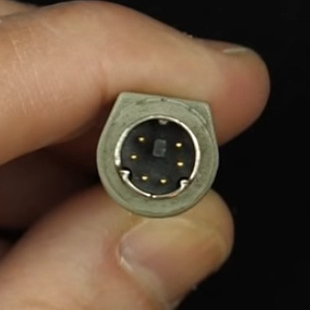
Which is precisely why products like the TA-1356 Tap Trapper were made. It was advertised as being able to scan your home’s phone line to alert you when somebody else might be listening in, whether it was a tape recorder spliced in on the pole or somebody in another room lifting the handset. You just had to clip it onto the phone distribution panel and feed it a fresh battery once and awhile.

If the red light came on, you’d know something had changed since the Tap Trapper was installed and calibrated. But how did this futuristic defender of communications privacy work? Let’s open it up and take a look.

Continue reading “Teardown: Tap Trapper”

Is Your Echo Flex Listening?

We are always surprised that Amazon or Google doesn’t employ Kelsey Grammer — TV’s Frasier — as a spokesman for their smart home devices. After all, his catchphrase was, “I’m listening…” Maybe they don’t want to remind you that the device could, theoretically, be sending everything you say to them or a nefarious hacker or government agency. Sure, there’s a mute button and it lights up a red LED.

But if you are truly paranoid, that’s not enough. After all, the same people want to eavesdrop on you would be happy to fake a red light. [Electronupdate] had the same thought and decided to answer the question: does the mute button really mute your microphone? The answer required not only some case opening and analysis, but there was even some IC decapsulation.

We were impressed with the depth of the analysis. The tiny SMD parts are marked confusingly, and if you are really paranoid you don’t believe them anyway. But looking at the actual circuit die is pretty unambiguous. The  parts in question turned out to be a Schmitt trigger, a flip flop, and a NAND gate.

Continue reading “Is Your Echo Flex Listening?”