If you want to measure resistance and you know Ohm’s law, it seems like you have an easy answer, right? Feed a known current through the thing you want to measure and read the voltage required. A little math, and that’s it. Or is it? If you are measuring reasonably large resistance and you don’t mind small inaccuracies, sure. But for tiny measurements or highly accurate measurements, you’d be better off using the four-wire method. What’s more is, understanding why you want to use the four-wire method is a great example of using an understanding of electronics to find solutions to problems.
Continue reading “Circuit VR: Resistance Measurement With Four Wires”
Gamifying Household Chores Helps Get The Kids To Pitch In
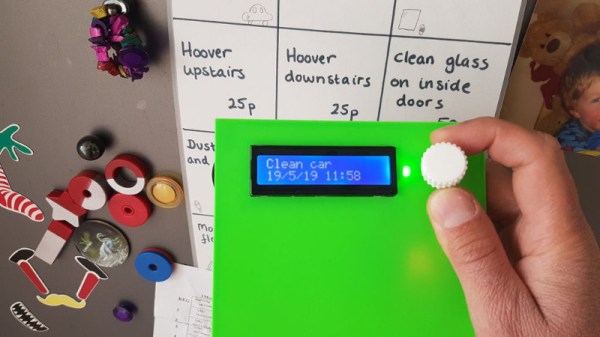
It’s rare to find anyone that gets excited about doing chores. This can lead to members of a household abrogating their duties. In these cases, enforcement is a common tactic. Tired of laminated chore grids and inconsistent results, [alastair-a] decided to tech up with an electronic chore tracking system.
[alastair-a]’s Task Manager is based around an Arduino Nano, fitted with the ever-popular HD44780-compatible LCD screen. Interfacing with the unit is via rotary encoder and RFID tag, while a real-time clock module keeps track of the time.
A custom data structure is used to manage tasks. This allows varying frequencies to be set for different tasks, as well as keeping track of the time of completion by different users. Each user has their own personal RFID tag, which can be swiped across the reader to indicate when a chore has been done.
The initial intent was to have the device print reports each week in order to reward the best performing members of the household. However, [alastair-a] reports the device was so popular with the younger members of the household, that they seem to have forgotten about rewards entirely!
We’ve seen chore reminders before; it’s often popular to build them as IoT devices.
Life On Contract: Product Development Lessons Big And Small
Developing a product and getting it out there to build a business is really hard. Whether it’s a single person acting alone to push their passion to the public, or a giant corporation with vast resources, everyone has to go through the same basic steps, and everyone needs to screw those steps up in the same way.
The reality is that the whole process needs to involve lots of aspects in order to succeed; small teams fail by not considering or dedicating resources to all of those aspects, and large teams fail by not having enough communication between the teams working on those pieces. But in truth, it’s a balance of many aspects that unlock a chance at a successful product. It’s worth recognizing this balance and seeking it out in your own product development efforts, whether you’re a one-engineer juggernaut or a large, established company.
Continue reading “Life On Contract: Product Development Lessons Big And Small”
Mobile SIGINT Hacking On A Civilian’s Budget
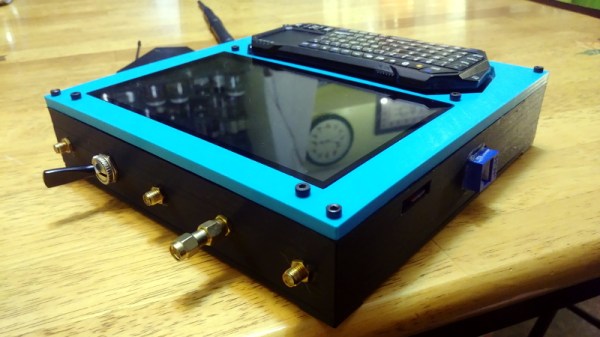
Signals Intelligence (SIGINT) refers to performing electronic reconnaissance by eavesdropping on communications, and used to be the kind of thing that was only within the purview of the military or various three letter government agencies. But today, for better or for worse, the individual hacker is able to pull an incredible amount of information out of thin air with low-cost hardware and open source software. Now, thanks to [Josh Conway], all that capability can be harnessed with a slick all-in-one device: the RadioInstigator.
In his talk at the recent 2019 CircleCityCon, [Josh] (who also goes by the handle [CrankyLinuxUser]) presented the RadioInstigator as an affordable way to get into the world of wireless security research beyond the traditional WiFi and Bluetooth. None of the hardware inside the device is new exactly, it’s all stuff the hacking community has had access to for a while now, but this project brings them all together under one 3D printed “roof” as it were. The end result is a surprisingly practical looking device that can be used on the go to explore huge swaths of the RF spectrum at a cost of only around $150 USD.

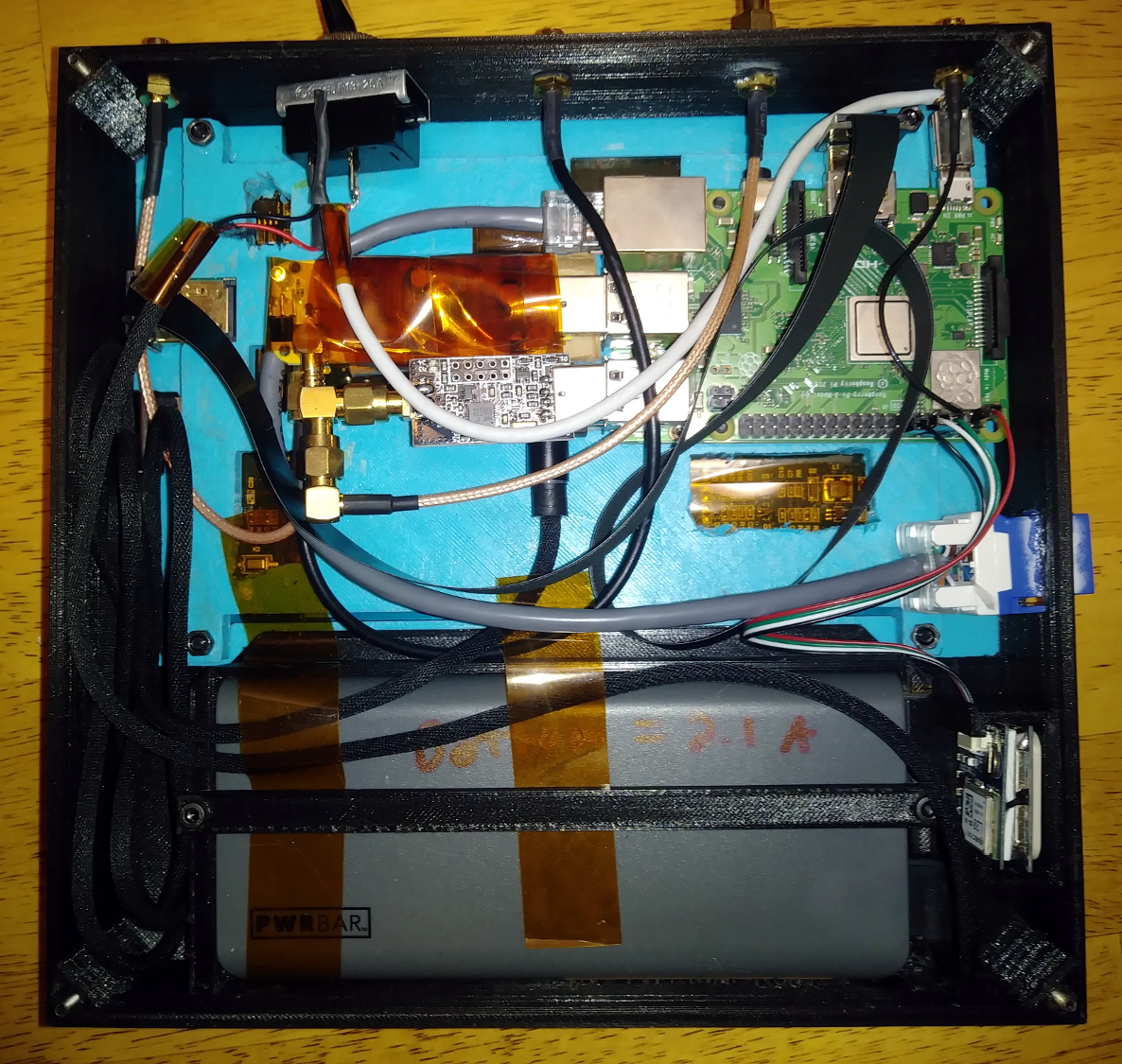
So what has [Josh] packed into this wireless toybox? It will probably come as little surprise to find out that the star of the show is a Raspberry Pi 3 B+, combined with a touch screen display and portable keyboard so the user can interface with the various security tools installed.
To help the RadioInstigator surf the airwaves there’s an RTL-SDR and a 2.4 Ghz nRF24LU1+ “Crazyradio”, both broken out to external antenna connectors on the outside of the device. There’s even an external SMA connector hooked up to the Pi’s GPIO pin, which can be used for low-power transmissions from 5 KHz up to 1500 MHz with rpitx. Everything is powered by a beefy 10,000 mAh battery pack which should give you plenty of loiter time to perform your investigations.
[Josh] has also written several Bash scripts which will get a trove of radio hacking tools installed on the Pi automatically, either by pulling them in through the official repositories or downloading the source and compiling them. Getting the software environment into a known-good state can be a huge time sink, so even if you don’t build your own version of the RadioInstigator, his scripts are still worth checking out.
You can do some pretty incredible things with nothing more than a Pi and an RTL-SDR, but we can’t help but notice there’s still plenty of room inside the RadioInstigator for more gear. It could be the perfect home for a Mult-RTL setup, or maybe even a VGA adapter for spoofing cell networks.
Continue reading “Mobile SIGINT Hacking On A Civilian’s Budget”
Tokyo Mechanical Keyboard Meetup Knocks Our Clacks Off
Just a few days ago, on the other side of the planet from this author, there was a mechanical keyboard meetup in Tokyo. Fortunately through the magic of the Internet we can all enjoy the impressive collection of devices people brought, and boy were there some interesting specimens. There were certainly the inevitable collections of strange artisan keycaps, unusual handmade switches, and keycap sets only available in one group buy five years ago in Nicaragua. But among the bright colors were some truly unique custom designs the likes of which we haven’t see before. A single source is hard to credit, you could check the hashtag #tokyomk6 on Twitter, or [obra]’s thread of photos, or this great blog post (video walkthroughs and photos included) from [romly].

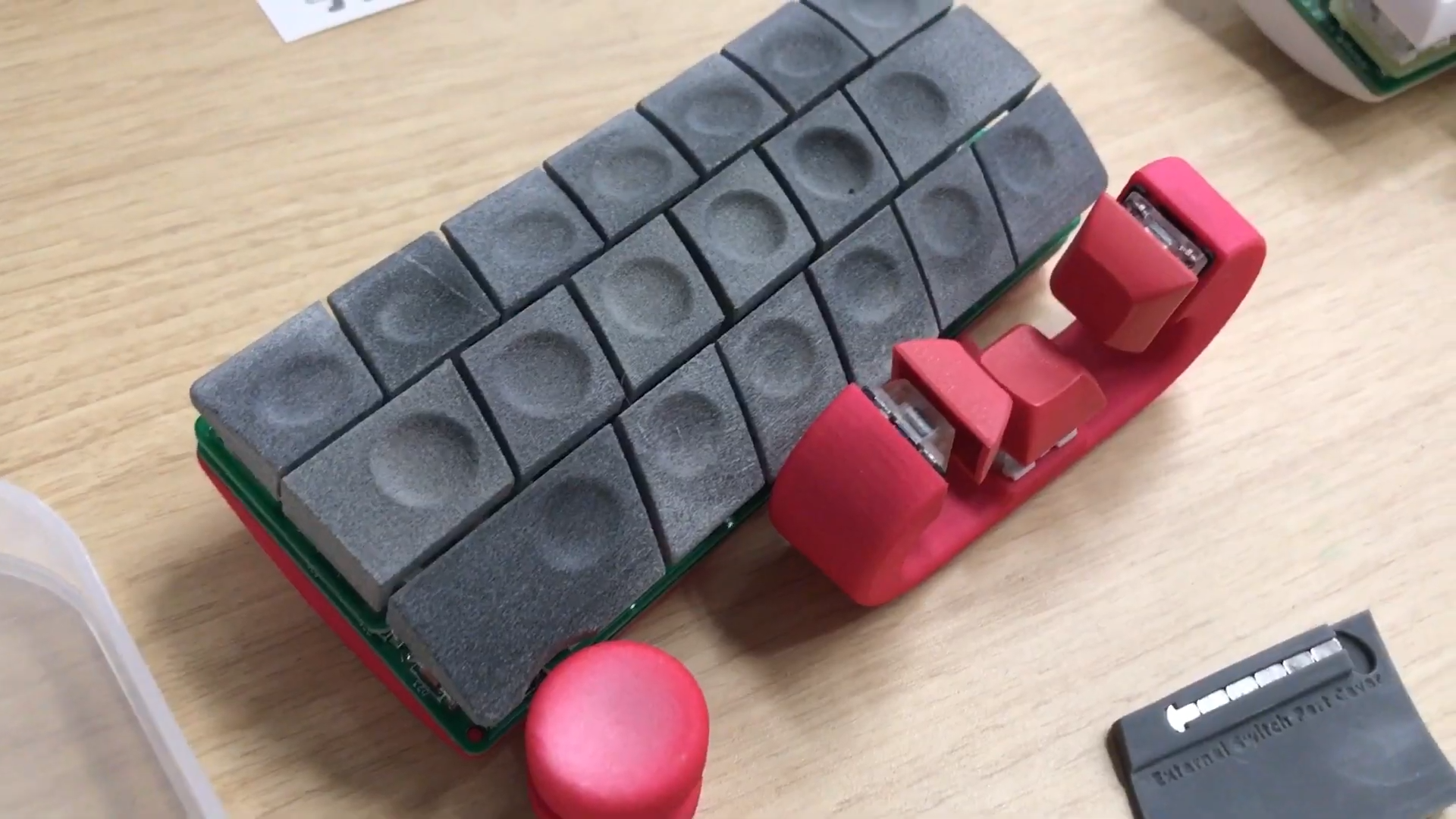
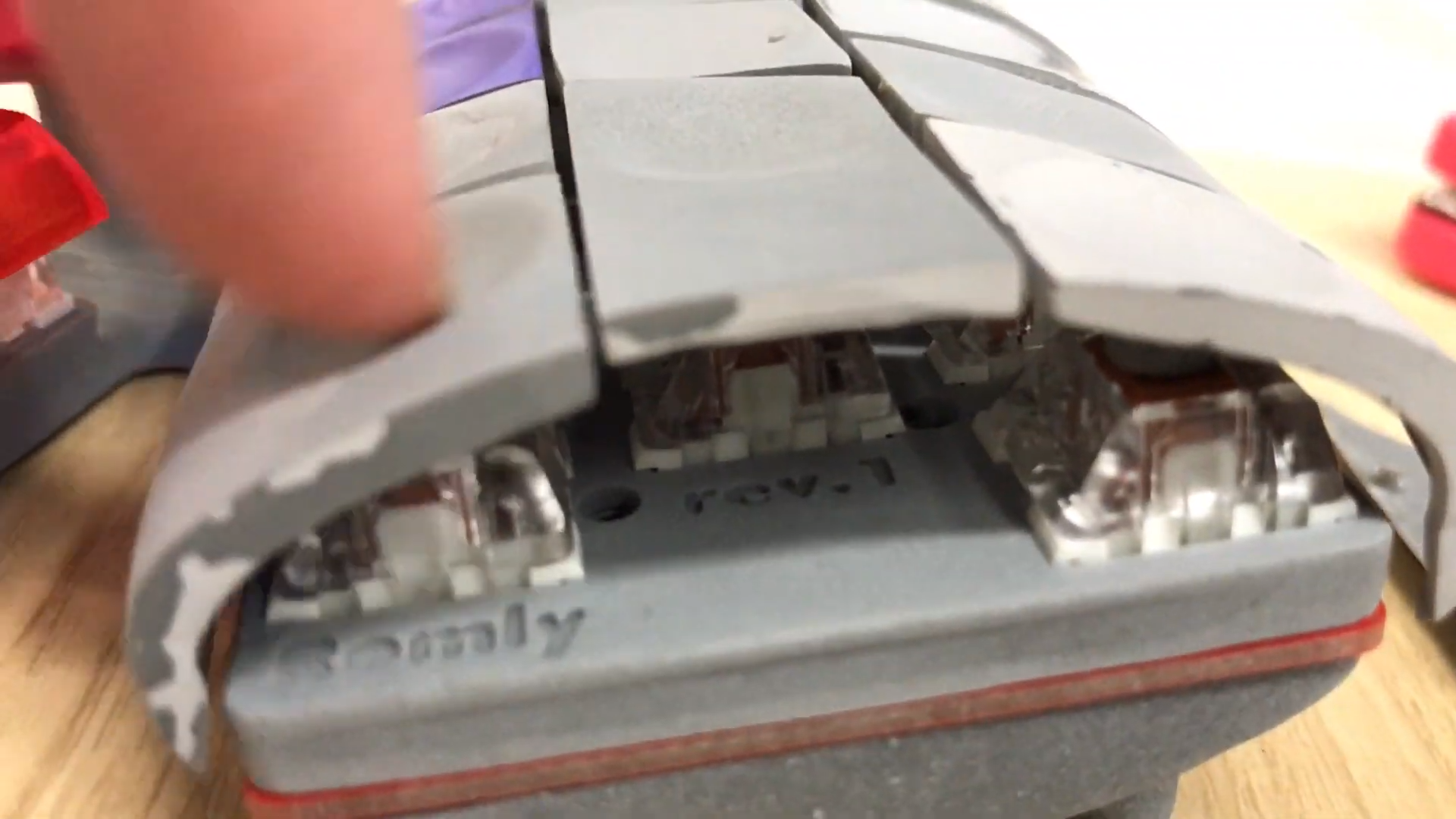
Speaking of [romly], one of their designs stands out as particularly unusual. There are a few things to note here. One is the very conspicuous surface profile of the (clearly totally custom) keycaps themselves. Instead of flat or cylindrical or spherical, these are round. Round like the outside of a log. If we didn’t know better it might look like the entire thing was sculpted or extruded as a single unit. And just below the deck are the perpendicular thumb clusters. Frankly we aren’t sure how to refer to this design feature. The switches are mounted at right angles facing inward so the user places a thumb inside it in a style reminiscent of the DataHand. It’s quite interesting, and we’d be love to know more about what specific functionality it provides.
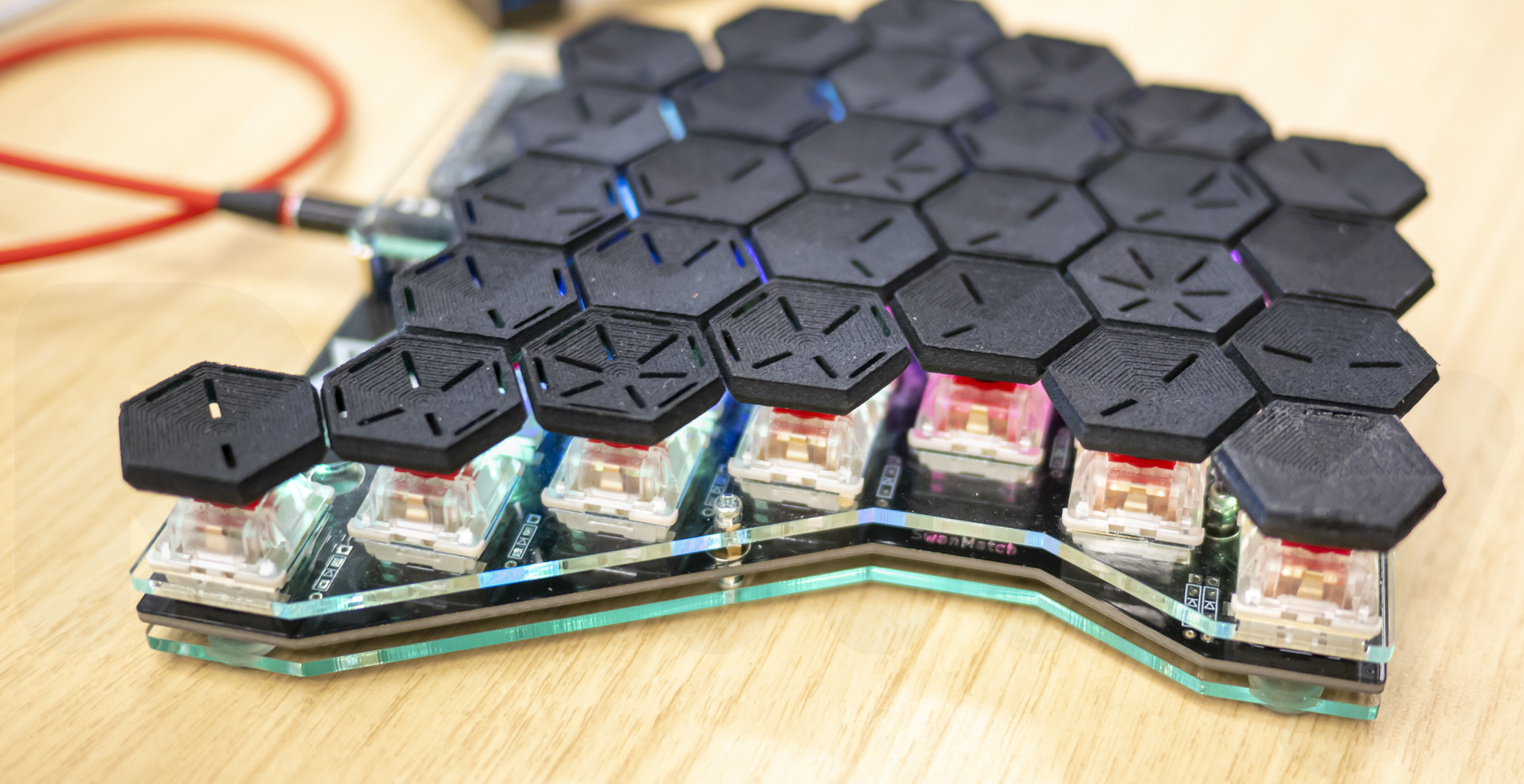
Another interesting entrant is this keyboard with unusually staggered switches and hexagonal caps (check out the individual markings!). Very broadly there are two typical keyboard layout styles; the diagonal columns of QWERTY (derived from a typewriter in the 1800’s) or the non slanted columns of an “ortholinear” or matrix style layout. By those metrics this is something like an ortholinear keyboard in that its switches overlap their neighbors by half, but the edge to edge close packed caps imply that it might be something else. We’d be very interested to know how typing on this beast would be!

There were so many more awesome designs present at the meetup that this would never end if we tried to document them all. Take a look through the posts and call out anything else too excellent to go unnoticed!
Thanks [obra] for Tweeting about this so we could discover it.
The UK Drone Community Fights Back, Gains FOI Admission Of No Tangible Drone Evidence
Regular Hackaday readers will have noted a succession of stories following the reports of drones in the air over British airports and in proximity to aircraft. We’ve consistently asked for a better quality of investigation and reporting into these cases, because so far the absence of reported tangible evidence of a drone being present casts doubt on the validity of the official reaction. For too long the official records of air proximity incidents have relied upon a shockingly low standard of proof when apportioning blame to drone operators, and this situation has contributed to something of a panic over the issue.
It seems that some members of the British drone flying community are on the case though. Airprox Reality Check are a group analysing air proximity reports and linking them to contemporary ADS-B and weather records to identify possible explanations. They have devised a rating system based upon a number of different metrics in an attempt to quantify the reliability of a particular report, and they are tabulating their analysis of air proximity reports on a month by month basis. This includes among many analyses such gems as Airprox Report #2019046, in which an Embraer 170 flying at 9000 feet and 20 km offshore reported a drone in close proximity. The Airprox Reality Check analysis points out that no known drone could manage that feat, and refers to a passing Boeing 737 revealed through ADS-B data as a more likely culprit.
Their latest news is that they have made a Freedom of Information request to the Air Proximity Board, asking for what evidence the Board has of a drone having been involved in any of the over 350 incidents in UK airspace having been reported as involving drones. The official response contains the following quote:
in all cases UKAB has no confirmation that a drone has flown close to an aircraft other than the report made by the pilot(s). Similarly, other than from the report of the pilot(s), UKAB has no confirmation that a drone was involved.
This confirms the view of the multirotor and drone community that has been reported by Hackaday in the past, that the whole British drone panic has been based upon unreliable and uncorroborated reports from eyewitnesses with little direct experience of multirotors. If any irresponsible drone operator is flying into close proximity with aircraft or otherwise into protected airspace then it goes without saying that they should be prosecuted, yet it seems that the community is being punished as though this had happened when the reality is that no such acts are proven to have occurred.
Apple Just Killed The VESA Mount And We Couldn’t Be Happier
After the immense failure of the 2013-era Apple Pro trash can Mac, Apple has been hard at work at the next generation of workstation desktops. This week, the new Mac Pro has been announced, and the specs are amazing: We finally can buy a professional, desktop Mac with half the storage of an iPhone. The big story isn’t the next generation of cheese-grater Macs, though: the new display, the Pro Display XDR, has killed the venerable VESA mount and we couldn’t be happier.
The VESA mount, or more correctly, the VESA Mounting Interface Standard, was created in 1997 as a mounting standard for flat panel monitors and televisions. Look on the back of your monitor, and you’ll probably find a pattern of M4 threaded inserts laid out on a 75mm or 100mm square. Larger sizes, with respectively larger thread sizes, are used for gigantic wall-mounted televisions. For the last two decades, this has been the standard for mounting monitors to stands. Now this standard faces a challenger thanks to the brave designers at Apple. Continue reading “Apple Just Killed The VESA Mount And We Couldn’t Be Happier”