Will We Recycle FPGAs In The Future?

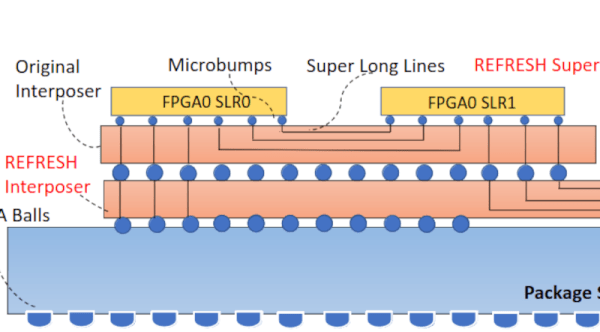
If you really want to look at how much something costs, you need to look at total cost of ownership, not just the sticker price. Same goes for things like pollution and carbon footprint. A vehicle, for example, might have a low carbon footprint in operation but require more carbon in the manufacturing or disposal processes. Researchers have noted that FPGA accelerators get replaced and may wind up as e-waste in as little as two years. They propose REFRESH, an architecture that recycles old FPGAs into new ones by joining multiple FPGA dice with a simple interposer to coordinate the work.

The idea is not as radical as it might first seem. Many modern chips use chiplets anyway, so this is a reasonable extension of that idea. You simply need a way to harvest the old devices.
Continue reading “Will We Recycle FPGAs In The Future?”

FPGA Runs IBM 5151 MDA Display

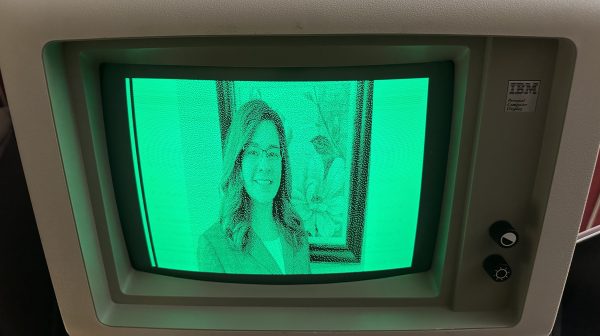
When it comes to driving a display, you can do all kinds of fancy tricks with microcontrollers to get an image up. Really, though, FPGAs are the weapon of choice for playing with these kinds of signals. [Ted Fried] put one to great work driving an ancient IBM 5151 MDA display, and shared his results on Hackaday.io.

The build relies on a Digilent Arty Z7-20 SOC FPGA development board, which has a beefy 600 MHz ARM processor on board. It also packs 500 MB of DRAM—more than enough for storing pixel data for an ancient display.

To drive the old display, [Ted] whipped up a state machine on the FPGA. It’s tasked with fetching display data from RAM and creating the appropriate timings for the MDA display interface. The images are stored directly in an array in C code running on the ARM core. From there, they are copied into the FPGA’s RAM for trucking out to the display. The 720×350 images are stored as 1 bit per pixel, and are created by converting the original JPEGs into single-bit bitmaps in GIMP, before final conversion into a C code array via utility of [Ted’s] own design.

If you’ve ever wanted to display your images in resplendent amber or green, then this could be the project for you. It’s also just a great way to learn about using FPGAs and interfacing with alternative display technologies. If you’ve been whipping up your own retro display hacks, don’t hesitate to drop us a line.

A Cycle-Accurate Sega Genesis With FPGA

The Field-Programmable Gate Array (FPGA) is a powerful tool that is becoming more common across all kinds of different projects. They are effectively programmable hardware devices, capable of creating specific digital circuits and custom logic for a wide range of applications and can be much more versatile and powerful than a generic microcontroller. While they’re often used for rapid prototyping, they can also recreate specific integrated circuits, and are especially useful for retrocomputing. [nukeykt] has been developing a Sega Genesis clone using them, with some impressive results.

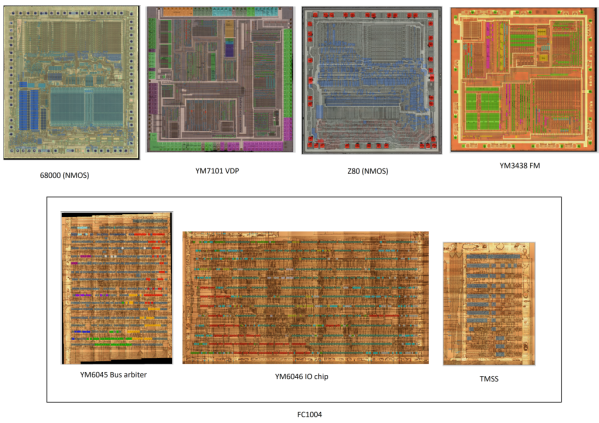
The Sega Genesis (or Mega Drive) was based around the fairly common Motorola 68000 processor, but this wasn’t the only processor in the console. There were a number of coprocessors including a Z80 and several chips from Yamaha to process audio. This project reproduces a number of these chips which are cycle-accurate using Verilog. The chips were recreated using images of de-capped original hardware, and although it doesn’t cover every chip from every version of the Genesis yet, it does have a version of the 68000, a Z80, and the combined Yamaha processor working and capable of playing plenty of games.

The project is still ongoing and eventually hopes to recreate the rest of the chipset using FPGAs. There’s also ongoing testing of the currently working chips, as some of them do still have a few bugs to work out. If you prefer to take a more purist approach to recreating 90s consoles, though, we recently featured a project which reproduced a Genesis development kit using original hardware.

Thanks to [Anonymous] for the tip!

FPGA Plays Tic-Tac-Toe

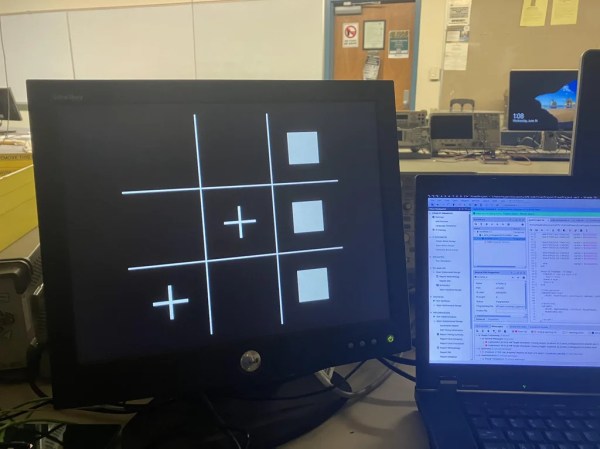
As computers get more and more powerful and artificial intelligence algorithms improve, few games remain where the best humans can reliably beat their electronic counterparts. In chess this barrier was passed in 2005 with the last human win against a computer, and recently humans lost to computers at go. Simpler games like tic-tac-toe have been solved for all possible positions for a while now, so even a simple computer will always win or tie the game. But that doesn’t mean that there’s nothing left to learn about these games as [Hayden] demonstrates with this tic-tac-toe game built entirely on an FPGA.

[Hayden] is making this as part of a college course on digital design, so it really starts at first principles for working with FPGAs. It’s programmed in Verilog on a Basys 3 board, which also hosts the switches used as the game’s input and handles the VGA video output as well. The build uses state machines to keep track of the moves played on each of the squares, and another state machine to keep track of whether or not the current game has been won. If so, it highlights the winning moves in red, and stops taking further inputs until it is reset. Some more logic ties everything together along with a customized VGA driver to produce the entire gaming experience.

A game like tic-tac-toe is a great way to master the fundamentals of a system like this before moving on to more complex programs, especially on an FPGA platform that might handle a lot of the things we take for granted on more traditional computing systems, such as the video output. If you’re interested in taking more of a deep dive into the world of FPGAs, we published a primer about them a few years ago that will get you started.

Continue reading “FPGA Plays Tic-Tac-Toe”

FPGA Breakout Board For DIP Package Shenanigans

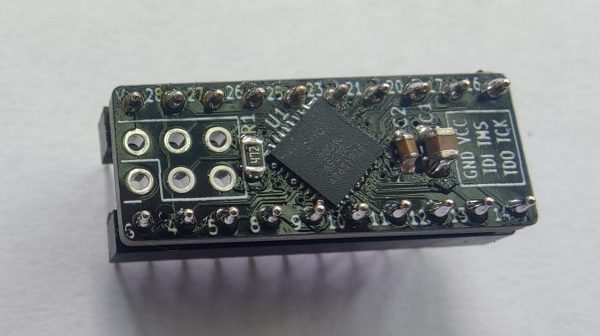
FPGAs are supremely flexible and powerful devices. However, they usually come in QFP or BGA packages that are altogether difficult for hobbyists to play with. The DIP-FPGA breakout board aims to solve that problem by using a carrier PCB to put an advanced chip in a friendlier form factor.

The board itself fits a DIP-20 form factor when soldered up with regular-pitch pin headers. It features a  MachXO2-1200HC FPGA from Lattice Semiconductor. That’s the same chip as used on similar the TinyFPGA A2. With 18 GPIO, a DIP-20 layout is just about enough pins to take care of business. It’s intended specifically for use on breadboards or via regular IC sockets. There’s also a six-pin programming port laid out on the board that you can use with pogo pins or header connectors as you desire.

If you want to do some fancy signal stuff in an easy-to-prototype form factor, this could be the setup for you. If you want to buy one ready-made, they’re available on Tindie for the curious. In the meantime, consider whether this beefy FPGA Arduino concept could also propel your next project to greater heights.

Bringing The PIO To The FPGA

We’ve seen some pretty incredible hacks using the Raspberry Pi 2040. However, one of the most exciting bits of hardware onboard is the Programmable I/O (PIO). Not content with it just being a part of RP2040-based projects, [Lawrie Griffiths] has been porting the PIO to Verilog so anyone can enjoy it.

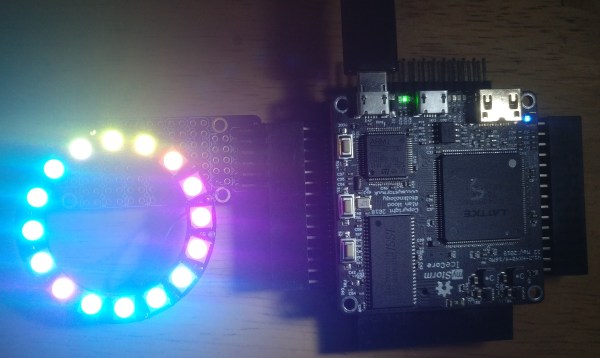
This particular implementation is based only on the spec that Raspberry Pi provides. For assembling PIO code, [Lawrie] uses Adafruit’s pioasm assembler they use for their MicroPython framework. There’s a simulator to test different programs, and the project targets the Blackice MX and the Ulx3s. A few example programs are included in the repo, such as outputting a pleasant guitar note over I2S and driving a chain of WS2812s.

The project is still incomplete but slowly making progress. It’s an incredible feat of reverse engineering. While the simulator can be used to debug programs, step through instructions, and inspect waveforms, the ultimate value of bringing the PIO to other systems is that now we can re-use the code. Things like the can2040, an implementation of the CAN bus protocol using the PIO. Or even a PIO-based USB host.

Classic Gaming With FPGA And ATX

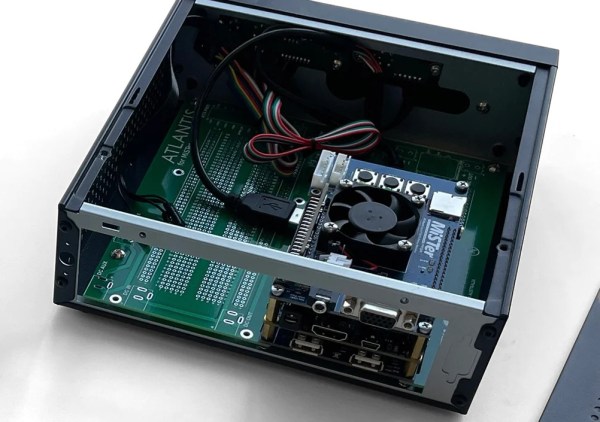
Playing classic games, whether they are games from the golden age of arcades or simply games from consoles that are long out of production, tends to exist on a spectrum. At one end is grabbing a game’s ROM file, finding an emulator, and kludging together some controls on a keyboard and mouse with your average PC. At the other is meticulously restoring classic hardware for the “true” feel of what the game would have felt like when it was new. Towards the latter end is emulating the hardware with an FPGA which the open-source MiSTer project attempts to do. This build, though, adds ATX capabilities for the retrocomputing platform. Continue reading “Classic Gaming With FPGA And ATX”