Beware Of Tall Grass: Pokemon Go On The Gameboy Pocket

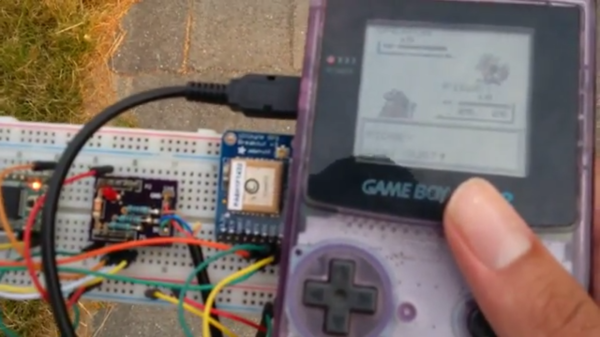
[Pepijn de Vos] was excited to interact with the world’s most popular augmented reality pedometer, Pokemon Go, and was extremely disappointed to find that his Blackberry couldn’t run it. Still, as far as he could tell from behind his wall of obsolete technology, Pokemon Go is all about walking distractedly, being suspicious, and occasionally catching a Pokemon. That should be possible.

Not a stranger to hacking Pokemon on the Gameboy, [Pepijn] put together a plan. Using his TCPoke module, he took it a step further. Rather than just emulating the original gameboy trade signals over the internet, he hacked a Pokemon Red ROM with some custom Z80 assembly to add some features to the Cable Club in the game.

After some waiting for the delivery man to bring a flashable cartridge and along with some Arduino code, he could now translate the steps he took in the game to his steps in the real world. Well, mostly. He could pick the location where he would like to catch a Pokemon. The character stands there. Somewhere around 100m the game will trigger a random pokemon battle.

[Pepijn] is now no longer a social outcast, as you can see in the video after the break. On a simple trip to the grocery store he caught two Pokemon!

Continue reading “Beware Of Tall Grass: Pokemon Go On The Gameboy Pocket”

Cory Doctorow Rails Against Technological Nihilism; Wants You To Have Hope

I was skeptical about a two hour block allotted for Cory Doctrow’s keynote address at HOPE XI. I’ve been to Operas that are shorter than that and it’s hard to imagine he could keep a huge audience engaged for that long. I was incredibly wrong — this was a barnburner of a talk. Here is where some would make a joke about breaking out the rainbows and puppies. But this isn’t a joke. I think Cory’s talk helped me understand why I’ve been feeling down about our not-so-bright digital future and unearthed a foundation upon which hope can grow.

Continue reading “Cory Doctorow Rails Against Technological Nihilism; Wants You To Have Hope”

Pokemon Go Physical Pokeball Catches ‘Em All

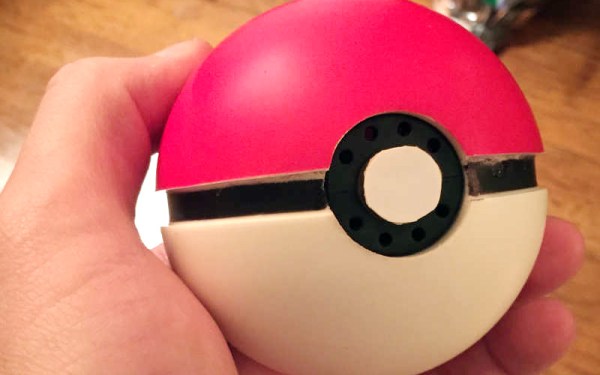
There’s something irresistible about throwing Pokeballs at unexpectedly appearing creatures. But wait. When did you actually, physically throw a Pokeball? Swiping over colored pixels wasn’t enough for [Trey Keown], so he built a real, throwable, Pokemon-catching Pokeball for Pokemon Go.

Continue reading “Pokemon Go Physical Pokeball Catches ‘Em All”

Hands-on The AND!XOR Unofficial DEF CON Badge

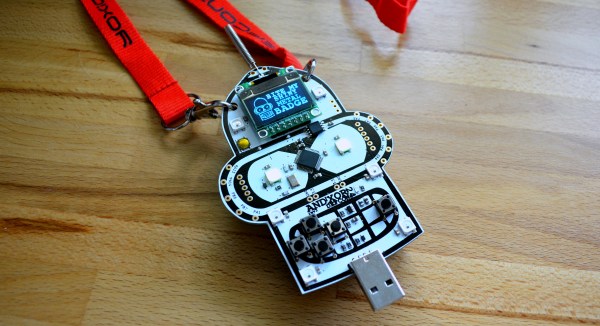
DEF CON 24 is still about two weeks away but we managed to get our hands on a hardware badge early. This is not the official hardware — there’s no way they’d let us leak that early. Although it may be unofficial in the sense that it won’t get you into the con, I’m declaring the AND!XOR badge to be officially awesome. I’ll walk you through it. There’s also a video below.

Over the past several years, building your own electronic badge has become an impromptu event. People who met at DEF CON and have been returning year after year spend the time in between coming up with great ideas and building as many badges as they can leading up to the event. This is how I met the trio who built this badge — AND!XORAndrew Riley, and Jorge Lacoste — last year they invited me up to their room where they were assembling the last of the Crypto Badges. Go check out my guide to 2015 Unofficial DEF CON badges for more on that story (and a video of the AM transmissions that badge was capable of).

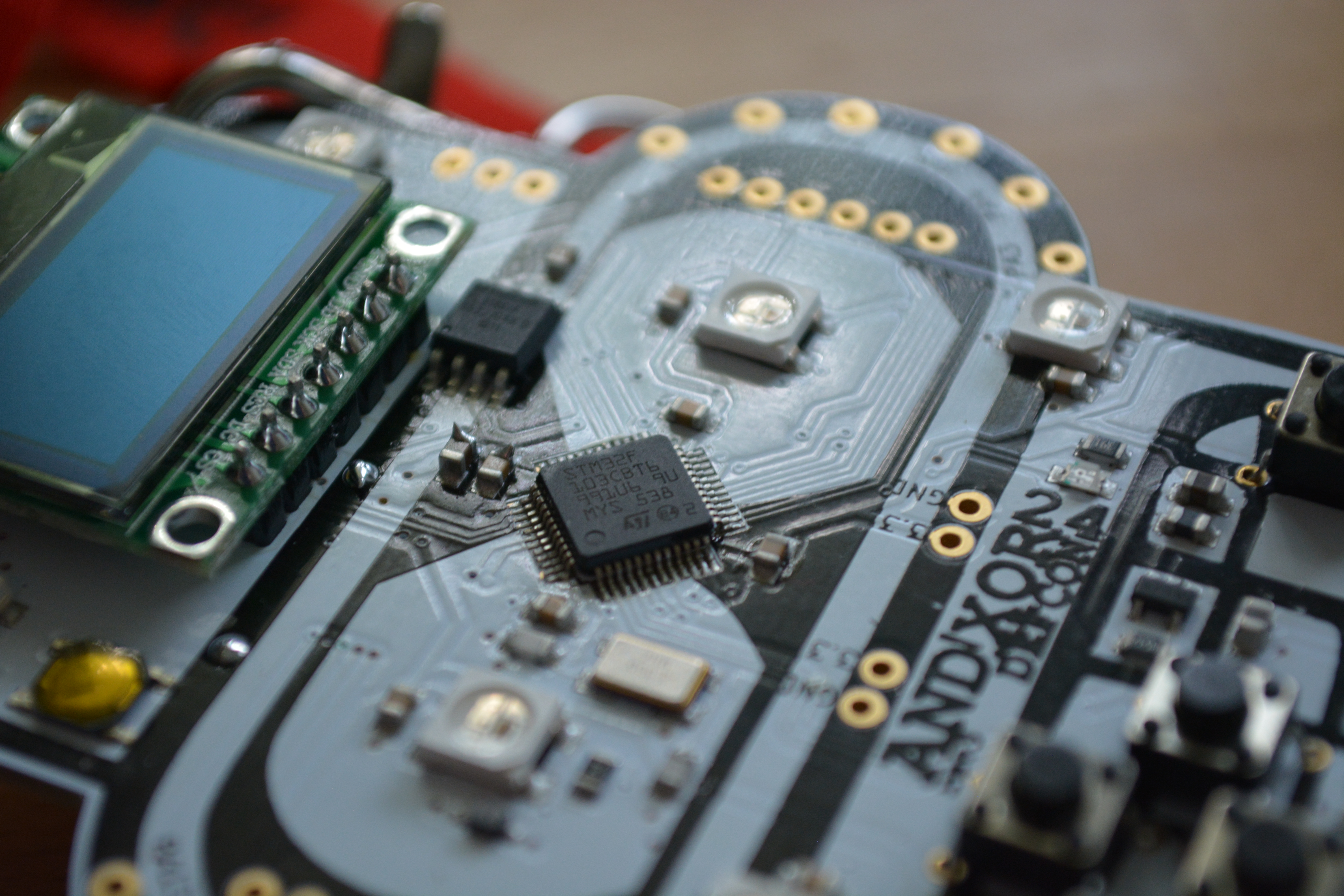
The outline is this year’s badge is of course Bender from Futurama. Both eyes are RGB LEDs, with another half dozen located at different points around his head. The microcontroller, an STM32F103 ARM Cortex-M0 Cortex-M3, sits in a diamond pattern between his eyes. Above the eyes you’ll find 16 Mbit of flash, a 128×64 OLED screen, and a reset button. The user inputs are five switches and the badge is powered by three AA batteries found on the flip side.

bender's-nose-closeup

That alone makes an interesting piece of hardware, but the RFM69W module makes all of the badges interactive. The spring coming off the top of Bender’s dome is a coil antenna for the 433 MHz communications. I only have the one badge on hand so I couldn’t delve too deeply what interactive tricks a large pool of badges will perform, but the menu hints at a structure in place for some very fun and interesting applications.

Continue reading “Hands-on The AND!XOR Unofficial DEF CON Badge”

DIY Command Station For Kerbal Space Program Is Overkill

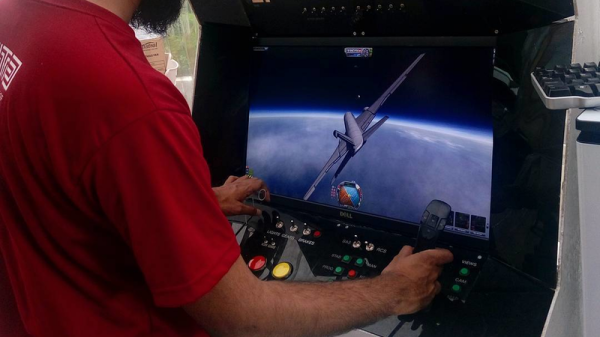
We’ve seen custom controller mods for Kerbal Space Program before, but a group calling themselves the Makerforce went a step further with their design and build of the KSP “Overkill” Command Station, which has much more in common with a fancy standup arcade unit than a custom controller. Kerbal Space Program is a hit indie game that, among other things, simulates the challenges of spaceflight. Like most games, you use the mouse and keyboard for control but many fans find this too limiting. With the help of a software mod that exposes control and status information over hardware serial communications, the door to full telemetry and remote control was opened to just about anyone to craft their own custom hardware such as flight sticks and status displays. Not content with the idea of having just a joystick and a few buttons critical for the flight process, this project took a different approach.

Continue reading “DIY Command Station For Kerbal Space Program Is Overkill”

What It’s Like To Quit Your Job And Start A Company – Then Fail

Some of our more dedicated readers may remember me as that promising and talented new writer who disappeared after only a couple of months last fall. Or, alternatively, that moronic new writer who had no idea what he was talking about. But, I’m just going to go ahead and assume it was the former in order to protect my ego. In either case, if you remember me at all, you may have wondered why I left. Was it cholera? Was I drafted into a top-secret CIA program? Did I join a circus as a fledgling trapeze artist?

No, it was none of that. That would be absurd. What would make you think I had any trapeze skills at all, much less circus-worthy ones? The truth is a lot more straightforward, but was also a lot scarier (and more exciting) for me — I started a business. The astute readers among you have probably already put the dots together and figured out that I failed. The title was a pretty strong hint, right? This isn’t a story of bootstraps-pulling success, or a heartwarming underdog tale. This is an opportunity for me to talk about the lessons I learned as I failed, and to give the entrepreneurs out there something to consider when they start their businesses. We’ll laugh together, we’ll cry together, and maybe we’ll even learn something together. Ready? Alright, let’s dive right into the heart of it, starting when I was seven years old…

Continue reading “What It’s Like To Quit Your Job And Start A Company – Then Fail”

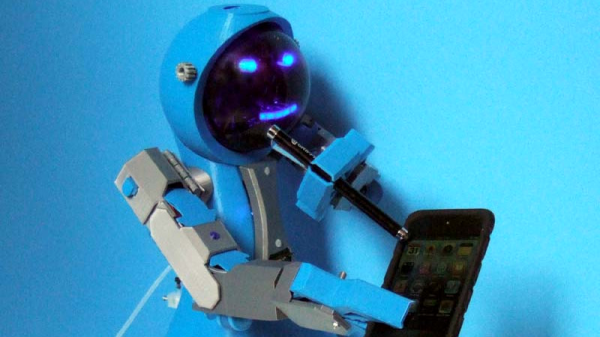
Zizzy The Personal Robot Uses 3D Printed Artificial Muscles Instead Of Hobby Servos

Zizzy is a personal robot designed to help those with limited mobility. Rather than being assisted by a nightmare creature, Zizzy would offer a more appealing and friendly option.

The coolest part about Zizzy is the 3D printable pneumatic artificial muscles. Project creator, [Michael Roybal] said it took over a year of development to arrive at the design.

The muscles are hollow bellows printed out of Ninjaflex with carefully calibrated settings. A lot of work must have gone into the design to make sure that they were printable. After printing the muscles are painted with a mixture of fabric glue and MEK solvent. If all is done correctly the bellows should be able to hold 20 PSI without any problem.

This results in a robot with very smooth and precise movement. It has none of the gear noise and can also give when it collides with a user, a feature typically found only in very expensive motor systems. If [Michael] can find a quiet compressor system the robot will be nearly silent.