Make Your Own TSA “Naked” Scanner

Have you ever wanted to ability to see through objects? Perhaps you have been looking for something special for your own personal TSA role playing adventures? Well, [Jeri Ellsworth] has your back. She has managed to cobble together her own millimeter centimeter wave scanner using a hacked set of Feed Horns (like from a satellite dish) to create the image. By reversing the power transistor on one of the Feed Horns, one of the horns is made into a transmitter, while one of the other horns stays as a receiver. This data is then fed into a FPGA by way of an A2D converter, where an image is assembled when the scanner is moved over a surface. X and Y axis tracking is handled by an optical mouse also controlled by the FPGA, and the whole setup is output to a monitor.

Right now there is no text write up, or any specific details as the hack will vary by whatever Feed Horn is available. However, the video does a great job of explaining some of the electrical concepts, as well as some very useful schematics. Be sure to watch the whole video after the break, and don’t blame us for any health complications, whether the radiation is ionizing or not.
Continue reading “Make Your Own TSA “Naked” Scanner” →

Water-blob Launcher

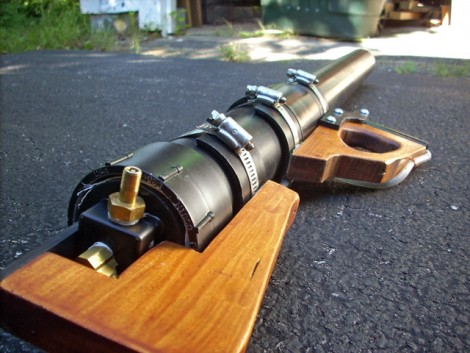
This rifle-shaped water cannon looks great and packs a big punch. We guess you could say that it’s a water balloon launcher, but the balloons are torn off and drop like the wad from a shotgun shell when fired. So we think this launches water blobs, or orbs, or something along those lines.

[Wolf] built it using PVC and some brass fittings that allow for the injection of compressed air. There’s a slick valve system that he developed which we don’t get a great look at in the build pictures. Fortunately, there’s an animated GIF that shows the various stages. Using his valve there’s no need for any electrical system like a lot of other pneumatic launcher systems use.

Just like the water-filled ping-pong gun, you’ve got to be careful with this thing. As you can see in the clip after the break there’s lethal force behind these projectiles. Especially when [Wolf] swaps out the water balloons for big steel darts.

Continue reading “Water-blob Launcher” →

BendDesk Multi-touch Furniture

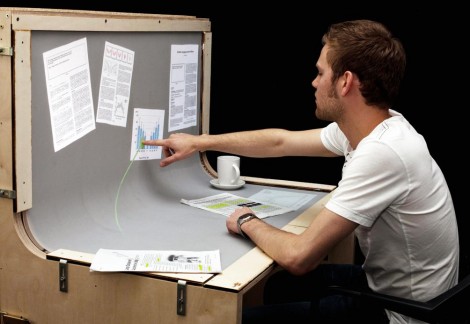
The BendDesk is a horizontal and a vertical multi-touch display connected as one curved surface. Think of it as a smart white-board and a multi-touch desk all in one. It can be used to sort and edit information, or to play games. Check out “Bend Invaders”, a game demonstrated in the video after the break. When you touch two fingers to the display the two points are used to aim a laser at the oncoming monsters.

The system uses a combination of two projectors shining on the surface from underneath and behind. A series of LEDs around the edges of the display bathe it in infrared light. Three cameras with IR filters peer at the underside of the acrylic surface and detect touches by distinguishing variances in the IR pattern through a process called Frustrated Total Internal Reflection. If you’re interested in more of the math and science involved there are a couple of papers available from the project site linked at the top of this post.

We’ve seen so many displays using the Kinect lately, it’s refreshing to see one that doesn’t.

Continue reading “BendDesk Multi-touch Furniture” →

Power All Over Your Body

We know that you can transform the mechanical motions of your body into electrical energy, like when you turn the crank or shake a mechanically-powered flashlight. These types of mechanical motions are quite large compared to many of the day-to-day (and minute-to-minute) actions you perform–for example walking, breathing, and thumb wrestling.

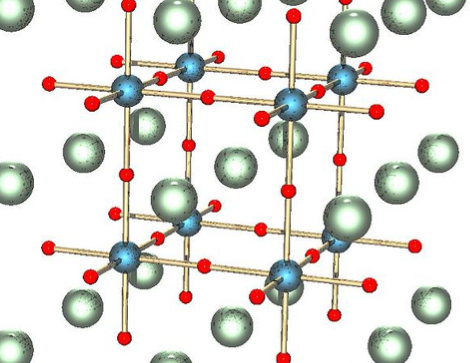
What if we could harvest energy from these tiny movements? Researchers at the Korea Advanced Institute of Science and Technology are seeking the answer to this question with piezoelectric barium titanate. The electrical output of their devices is very small (in the nanoAmps) but over a long period and over many repetitions it would be possible to run a small electric device–even a biologically-embedded one. An alternative to blood power?

There is clearly a lot of potential in this technology, and we’ll be interested to see if and when we can start messing around with this stuff. Heck, it’s already been used to power a small LED and you all know just how much everyone would jump at the chance to cover themselves in self-powered LEDs…

Next-Level Robotic Hijinx

Oberon is a wheeled remotely operated vehicle that [LucidScience] built based on an electric wheelchair. The detailed and helpful build log is valuable enough even before considering the vast potential of Oberon’s intended use: strutting around town, scaring the neighbours.

We’ve seen other ROVs before, of course, but none with the same kind of War of the Worlds “real-life invasion” kitch. Running down hapless pedestrians or raining hell upon your enemies are great and all, but once you’ve destroyed the surrounding population you’re out of laughs. Not so with Oberon, with which you can convince Mr. Nutcase down the road to go on wild quests for the glory of the new robot empire. The fun doesn’t stop there–enjoy the Hubbard side of life by starting a cult to worship the great Oberon and enjoy decades of financial payoff and moral depravity…all from the comfort of your own living room!

It would be wicked rad if we could move forward with this idea by combining the abilities of specialized ROVs like this camera-bot and this termite-killer-bot. Face it, who wouldn’t want a smooth-talking camera-snapping chemical-spraying avatar for christmas?

Vacuum Forming At Home

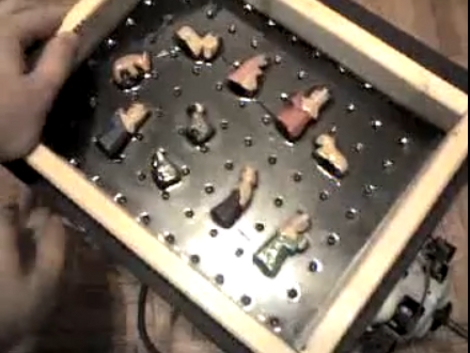
A little dumpster-diving let [Nick Skvarla] build his vacuum form machine for around $5. He pulled a vacuum cleaner out of the trash, which was tossed away because of a broken power plug. He put it into a box which had been sealed with spray foam and used a piece of pegboard for the top side of the enclosure. He takes a piece of 40 mil PETG plastic from the hobby shop and mounts it in a wooden frame. That goes into the oven on broil until the entire sheet is sagging, then onto the vacuum former. Above he’s making forms out of some figurines which he’ll walk you through in the video after the break.

There’s a whole world of manufacturing processes that use these forms as a starting point. What would you use this for?

Continue reading “Vacuum Forming At Home” →

Make Your Own Solenoids, Then Play The Xylophone

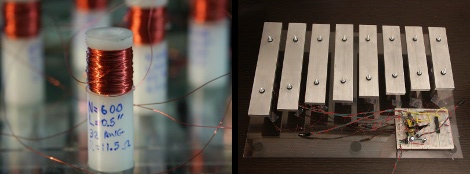
Learn to manufacture your own solenoids and then use them to play the xylophone by watching the tutorial video after the break. [Humberto Evans] and the team at Nerd Kits do a great job of not only manufacturing the coils, but the xylophone itself. The bars are machined from some aluminum stock and they take you down the rabbit hole with they why’s and how’s of engineering the keys.

We’re unlikely to replicate this machining process but the solenoids are another story all together. Starting at about 3:30 you can learn about designing, building, and using these little marvels. They’re basically an electromagnetic cuff with a metal slug in the middle. The solenoid seen above uses a body milled from HDPE and wrapped with magnet wire. The slug in the center is steel, with a few rare-earth magnets at the top. When you run current through the coil it repulses the magnets on the slug, witch then strikes the xylophone key. Using a MOSFET and a protection diode, actuating them is as simple as sending a digital high from your microcontroller of choice.

We’ve seen solenoids used to play a vibrophone before, but those were commercial units. Making your own hardware is far more hardcore.

Continue reading “Make Your Own Solenoids, Then Play The Xylophone” →