PSP Homebrew Using The Half-Byte Loader

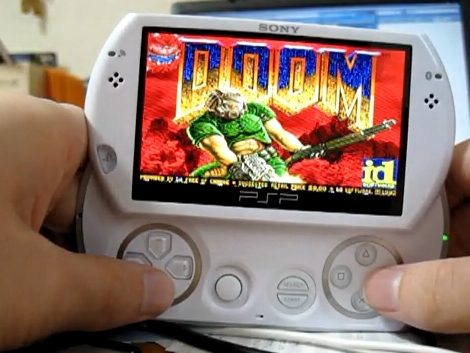
[Rich] tipped us off about the Half-Byte Loader which lets you run homebrew on late-model Sony PlayStation Portables. Above you can see a PSP Go running Doom (a screenshot from the video after the break), which is a prerequisite for any cracked device. HBL uses an exploit in the game demo of Patapon 2, which is free for download. A crafted game save loaded onto a Memory Stick gets you to the loader when selected from the continue menu of the game. Right now this method works on all know firmware version 5.0 and higher. Who knows when Sony will take action to kill an exploit like this one.
Continue reading “PSP Homebrew Using The Half-Byte Loader”

Audio Breakout Box For MacBook Pro

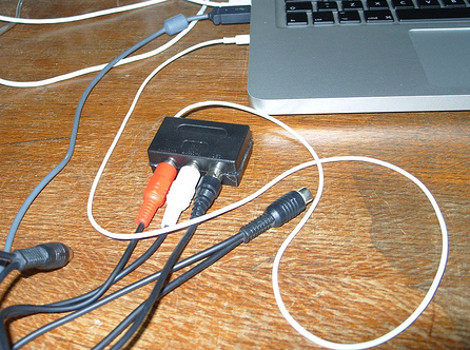
[Billy] wanted to use the audio connector on his MacBook Pro for input and output at the same time. He knew it could be done because Apple sells headphones with built-in microphones that work with the computer. He set out to build a breakout box so that he could connect the components of his choice to the single port. Using a scart-RCA adaptor box he scrapped the scart plug and wired the RCA jacks to the Apple headphone wires. He can now patch the pickup of his guitar to the mic connector, send it through the MacBook, and run the output back to his guitar amp.

Inductive Charging For The HTC Evo

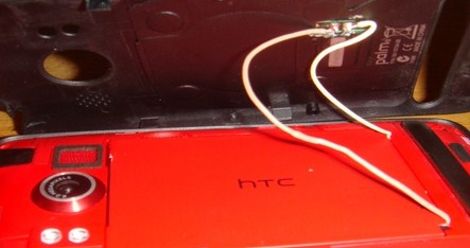
[Danny] added wireless charging to his HTC Evo. The hard work was already done for him by Palm, it was just a matter of adding that hardware to his phone. A Touchstone induction charging kit for the Palm Pre will cost you just over $40 for the base station and a replacement back cover. [Danny’s] method removes the induction coil from that cover a relocates inside the case of the Evo. He routes two wires around the battery and solders them to positive and ground connections on the board. Once it’s back together the device draws power without any wires.

[Thanks Matt]

Gaming’s Newest Accessory: Headbands

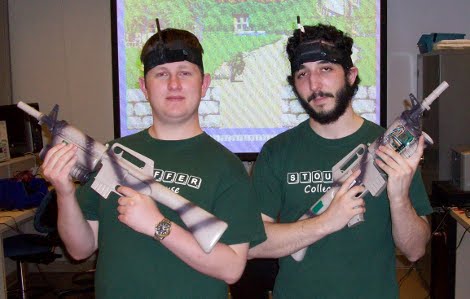
These aren’t terrorists, they’re electrical engineering students. For their final project they developed a headband and rifle input system for the NES. The controllers send data to a laptop which then maps out the inputs to NES controller commands and sends them to an original NES console, no emulation here.

The controllers in the headband and rifle are Firefly sensor network nodes. Originally, [Kevin] and [Evan] tried using accelerometers for motion information but found the data do be unreliable. After an upgrade to gyroscope modules the interface is much more responsive, as seen about 3:50 into the video after the break. We like seeing motion controller hacks and we appreciate the choice of a classic system (and lesser known game title). This really makes it a whole different game.

Continue reading “Gaming’s Newest Accessory: Headbands”

Swarm Light At Art Basel

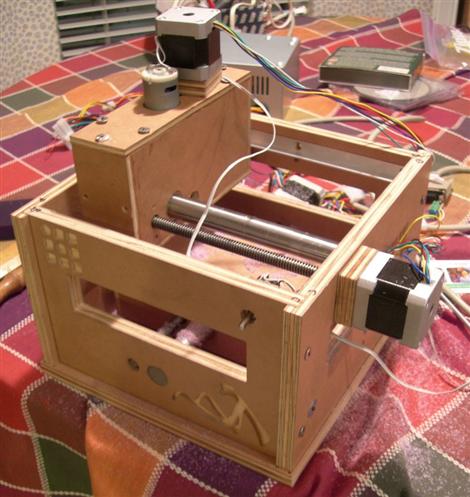
What has 9000 LEDs, 3000 MSP430 processors, six XMOS XC-2 Ethernet modules, and goes blinkity-blink-blink? It’s Swarm Light, an art installation shown at this year’s Art Basel exhibition. [Fredrik Petrini] worked on the hardware that went into building the group of three 3D cubes of LED light modules. Unlike so many art pieces we see he shared the design details of the piece. In the image above you can tell that each cube encompasses several rods of LED modules. Each rod as three rails that provide power, ground, and serial data in addition to serving as the physical structure. Each module has three LEDs on it controlled by one MSP430 processor. The XMOS units each control half of the rods in a cube, getting their instructions over an Ethernet connection from a PC running a program on a .NET framework. It would be an understatement to say this is just a upscaled LED cube. Check out the exhibit in action after the break. It uses an algorithm to analyze the music, taking input from the ambient sound in the room, to control the light fluctuation.

Continue reading “Swarm Light At Art Basel”

Tetris Code Theory Explained


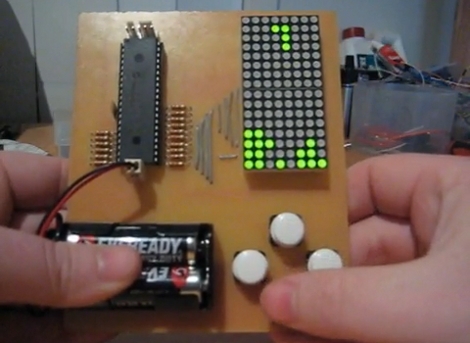
[Graham] designed this PIC based Tetris game on a single board. The hardware is quite nice but we enjoyed his explanation of the graphics algorithm that he used. Having coded Tetris from the ground up ourselves we understand how difficult it is to explain how the program works. Tracking pieces already on the board as well as moving pieces, making sure that rotation won’t cause a collision with another piece or go out-of-bounds, and looking for completed lines all add up to one bid headache.

[Graham’s] method for handling rotation involves choosing a point around which to rotate, measuring how this affects each pixel in the piece, and then checking those pixels for overlaps. It may take a couple of readings, but he’s done a brilliant job of making it understandable. There’s a demo after the break and the link at the top takes you to his treatise on Tetris. Continue reading “Tetris Code Theory Explained”