Reverse GeoCache Puzzle Gets Downsized

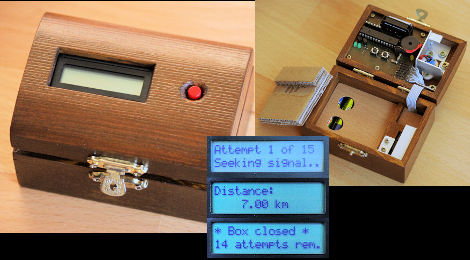
[Markus] built his own reverse geocache puzzle box but on a smaller scale than the original. His is based around a PIC 18F2520 and powered by two AAA batteries. The user interface includes one button, a 16×2 character LCD, and a piezo speaker. The box unlocks itself when the GPS module inside detects the proper location on the globe. There is also a secret code that can be tapped on the button to unlock the box prematurely, and another to show the locations in which the user attempted to open the box. This build doesn’t leave much room for a payload, but [Markus] did a great job designing the board and making the components fit as efficiently as possible.

Hackaday Links: June 20, 2010

Nixie Voltmeter Clock
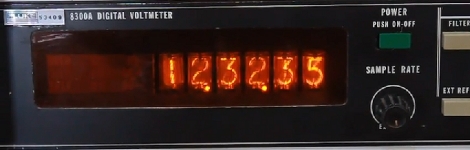
[Gmglickman] built a clock out of an old digital voltmeter. The Fluke 8300A came out in 1969 and is featured in their 60 years of innovation slideshow. What makes it a cool clock? The Voltmeter’s display is made up of Nixie tubes.

Easy optical encoder wheel generator
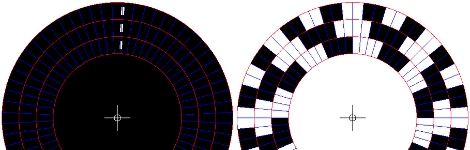
If you need to print out encoder wheels for your project there is an online tool you can use. It has almost any setting you would want to make a rotary encoder wheel.The black wheel can be used with old mouse parts and the checkered wheel with an optical sensor. [Thanks Bluewraith]

New CD without the CD

1-bit Symphony is a newly released album. It come in a CD jewel case but there’s no CD included. That’s because they’ve built a circuit to playback their music via a headphone jack. We didn’t see any info on what microcontroller was used, but we love the cleanliness of the design. This apparently isn’t the first time the artist has released an album like this either.[Thanks Juan]

Making a standard SIM work with the iPad

[Tony Million] used a standard SIM to reduce the monthly cost of using broadband on the iPad. This is the exact opposite of using the iPad SIM in an iPhone and requires that you cut down your standard SIM quite a lot. [Tony] did this because he imported his iPad to the UK from the United States and using AT&T wasn’t an option for him. [Thanks David]

16TB NAS is a thing of beauty

The Black Dwarf is a sixteen terabyte network attached storage device that looks more like a display counter for high-end hard drives. We’d usually think of this as a closet or basement dweller, but an item this gorgeously crafted deserves a place of honor in your home or office. Documenting the entire process was as complex as the build itself. We like seeing the time-lapse version. [Thanks Howard via Engadget]

Building A SuperMacro Lens

[youtube=http://www.youtube.com/watch?v=KW0cFk9d-P0]

[Lozzless] has a steady hand and plenty of confidence in his hacking skills. The video above is worth watching for the full eight minutes. In it you’ll see him convert a lens into what he calls a SuperMacro lens with a working aperture. The process involves fashioning a connector ring from a lens cap, modifying an Electro-focus lens mount, and assembling the parts to do his bidding. We don’t have the photography background to fully understand what he’s doing here, but we can appreciate the process, and the results are shown at the end of the clip.

[Thanks TommyC]

Coachella Lamp

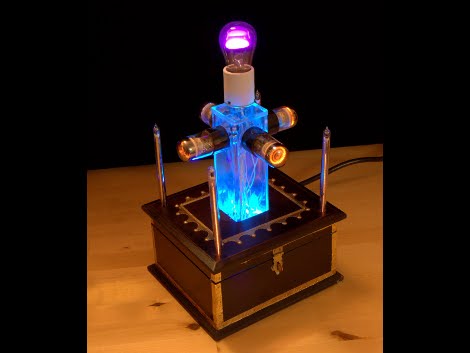
This little art piece might be just the thing to add that mad scientist look to your room. It’s called the Coachella lamp and it makes use of several throwback display devices. At the top an Argon discharge lamp puts out ultraviolet light. Protruding from each of the four sides you can see a set of decatrons. There’s also four Nixie tube bar graphs standing tall from each corner of the base. The final touch is the colored glow in the center which is provided by LEDs. We’ve embedded some video of the device after the break.

The lamp is powered by a wall outlet and controlled with an Arduino. We’ve seen deactrons used as timing devices and would love to see some clock functionality added to the lamp. Trying to decipher the time from the different Nixie displays would put this up there with some of those other hard to read timepieces.

Continue reading “Coachella Lamp”

Arc Reactor Replica

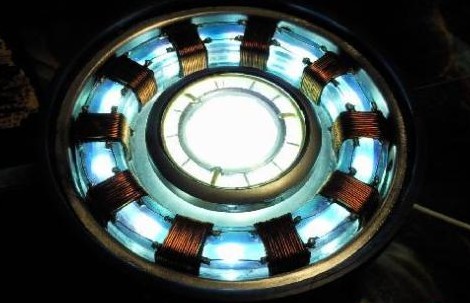
This Arc Reactor is a great re-creation of the fictional source of Iron Man’s power. It’s really just a holder for a bunch of LED’s, but it exhibits some fine craftsmanship which we enjoy in any project. This rendition is much more true to the movie than the last look-a-like we saw. These might end up being for sale (the webpage narrative is kind of weird) but you really shouldn’t be wearing this kind of thing around unless you made it yourself, or if you can add it to some kind of Iron Man simulator.

[Thanks Cr8vie]

Nerf Sentry Turret

With exams behind him [Adam Greig] had time to make a Nerf sentry gun. It’s actually quite easy to pull everything together. He’s got a netbook running Motion, an open source motion sensing program for use with a webcam. When movement is detected an Arduino, connected via a USB cable, actuates a servo to pull the trigger of the gun. The turret itself has seen a battery upgrade that increases the firing speed. It’s fun to see hardware prototyping done with a few pencils and a fist full of cable ties. Check it out after the break.

This particular toy, the Nerf N-Strike Vulcan, has become quite a popular starting point for turrent projects. We’ve seen one that uses a motorized base, and another that was part of a final project at Cornell.

Continue reading “Nerf Sentry Turret”

Candle Stop Motion: How’s It Done?

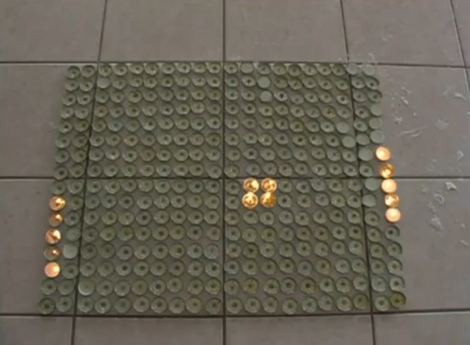
[Ollie] tipped us off about a stop motion video that uses a grid of tea candles to animate some classically pixellated game graphics. The image above is obviously a game of pong in progress. It’s interesting to watch but for us the fun is trying to decide how it’s done. Click through the break to see the video and discuss the methodology.

Continue reading “Candle Stop Motion: How’s It Done?”