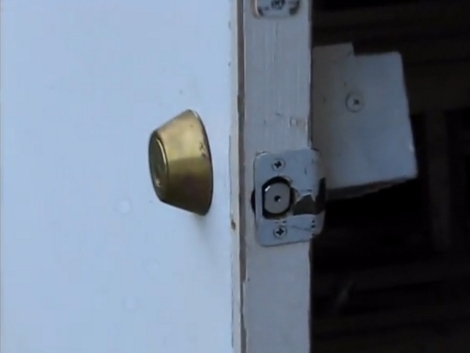
RFID Entry Uses Homemade Electronic Strike

[Fileark] built an RFID entry system that uses a pretty ingenious alternative to an electronic strike plate. An electronic strike is a rather expensive hinged plate that mounts in the door frame and catches the door latch. But this system opens a set of double doors. The door without the handle is fixed in place and has a normal strike plate. But it also has a deadbolt mounted in line with that plate. When the deadbolt is extended it is flush with the strike plate, pushing the latch from the door knob back and freeing the door to swing open. This is a bit hard to put into words so watch the video after the break to clear things up.

The system uses a cheap RFID package that provides a single signal line. This line connects to an old VCR motor which turns the deadbolt. Timing is provided by a 555 chip, and the deadbolt movement is limited by a couple of switches mounted along with the motor.

Now that the unlocking mechanism has been built it would be simple to use other authentication methods for unlocking the door, like a wristwatch-based proximity system.

Continue reading “RFID Entry Uses Homemade Electronic Strike” →

Password Exploitation Classes Online

open sesame

Irongeek.com is hosting an online class on password exploitation. The event was a fundraiser called ShoeCon, but they are hosting the entire series for everyone to share. Not only are the videos there, but you can download the powerpoint slides as well. There is a massive amount of information here on various topics like Hashcat, OCLHashcat, Cain, SAMDump2, Nir’s Password Recovery Tools, Password Renew, Backtrack 4 R1, UBCD4Win. There’s so much info, they split it into 3 sections. The videos are fairly long, between 1 and 2.5 hours each. What might surprise people is the amount of time that google is actually one of the main tools.

These videos can be a fantastic resource for hobby hackers, IT admins, and security professionals.

Revive A DockStar And Get So Much More

[Firestorm_v1] has done a fabulous writeup on not only resurrecting his dead DockStar with JTAG, but also includes some handy techniques and useful information that could be used with other hardware and JTAG equipped devices.

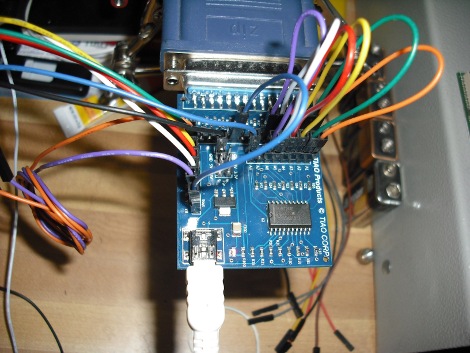
The tutorial itself goes into the details of finding the JTAG, correctly identifying the ports and making an adapter cable. Then wiring a TIAO Parallel JTAG kit and finally the flash and upload of firmware to the deceased Dockstar to give it new life.

While the fun stops a little short, we’ll be sure to keep an eye out for [Firestorm_v1’s] future plans involving these surprisingly useful (read: hackable) storage devices, “roving USB camera with WiFi” we hear?

Easy Quadrotor Helicopter Instructions

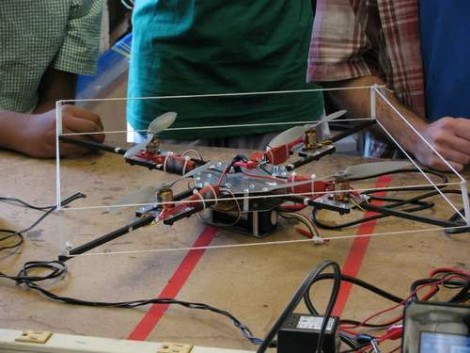
Here’s a great tutorial on building your own quadrotor helicopter. This build isn’t necessarily less expensive than others we’ve seen since quality motors, propellers, and control circuitry aren’t cheap. But the design and assembly is well documented and presents a well-planned building procedure. The carbon-fiber tubes that make up the frame have extensions to protect the motors and propellers in the event of a crash. The Arduino, IMU, and transceiver are all tucked away between two aluminum body plates as well. They only thing missing is a solid methodology for tuning the four motors, a critical procedure that is just touched up at the end of the article.

Location Tracking With Twitter And Google Maps


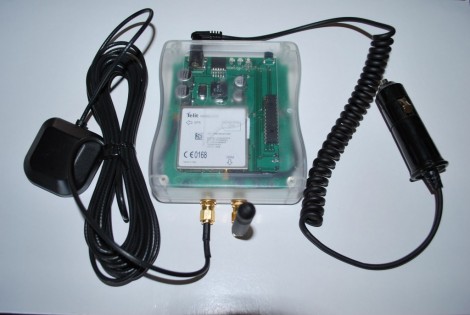
[Ryan O’Hara] built a location tracker he could use on motorcycle trips. Ostensibly this is to give his wife piece of mind be we think that was an excuse to play with GPS and SMS. To stand up to the trials of the road [Ryan] took his breadboarded prototype to the next level, using a manufactured board and a SparkFun enclosure. Tucked safely away is a PIC 18F25K20 gathering longitude and latitude from a GM862, formatting the info into a Google Maps link, and sending it to the Twitter feed via an SMS message. If you’re not familiar with the GM862, in addition to being a GPS module it can send and receive cellular data on a GSM network.

This is a nice solid hardware platform from which we can envision a couple of other hacks. The feed could be parsed to make a nice map graphic like the webpage for that Twittering Road Bike. It also might be nice to have a d-pad and character LCD to post your own tweets to the feed at the end of the day.

Steroscopic Rig Requires Only One Camera

[courtervideo] shares an instructible with us on how to build a mirror rig to take stereoscopic pictures with one camera. We’ve had the thought “couldn’t you just do that with some mirrors?” when looking at a dual camera rig. Well, as we all suspected, you can. There are some advantages here, a single click gives you your 3d image or video without any post processing, and unless you just happen to have an extra camera lying around you can save money there. You do however lose some resolution compared to two separate cameras. This setup could actually add some steps if you were wanting to interlace your images for viewing on a 3d tv.

Serial Port Controlled CPU Fan

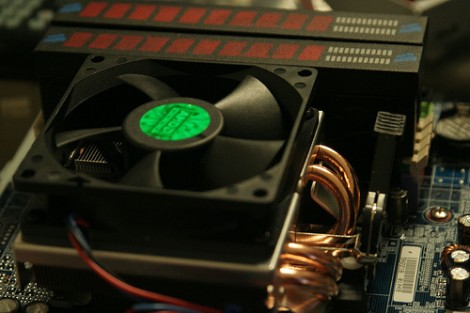
[Christian] was running a Linux box as a home server but needed a way to quiet the noisy machine. Like many Linux servers, he’s using some pretty old hardware which doesn’t have an on-board header for the CPU fan which generates much of the unwanted sound. Those headers are nice because software can monitor the CPU and board temperature and adjust the fan accordingly.

[Christian’s] solution was to use the serial port for the task. He built a small circuit in which serial pin 3 drives the base of a transistor, pin 5 provides ground, and a floppy drive power cable supplies 5 volts. From there he wrote a RUBY program to monitor the CPU temperature and generate a PWM signal on the serial port, throttling the fan speed as needed.

[CC Photo Credit: Garrette via Flickr]