Tiny Transmitters Track Monarch Butterflies

Miniaturization is one thing, but how would you like to design a transmitter that attaches to a butterfly? That’s what the BlūMorpho transmitter is made to do, according to [Tom Jokinen] writing for Be Giant. Apparently, most of these butterflies have a two- to six-week life, but periodically a “super generation” spawns and lives up to nine months. This is enough time to migrate from Canada and the United States to Mexico. In Mexico, they spend the winter, and then return when the weather is more hospitable. Scientists wanted to study this migration pattern, and the tiny transmitter is exactly what they needed.

You can even download an app to track the butterflies yourself. The transmitter looks like a tadpole and weighs 60 milligrams. There’s no battery, but there is a tiny solar cell. The transmitter emits a Bluetooth signal that your phone’s location services can relay.

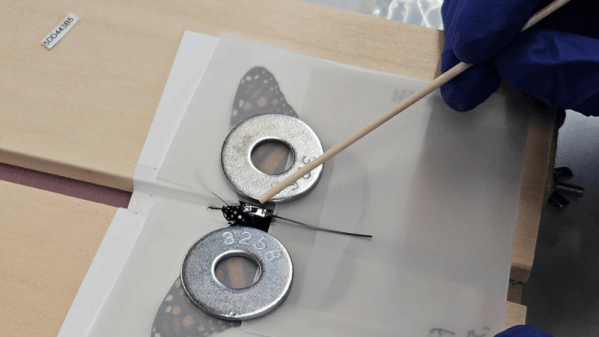
To affix the transmitter, researchers put a glassine envelope over the butterfly, weigh its wings down with something slightly heavy, and then apply eyelash glue to the transmitter. You can see the process in the video below.

What else could you do with a virtually weightless Bluetooth tracker? It is possible that dedicated tracking stations could have a longer range.

Continue reading “Tiny Transmitters Track Monarch Butterflies” →

Espresso, Meet Custom-Machined Stainless Steel Boiler

While pondering some repairs for his Gaggia Classic Pro espresso machine, [Hans Gaensbauer] ended up machining an entirely new boiler from stainless steel.

It was a nontrivial undertaking, since the boiler is an assembly that integrates not only heaters and pump connections, but one end is also the group head into which the portafilter interfaces. [Hans] had to deal with machining out the contours and pockets necessary for a portafilter to lock in securely, complete with the little screen and perforated plate responsible for even water distribution. And of course, the whole thing still has to fit into the original machine. All in all, [Hans] had some constraints to work around, making it a considerably more complex job than just milling a chamber out of a block of stainless steel.

Continue reading “Espresso, Meet Custom-Machined Stainless Steel Boiler” →

A LEGO 3D Printer

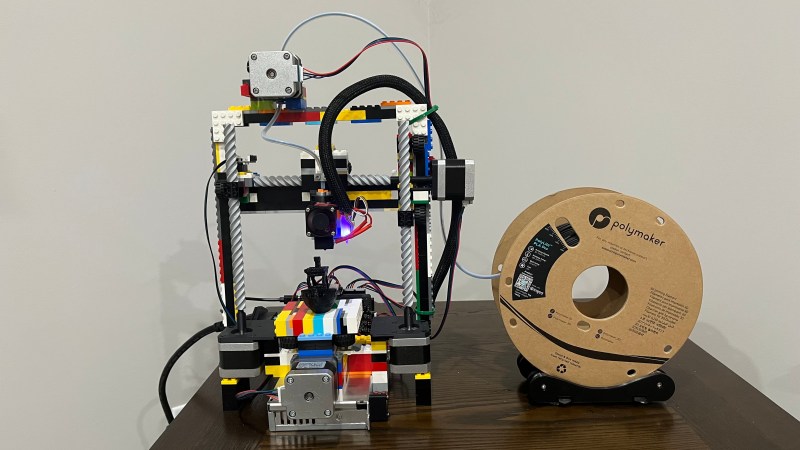
LEGO building blocks are a great toy, but every so often a hacker decides to take the little bricks outside of the toy room and make them an integral part of a build. [Adam Turaj] took that idea further than most with his Studprint, a 3D printer that’s 92% LEGO.

We aren’t just talking LEGO bricks making up part of the frame here, or even the bed — though that’s obviously the case — but [Adam] goes so far that even the motion system is using LEGO leadscrews to drive the axes of this printer. Is it particularly capable? Well, no. He’s not boasting of a remarkable bed size or high speeds here because that’s really not the point. The point is that he made a printer in LEGO and if you don’t see the fun in that, we don’t know what to tell you.

The whole project is open source, and includes the CAD files for the handful of non-LEGO bits you’ll need to mount the electronics, steppers and such. With an unheated bed of ABS bricks, you’re going to be limited in filament choices, but [Adam] has at least made a Benchy, which is all anyone really needs, right?

In light of recent work, we might suggest that the printer is also a pick-and-place machine. If you want to turn the phrase “LEGO 3D Printer” around, we have seen 3D Printed LEGO before as well. We’d be remiss not to note that this isn’t the first printer to use the ubiquitous building blocks we’ve seen, though this one keeps with the regular filament and extruder rather than hot glue like the 2013 version.

It’s Elite, For The Commodore Pet

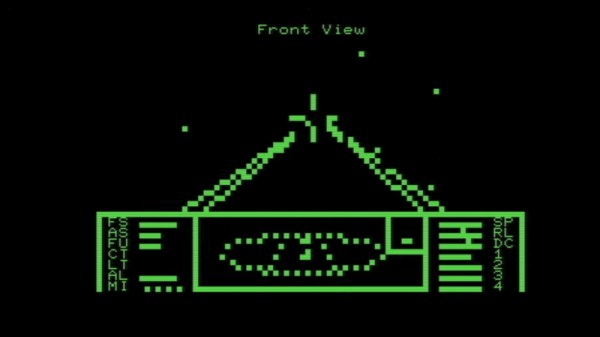
A few times in the life of someone interested in technology, there comes along something which after seeing it, you know the field is never going to be the same again. For a teenage future Hackaday writer this came in seeing Elite, on a BBC Micro. Nowadays an open world game is normal, but in the mid-1980s it was mind-blowing. Of course, such a powerful piece of software couldn’t be ported to any old computer, so owners of less capable machines were left envious of their more well-heeled friends.

It will be a surprise to Commodore Pet owners then, that over four decades later, [David Given] has ported the game to their platform. It’s not such a leap, as the Pet has the same (albeit slower) 6502 as the BBC Micro, and the game requires the Commodore machine to have 32k of memory.

So what you get is Elite, but with the Pet’s block graphics rather than the higher-resolution you’d have seen on the newer machines. He admits it doesn’t play well and that the code is something of a mess, but we suspect 32k Pet owners in 2026 won’t be too bothered by this. All the code and disk images are there in the repository, and you can see it at work in the video below the break. Meanwhile if you’re curious about the Elite codebase, you can take a look at it yourself.

Continue reading “It’s Elite, For The Commodore Pet” →

FLOSS Weekly Episode 883: Telnet Broke Us

This week Jonathan chats with Sattyam Jain about Agent Audit Kit and Agent Airlock. We’re in a brave new world, where anyone can use AI to generate an AI agent. But what keeps those builds secure? And what can we do to prevent AI jailbreaking where it matters? Listen to find out!
Continue reading “FLOSS Weekly Episode 883: Telnet Broke Us” →

Modular, 3D Printed Train Whistles For Everyone

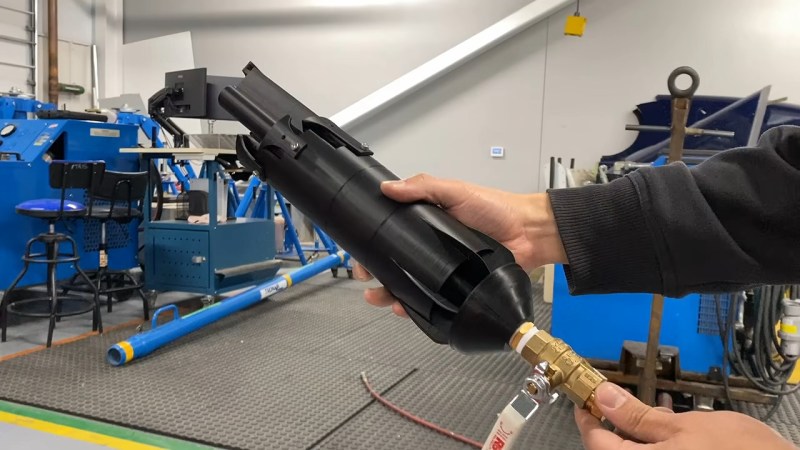
If the word “train” didn’t grab your attention, you’re probably not the target audience for this project. If it did, then there is no need to explain why [AeroKoi] has come up with a modular 3″ train whistle, available on Thingiverse and well explained in the video embedded below. It’s a train whistle. Who doesn’t want their own train whistle?

The great part of this design, aside from requiring less air than his earlier, larger-diameter iterations, is the modularity. With adjustable bell caps, you can alter the size of the resonant chamber and thus the notes the whistle plays on the fly. That’s the key difference between a train whistle, as used in the steam era, and a modern train horn — whistles use a resonant chamber, while a horn uses a diaphragm to create the vibrations we call sound. By using the movable chamber caps to change the resonance, you can go from a Santa Fe 5 chime to a B&O 3 chime whistle by matching the measurements in the handy-dandy spreadsheet [TrainArtisan] provided.

One excellent tip he gives in the video is to grease all the mating surfaces of the whistles with petroleum jelly, but it’s worth watching the whole thing on YouTube for both full build and tuning instructions, and to learn more than you ever thought you needed to know about whistles. He gets right into the physics of sound waves to explain exactly the limitations of trying to replicate the sound of brass steam whistles with plastic and compressed air. If you just want to hear a bunch of train whistles to see how well it works, jump to the ten minute mark. The disappointing part comes later, where he explains the airflow requirements: if you don’t have a compressor with a big tank, you can’t expect more than one short toot at a time.

Interestingly enough it looks like most of the whistles we’ve written about are locomotive-adjacent, including [AeroKoi]’s earlier work, and a true cast-brass replica for the purists. 

Continue reading “Modular, 3D Printed Train Whistles For Everyone” →

CHIP 8: The Pong Game’s Afoot!

Writing a computer game has always been hard. It is only the nature of the difficulty that changes. A modern game is as much about graphics, sound, and storytelling as it is about programming. But in the early days of computers, writing a game was a challenge because of limited graphics, slow CPUs, and tiny memory capacity. If you wanted to write a game for an early microcomputer, you generally wrote it in assembly language. BASIC was available on many machines, but it was usually too slow for anything requiring fast animation. Assembly language was fast, but it was also difficult to write, debug, and port to another machine.

RCA — in particular [Joseph Weisbecker], the architect of the 1802 — introduced the COSMAC VIP into the primordial 1977 home video game market. In addition to using ready-made games, the idea was that you could create your own. But writing games in 1802 assembly language would be beyond most of RCA’s customers. [Weisbecker] devised CHIP-8, a tiny virtual machine. It wasn’t quite a programming language. Instead, it was a simple instruction set implemented by an interpreter running on a real computer. You wrote programs for the imaginary CHIP-8 processor, and the interpreter made them run on the actual hardware. CHIP-8 is perfect for the kind of games you’d see in those days and still has a following among those who love retro games. Continue reading “CHIP 8: The Pong Game’s Afoot!” →