Fail Of The Week: Hard Lessons In 3D-Printed Bushings For A Giant RC Car

Can you turn 47 pounds (21 kg) of PLA filament into a gigantic working 3D-printed RC car? No, no you can’t — at least not if you eschew proper bearings in favor of printed bushings.

That’s the hard lesson that [Joel Telling] learned with his scaled up version of the OpenRC F1 car, an RC car that can be mostly 3D-printed. The small version still has its share of non-printed parts, mainly screws and bearings. In his video series documenting the build of the upsized version, [Joel] elaborates on some of the reasons for going with printed bushings rather than bearings, which mainly boil down to hoping that the graphite lubricant powder he added would reduce friction enough to prevent the parts from welding themselves together.

The car came out looking great, and even managed to scoot about nicely for a few seconds before its predictably noisy and unhappy demise. But what was unexpected was the actual failure mode. The plastic-on-plastic running gear seemed to handle the rolling loads fine; it was the lateral force exerted on the axle by the tension of the drive belt that was too much for the printed bushing to bear.

As [Joel] rightly points out, it’s only a failure if you fail to learn something, so kudos to him for at least giving this a try. And all that PLA won’t go to waste, of course — everything else on the car worked fine, so adding one bearing should get it back on the road. He should check out our primer on bearings for a few tips on selecting the right one.

Continue reading “Fail Of The Week: Hard Lessons In 3D-Printed Bushings For A Giant RC Car”

Oh The Lessons You’ll Learn By Building A Robot Familiar

A familiar spirit, or just a familiar, is a creature rumored to help people in the practice of magic. The moniker is perfect for Archimedes, the robot owl built by Alex Glow, which wields the Amazon Google AIY kit to react when it detects faces. A series of very interesting design choices a what really gives the creature life. Not all of those choices were on purpose, which is the core of her talk at the 2018 Hackaday Superconference.

You can watch the video of her talk, along with an interview with Alex after the break.

Continue reading “Oh The Lessons You’ll Learn By Building A Robot Familiar”

Hackaday Links Column Banner

Hackaday Links: Christmas Eve Eve, 2018

The entirety of Silicon Valley is predicated on the ability to ‘move fast and break laws’. Have an idea for a scooter startup? No problem, just throw a bunch of scooters on the curb, littering and e-waste laws be damned. Earlier this year, Swarm Technologies launched four rogue satellites on an Indian rocket. All commercial satellite launches by US companies are regulated by the FCC, and Swarm just decided not to tell the FCC. This was the first unauthorized satellite launch ever. Now, Swarm has been fined $900k. Now that we know the cost of launching unauthorized satellites, so if you’ve got a plan for a satellite startup, the cost for an unauthorized launch is a bit more than $200k per satellite. Be sure to put that in your budget.

Santa Claws! Liberty Games would like to donate to a charity this holiday season, but you can’t just write a check. That’s not fun. Instead, they connected a claw machine to the Internet, and anyone can play it. Setting up a webcam was easy enough, but they also had to move the claw and press the button over the Internet. A Raspberry Pi came to the rescue.

Tomorrow is the 50th anniversary of Apollo 8, mankind’s first trip beyond Earth orbit. Now, using Lunar Reconnaissance Orbiter data, NASA has reconstructed the famous ‘Earthrise’ photo taken by the crew. It’s in 4K, and we’re getting a great diagram of what pictures were taken when, through which window.

It’s that time of year again, and the 176th Air Defense Squadron is on high alert. This squadron, based out of Joint Base Elmendorf-Richardson in Anchorage, Alaska has the AWACS in the air, on patrol, just waiting for the inevitable. You can take a look at their progress here, and please be sure to keep our service members in your thoughts this holiday season.

Show off your sculpture skills with small bits of wire! Get the blowtorch out because copper work hardens! [Roger] can’t enter the Circuit Sculpture contest, but he did manage to give a body to one of the Tindie heads.

Radio Gets Ridiculous

There were plenty of great talks at this year’s Supercon, but we really liked the title of Dominic Spill’s talk: Ridiculous Radios. Let’s face it, it is one thing to make a radio or a computer or a drone the way you are supposed to. It is another thing altogether to make one out of things you shouldn’t be using. That’s [Dominic’s] approach. In a quick 30 minutes, he shows you two receivers and two transmitters. What makes them ridiculous? Consider one of the receivers. It is a software defined radio (SDR). How many bits should an SDR have? How about one bit? Ridiculous? Then you are getting the idea.

Dominic is pretty adept at taking a normal microcontroller and bending it to do strange RF things and the results are really entertaining. The breadboard SDR, for example, is a microcontroller with three components: an antenna, a diode, and a resistor. That’s it. If you missed the talk at Supercon, you can see the newly published video below, along with more highlights from Dominic’s talk.

Continue reading “Radio Gets Ridiculous”

Linux Fu: Share Terminal In Browser

The title of this post says it all: GoTTY is a program that lets you share Linux terminal applications into a web browser. It is a simple web server written in Go that runs a non-GUI program and can push it out a socket in such a way that a browser can display it and, optionally, let the user interact with it.

With the emphasis on security these days, that ought to alarm you. After all, why would you want a shell running in a browser? Hang on, though. While that is possible — and not always undesirable — the real value to this technique is to run a specific command line program in a browser window. Here’s a use case: You want users to remotely monitor a system using top (or htop, if you are fancy). But you don’t want users logging into the system nor do you want to require them to have ssh clients. You don’t want to install monitoring tools, just use what you already have.

If you could get the output from top to show up in a browser window — even if the users had no ability to input — that would be an easy solution. Granted, you could just run top in batch mode, collect the output, and write it somewhere that a web server could find it. Assuming you have a web server installed, of course. But then what if you did want some other features like taking command line options or having the option for (hopefully) authenticated users to interact with the software? Now that would be more complicated. With GoTTY, it is easy.

Continue reading “Linux Fu: Share Terminal In Browser”

Kitty Yeung On Tech-Fashion Designs And The Wearables Industry

If there is a field which has promise verging on a true breakout, it is that of wearable electronics. We regularly see 3D printing, retrocomputing, robotics, lasers, and electric vehicle projects whose advances are immediately obvious. These are all exciting fields in which the Hackaday community continually push the boundaries, and from which come the astounding pieces of work you read on these pages daily. Of course the projects that merge textiles and electronics are pushing boundaries in the same way, except for that it’s often not obvious at first glance. Why is that?

Wearables are a field in which hard work and ingenuity abound, but pulling off the projects that stand out and go beyond mere ordinary garments adorned with a few twinkly LEDs or EL wire is hard. Wearables have a sense of either still seeking its killer application or its technological enabler, and it was this topic that physicist, textilist, and artist Kitty Yeung touched upon in her talk at the recent Hackaday Superconference.

Continue reading “Kitty Yeung On Tech-Fashion Designs And The Wearables Industry”

Seeing Like Bees With Ultraviolet Photography

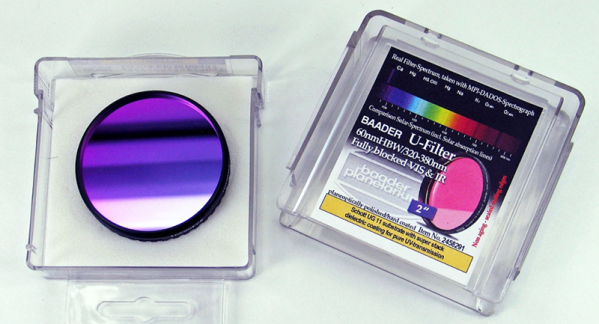
When it comes to seeing in strange spectrums, David Prutchi is the guy you want to talk to. He’s taken pictures of rocks under long, medium and short UV light, he’s added thermal imaging to consumer cameras, and he’s made cameras see polarization. There’s a lot more to the world than what the rods and cones on your retina can see, and David is one of the best at revealing it. For this year’s talk at the Hackaday Superconference, David is talking about DIY Ultraviolet Photography. It’s how bees see, and it’s the bees knees.

Continue reading “Seeing Like Bees With Ultraviolet Photography”