Listen To The Globe

There was a time when electronic hackers (or hobbyist, enthusiasts, geeks, or whatever you want to be called) were better than average at geography. Probably because most of us listened to shortwave radio or even transmitted with ham radio gear. These days, if you try listening to shortwave, you have to be pretty patient. Unless you want to hear religious broadcasters or programming aimed at the third world, there’s not much broadcast traffic to listen to anymore

The reason, of course, is the Internet. But we’ve often thought that it isn’t quite the same. When you tuned in London on your homebrew regenerative receiver, you wanted to know where that voice was coming from, and you couldn’t help but learn more about the area and the people who live there. Tune into a BBC live stream on the Internet, and it might as well be any other stream or podcast from anywhere in the world.

The New Shortwave

Maybe we need to turn kids on to Radio Garden. Superficially, it isn’t a big deal. Another catalog of streaming radio stations. You can find plenty of those around. But Radio Garden has an amazing interface (and a few other unique features). That interface is a globe. You can see dots everywhere there’s a broadcast station and with a click, you are listening to that station. The static and tuning noises are a nice touch.


Continue reading “Listen To The Globe”

Hackaday Links: The 2017 One

You screwed everything up last night. The end of 2016 had a leap second, so instead of the seconds going up from 57, 58, 59… 00, there was a 61st second in the last minute of the year. Yeah, 2016 just wouldn’t quit. [Michel] built a device to keep track of 2016’s leap second using GPS, and everything worked beautifully.

Remember MechWarrior? There’s a reason those mid-90s games used mechs instead of more organic characters. Computers couldn’t draw that many polygons, making MechWarrior a stylistic choice driven by the limitations of technology. Here’s a real MechWarrior that could rip your head off without trying.

The Hackaday Retro Edition is a Web 1.0 version of our main blog, and a challenge to retrocomputing enthusiasts. [PK] recently got his Psion Series 3a surfing the interwebs with a little help from PPP and a Raspberry Pi. He also got a Psion Series 7 online using the same method, but that was a little more anti-climatic.

The NES Classic Edition costs too much, the cords are too short, and you can’t play anything but the pre-installed games. There’s a solution to this: [Andrew] has been working on the Beagle Entertainment System for a while now, and it’s ready for a proper release. The BES uses the SNES9X, VBA-M, and Nestopia emulators, with the original ROMs, and has a ‘shield’ for SNES gamepads. You can’t do better than this, and it’s cheaper than the NES Classic Edition.

Vacuum pens, or vacuum pickup tools, or whatever you want to call them, are really useful when working with SMD parts. You can build your own out of an aquarium pump, duct tape, a lighter, paperclip, and a mechanical pencil, but that lacks the elegance of a footswitch-operated, solenoid valve pickup tool. [Dave] built a great version of a vacuum pickup tool from scratch for less than $200. There’s NTP fittings on here, so you know it has to be great.

fundungeonTerrible news! I’m in Vegas next week for CES. While I’ll be spending most of my time figuring out ‘which internet of things is best internet of things’, I might have some time for a Hackaday CES meetup.

The best idea I have for a Hackaday CES meetup is the Fun Dungeon in the Trashy Castle. It has Skee Ball and Crazy Taxi. If you have a better idea of where Hackaday fans and aficionados can meet up for an hour or two, leave a note in the comments below.

Mike Szczys On The State Of The Hackaday

Hey, that’s me! I had the honor of giving a talk at the Hackaday SuperConference in November about our editorial direction over the past year and looking towards the next. At any given time we have about 20-25 people writing articles for Hackaday. We depend on their judgment, experience, and skill to keep Hackaday fresh. It would be wonderful if you would join me in thanking all of the writers and editors for a great year by leaving your well-wishes in the comments.

Take a look at the video of the talk, then join me below for a few more thoughts.

Continue reading “Mike Szczys On The State Of The Hackaday”

Fail Of The Week: How I Killed The HiPot Tester

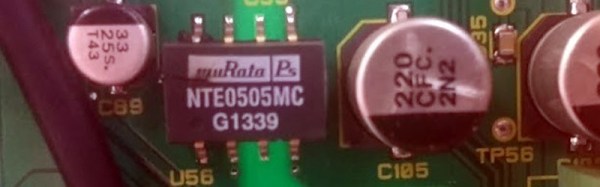
Have you ever wired up a piece of test equipment to a circuit or piece of equipment on your bench, only to have the dreaded magic smoke emerge when you apply power? [Steaky] did, and unfortunately for him the smoke was coming not from his circuit being tested but from a £2300 Clare H101 HiPot tester. His write-up details his search for the culprit, then looks at how the manufacturer might have protected the instrument.

[Steaky]’s employer uses the HiPot tester to check that adjacent circuits are adequately isolated from each other. A high voltage is put between the two circuits, and the leakage current between them is measured. A variety of tests are conducted on the same piece of equipment, and the task in hand was to produce a new version of a switch box with software control to swap between the different tests.

This particular instrument has a guard circuit, a pair of contacts that have to be closed before it will proceed. So the switch box incorporated a relay to close them, and wiring was made to connect to the guard socket. At first it was thought that the circuit might run at mains voltage, but when it was discovered to be only 5V the decision was made to use a 3.5mm jack on the switch box. Inadvertently this was left with its sleeve earthed, which had the effect of shorting out a DC to DC converter in the HiPot tester and releasing the smoke. Fortunately then the converter could be replaced and the machine brought back to life, but it left questions about the design of the internal circuit. What was in effect a logic level sense line was in fact connected to a low current power supply, and even the most rudimentary of protection circuitry could have saved the day.

We all stand warned to be vigilant for this kind of problem, and kudos to [Steaky] for both owning up to this particular fail and writing such a good analysis of it.

Our Fail Of The Week series has plenty to entertain the reader who is not of a nervous disposition. This isn’t the first fail to feature a suspect bit of connector wiring, not an unexpected short or even some magic smoke.

Open Source Art Encourages Society To Think Inclusively

Kate Reed has a vision for elevating the less talked about parts of ourselves, and of society. Through her art, she wants people to think about a part of themselves that makes them feel invisible, and to anonymously share that with the community around them. The mechanism for this is Invisible, a campaign to place translucent sculptures in public places around the world. The approach that she has taken to the project is very interesting — she’s giving the art away to empower the campaign. Check out her talk from the Hackaday SuperConference.

Continue reading “Open Source Art Encourages Society To Think Inclusively”

In Defense Of The Electric Chainsaw

Here at Hackaday we are a diverse bunch, we all bring our own experience to the task of bringing you the best of the hardware scene. Our differing backgrounds were recently highlighted by a piece from my colleague [Dan] in which he covered the teardown of a cordless electric chainsaw.

It was his line “Now, we’d normally shy away from any electric chainsaw, especially a cordless saw, and doubly so a Harbor Freight special“. that caught my eye. I’m with him on cordless tools which I see as a cynical ploy from manufacturers to ensure 5-yearly replacements, and I agree that cheap tools are a false economy. But electric chainsaws? Here on this small farm, they’re the saw of choice and here’s why.

Continue reading “In Defense Of The Electric Chainsaw”

Ken Shirriff Takes Us Inside The IC, For Fun

[Ken Shirriff] has seen the insides of more integrated circuits than most people have seen bellybuttons. (This is an exaggeration.) But the point is, where we see a crazy jumble of circuitry, [Ken] sees a riddle to be solved, and he’s got a method that guides him through the madness.

In his talk at the 2016 Hackaday SuperConference, [Ken] stepped the audience through a number of famous chips, showing how he approaches them and how you could do the same if you wanted to, or needed to. Reading an IC from a photo is not for the faint of heart, but with a little perseverance, it can give you the keys to the kingdom. We’re stoked that [Ken] shared his methods with us, and gave us some deeper insight into a handful of classic silicon, from the Z80 processor to the 555 timer and LM7805 voltage regulator, and beyond.

Continue reading “Ken Shirriff Takes Us Inside The IC, For Fun”