Electric Truck Sets Racing Record

The 24 Hours of Le Mans races is an extremely prestigious endurance motorsport event which attracts the best cars and drivers from around the world. It’s one of the longest-running races too, taking place once a year since 1923 (with a few obvious understandable gaps). But, like most motorsports, it’s financially out of reach for most people. One of the more popular attempts to bring racing to the masses has been the 24 Hours of Lemons races, which have price limits on vehicles to keep the barrier to entry low, and an EV truck recently entered one of these races with some interesting results.

The group behind this vehicle is called Team Arcblast, who retrofitted an old Datsun pickup truck to the extreme to enter this race. The modestly sized electric motor is installed in between the cab and the bed for easy access to the driveshaft, with the engine bay repurposed for all of the cooling and radiators needed for endurance racing like this. They’ve also equipped the truck with plenty of efficiency-increasing spoilers and other aerodynamic parts, and rebuilt the cab with not only the required roll cage and other safety equipment, but a modified driving position with steering and other components from various Miatas.

The most impressive part of this build, however, is the battery. The team invented a method of swapping out batteries quickly to avoid having to fast charge the car in the pit area. The system lets a battery slide in to the middle of the truck above the motor and quickly connect to the electrical system allowing for very quick pit stops and the ability to charge other batteries while the race goes on. All of these modifications together allowed the team to break the EV record for a Lemons race.

For a Lemons race, though, even this truck stretches the original spirit that these races were started, however impressive the build. We published a primer to these types of races a while back which includes much more affordable internal combustion options.

Thanks to [JohnU] for the tip!

Continue reading “Electric Truck Sets Racing Record”

Nissan Shuts Down NissanConnect App For Older Leaf EVs

Back in late February Nissan Leaf owners began to receive messages from Nissan informing them that the remote features in their cars would cease operation as the NissanConnect app would drop support for Leaf EVs produced before 2020 as well as eNV200 vehicles that were produced until 2022. The indicated cut-off date was March 30, giving affected users about a month to come to terms with the fact that their vehicle would soon to losing any and all remote control features.

What this highlights is an increasingly pertinent question when it comes to ‘connected cars’, which feature a built-in wireless modem to provide a range of additional features. These require access to a remote server for even simple remote features like controlling the charging process or turning on the heating. This has left many Leaf users rather dissatisfied.

While for such basic remote features you could make the argument that they’re just silly convenience features that do not affect the car’s functionality, modern cars are increasingly becoming reliant on such remote features, including for things like navigation and checking subscriptions for features like heated seats.

Increasingly it would seem that we’re looking at the Car-as-a-Service (CaaS) model being implemented.

AI For The Skeptics: Pick Your Reasons To Be Excited

It’s odd being a technology writer in 2026, because around you are many people who will tell you that your craft is outdated. Like the manufacturers of buggy-whips at the turn of the twentieth century, the automobile (in the form of large language model AI) is on the market, and your business will soon be an anachronism. Adapt or go extinct, they tell you. It’s an argument I’ve found myself facing a few times over the last year in my wandering existence, and it’s forced me to think about it. What are the reasons everyone is excited about AI and are those reasons valid, what is there to be scared of, and what are the real reasons people should be excited about it?

If We Gotta Take This Seriously, How Can We Do It?

A couple in a horse drawn buggy, circa 1900ish
The futures looking bright in the buggy-whip department! Public domain.

I’ll start by repeating my tale from a few weeks ago when I asked readers what AI applications would survive when the hype is over. The reaction of a friend with decades of software experience on trying an AI coding helper stuck with me; she referenced her grandfather who had been born in rural America in the closing years of the nineteenth century, and recalled him describing the first time he saw an automobile. I agree with her that this has the potential to be a transformative technology, and while it’s entertaining to make fun of its shortcomings as I did three years ago when the idea of what we now call vibe coding first appeared, it’s already making itself useful in some applications. Simply dismissing it is no longer appropriate, but equally, drinking freely of the Kool-Aid seems like joining yet another hype bandwagon that will inevitably derail. A middle way has to be found. Continue reading “AI For The Skeptics: Pick Your Reasons To Be Excited”

Intel 486 Support Likely To Be Removed In Linux 7.1

Although everyone’s favorite Linux overlord [Linus Torvalds] has been musing on dropping Intel 486 support for a while now, it would seem that this time now has finally come. In a Linux patch submitted by [Ingo Molnar] the first concrete step is taken by removing support for i486 in the build system. With this patch now accepted into the ‘tip’ branch, this means that no i486-compatible image can be built any more as it works its way into the release branches, starting with kernel 7.1.

No mainstream Linux distribution currently supports the 486 CPU, so the impact should be minimal, and there has been plenty of warning. We covered the topic back in 2022 when [Linus] first floated the idea, as well as in 2025 when more mutterings from the side of [Linus] were heard, but no exact date was offered until now.

It remains to be seen whether 2026 is really the year when Linux says farewell to the Intel 486 after doing so for the Intel 386 back in 2012. We cannot really imagine that there’s a lot of interest in running modern Linux kernels on CPUs that are probably older than the average Hackaday reader, but we could be mistaken.

Meanwhile, we got people modding Windows XP to be able to run on the Intel 486, opening the prospect that modern Windows might make it onto these systems instead of Linux in the ultimate twist of irony.

In Space (Probably) Everyone Can Hear You.. Well, You Know

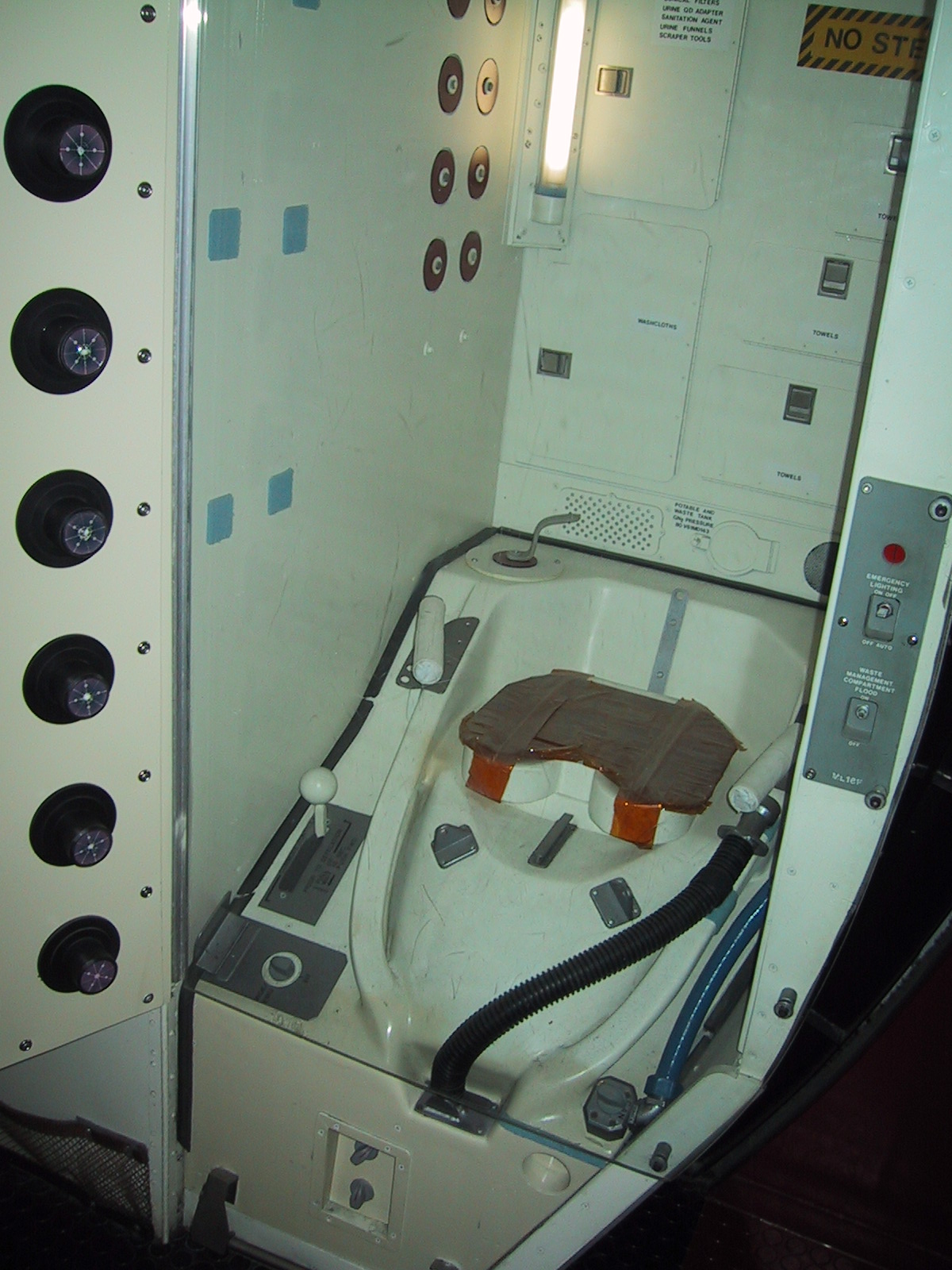
The news is full of reports from the moon-bound Integrity, otherwise known as Artemis II. Mostly, the news is good, but there has been one “Houston, we have a problem…” moment. The space toilet, otherwise known as the Universal Waste Management System or UWMS is making a burning smell while in use. While we would love to be astronauts, we really don’t want to go ten days without using the can, and it made us wonder how, exactly, the astronauts answered the call of nature.

The Old Days

Back in the Apollo-era, going to the bathroom was a messy business. The capsule wasn’t that big, and there were no women on board. So you simply strapped an adhesive-rimmed bag or tube to yourself and answered nature’s call with your two closest coworkers right there.

Space Shuttle facilities (by [Svobodat] CC BY-SA 3.0)
To add insult to injury, the “#2 bags” needed some packet mixed in to keep it from going bad in the bag before it could return to Earth for — no kidding — scientific study.

The system was far from perfect. Apollo 8 and Apollo 10 both had to do some housekeeping due to leaky bags.

Astronaut Ken Mattingly reportedly said, “Man, one of the feats of my existence the other day was, in 42 minutes, I strapped on a bag, went out of both ends, and ate lunch…. I used to want to be the first man to Mars. This has convinced me that, if we got to go on Apollo, I ain’t interested.”

Still, it was better than the first Mercury launch, where Alan Shepard famously relieved himself in his spacesuit while sitting on the pad for over eight hours. Later missions used hoses.

Things got slightly better with Skylab, where there was more room. The Shuttle also had a toilet. You got a curtain for privacy, but you couldn’t go #1 and #2 at the same time. Also, apparently, the contraptions were not easily workable for females.

Continue reading “In Space (Probably) Everyone Can Hear You.. Well, You Know”

Despite Penalties, Lawyers Can’t Stop Using AI

Despite a few high-profile cases in recent years with lawyers getting caught using LLM-generated documents and facing disciplinary action due to this, it would seem that this is not deterring many other lawyers from following them off this particular cliff, per reporting from NPR.

We reported back in the innocent days of 2023 about the amusing case of Robert Mata v. Avianca, Inc. In this case, the plaintiff’s lawyer decided to have ChatGPT ‘assist’ with the legal filing, which ended up being filled with non-existent cases being cited, despite the chatbot’s assurance that these were all real cases. Now it would seem that this blind trust in cases cited by LLM chatbots is becoming the rule, rather than the exception.

Last year a record number of lawyers fell into the same trap, with many lawyers getting fined thousands of dollars for confabulated case citations. According to a researcher at the business school HEC Paris, who is keeping a worldwide tally, the count so far is 1,200, of which 800 originate from US courts.

Unsurprisingly, penalties are also increasing in severity, with monetary penalties passing the $100,000 and some courts demanding that any use of ‘AI’ be declared up-front. Whether or not the popularity of LLM chatbots among US lawyers is simply due to the massive caseload that digging through cases in Common Law legal systems entails has not yet been addressed, but that undesirable shortcuts are being taken is undeniable.

Remember that it’s easy to point and laugh, but the next case could involve the lawyer handling your delicate situation.

The Raspberry Pi 4 With 3 GB RAM Is No Joke

Raspberry Pi 5 price increases. (Credit: Jeff Geerling)

Although easily dismissed by some as another cruel April Fools joke, Raspberry Pi’s announcement of a new 3 GB model of the Raspberry Pi 4 along with (more) price increases for other models was no joke. Courtesy of the ongoing RAMpocalypse, supplies of LPDDR4 and LPDDR5 are massively affected, leading to this new RPi 4 model with two 1.5 GB LPDDR4 chips, as these are apparently cheaper to source.

Affected in this latest price increase across RP’s product range are RPi 4 and 5 models with 4 or more GB of RAM, with price bumps ranging from $25 on the low end to $150 for the Raspberry Pi 500+. If you wanted a Raspberry Pi 5 with 16 GB of RAM, you’re now paying $300 for the privilege.

Obviously, this news has got people like [Jeff Geerling] rather down in the dumps, essentially stating that using SBCs like the RPi is now beyond the means of many hobbyists. While you can still use SBCs that use e.g. LPDDR2 RAM, such as the older RPi Zero, 2 and 3 models, [Jeff] himself is now moving more towards wrangling with snakes on MCUs, as these boards are so far not significantly affected in terms of price.

With current projections in the RAM market being that this year will still see more price increases, it remains hard to tell exactly how ‘temporary’ this situation will be. That said, using readily available, powerful and cheap MCUs like the ESP32 variants for projects isn’t a bad idea if you really don’t need to be running more than perhaps FreeRTOS.

Continue reading “The Raspberry Pi 4 With 3 GB RAM Is No Joke”