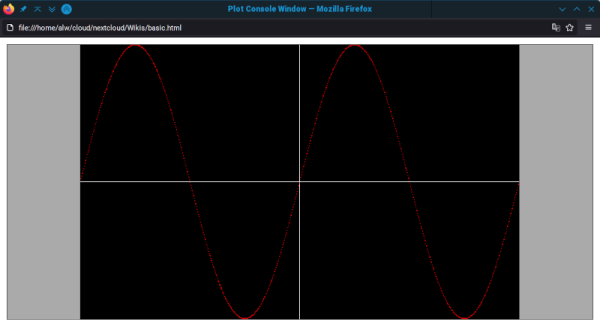
If you are a certain age or just like retrocomputers, you probably have a soft spot for good old-fashioned BASIC. If you miss those days but don’t want to install a modern interpreter, you don’t have to. Just load a web page containing the “BASIC Anywhere Machine” from [CJ Veniot]. Worried about it being “in the cloud?” It isn’t? It runs in your browser, and if you are a TiddlyWiki fan, it will even live inside your Wiki, which you can host as you please.
The project has lots of features, including some integration back into TiddlyWiki, which we haven’t tried. But you can use graphics commands, work with the mouse, and do other fun things.
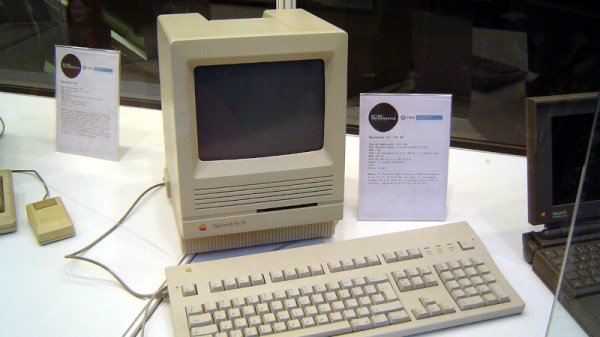
The Mac SE and in particular the Mac SE/30 number among the more sought-after of the classic all-in-one Apple computers, and consequently their peripherals including network cards are also hard to find and pricey. Even attempts at re-creating them can be expensive, usually because the chips used back in the day are now nearly unobtainable. But if the search is widened to other silicon it becomes possible to create substitutes, as [Richard Halkyard] is doing with a modern version of the SE Ethernet card.
The chip which makes this possible is the Microchip ENC624J600, an embedded 10/100 Ethernet controller with an impressively configurable interface that can be easily mated to the 68k bus. For The SE it’s mapped to a memory area, while for the /30 there can be a declaration ROM which informs the machine where it is.
This is an as yet unfinished project, a work in progress. But it deserves to succeed, and if we can provide encouragement by featuring it here then it’s definitely worth a look. Or course, this is by no means the only replacement for an original board.
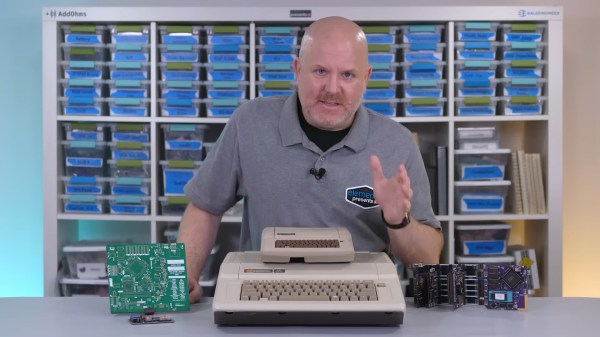
Here at Hackaday, we love living in a future with miniaturized versions of our favorite retrocomputers. [James Lewis] has given us another with his fully functional Apple IIe from the Mega II chip.
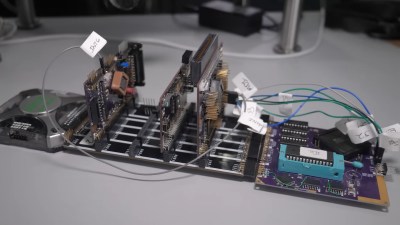
When we last checked in on the Mega IIe, it was only just booting and had a ways to go before being a fully functional Apple II. We really love the modular dev board he designed to do the extensive debugging required to make this whole thing work. Each of the boards is connected with jumper pins, which [Lewis] admits would have been better as edge connectors since he should’ve known he’d be unplugging and replugging them more than he’d like.
This modular prototyping system paid dividends late in the project when a “MEGA bug” threatened the stability of the entire system. Since it was confined to the keyboard PCB, [Lewis] was able to correct the error and, swapping for the third revision of the board, everything that had been crashing the system now ran.
There were still some issues going to the final unified PCB that nearly made him give up on the project, but perseverance paid off in the end. Combining vintage chips and multiple RP2040s isn’t for the feint of heart.
Now that you have a more conveniently-sized Apple II, why not teach it some new tricks like digital photography or ChatGPT?
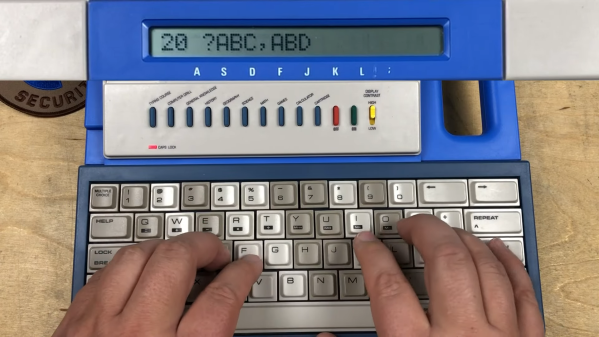
The VTech PreComputer 1000 is a rather ancient toy computer that was available in the distant misty past of 1988. It featured a keyboard and a variety of simple learning games, but does it also feature Microsoft BASIC? [Robin] of 8-Bit Show and Tell dove in to find out.
Officially, the PreComputer was programmable in a form of BASIC, referred to by VTech as PRE-BASIC V1.0. Given that the system has a Z80 CPU and there’s little information in the manual about this programming language, [Robin] was suspicious as to whether it was based on Microsoft BASIC-80. Thus, an examination was in order to figure out just how this BASIC implementation worked, and whether it shared anything with Microsoft’s own effort.
We won’t spoil the conclusions, but there are some strong commonalities between VTech’s BASIC and Microsoft’s version from this era. The variable names in particular are a strong hint as to what’s going on under the hood. The video is worth a watch for anyone that’s a fan of early microcomputer history, BASIC, or just the weird computer-like devices of yesteryear. We also love the idea that the PreComputer 1000 was actually quite a capable machine hiding behind a single-line LCD display.
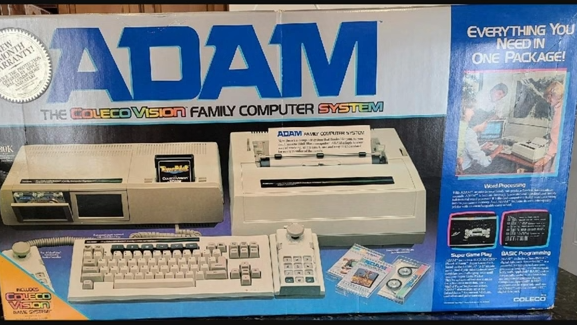
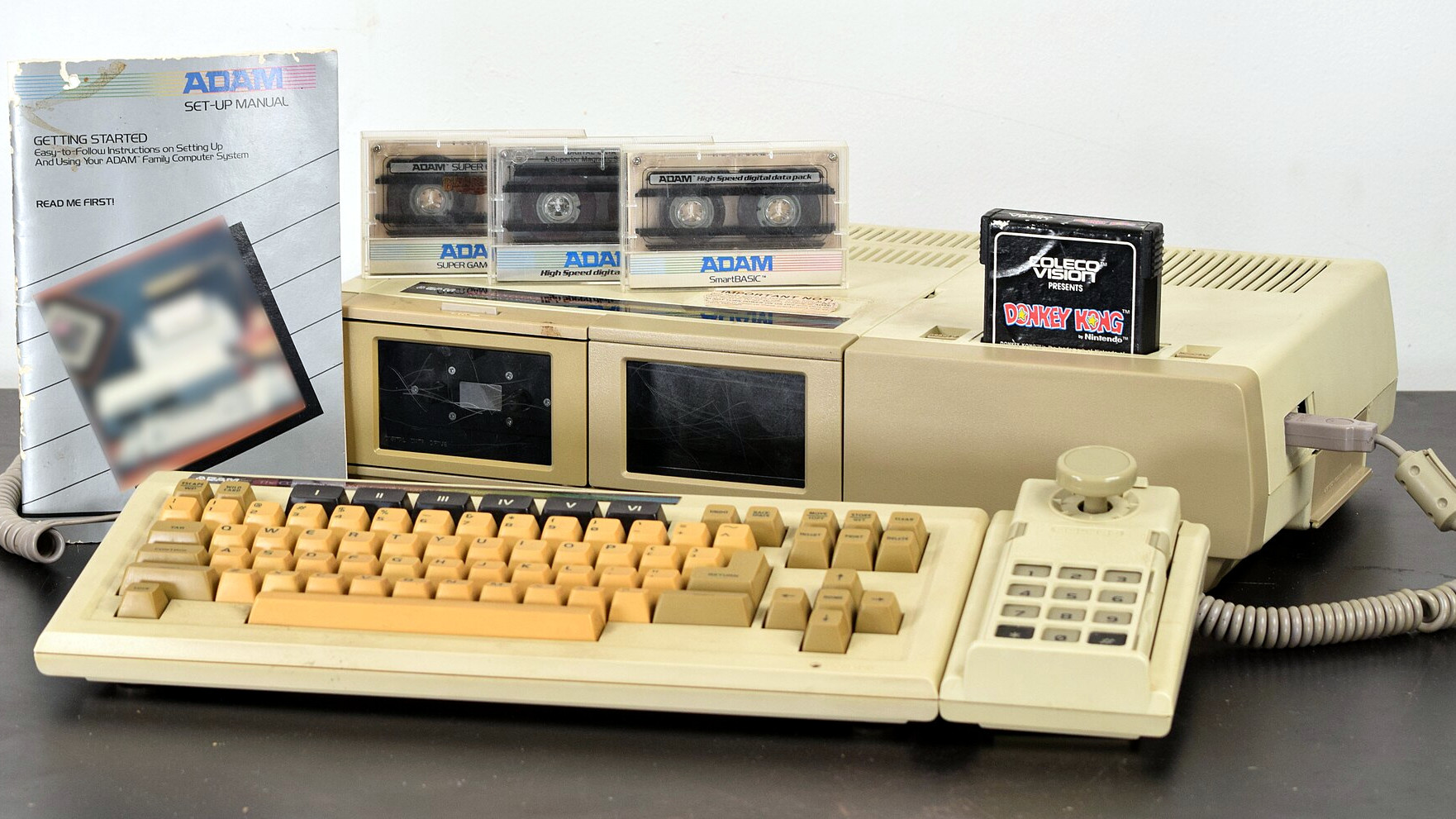
[Thom Cherryhomes] shared with us an incredible resource for anyone curious about the Coleco Adam, one of the big might-have-been home computers of the 80s. There’s a monstrous 4-hour deep dive video (see the video description for a comprehensive chapter index) that makes a fantastic reference for anyone wanting to see the Coleco Adam and all of its features in action, in the context of 8-bit home computing in the 80s.
[Image by Akbkuku, CC BY 4.0]The Adam aimed to be an all-in-one computer package, targeting a family audience for both education and gaming purposes, with a price target around $600, a pretty compelling pitch.
The video is a serious in-depth look at the Adam, providing practical demonstrations of everything in various scenarios. This includes showcasing commercials from the period, detailing the system’s specs and history, explaining the Adam’s appeal, discussing specific features, comparing advertisement promises to real costs, and giving a step-by-step tutorial on how to use the system. All of the talk notes are available as well, providing a great companion to the chapter index.
Manufactured by the same Coleco responsible for the ColecoVision gaming console, the Adam had great specs, a great price, and a compelling array of features. Sadly, it was let down badly at launch and Coleco never recovered. However, the Adam remains of interest in the retrocomputing scene and we’ve even seen more than one effort to convert the Adam’s keyboard to USB.
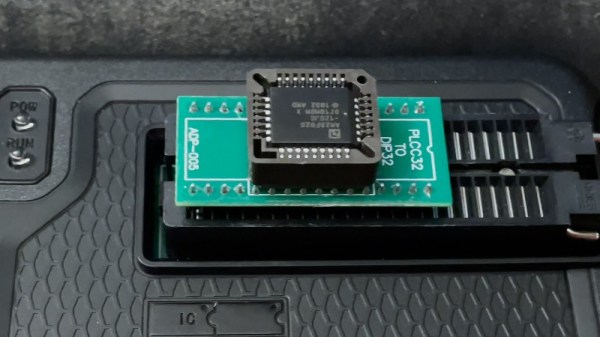
Apple Macintosh computers of the 1990s came with a system ROM containing an Open Firmware implementation and the Mac Toolbox required to start the operating system. In many cases this was on a SIMM-like daughter board, and it would have been a true ROM that was unable to be reprogrammed. This is not the end of the story though, and [Doug Brown] set out on the trail of a Flash-based ROM module allowing the firmware on these machines to be updated.
The trail was warm thanks to an Apple developer utility found on a secondhand Mac prototype, allowing ROM flashing. A little disassembly allowed a list of valid IDs to be made, and this info coupled with a bit of reverse engineering from online photos of a real Apple Flash ROM from the ’90s allowed a new board to be created with four Am28F020 chips. He can now flash at will, with such oddities as running ROMs from different machines with the “wrong” startup chime. It’s an interesting little piece of 1990s Mac trivia, settled.
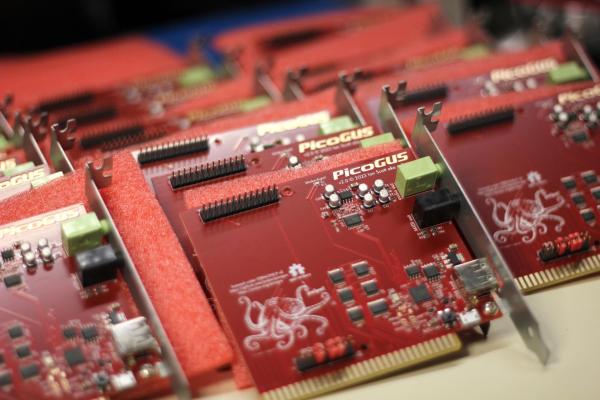
Sound cards used to be a big part of gaming machines in the 90s and 2000s but have largely gone extinct in the wake of powerful CPUs doing the sound themselves. Sound cards were expensive back then and, because the good ones weren’t very common, are expensive still for the retro gamer. But if you don’t need the real thing, [polpo] has you covered with his RP2040-based ISA sound card.
The PicoGUS, as he calls it, primarily serves to replace the Gravis UltraSound with modern components at a low cost. It uses the RP2040’s PIO to attach to an ISA bus and the RP2040’s dual-core power to synthesize the audio for its primary target, but also the AdLib (OPL2), CMS/Game Blaster and Tandy 3-Voice. [polpo] sells the PicoGUS on his Tindie store, but since it’s open source, you can of course just make your own.
Although “work-in-progress”, the PicoGUS is very useful to the right person and a perfect demonstration of how the RP2040’s PIO can be used to interface with almost any type of protocol.