The hourglass dramatically depicts the flow of time; gravity pulling grains of sand inevitably downward. So it is with the Bits of Time project by [Frank Andre]. The pixels drop, stopping only when the battery dies. Or, when your eggs are ready. (Pssst, it’s also on Hackaday.io.)
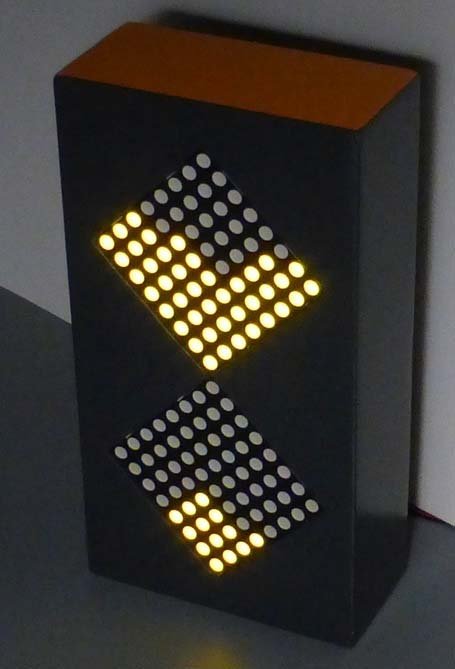
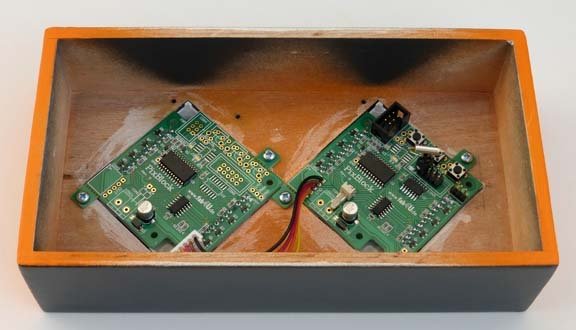
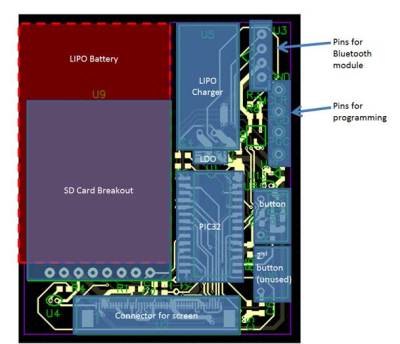
The project starts with a couple of [Frank’s] PixBlocks. A processor is added to one PixBlock to serve as the controller for both after they are connected via the serial bus. A tilt switch, with a debouncing circuit, is connected to an IO pin. This tells the processor the orientation of the box and therefore which way the pixels should flow.
Two switches set the duration of the timer in 15 second increments. A third starts the timer. When the box is rotated the pixels start flowing in the opposite direction. With code available on GitHub the system can be programmed for other effects such as changing colors, flickering, or even text display.
You’ll agree this is a bit less intimidating than the MacGyver-ish kitchen timer we covered last year.
Continue reading “The Flowing Pixels Of Time Wait For No Man”
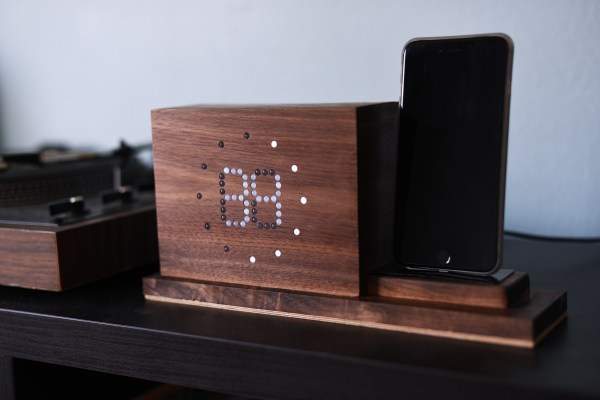
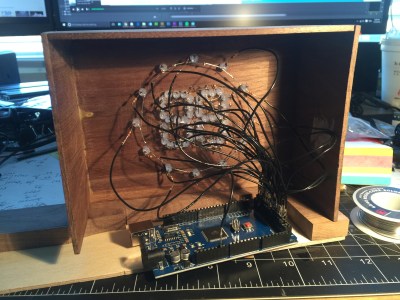 He built the enclosure completely out of walnut, which gives it a very refined and polished look; we’re quite impressed with his woodworking skills. The cool thing about this digital clock is that he used individual LEDs to create both the digital 7-segment displays, and a ring of LEDs around it to denote the hour.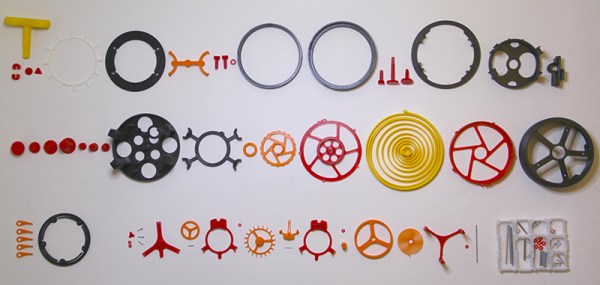
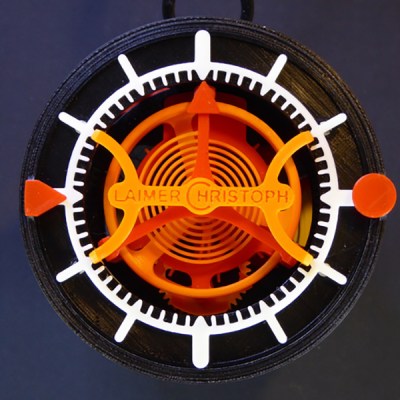 [Christoph Lamier] designed this tourbillon clock in Autodesk Fusion 360, with 50 printable parts, and a handful of pins, screws, and washers. The most delicate parts – the hairspring, anchor, escapement wheel, and a few gears were printed at 0.06 layer height. Everything else was printed at a much more normal resolution with 0.1mm layer height.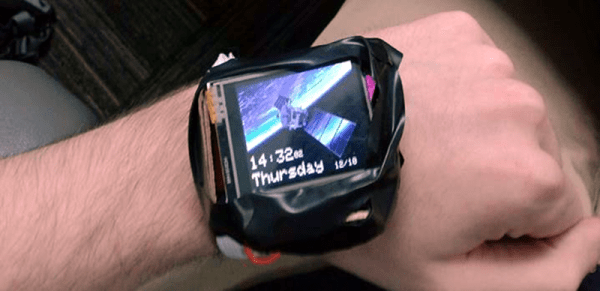
 and meant one shot at getting his custom PCB right.