Sales of electric vehicles continue to climb, topping three million cars worldwide last year. All these electric cars need batteries, of course, which means demand for rechargeable cells is through the roof.
All those cells have to come from somewhere, of course, and many are surprised to learn that automakers don’t manufacture EV batteries themselves. Instead, they’re typically sourced from outside suppliers. Today, you get to Ask Hackaday: why aren’t EV batteries manufactured by the automakers themselves? Continue reading “Ask Hackaday: Why Don’t Automakers Make Their Own EV Batteries?”→
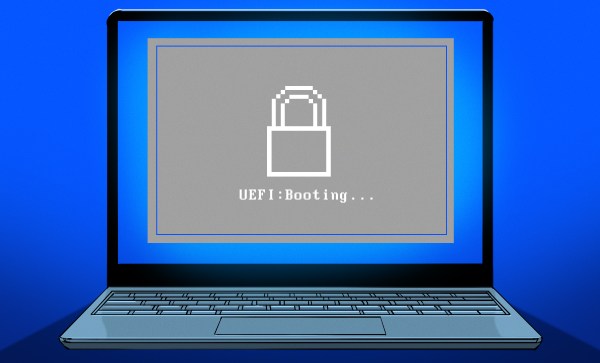
It seems like there are two camps, the small group of people who care about UEFI and everyone else who doesn’t really notice or care as long as their computer works. So let’s talk about what UEFI is, how it came to be, what it’s suitable for, and why you should (or shouldn’t) care.
History is full of stories about technology that makes sense to the designer but doesn’t really fit the needs of the users. Take cake mixes. In 1929, a man named Duff realized that he could capitalize on surplus flour and molasses and created a cake mix. You simply added water to the dry mix and baked it to create a delicious cake. After World War II General Mills and Pillsbury also wanted to sell more flour so they started making cakes. But sales leveled out. A psychologist who was a pioneer in focus groups named Dichter had the answer: bakers didn’t feel like they were contributing to the creation of the cake. To get more emotional investment, the cake mixes would need to have real eggs added in. Actually, Duff had noticed the same thing in his 1933 patent.
It is easy to imagine a bunch of food… scientists? Engineers? Designers?… whatever a person inventing flour mixes in the 1930s was called… sitting around thinking that making a mix that only requires water is a great thing. But the bakers didn’t like it. How often do we fail to account for users?
From Cake Mix to Tech
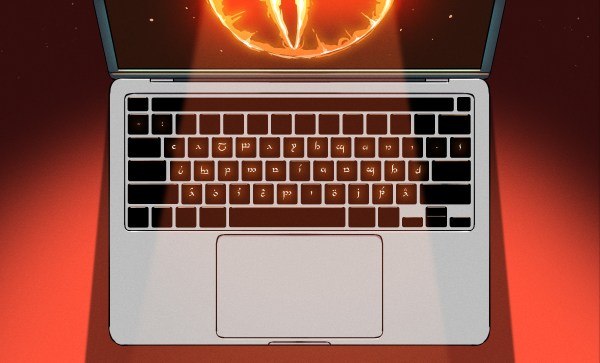
Apple has made a business of this. Most of us don’t mind things like arcane commands and control key combinations, but the wider pool of global computer users don’t like those things. As the world continues to virtually shrink, we often find our users are people from different lands and cultures who speak different languages. It is, after all, the world wide web. This requires us to think even harder about our users and their particular likes, dislikes, and customs.
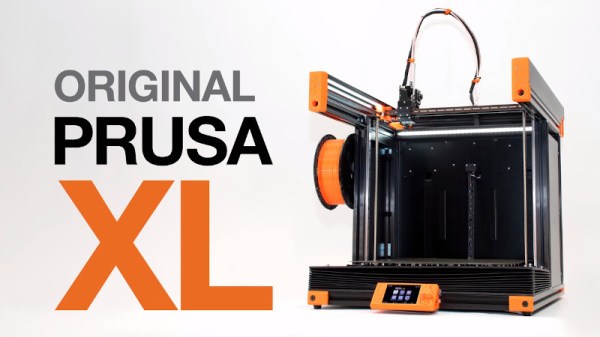
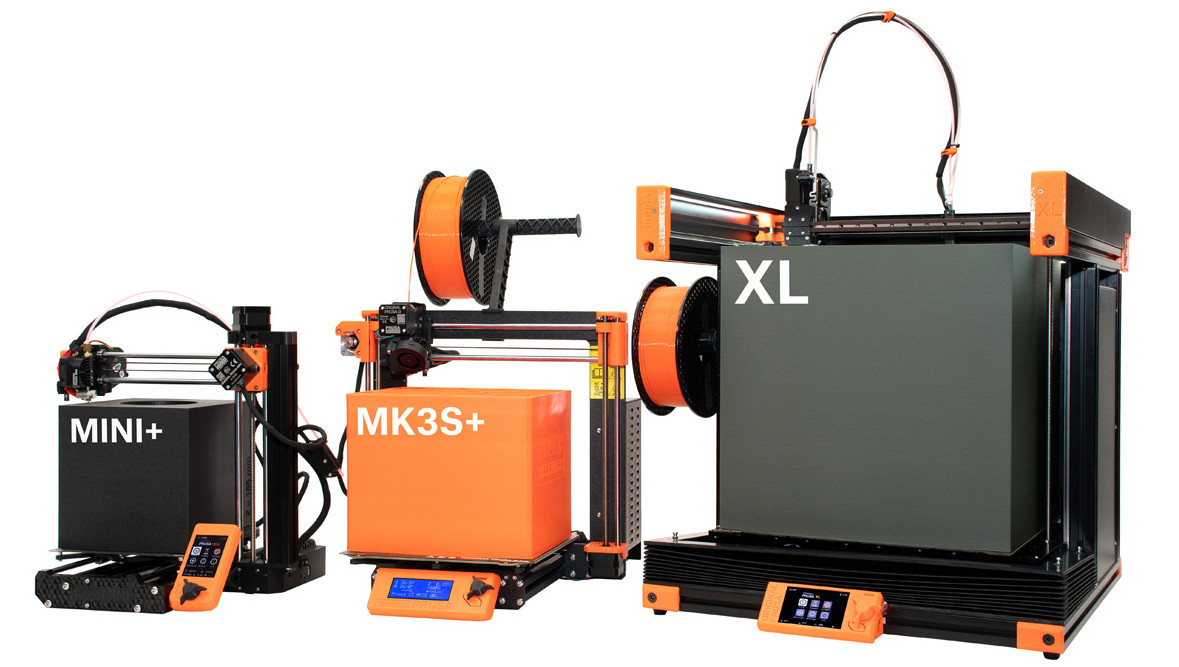
For a few years now it’s been an open secret that Prusa Research was working on a larger printer named, imaginatively enough, the Prusa XL. Positioned at the opposite end of their product spectrum from the wildly popular Prusa Mini, this upper-tier machine would be for serious hobbyists or small companies that need to print single-part objects that were too large for their flagship i3 MK3S+ printer. Unfortunately, the global COVID-19 pandemic made it difficult for the Czech company to focus on bringing a new product to market, to the point that some had begun to wonder if we’d ever see this mythical machine.
But now, finally, the wait is over. Or perhaps, it’s just beginning. That’s because while Prusa Research has officially announced their new XL model and opened preorders for the $1,999+ USD printer, it’s not expected to ship until at least the second quarter of 2022. That’s already a pretty substantial lead time, but given Prusa’s track record when it comes to product launches, we wouldn’t be surprised if early adopters don’t start seeing their machines until this time next year.
So what do you get for your money? Well, not an over-sized Prusa i3, that’s for sure. While many had speculated the XL would simply be a larger version of the company’s popular open source printer with a few modern niceties like a 32-bit control board sprinkled in, the reality is something else entirely. While the high purchase price and ponderous dimensions of the new machine might make it a tough sell for many in the hacker and maker communities, there’s little question that the technical improvements and innovations built into the Prusa XL provide a glimpse of the future for the desktop 3D printer market as a whole.
Tomorrow is Thanksgiving and that means Americans across the United States will be cooking up a turkey feast. One of the most popular ways to cook the bird is by deep frying it in oil.
Local TV stations everywhere spend this week warning about turkey frying. They’re not wrong… if things get out of hand you can end up burning down your house, if not your entire street. Let’s talk the science behind November turkey fires, and hopefully avoid a turkeyferno.
Simple Errors
The typical setup for deep frying a turkey involves lowering the bird into a big pot full of oil sitting on a gas burner. Ropes and pulleys are often used to lower the turkey into the pot to avoid getting one’s hands near the hot oil. Ideally, this should be done in a backyard, away from structures, to provide good ventilation and plenty of room in the case something does go wrong.
If you can’t imagine writing a letter on a typewriter and putting it in a mailbox, then you take computers for granted. But that’s just the tip of the iceberg. More niche applications begat niche machines, and a number of them are on display in this film that the Computer History Archives Project released last month. Aside from the File-o-matic Desk, the Addressograph, or the Sound Scriber, there a number of other devices that give us a peek into a bygone era.
One machine that’s still around, although in a much computerized form, is the stenograph. Not so popular these days is the convenient stenograph carrier, allowing a patient’s statement to be recorded bedside in the hospital immediately after a car accident. Wire recorders were all the rage in 1947, as were floppy disks (for audio, not data). Both media were used to time-shift dictation. Typing champions like Stella Pajunas could transcribe your letters and memos at 140 WPM using an electric typewriter, outpacing dot matrix printers but a snail’s pace compared to a laser jet.
By any metric you care to use, this is a very exciting time for America’s space program. NASA is refocusing their efforts towards the Moon and beyond, SpaceX is launching routine crew and cargo flights to the International Space Station with reusable rockets, and if you’ve got deep enough pockets, there are now multiple companies offering suborbital pleasure trips requiring little more than a few hours worth of training. It’s taken longer than many people had hoped, but it seems we’re finally making the confident strides necessary to truly utilize space’s vast resources.
But things are just getting started. A new generation of massive reusable rockets are currently being developed, which promise to make access to space cheaper and faster than ever before. We’ve seen quite a bit of SpaceX’s Starship, thanks in no small part to the dramatic test flights that the media-savvy company has been regularly live streaming to YouTube. But Blue Origin, founded by Amazon’s Jeff Bezos, has been far more secretive about their New Glenn. That is, until now.
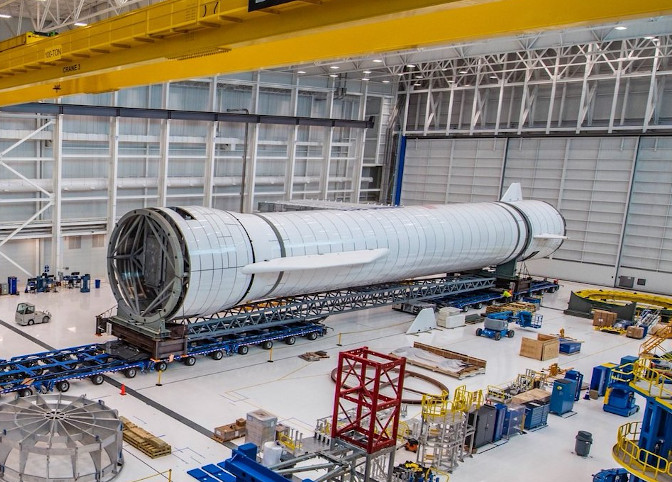
GS1 under construction in Florida.
On November 8th, Blue Origin rolled out their GS1 simulator for the New Glenn’s first stage. This stand-in for the real rocket will never fly, but it’s designed to perfectly recreate the dimensions, center of gravity, and mass, of the real thing. Ground teams will use the GS1 to practice safely transporting the booster, which is approximately half the length of the Saturn V, from their production facility to Launch Complex 36 (LC-36) at Cape Canaveral. It will also be used to test the fit and function of various pieces of ground support equipment, and eventually, the second stage stacking procedure.
For the uninitiated, it might seem like this is a lot of fuss over what’s ultimately just a hollow metal tube. But the introduction of a test article such as this has traditionally been a major milestone during the design and construction of rockets and spacecraft, dating back to the “boilerplate” test capsules used during the Mercury, Gemini, and Apollo programs; a sure sign that what was just an idea is now becoming a reality.