We Need To Have A Chat About Something Important

Yes, I really did print this the day before the story broke.

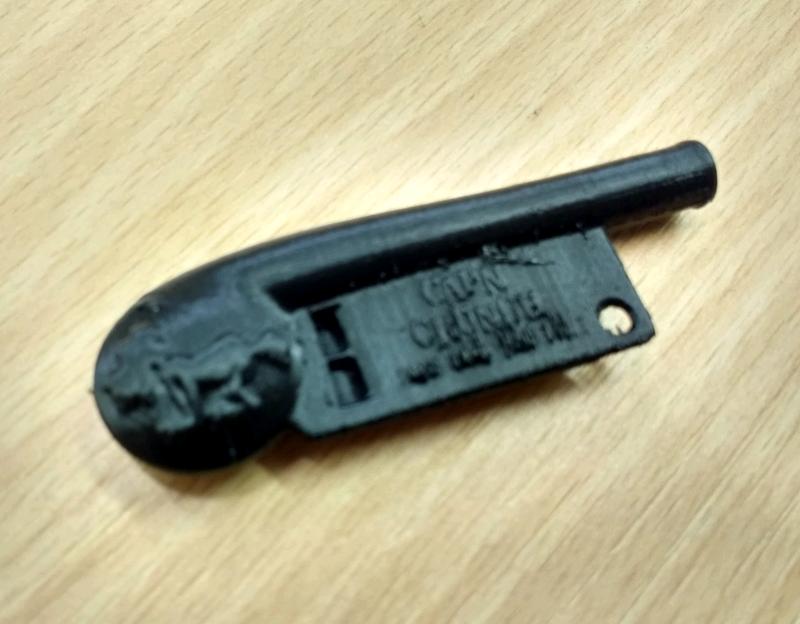
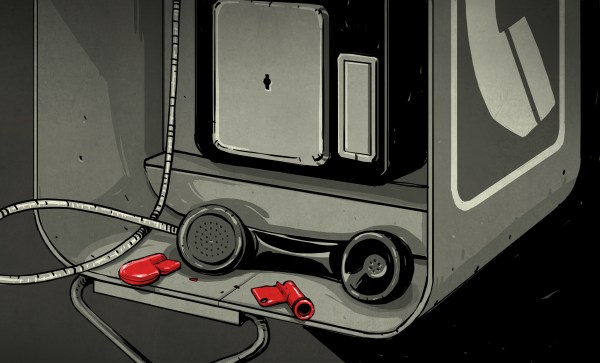
With hindsight, I picked the wrong day to 3D print a Cap’n Crunch whistle downloaded from Thingiverse. I was covering the hackspace textile evening, so I set the Ultimaker going and headed off to spend my evening making a laptop pouch. My whistle, a reasonable reproduction of the famous cereal packet novelty whose 2600 Hz tone allowed special access to American telephone networks, was ready for me to take away as I headed home.

The next day, there it was. The legendary phreaker [John Draper], also known as [Captain Crunch] after his use of that free whistle, was exposed as having a history of inappropriate conduct towards teenage boys and young men who he encountered in his tours of the hacker community as a celebrity speaker.

My whistle will no longer go on a lanyard as a piece of cool ephemera, it’s sitting forlornly on my bench. The constant procession of harassment allegations that have been in the news of late have arrived at our doorstep. Continue reading “We Need To Have A Chat About Something Important”

Life On Contract: How Much Do I Charge?

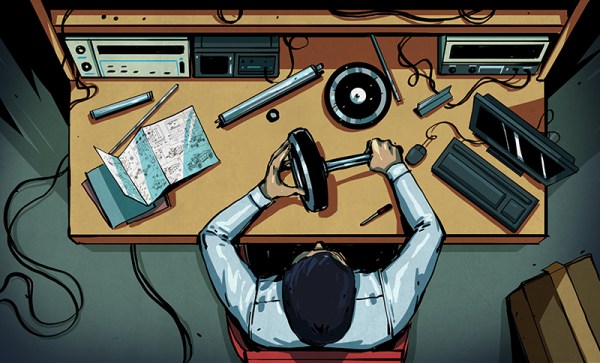
If you’re comfortable with the technical side of becoming a consultant or contractor but are unsure what to charge for your services, you’re not alone. “How much do I charge?” is a tough question, made even tougher by the fact that discussing money can be awkward, and at times virtually taboo.

As a result it’s not uncommon for the issue to get put off because it’s outside one’s comfort zone. Technical people in particular tend to suffer from an “if you build it, they will come” mentality; we get the technical side of things all figured out and just sort of assume that the rest — customers, money, and so forth — will fall into place afterward. If you’re lucky, it will! But it’s better to do some planning.

The short and simple answer of how much to charge is a mix of “it depends” and “whatever the market bears” but of course, that’s incredibly unhelpful all by itself. It’s time to make the whole process of getting started a bit less opaque.

A stubborn determination to solve my own problems has given me plenty of opportunity to make mistakes and commit inefficiencies over the years; I’ve ended up with a process that works for me, but I also happen to think it is fairly generally applicable. Hopefully, sharing the lessons I’ve learned will help make your own process of figuring out what to charge easier, or at least make the inevitable blunders less costly.

Continue reading “Life On Contract: How Much Do I Charge?”

Mike Ossmann And Dominic Spill: IR, Pirates!

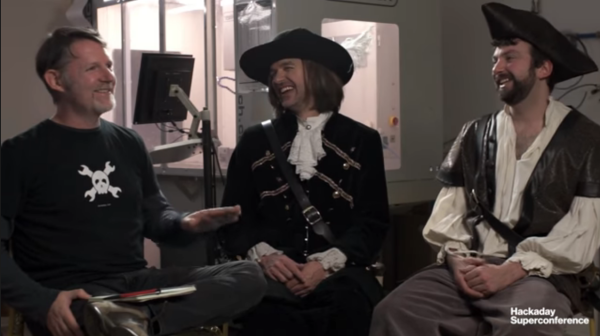
Mike Ossmann and Dominic Spill have been at the forefront of the recent wave of software-defined radio (SDR) hacking. Mike is the hardware guy, and his radio designs helped bring Bluetooth and ISM-band to the masses. Dominic is the software guy who makes sure that all this gear is actually usable. The HackRF SDR is still one of the best cheap choices if you need an SDR that can transmit and receive.

So what are these two doing on stage giving a talk about IR communication? Can you really turn traffic lights green by blinking lights? And can you spoof a TV remote with a cardboard cutout, a bicycle wheel, and a sparkler? What does IR have to do with pirates, and why are these two dressed up as buccaneers? Watch our video interview and find out, or watch the full talk for all of the juicy details.

Continue reading “Mike Ossmann And Dominic Spill: IR, Pirates!”

Coin Cell Challenge: Use Coin Cell, Win Prizes

Today, we’re calling all hackers to do the most with a single coin cell. It’s the Coin Cell Challenge, and we’re looking for everything from the most low-power electronics to a supernova in a button cell battery.

Electronics are sucking down fewer and fewer amps every year. Low power is the future, and we’re wondering how far we can push the capabilities of those tiny discs full of power. The Coin Cell Challenge is your chance to plumb the depths of what can be done with the humble coin cell.

This is a contest, and as with the tradition of the Open 7400 Logic Competition and the recent Flashing Light Prize, we want to see what the community can come up with. The idea is simple: do something cool with a single coin cell and you’ll secure your fifteen minutes of fame and win a prize.

Three Challenges

To kick this contest off, we’re opening up three challenges to all contenders to the world heavyweight champion of button cell exploits. The first, the Lifetime Award, will go to whoever can run something interesting the longest amount of time on a coin cell. The Supernova Award is the opposite – what is the most exciting thing you can do with a button cell battery, lifetime be damned? The Heavy Lifting Award will go to the project that is the most unbelievable. If you think you can’t do that with a coin cell battery — lifting a piano or starting a car, for example — odds are you probably can. We want to see it.

Prizes and Rules

All Hackaday hardware hacking challenges need prizes, and for this one, we’re rolling out the red carpet. We’re offering up cash prizes for the top coin cell hacks. There are three $500 USD cash prizes, one for each winner of the Lifetime, Supernova, and Heavy Lifting awards. We’re not stopping there, because the top twenty builds overall will each receive $100 in Tindie credit, where the winners can cash in on some artisanal electronics sold by the people who design them.

What do you have to do to get in on this action? First, you need to build something. This something must be powered by nothing more than a single coin cell battery and must include some type of electronics. We also want this to be Open Source, and you’ll need to start a project on hackaday.io. The full rules are available over here, but don’t wait — the deadline for entry is January 8th, 2018.

We’re excited to see what the community comes up with, and who will find a production coin cell that’s the size of a dinner plate. This is going to be a great contest with overheating coin cells and tiny bits of metal flying across the room. This is going to be a contest filled with blinkies and wireless devices that run for far, far too long. Someone is going to misread the rules and tape together a meter tall pile of coin cells. It’s going to be awesome, so start your project now.

Peer Review In The Age Of Viral Video

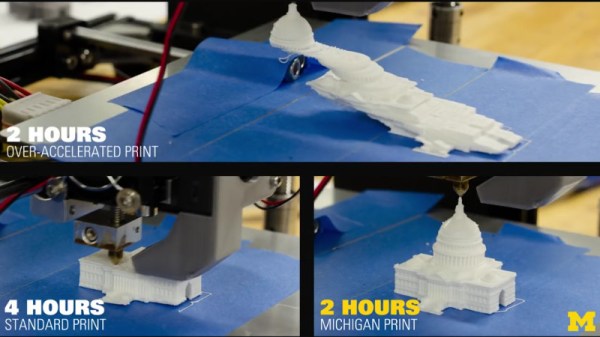
Recently, a YouTube video has been making the rounds online which shows a rather astounding comparison between two printed models of the US Capitol. Starting with the line “3-D PRINTERS CAN NOW PRINT TWICE AS FAST”, the video shows that one print took four hours to complete, and the other finished in just two hours by virtue of vibration reducing algorithms developed at the University of Michigan. The excitement around this video is understandable; one of the biggest limitations of current 3D printer technology is how long it takes to produce a model of acceptable quality, and if improvements to the software that drives these machines could cut total print time in half, the ramifications would be immense.

In only a few weeks the video racked up tens of thousands of views, and glowing articles popped up with headlines such as: “How to cut 3D print times in half by the University of Michigan” and “University of Michigan professor doubles 3D printing speeds using vibration-mitigating algorithm“. Predictably, our tips line lit up with 3D printer owners who wanted to hear more about the incredible research that promised to double their print speed with nothing more than a firmware update.

The only problem is, the video shows nothing of the sort. What’s more, when pushed for details, the creators of the video are now claiming the same thing.

Continue reading “Peer Review In The Age Of Viral Video”

Marguerite Perey: When The Lab Assistant Gets The Credit

Most people obtain a bachelor’s degree before getting their masters, and even that is a prerequisite for a doctorate. Most people, however, don’t discover a new chemical element.

Marguerite Perey graduated with a chemistry diploma from Paris’ Technical School of Women’s Education in 1929, and applied for work at the Curie Institute, at the time one of the leading chemistry and physics labs in the world. She was hired, and put to work cataloging and preparing samples of the element actinium. This element had been discovered thirty years before by a chemist who had also been working in the Curie laboratory, but this was the height of the chemical revolution and the studies and research must continue.

When Marie Curie died in 1934, the discoverer of actinium, André-Louis Debierne, continued his research and Perey kept providing samples. Marguerite’s work was recognized, and in time she was promoted from a simple lab assistant to a  radiochemist. It would not be an exaggeration to say that Marguerite was, at the time, the world’s leading expert in the preparation of actinium. This expertise would lead her to the discovery of the bottom left corner of the periodic table: francium, element 87, the least electronegative element, and arguably the most difficult naturally occurring element to isolate.

Continue reading “Marguerite Perey: When The Lab Assistant Gets The Credit”

The Flight That Made The Calculator And Changed The World

It was the fall of 1965 and Jack Kilby and Patrick Haggerty of Texas Instruments sat on a flight as Haggerty explained his idea for a calculator that could fit in the palm of a hand. This was a huge challenge since at that time calculators were the size of typewriters and plugged into wall sockets for their power. Kilby, who’d co-invented the integrated circuit just seven years earlier while at TI, lived to solve problems.

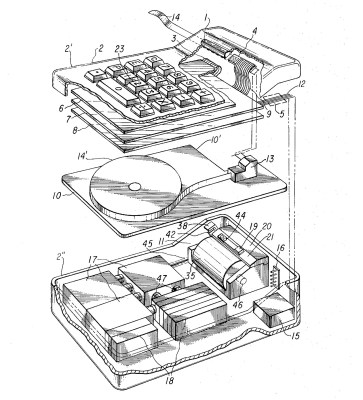
Fig. 2 from US 3,819,921 Miniature electronic calculator

By the time they landed, Kilby had decided they should come up with a calculator that could fit in your pocket, cost less than $100, and could add, subtract, multiply, divide and maybe do square roots. He chose the code name, Project Cal Tech, for this endeavor, which seemed logical as TI had previously had a Project MIT.

Rather than study how existing calculators worked, they decided to start from scratch. The task was broken into five parts: the keyboard, the memory, the processor, the power supply, and some form of output. The processing portion came down to a four-chip design, one more than was initially hoped for. The output was also tricky for the time. CRTs were out of the question, neon lights required too high a voltage and LEDs were still not bright enough. In the end, they developed a thermal printer that burned images into heat-sensitive paper.

Just over twelve months later, with the parts all spread out on a table, it quietly spat out correct answers. A patent application was filed resulting in US patent 3,819,921, Miniature electronic calculator, which outlined the basic design for all the calculators to follow. This, idea borne of a discussion on an airplane, was a pivotal moment that changed the way we teach every student, and brought the power of solid-state computing technology into everyday life.

Continue reading “The Flight That Made The Calculator And Changed The World”