Specifications You Should Read: The NASA Workmanship Standards

"This is reflective of the typically idiosyncratic way engineer's of this era explored the human condition. The purple and shitty gradient show's the artists deep struggle with deadlines and his personal philosophy on the tyranny of the bourgeois. " - A segment from a confused student's art history paper
“Reflective of the typically idiosyncratic way engineers of this era explored the human condition. The shitty gradient show’s the deep struggle with deadlines and their personal philosophy on the tyranny of the bourgeois. ” – An excerpt from a confused student’s art history paper after the standard is installed in the Louvre.

The NASA workmanship standards are absolutely beautiful. I mean that in the fullest extent of the word. If I had any say in the art that goes up in the Louvre, I’d put them up right beside Mona. They’re a model of what a standard should be. A clear instruction for construction, design, and inspection all at once. They’re written in clear language and contain all the vernacular one needs to interpret them. They’re unassuming. The illustrations are perfectly communicative.  It’s a monument to the engineer’s art.

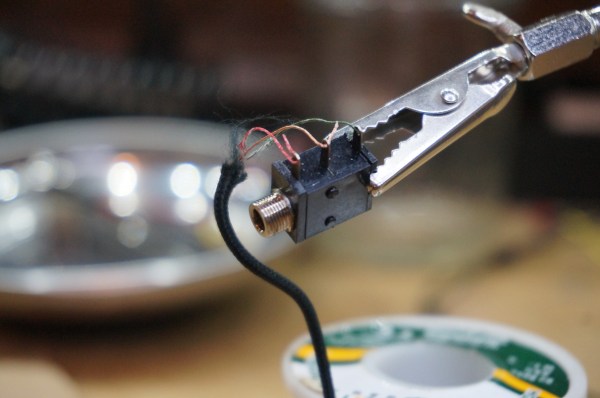
Around five years ago I had a problem to solve. Every time a device went into the field happily transmitting magic through its myriad connectors, it would inevitably come back red tagged, dusty, and sad. It needed to stop. I dutifully traced the problem to a connector, and I found the problem. A previous engineer had informed everyone that it was perfectly okay to solder a connector after crimping. This instruction was added because, previously, the crimps were performed with a regular pair of needle nose pliers and they came undone… a lot. Needless to say, the solder also interfered with their reliable operation, though less obviously. Stress failures and intermittent contact was common.

Continue reading “Specifications You Should Read: The NASA Workmanship Standards”

The Comic Book World Of Capacitor Marketing

The Economist is an interesting publication, a British weekly newspaper that looks for all the world like a magazine, and contains pithy insights into world politics and economic movements. It’s one of those rare print news publications that manages to deliver fresh insights even to hardened web news junkies despite its weekly publication date.

It was typical then of their wide-ranging coverage of world industries to publish a piece recently on the world of supercapacitors, with particular focus on Estonia’s Skeleton Technologies. This is an exciting field in which the products are inching their way towards energy density parity with conventional batteries, and news of new manufacturing facilities coming online should be of interest to many Hackaday readers.

Exciting though it may be it was not the news of a new capacitor plant in Germany that provided the impetus for this piece. Instead it was the language used by the Economist writer delicately skirting the distinction between the words “Supercapacitor” and “Ultracapacitor”. Images of flying crimefighters in brightly coloured capes spring instantly to mind, as Captain Ultra and Superman battle an arch-villain who is no doubt idly bouncing a piece of burning Kryptonite against the wall in readiness for the final denouement.

Continue reading “The Comic Book World Of Capacitor Marketing”

Machine Learning: Foundations

When you want a person to do something, you train them. When you want a computer to do something, you program it. However, there are ways to make computers learn, at least in some situations. One technique that makes this possible is the perceptron learning algorithm. A perceptron is a computer simulation of a nerve, and there are various ways to change the perceptron’s behavior based on either example data or a method to determine how good (or bad) some outcome is.

What’s a Perceptron?

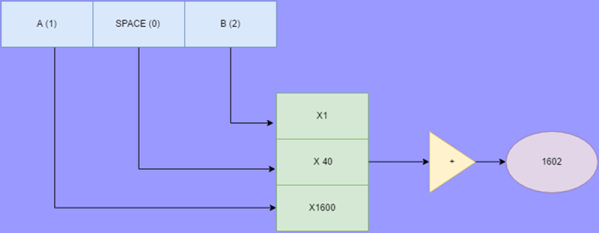
I’m no biologist, but apparently a neuron has a bunch of inputs and if the level of those inputs gets to a certain level, the neuron “fires” which means it stimulates the input of another neuron further down the line. Not all inputs are created equally: in the mathematical model of them, they have different weighting. Input A might be on a hair trigger, while it might take inputs B and C on together to wake up the neuron in question.
Continue reading “Machine Learning: Foundations”

ESP32 Modules Popping Up Everywhere, In Stock Almost Nowhere

We know what it’s like to wait for newly released electronic parts. Clicking refresh every day at your favorite online retailers, reading reviews published by the press who got preview units, and maybe even daring to order implausibly cheap devices from foreign lands. The ESP32 has many of us playing the waiting game, and we’ll level with you — they’re out of stock most places. But, if you look hard enough you can find one. At least, you could find them before we wrote this quick roundup of ESP32 hardware. If hearing about parts that are just out of reach is your sort of thing, then read on, you masochist!

Continue reading “ESP32 Modules Popping Up Everywhere, In Stock Almost Nowhere”

SSH Enters The Mosh Pit

With so many systems depending on Linux, the secure shell SSH has become a staple for many developers. If you are connected to your Raspberry Pi via a cable or a wireless router a few feet away, SSH can provide you with an encrypted connection straight to the box. However, if you have a system out in a swamp somewhere with intermittent slow network access, SSH can be a real pain. When your IP address can change (for example, roaming on a cellular network), SSH has problems, too.

To combat these and other problems, you might consider an open source program called Mosh (mobile shell). There’s two parts to Mosh. One part works as a server while the other is the client application. Neither of these require root access. You can see a video about Mosh below.

Continue reading “SSH Enters The Mosh Pit”

Hams In Space Part 2: The Manned Spaceflights

Whether it’s trying to make contacts across the planet with a transmitter that would have a hard time lighting an LED, or blasting signals into space and bouncing them off the moon, amateur radio operators have always been on the forefront of communications technology. As mankind took to space in the 1950s and 1960s, hams went along for the ride with the first private satellites. But as successful as the OSCAR satellites were, they were still at best only beacons or repeaters in space. What was needed was the human touch – a real live operator making contacts with people on the ground, showing the capabilities of amateur radio while generating public interest in the space program. What was needed was a ham in space. Continue reading “Hams In Space Part 2: The Manned Spaceflights”

What’s New, ESP-32? Testing The Arduino Library

In case you missed it, the big news is that a minimal Arduino core is up and working on the ESP32. There’s still lots left to do, but the core functionality — GPIO, UART, SPI, I2C, and WiFi — are all up and ready to be tested out. Installing the library is as easy as checking out the code from GitHub into your Arduino install, so that’s exactly what I did.

I then spent a couple days playing around with it. It’s a work in progress, but it’s getting to the point of being useful, and the codebase itself contains some hidden gems. Come on along and take a sneak peek.

Continue reading “What’s New, ESP-32? Testing The Arduino Library”