Do you know how to harvest data from your bench tools, like plotting bandwidth from your oscilloscope with a computer? It’s actually pretty easy. Many bench tools make this easy using a standard protocol with USB to make the connection.
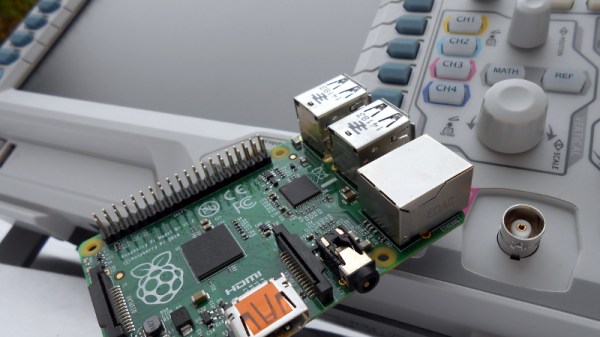
In the previous installment of this article we talked about the National Instruments VISA (Virtual Instrument Software Archetecture) standard for communicating with your instruments from a computer, and introduced its Python wrapper with a simple demonstration using a Raspberry Pi. We’ll now build on that modest start by describing a more useful application for a Raspberry Pi and a digital oscilloscope; we’ll plot the bandwidth of an RF filter. We’ll assume that you’ve read the previous installment and have both Python and the required libraries on your machine. In our case the computer is a Raspberry Pi and the instrument is a Rigol DS1054z, but similar techniques could be employed with other computers and instruments.
I believe higher quality learning happens from sharing failure than from sharing stories of success. If you have set your mind to living on contract, I present this cheat sheet of some of the most simple and effective ways to muck it all up that have surprisingly little or nothing to do with your technical skill, knowledge, or even deliverables.
The previous installment of Life on Contract discussed how one might find clients as an engineering contractor or consultant while also taking a bit of time to pull apart the idea of whether life on contract is appropriate as opposed to, for example, bootstrapping a business instead. Assuming you are set on working as a contractor, let’s talk about what happens after you have found a prospective client (or perhaps more likely: after they have found you.)
WARNING: this article features an utter lack of success tips and tricks. Partly because those can be found in any seminar or business self-help book, but mostly because I do not have a foolproof recipe for success, and cheat codes to unlock easy mode still elude me. But I have witnessed (or committed) and reflected on many excellent ways to fail at contracting; or at the very least succeed in not being invited back.
Just because I won’t be sharing success stories doesn’t mean success has no learning value. Got a success story, or a better way to fail? Tell us about it in the comments!
A while back I looked at lubricants for the home shop, with an eye to the physics and chemistry behind lubrication. Talking about how to keep parts moving got me thinking about the other side of the equation – what’s the science behind sticking stuff together? Home shops have a lot of applications for adhesives, so it probably pays to know how they work so you can choose the right glue for the job. We’ll also take a look at a couple of broad classes of adhesives that are handy to have around the home shop. Continue reading “Glues You Can Use: Adhesives For The Home Shop”→
We recently went through our twice yearly period of communal venting called adjusting for daylight saving time (DST), or British Summer Time (BST) as it’s called in the UK. But why are we changing the time? Seriously, who caused all this? Does it do any good? Do we still need it? And what can we do about it? As it turns out, most of us want it, as you’ll see below.
Does everyone watch a load of videos on YouTube that are somewhat on the unadmissibly geeky side? In my case I might not care to admit that I have a lot of videos featuring tractors in my timeline. The mighty Russian Kirovets hauling loads through the impossible terrain of the taiga, tiny overloaded 2WD tractors in India pulling wheelies, and JCB Fastracs tearing around the British Fenland. You can take the girl off the farm, but you can’t take the farm out of the girl.
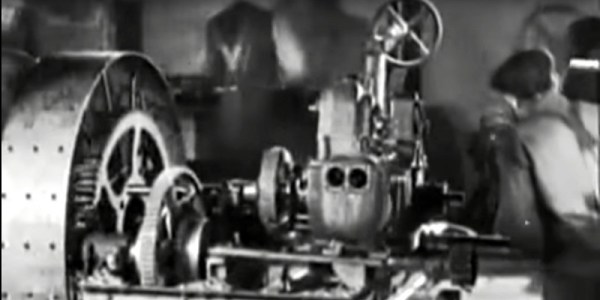
So my recommendations have something of an agricultural flavor. Like the video below the break, a 1917 silent film promoting the Ford Model B tractor. This one was eye-catching because it was a machine I’d not seen before, a rather unusual three-wheeler design with two driving wheels at the front and a single rear steering wheel.
During the early years of the twentieth century the shape of the modern tractor was beginning to evolve, this must have been a late attempt at an alternative. Speaking from the viewpoint of someone who has operated a few tractors in her time it does not look the easiest machine to control, that cloud of exhaust smoke surrounding the driver would not be pleasant, and the operating position hanging over the implement coupling at the rear does not look particularly comfortable or safe.
The film has a charming period feel, and tells the tale of a farmer’s son who tires of the drudgery of manual farm labor, and leaves for the city. He finds a job at the tractor factory and eventually becomes a tractor salesman, along the way meeting and marrying the daughter of a satisfied customer. He returns home with his bride, and a shiny new tractor to release his father from ceaseless labor. Along the way we gain a fascinating look at agriculture on the brink of mass mechanization, as well as the inside of a tractor factory of the time with an assembly sequence in which they appear to use no fasteners.
[Image Source: Tractor Industry Fraud on Farm Collector]All of this is very interesting, but the real nugget in the story lies with its manufacturer. This is a Ford Model B tractor. But it’s not a Ford Model B. Confused? So, it seems were the customers. The Ford we all know is the Michigan-based motor company of Henry Ford, who were already very much a big name in 1917. This Ford however comes from the Ford Tractor Co, of South Dakota, an enterprise set up by a shady businessman to cash in on the Ford brand, manufacturing an already outdated and inferior machine backed up by dubious claims of its capabilities.
On the staff was an engineer called Ford who lent his name to the company, but he bore no relation to Henry Ford. The company didn’t last long, collapsing soon after the date of this film, and very few of its products survived. It did have one legacy though, the awful quality of one of its tractors is reputed to have been the impetus behind the founding of the Nebraska Tractor Test Laboratory, the place where if you sell a tractor in the USA, you’ll have to have it tested to ensure it performs as it should. In their museum they house one of the few surviving Ford Model B tractors.
Meanwhile the Ford in Michigan produced their own very successful line of tractors, and their Fordson Model F from the same year is a visible ancestor of today’s machines. But as the video below shows, there’s nothing new about a fake.
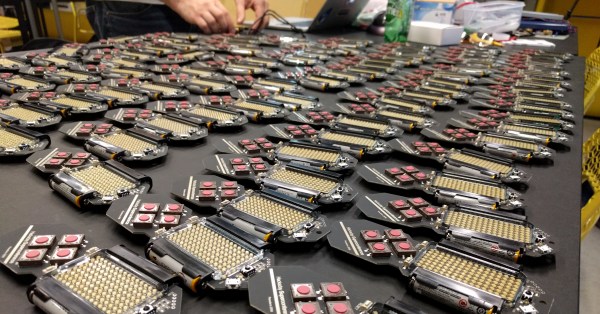
What does it take to go from concept to dropping a finished product into the hands of the end user? Gather ’round for a story that pulls people and parts from around the world to make one killer piece of hardware art.
Seems like all the buzz about autonomous vehicles these days centers around self-driving cars. Hands-free transportation certainly has its appeal – being able to whistle up a ride with a smartphone app and converting commute time to Netflix binge time is an alluring idea. But is autonomous personal transportation really the killer app that everyone seems to think it is? Wouldn’t we get more bang for the buck by automating something a little more mundane and a lot more important? What about automating the shipping of freight?
Look around the next time you’re not being driven to work by a robot and you’re sure to notice a heck of a lot of trucks on the road. From small panel trucks making local deliveries to long-haul tractor trailers working cross-country routes, the roads are lousy with trucks. And behind the wheel of each truck is a human driver (or two, in the case of team-driven long-haul rigs). The drivers are the weak point in this system, and the big reason I think self-driving trucks will be commonplace long before we see massive market penetration of self-driving cars.




![[Image Source: Tractor Industry Fraud on Farm Collector]](https://hackaday.com/wp-content/uploads/2016/11/ford-tractor-company-poster.jpg)