The Real Science (Not Armchair Science) Of Consciousness

Among brain researchers there’s a truism that says the reason people underestimate how much unconscious processing goes on in your brain is because you’re not conscious of it. And while there is a lot of unconscious processing, the truism also points out a duality: your brain does both processing that leads to consciousness and processing that does not. As you’ll see below, this duality has opened up a scientific approach to studying consciousness.

Are Subjective Results Scientific?

Researcher checking fMRI images.
Checking fMRI images.

In science we’re used to empirical test results, measurements made in a way that are verifiable, a reading from a calibrated meter where that reading can be made again and again by different people. But what if all you have to go on is what a person says they are experiencing, a subjective observation? That doesn’t sound very scientific.

That lack of non-subjective evidence is a big part of what stalled scientific research into consciousness for many years. But consciousness is unique. While we have measuring tools for observing brain activity, how do you know whether that activity is contributing to a conscious experience or is unconscious? The only way is to ask the person whose brain you’re measuring. Are they conscious of an image being presented to them? If not, then it’s being processed unconsciously. You have to ask them, and their response is, naturally, subjective.

Skepticism about subjective results along with a lack of tools, held back scientific research into consciousness for many years. It was taboo to even use the C-word until the 1980s when researchers decided that subjective results were okay. Since then, here’s been a great deal of scientific research into consciousness and this then is a sampling of that research. And as you’ll see, it’s even saved a life or two.

Continue reading “The Real Science (Not Armchair Science) Of Consciousness”

Mining And Refining: From Red Dirt To Aluminum

No matter how many syllables you use to say it, aluminum is one of the most useful industrial metals we have. Lightweight, strong, easily alloyed, highly conductive, and easy to machine, cast, and extrude, aluminum has found its way into virtually every industrial process and commercial product imaginable.

Modern life would be impossible without aluminum, and yet the silver metal has been in widespread use only for about the last 100 years. There was a time not all that long ago that aluminum dinnerware was a status symbol, and it was once literally worth more than its weight in gold. The reason behind its one-time rarity lies in the effort needed to extract the abundant element from the rocks that carry it, as well as the energy to do so. The forces that locked aluminum away from human use until recently have been overcome, and the chemistry and engineering needed to do that are worth looking into in our next installment of “Mining and Refining.”

Continue reading “Mining And Refining: From Red Dirt To Aluminum”

Mike Szczys at the 2018 Hackaday Superconference

Today Is My Last Day At Hackaday; Thanks For All The Hacks!

I have decided to make a career move and have accepted a position as Developer Relations Engineer at Golioth.io. I’m happy to announce that Elliot Williams will be the next Editor in Chief of Hackaday.

Right now I’m in my 13th year at Hackaday, having started in the summer of 2009. But like all of the Hackaday writing crew, I began as a loyal reader of the site. I remember hearing about Hackaday when Kevin Rose mentioned in on an episode of the old CNET TV program The Screensavers early in 2005. Having already been building robots and just starting on 8-bit AVR microcontrollers, Hackaday was exactly the source of new and interesting projects I was looking for.

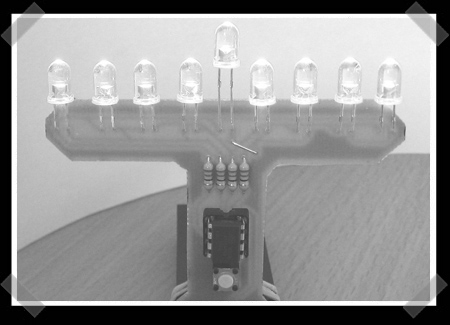
Remember when all Hackaday photos looked like this? This one is actually the first time I had a project featured on the site!

An enormous amount has changed since then. When I started as a writer we had just stopped using black and white photos. A few articles later, we removed the CSS that forced all articles to be lowercase. When I became head editor in 2013 we stopped calling it Hack a Day in favor of Hackaday, and about a year later we overhauled the site, moving from green-on-black to yellow-on black and expanding the 470 pixel content width to 800. Progress.

What hasn’t changed is how we stay fresh. Hackaday has always trusted our writers to guide us by following their own interests. The people who write for Hackaday have far better things to do, but they use their writing as a creative outlet to focus on leveling up their skills, to discover new uses of available technology, and to share that energy with the greater Hackaday community. They live all over the world and work in many different fields. These experiences come together in there collective writings. I’m lucky to have this great group of writers, and so are you. When their time has ended, the hope is that a new group of readers will step up to the plate and make sure the good times never end.

Continue reading “Today Is My Last Day At Hackaday; Thanks For All The Hacks!”

Mixing synthetic blood

The Challenges Of Finding A Substitute For Human Blood

Throughout history, the human body has been the subject of endless scrutiny and wonder. Many puzzled over the function of all these organs and fluids found inside. This included the purpose of blood, which saw itself alternately disregarded as being merely for ‘cooling the body’, to being responsible for regulating the body’s humors, leading to the practice of bloodletting and other questionable remedies. As medical science progressed, however, we came to quite a different perspective.

Simply put, our circulatory system and the blood inside it, is what allows us large, multi-celled organisms to exist. It carries oxygen and nutrients to cells, while enabling the removal of waste products as well as an easy path for the cells that make up our immune system. Our blood and the tissues involved with it are crucial to a healthy existence. This is something which becomes painfully clear when we talk about injuries and surgeries that involve severe blood loss.

While the practice of blood transfusions from donated blood has made a tremendous difference here, it’s not always easy to keep every single type of blood stocked, especially not in remote hospitals, in an ambulance, or in the midst of a war zone. Here the use of artificial blood — free from complicated storage requirements and the need to balance blood types — could be revolutionary and save countless lives, including those whose religion forbids the transfusion of human blood.

Although a lot of progress has been made in this field, with a limited number of practical products, it’s nevertheless proving to be a challenge to hit upon a replacement that ticks all of the boxes needed to make it generic and safe.

Continue reading “The Challenges Of Finding A Substitute For Human Blood”

Ordering prototypes like they were fast food

Made To Spec: The Coming Age Of Prototyping As A Service

In the last decade, the price for making a single PCB plummeted. And we’ve featured tons of hacks with boards hailing from places like OSH Park or Seeed Studio. But this phenomenon isn’t isolated, and all sorts of one-off prototyping services are becoming cheaper and looking to satiate both hobbyist and engineer alike.

Today, I want to blow the lid off a few places offering one-off mechanical prototyping services. I’ll take us through some history of how we got here, introduce a few new players, and finally highlight some important tradeoffs before you start ordering bespoke aluminum parts straight to your doorstep.

Now go get your ANSI Z87+ safety glasses, and let’s get started.

Continue reading “Made To Spec: The Coming Age Of Prototyping As A Service”

Microsoft’s Minimal Mouse May Maximize Masochism

So it seems that Microsoft has a patent in process for a folding mouse.  It looks a whole lot like their Arc mouse, which is quite thin and already goes from curved to flat. But that’s apparently not good enough for Microsoft, who says mice in general are bulky and cumbersome to travel with. On the bright side, they do acknowledge the total lack of ergonomics in those tiny travel mice.

Microsoft filed this patent in March of 2021 and it was published in early November. The patent describes the use of an expandable shell on the top with these kerf cuts in the long sides like those used to bend wood — this is where the flexibility comes in. The patent also mentions a motion tracker, haptic feedback, and a wireless charging coil. Now remember, there’s no guarantee of this ever actually happening, and there was no comment from Microsoft about whether it will become a real rodent someday.

And now, the rant. Microsoft considers this mouse, which again is essentially an updated Arc that folds in half, to be ergonomic. Full disclosure: I’ve never used an Arc mouse. But I respectfully disagree with this assessment and believe that people should not prioritize portability when it comes to peripherals, especially those that are so small to begin with. Like, what’s the use? And by the way, isn’t anyone this concerned with portability just using the touch pad or steering stick on their laptop anyway?

Continue reading “Microsoft’s Minimal Mouse May Maximize Masochism”

TTL And CMOS Logic ICs: The Building Blocks Of A Revolution

When starting a new electronics project today, one of the first things that we tend to do is pick the integrated circuits that make up the core of the design. This can be anything from a microcontroller and various controller ICs to a sprinkling of MOSFETs, opamps, and possibly some 7400- or 4000-series logic ICs to tie things together. Yet it hasn’t been that long since this level of high integration and miniaturization was firmly in the realm of science-fiction, with even NORBIT modules seeming futuristic.

Starting with the construction of the first point-contact transistor in 1947 and the bipolar junction transistor (BJT) in 1948 at Bell Labs, the electronics world would soon see the beginning of its biggest transformation to that point. Yet due to the interesting geopolitical circumstances of the 20th century, this led to a fascinating situation of parallel development, blatant copying of designs, and one of the most fascinating stories in technology history on both sides of the Iron Curtain. Continue reading “TTL And CMOS Logic ICs: The Building Blocks Of A Revolution”