Profiles In Science: Jack Kilby And The Integrated Circuit

Sixty years ago this month, an unassuming but gifted engineer sitting in a lonely lab at Texas Instruments penned a few lines in his notebook about his ideas for building complete circuits on a single slab of semiconductor. He had no way of knowing if his idea would even work; the idea that it would become one of the key technologies of the 20th century that would rapidly change everything about the world would have seemed like a fantasy to him.

We’ve covered the story of how the integrated circuit came to be, and the ensuing patent battle that would eventually award priority to someone else. But we’ve never taken a close look at the quiet man in the quiet lab who actually thought it up: Jack Kilby.

Continue reading “Profiles In Science: Jack Kilby And The Integrated Circuit”

Hackaday guide to Lathes

The Machinists’ Mantra: Level Thy Lathe

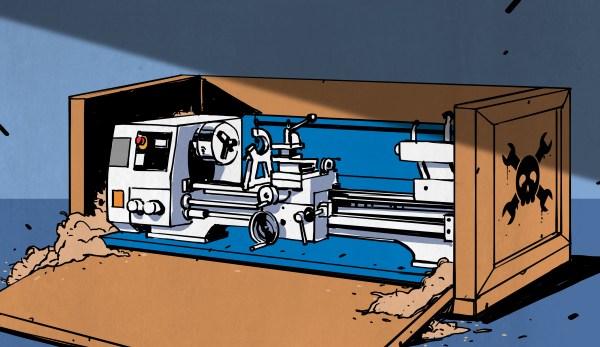
Let’s say you’ve gone and bought yourself a sweet sweet metal lathe. Maybe it’s one of the new price-conscious Asian models, or maybe it’s a lovely old cast iron beast that you found behind a foreclosed machine shop. You followed all the advice for setting it up, and now you’re ready to make chips, right? Well, not so fast. Unlike other big power tools, such as band saws or whatever people use to modify dead trees, machine tools need to be properly level. Not, “Hurr hurr my carpenter’s level says the bubble is in the middle”, but like really level.

This is especially true for lathes, but leveling is actually a proxy for something else. What you’re really doing is getting the entire machine in one plane. Leveling is a primitive way of removing twist from the structure. It may not seem like a huge piece of cast iron could possibly twist, but at very small scales it does! Everything is a spring, and imperceptible twist in the machine will show up as your lathe turning a couple thousandths of taper (cone) when it should be making perfect cylinders. All this is to say, before making chips, level your lathe. Let me show you the way. Continue reading “The Machinists’ Mantra: Level Thy Lathe”

Hackaday Superconference: Tickets And Proposals

Get your tickets now for the 2018 Hackaday Superconference. Join us November 2nd-4th in Pasadena, California!

This is the ultimate hardware conference. Hackers, designers, and engineers from all over the world converge — from the greenest beginners to those who have made history with their designs. This is the Hackaday community, these are your people, and you need to be here. Supercon is your chance to experience all things involved in hardware creation — the weekend is filled with unparalleled talks and workshops — but the experience of Supercon transcends the organized event. We call it a conference but it’s truly a hacker village with a who’s-who of hackerdom in attendance.

Call for Proposals

We want you to present a talk (or a workshop) at this year’s Supercon! Please submit your proposal using this form.

The number one question we get about CFP is “I’m excited about X, should I submit a proposal?” The answer is yes. Don’t self-eliminate — if you have an idea for a talk we want to hear from you. Supercon is a flat conference, your proposal will be judged on the idea and how you plan to present it, not on how many other amazing speaking slots you’ve secured.

To help get your mind moving about topics, we suggest that you consider this list of themes your talk might fit into: Engineering Heroics, Prototyping, Research, Product Development, Full-Stack Fabrication, and of course Wildcard.

Tickets! Get Your Tickets Here!

Are you a true believer? We’ve just opened up the Call for Proposal today, so we can’t tell you who’s speaking or what workshops will take place. However, we suspect there are many of you ready to take the plunge right now. Those first 96 true believers get an incredibly low ticket price of $128.

Standing room only during a 2017 Hackaday Supercon talk

Even at full price, the admission fee is an incredible value (see for yourself). Each ticket comes with admission for all three days, a custom hardware badge to hack on, admission to the Friday kick-off party and Saturday Hackaday Prize party, food and beverage throughout the conference, and much more.

This is the fourth year we’ve hosted the Hackaday Superconference. You can check out all of the talk videos from last year, there’s a slew of articles on the event, and of course an incredible hardware hacking scene throughout. In large part, the packed and jovial community atmosphere is why we’ve added Friday as a full day of workshops and badge hacking!

Get your ticket and book your travel. We look forward to hanging out with a huge chunk of the Hackaday community at Supercon!

A Sneak Preview Of The Hacker Warehouse Badge

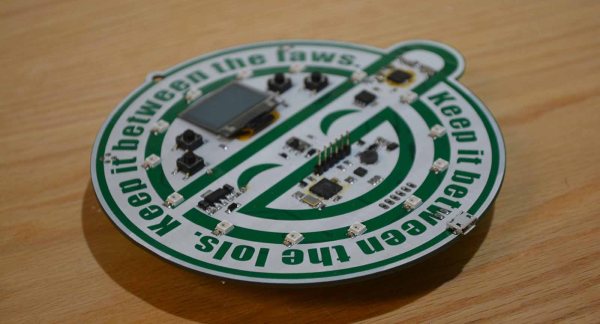
We were lucky enough to get our hands on a hand-soldered prototype of the new Hacker Warehouse badge, and boy is this one a treat. It’s fashionable, it’s blinky, and most impressively, it’s a very useful tool. This badge can replace the Google Authenticator two factor authentication app on your phone, and it’s a USB Rubber Ducky. It’s also a badge. Is this the year badges become useful? Check out the video below to find out more.

This is the time of year when hardware hackers from all across North America are busy working on the demoscene of hardware and manufacturing. This is badgelife, the celebration of manufacturing custom wearable electronics for one special weekend in Las Vegas. In just about a month from now, there will be thousands of independent badges flooding Caesar’s Palace in Vegas, complete with blinkies, custom chips, innovative manufacturing processes, and so many memes rendered in fiberglass and soldermask.

Continue reading “A Sneak Preview Of The Hacker Warehouse Badge”

Open Source DIY Printers Are Alive And Well: What We Saw At ERRF 18

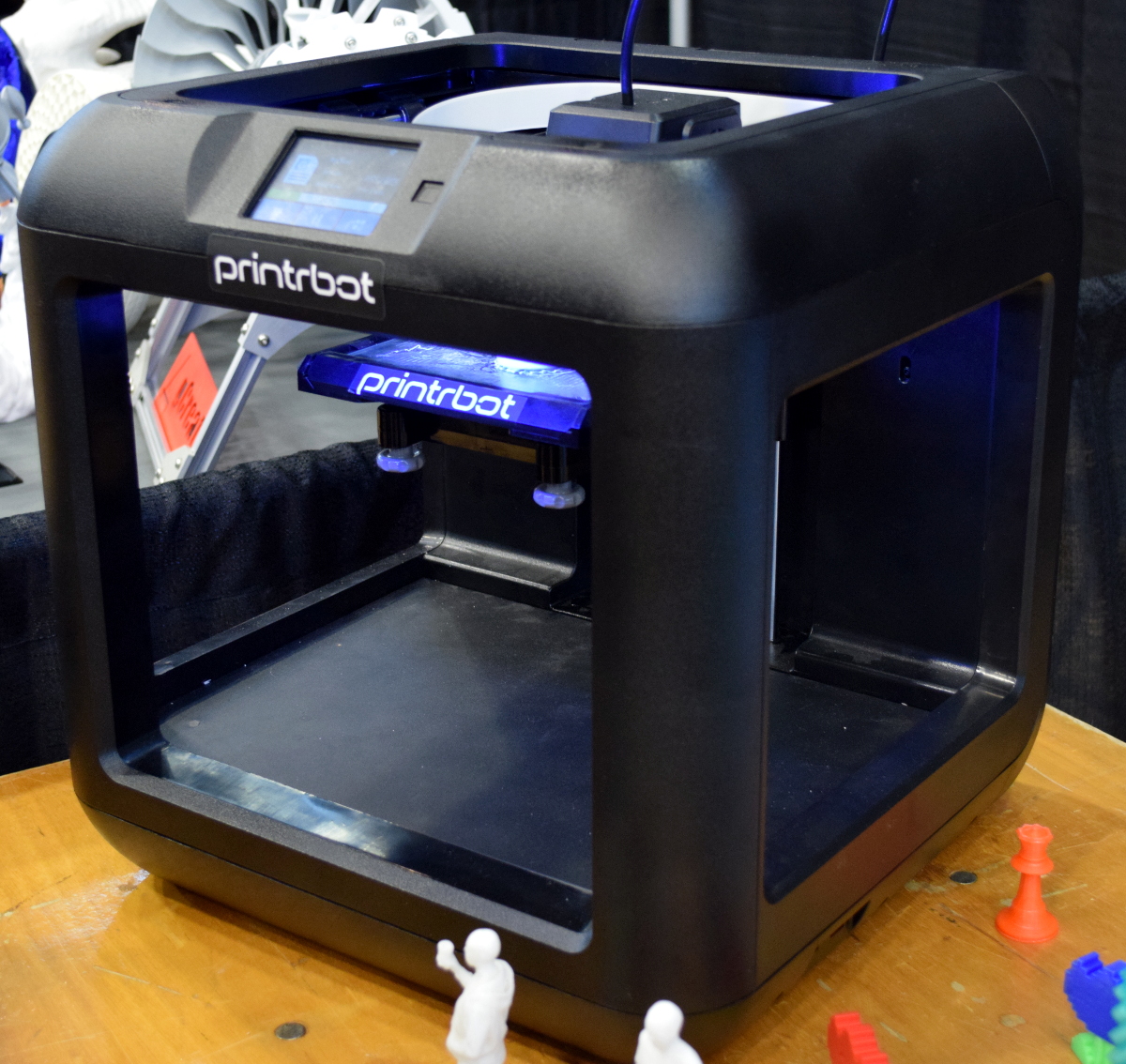
If you follow the desktop 3D printer market, it probably won’t surprise you to hear that nearly every 3D printer on display at the inaugural East Coast RepRap Festival (ERRF) was made in China. Even Printrbot CEO Brook Drumm had to admit that this was the year his company may finally bite the bullet and begin selling a branded and customized printer built overseas.

When you can get a decent (but let’s be clear, not great) 3D printer for $200 USD, it’s no surprise that American and European manufacturers are having a hard time staying competitive. But not everyone is seduced by low-cost printers. They know they could buy a decent printer for a couple hundred bucks, but for them that’s not the point. Some hackers are just as (if not more) interested in designing and building the machines than they are churning out little plastic boats with the finished product.

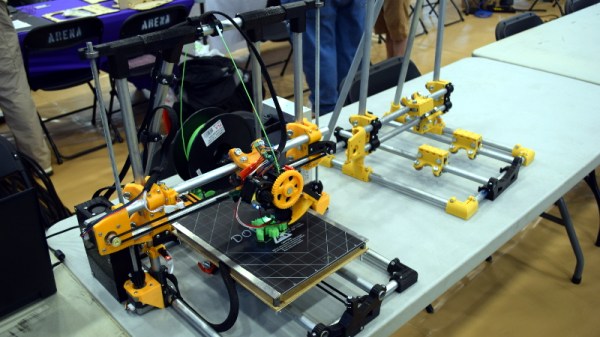
Luckily for us, these are also the type of folks who document their builds and make all their collected information and design files available for others under an open source license. Such builders exemplify the true spirit of the RepRap movement, and we’re happy to report that in a sea of imported printers, there were several interesting home built open source printers.

Whether you want to build your own copy of one of these machines, or simply get inspired by some of the ideas their creators had, these machines are physical proof that just because you can order a cheap 3D printer on eBay right now doesn’t mean you have to.

Continue reading “Open Source DIY Printers Are Alive And Well: What We Saw At ERRF 18”

Coolest Way To Watch 3D Printing: Lights, Camera, Octolapse!

Octoprint is a household name for anyone into 3D printing and anyone regularly reading Hackaday. Described by creator Gina Häußge as “the snappy web interface for your 3D printer”, Octoprint allows you to control effectively any desktop 3D printer over the local network or Internet. It even has webcam support so you can watch your printer while it works, meaning you can finally put that video baby monitor back into the crib with Junior.

While the core functionality of Octoprint is fantastic alone, its true power is unlocked through the plugin system and the community that’s sprung up around it. With plugins, Octoprint can do everything from control RGB light strips in your printer’s enclosure to sending status messages via Discord. One particularly popular plugin that has been making the rounds lately is Octolapse by [FormerLurker]. This plugin provides a comprehensive intelligent system for creating time-lapse videos of prints.

What does that mean? Well, instead of simply taking a picture every few seconds like you’d do traditionally, Octolapse actually keeps track of the printer’s motions while its running. It can then take a picture at the opportune moment to create a number of user-selected effects. More importantly, it can even take control of the printer directly; moving the hotend away from the print before taking a picture. The effect is that the print simply “grows” out of the bed.

I thought it would be interesting to take a closer look at Octolapse and see just what it takes to create one of those awesome time-lapse videos. It turned out to be somewhat trickier than I anticipated, but the end results are so fantastic I’d say it’s a technique worth mastering.

Continue reading “Coolest Way To Watch 3D Printing: Lights, Camera, Octolapse!”

How Etak Paved The Way To Personal Navigation

Our recent “Retrotechtacular” feature on an early 1970s dead-reckoning car navigation system stirred a memory of another pre-GPS solution for the question that had vexed the motoring public on road trips into unfamiliar areas for decades: “Where the heck are we?” In an age when the tattered remains of long-outdated paper roadmaps were often the best navigational aid a driver had, the dream of an in-dash scrolling map seemed like something Q would build for James Bond to destroy.

And yet, in the mid-1980s, just such a device was designed and made available to the public. Dubbed Etak, the system was simultaneously far ahead of its time and doomed to failure by the constellation of global positioning satellites being assembled overhead as it was being rolled out. Given the constraints it was operating under, Etak worked very well, and even managed to introduce some of the features of modern GPS that we take for granted, such as searching for services and businesses. Here’s a little bit about how the system came to be and how it worked.

Continue reading “How Etak Paved The Way To Personal Navigation”