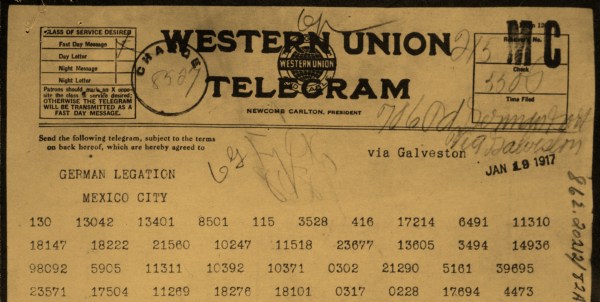
World War I began in 1914 as a fight among several European nations, while the United States pursued a policy of non-intervention. In fact, Woodrow Wilson was reelected President largely because “He kept us out of war”. But as the war unfolded in Europe, an intercepted telegram sent by the German Foreign Secretary, Arthur Zimmermann, to the Mexican government inflamed the U.S. public opinion and was one of the main reasons for the entry of the U.S. into WWI. This is the story of the encrypted telegram that changed the last century.
One of the most famous lectures in the history of technology was delivered by [Douglas Engelbart] in December 1968, at a San Francisco conference. In it he described for the first time most of what we take for granted in our desktop computers and networking today, several years before even the first microprocessor made it to market. It is revered not only because it was the first airing of these ideas, but because it was the event that inspired and influenced many of those who developed them and brought them to market. You may have heard of it by its poplar name: the Mother of All Demos.
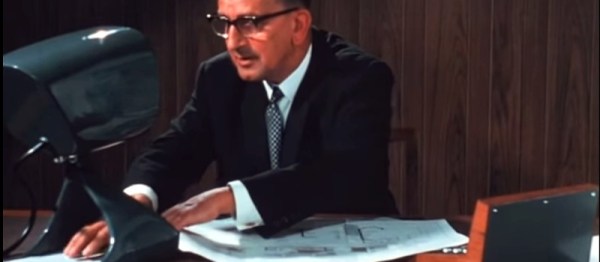
This was an exciting time to be a technologist, as it must have been obvious that we lay on the brink of an age of ubiquitous computing. [Engelbart] was by no means alone in looking to the future and trying to imagine the impact that the new developments would have in the decades to come. On the other side of the Atlantic, at the British Post Office Telephone research centre at Dollis Hill, London, his British counterparts were no less active with their crystal ball gazing. In 1969 they produced our film for today, entitled complete with misplaced apostrophe “Telecommunications Services For The 1990’s” , and for our 2017 viewpoint it provides a quaint but fascinating glimpse of what almost might have been.
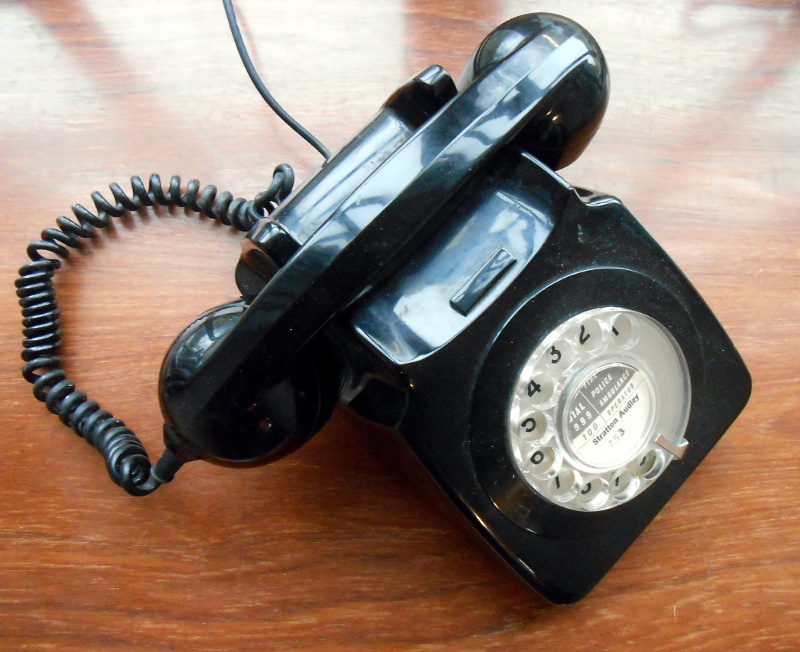
You can have any phone you want, as long as it’s state-owned! A GPO 746 telephone from the early 1970s.
Until the 1980s, the vast majority of British telephone services were a tightly regulated state monopoly run as part of the Post Office. There were only a few models of telephone available in the GPO catalogue, all of which were fixed installations with none of the phone sockets we take for granted today. Accessories such as autodiallers or answering machines were eye-wateringly expensive luxuries you’d only have found in offices, and since the fax machine was unheard of the height of data transfer technology was the telex. Thus in what later generations would call consumer information technology there really was only one player, so when they made pronouncements on the future they were a good indication of what you were likely to see in your home.
The film starts with a couple having a conversation, she in her bedroom and he in a phone box. Forgotten little touches such as a queue for a phone box or the then-cutting-edge-design Trimphone she’s using evoke the era, and the conversation leaves us hanging with the promise that their conversation would be better with video. After the intro sequence we dive straight into how the GPO thought their future network would look, a co-axial backbone with local circuits as a ring.
The real future-gazing starts with an office phone call to an Australian, at which we’re introduced to their concept of video calling with a colour CRT in a plastic unit that could almost be lifted from the set of The Jetsons. The presenter then goes on to describe a mass information service which we might recognise as something like our WWW, before showing us the terminal in more detail. Alongside the screen is a mock-up of a desktop console with keypad, cassette-based answerphone recorder, and a subscriber identity card slot for billing purposes. Period touches are a brief burst of the old harsh dial tone of a Strowger exchange, and mention of a New Penny, the newly-Decimalised currency. We’re then shown the system transmitting a fax image, of which a hard copy is taken by exposing a photographic plate to the screen.
Perhaps the most interesting sequence shows their idea of how an online information system would look. Bank statements and mortgage information are retrieved, though all with the use of a numeric keypad rather than [Englebart]’s mouse. Finally we see the system being used in a home office, a situation shown as farcical because the worker is continually harassed by his children.
Scorecard
This was the cutting edge in 1980, at least for people who hadn’t seen France’s Minitel. Fair use, via Wikimedia Commons.
So nearly five decades later, what did they get right and how much did they miss? The area you might expect them to be most accurate is oddly the one in which they failed most. The BT telecommunications backbone is now fibre-optic, and for the vast majority of us the last mile or two is still the copper pair it would have been a hundred years ago. In terms of the services though we have all of the ones they show us even if not in the form they envisaged. Fax and answering machines were everyday items by the 1980s, and though it didn’t gain much traction at the time we had video calling as a feature of most offices by the 1990s. We might however have expected them to anticipate a fax machine with a printer, after all it was hardly new technology. Meanwhile the online service they show us is visibly an ancestor of Prestel, which they launched for the late 1970s and which failed to gain significant traction due to its expense.
Another area they miss is wireless. We briefly see a pager, but even though they had a VHF radio telephone service and the ancestors of our modern cellular services were on the drawing board on the other side of the Atlantic at the time, they completely miss a future involving mobile phones.
The full film is below the break. It’s a charming period production, and the wooden quality of the action shows us that while the GPO engineers might have been telephone experts, they certainly weren’t actors.
The start of World War II threw quantum theory research into disarray. Many of the European physicists left Europe all together, and research moved across the ocean to the shores of the United States. The advent of the atomic bomb thrust American physicists into the spotlight, and physicists began to meet on Shelter Island to discuss the future of quantum theory. By this time one thing was certain: the Copenhagen interpretation of quantum theory had triumphed and challenges to it had mostly died off.
This allowed physicists to focus on a different kind of problem. At this point in time quantum theory was not able to deal with transitional states of particles when they are created and destroyed. It was well known that when an electron came into contact with a positron, the two particles were destroyed and formed at least two photons with a very high energy, known as gamma rays. On the flip side, gamma ray photons could spontaneously turn into positron-electron pairs.
No one could explain why this occurred. It had become obvious to the physicists of the day that a quantum version of Maxwell’s electromagnetic field theory was needed to explain the phenomenon. This would eventually give rise to QED, short for quantum electrodynamics. This is a severely condensed story of how that happened.
To a casual observer it might seem as though our community is in the news rather a lot at the moment. It’s all about hacks on our TV screens in the soap opera of Washington politics, who hacked this, whether those people over there helped that lot hack the other lot, or even whether that person’s emails could have been hacked on that server. Keeping up with it as an outsider can become a full-time job.
Of course, as we all know even if the mainstream journalists (or should I refer to them colloquially as “hacks”?) don’t, it’s not us they’re talking about. Their hackers are computer criminals, while we are people with some of the hardware and software skills to bend technology to our will, even beyond what its designers might have intended. And that divergence between the way we use the word in a sense of reappropriation and they use it in disapprobation sometimes puts us in an odd position. Explaining to a sober-suited businessman as the director of a hackspace, that no, we’re not *those*hackers can sometimes feel like skating on thin ice.
[Steve Collins] is a regular around Hackaday. He’s brought homebrew LIDARs to our regular meetups, he’s given a talk on a lifetime’s worth of hacking, and he is the owner of the most immaculate Hackaday t-shirt we’ve ever seen.
For the 2016 Hackaday SuperConference, [Steve] took a break from his day job of driving spacecraft around the Solar System. As you can imagine, NASA plans on things going wrong. How do you plan for that? [Steve] answers all your questions by telling you what happens when things go wrong in space.
Recharging your mobile phone or your electric vehicle in a few minutes sure sounds appealing. Supercapacitor technology has the potential to deliver that kind of performance that batteries currently can’t, and while batteries are constantly improving, the pace of development is not very fast. Just remember your old Nokia mobile with Ni-Cad batteries and several days of usage before a recharge was needed. Today we have Lithium-Ion batteries and we have to charge our phones every single day. A better energy storage option is clearly needed, and supercapacitors seem to be the only technology that is close to replace the battery.
There was a time when Radio Shack offered an incredible variety of supplies for the electronics hobbyist. In the back of each store, past the displays of Realistic 8-track players, Minimus-7 speakers, Patrolman scanners, and just beyond the battery bin where you could cash in your “Battery of the Month Club” card for a fresh, free 9-volt battery, lay the holy of holies — the parts. Perfboard panels on hinges held pegs with cards of resistors for 49 cents, blister packs of 2N2222 transistors and electrolytic capacitors, and everything else you needed to get your project going. It was a treasure trove to a budding hardware hobbyist.
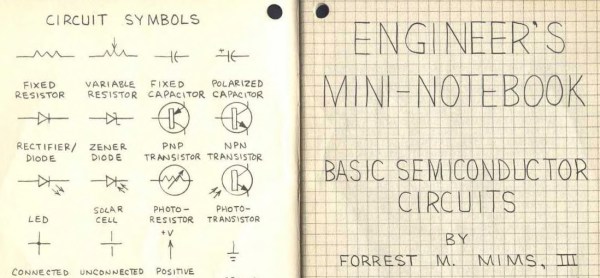
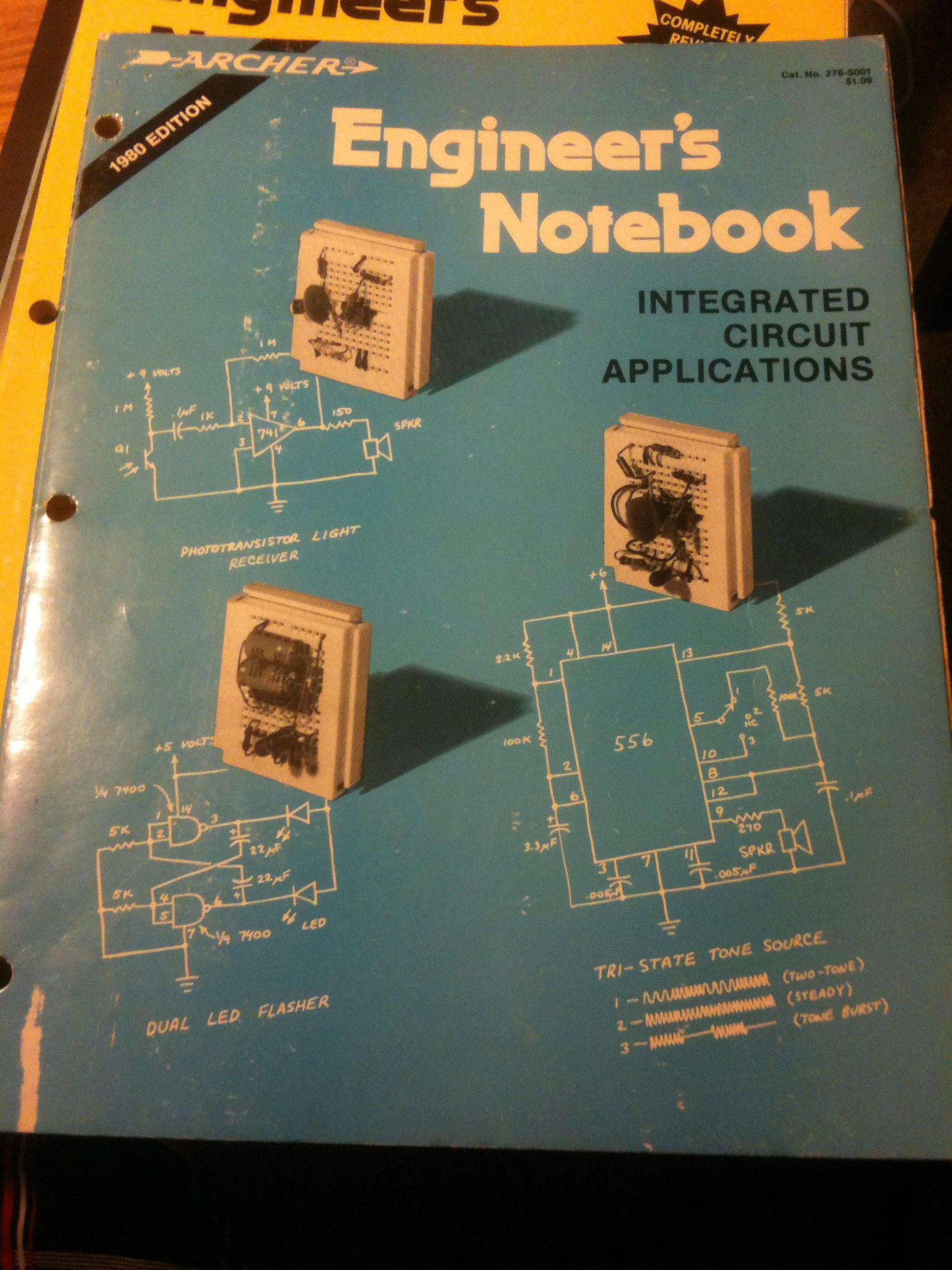
But over on the side, invariably near the parts, was a rack of books for sale, mostly under the Archer brand. 12-year old me only had Christmas and birthday money to spend, and what I could beg from my parents, so I tended to buy books — I figured I needed to learn before I started blowing money on parts. And like many of that vintage, one of the first books I picked up was the Engineer’s Notebook by Forrest M. Mims III.
Wish I could find my original copy from 1979. I just bought this one from Amazon.
Many years rolled by, and my trusty and shop-worn first edition of Mims’ book, with my marginal notes and more than one soldering iron burn scarring its pulp pages, has long since gone missing. I learned so much from that book, and as I used it to plan my Next Big Project I’d often wonder how the book came about. Those of you that have seen the book and any of its sequels, like the Mini-notebook Series, will no doubt remember the style of the book. Printed on subdued graph paper with simple line drawings and schematics, the accompanying text did not appear to be typeset, but rather hand lettered. Each page was a work of technical beauty that served as an inspiration as I filled my own graph-paper notebooks with page after page of circuits I would find neither the time nor money to build.
I always wondered about those books and how they came about. It was a pretty astute marketing decision by Radio Shack to publish them and feature them so prominently near the parts — sort of makes the string of poor business decisions that led to the greatly diminished “RadioShack” stores of today all the more puzzling. Luckily, Forrest Mims recently did an AMA on reddit, and he answered a lot of questions regarding how these books came about. The full AMA is worth a read, but here’s the short story of those classics of pulp non-fiction.