Hacking A Universal Assembler

I have always laughed at people who keep multitools–those modern Swiss army knives–in their toolbox. To me, the whole premise of a multitool is that they keep me from going to the toolbox. If I’ve got time to go to the garage, I’m going to get the right tool for the job.

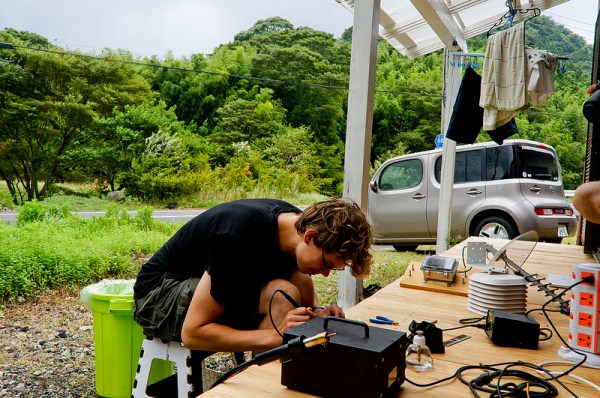
Not that I don’t like a good multitool. They are expedient and great to get a job done. That’s kind of the way I feel about axasm — a universal assembler I’ve been hacking together. To call it a cross assembler hack doesn’t do it justice. It is a huge and ugly hack, but it does get the job done. If I needed something serious, I’d go to the tool box and get a real assembler, but sometimes you just want to use what’s in your pocket.

Continue reading “Hacking A Universal Assembler”

Tindie Becomes A Part Of The Hackaday Family

A little over two years ago, we announced that Hackaday became a part of Supplyframe. This was a natural fit: both sides are comprised of hardware engineers, computer scientists and hackers alike. We immediately pooled forces and set out to make Hackaday bigger, with a broader mission. So far, it has been an amazing journey: Hackaday.io is approaching 100,000 registered users, The Hackaday Prize is in its second year, and the Hackaday Store is about to fulfill its 5,000th order.

The main theme behind all of this is fostering collaboration, learning, and providing incentives for everyone in the community to stop procrastinating and try to build something amazing. Hackaday.com is here to inspire, Hackaday.io to help develop projects in the open, and the Hackaday Store is to provide a way to turn passion projects into a self-sustainable lifestyle. While the road to community-powered innovation might not be easy, it’s something we’re all incredibly passionate about, and will continue investing in to further this goal.

With that in mind, we’re very excited to announce that everyone’s favorite hardware marketplace – Tindie, has been acquired by Supplyframe and will be joining the Hackaday family! Apart from the fact that most of us are personal fans of the website, we believe that Tindie fills an important gap in helping projects cross the chasm between prototype and initial production. Crowdfunding provides access to capital for some (and access to laughs for others), but it’s not always the way to go. You might not be ready to quit your day job or take on a project full-time. You might be working on rev1 of the project and want to try the “lean manufacturing” thing. Or maybe you’re building something for your own purposes and have some extras lying around. Tindie is a platform that has helped launch many such projects, and we’re incredibly lucky to have it be a part of Hackaday.

Now what?

Naturally, the question that’s on everyone’s mind is, what happens next? Are we going to mess things up? Paint Tindie in black? Change the fee structure? While we have ideas on things that we could help with, our main goal will be making sure that the Tindie community continues to thrive. The only changes we’re interested in are the ones that make the community stronger. We are fascinated with the challenges surrounding the supply chain and will be looking into tools to help sellers improve margins and ship better products. Hackaday.io and Tindie combined represent the world’s largest repository of (working) Open Hardware products, so we will be looking into more closely integrating the two. We will also make efforts to grow the overall Tindie audience, as every new buyer helps move the community forward.

All of these are some of the ideas, but we’re ultimately looking at you for guidance: things we should do, problems we should attack, dreams of future capabilities.

Wish us luck in this new adventure.

Aleksandar Bradic
CTO
Supplyframe

How CMOS Works: MOSFETs, JFETs, IGFETS And More

CMOS opened the door for many if not most of the properties needed for today’s highly integrated circuits and low power portable and mobile devices. This really couldn’t happen until the speeds and current drive capabilities of CMOS caught up to the other technologies, but catch up they did.

Nowadays CMOS Small Scale Integration (SSI) logic families, I.E. the gates used in external logic, offer very fast speeds and high current drive capability as well as supporting the low voltages found in modern designs. Likewise the Very Large Scale Integration (VLSI) designs, or Very Very Large Scale if you like counting the letter V when talking, are possible due to low power dissipation as well as other factors.

Continue reading “How CMOS Works: MOSFETs, JFETs, IGFETS And More”

Hacking The Digital And Social System

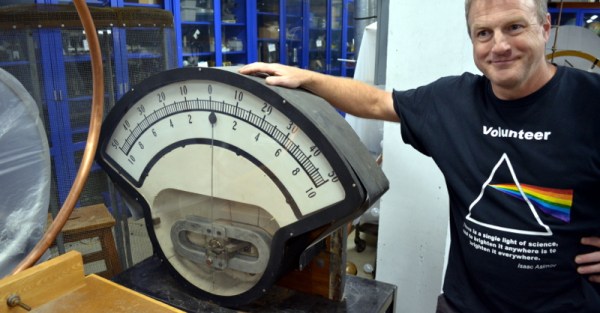
When you live in a totalitarian, controlled and “happy” society, and you want to be a hacker, you have to hack the social system first. Being just an engineer doesn’t cut it, you have to be a hypocrite, dissident and a smuggler at the same time. That’s the motto of my personal story, which starts in Yugoslavia, and ends in Serbia. No, I didn’t move, I’m still in Belgrade, only the political borders have changed.

Half a century ago, when I was in elementary school, I discovered the magical world of HAM radio. I became a member of two amateur radio clubs, passed all exams and got my licence and callsign, which was YU1OPC. I was delighted, but after five years, the party was over. What happened? Well, one day the police paid a visit to all registered owners of CB Band equipment and simply took that equipment away. No one knows why they did it, but it was probably off the books, as we never got any written confirmation, and no one ever saw their equipment again.

Continue reading “Hacking The Digital And Social System”

The Countdown Begins — Last Two Weeks For Entries

Procrastination is a wonderful thing, but now is the time to stop delaying. Get those hacks documented and entered in the 2015 Hackaday Prize. We’ll close entries in just about two weeks. There’s a handy little countdown on the Prize page which lets you know that your entry must be in by August 17th at 1:50pm PDT (UTC-7).

There’s a lot at stake here, so let’s take another look at what this is all about: Build something that solves a problem faced by a lot of people and you could score a Trip to Space, $100,000 for Best Product, or 2nd-5th place prizes worth $5,000-10,000 each.

Of course the goal is to show off your build. This could end up inspiring others to Build Something that Matters and that means to win you need to document your work. Join us after the break to see the minimum needed for your entry to qualify for judging.

Continue reading “The Countdown Begins — Last Two Weeks For Entries”

We Should 3D Scan People

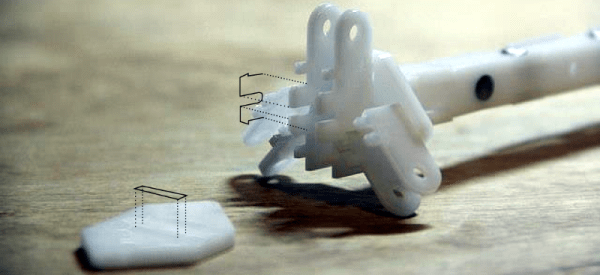
In a perfect futuristic world you have pre-emptive 3D scans of your specific anatomy. They’d be useful to compare changes in your body over time, and to have a pristine blueprint to aid in the event of a catastrophe. As with all futuristic worlds there are some problems with actually getting there. The risks may outweigh the rewards, and cost is an issue, but having 3D imaging of a sick body’s anatomy does have some real benefits. Take a journey with me down the rabbit hole of 3D technology and Gray’s Anatomy.

Continue reading “We Should 3D Scan People”

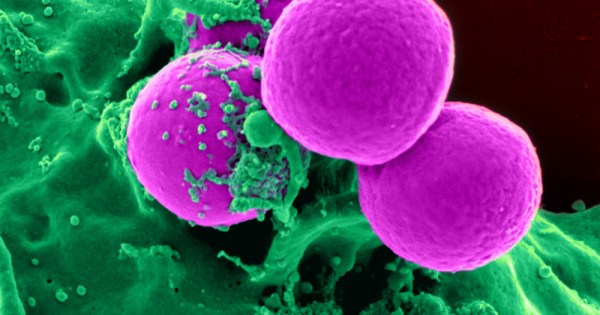
The Biohacking Movement And Open Source Insulin

In March of 2014, I knew my eight year old daughter was sick. Once borderline overweight, she was now skeletally thin and fading away from us. A pre-dawn ambulance ride to the hospital gave us the devastating news – our daughter had Type 1 diabetes, and would be dependent on insulin injections for the rest of her life.

This news hit me particularly hard. I’ve always been a preparedness-minded kind of guy, and I’ve worked to free myself and my family from as many of the systems of support as possible. As I sat in the dark of the Pediatric ICU watching my daughter slowly come back to us, I contemplated how tied to the medical system I had just become. She was going to need a constant supply of expensive insulin, doled out by a medical insurance system that doesn’t understand that a 90-day supply of life-saving medicine is a joke to a guy who stocks a year supply of toilet paper. Plus I had recently read an apocalyptic novel where a father watches his 12-year old diabetic daughter slip into a coma as the last of her now-unobtainable insulin went bad in an off-grid world. I swore to myself that I’d never let this happen, and set about trying to find ways to make my own insulin, just in case.

Continue reading “The Biohacking Movement And Open Source Insulin”