Hackaday Prize Worldwide: San Francisco

Summer is heating up and so is the Hackaday Prize. In two weeks we’ll put down stakes in San Francisco for a day-long workshop followed by a meetup in the hippest of bars.

The Zero to Product workshop will be held on June 13th at Highway1 — the well-known hardware startup accelerator in San Francisco. This workshop is created and led by [Matt Berggren] who is an expert in electronic design and PCB layout.

RSVP Before Tickets are Gone!

Zero to Product workshop in Pasadena a few weeks ago

RSVP for the workshop and you’ll be well on your way to knowing what goes into professional-level PCB design. Basic knowledge of electronics is all you need, prior layout experience isn’t required. Bring along a computer with the newest version of Eagle on it if you want to follow along, but this is not a requirement. It will certainly jumpstart any PCB design you are working on for your 2015 Hackaday Prize entry. If you haven’t started your entry yet, this is a great crowd to help with brainstorming!

Whether or not you are at the workshop, we’re planning to head out for a bit of fun afterward. This casual meet up is at Lucky Strike starting around 7:30pm. It’s up to you if you want to bowl, imbibe, or both. Please RSVP; since we haven’t rented the place out we’d like to have an idea of how many hackers are coming. And don’t forget, it’s a tradition at Hackaday bar meetups to bring a small bit of hardware to show off as you meet new people. See you in June!


The 2015 Hackaday Prize is sponsored by:

From Gates To FPGA’s – Part 1: Basic Logic

It’s time to do a series on logic including things such as programmable logic, state machines, and the lesser known demons such as switching hazards. It is best to start at the beginning — but even experts will enjoy this refresher and might even learn a trick or two. I’ll start with logic symbols, alternate symbols, small Boolean truth tables and some oddball things that we can do with basic logic. The narrative version is found in the video, with a full reference laid out in the rest of this post.

Invert

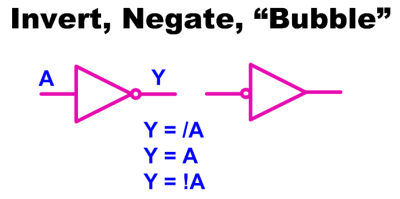
1The most simple piece of logic is inversion; making a high change to low or a low change to high. Shown are a couple of ways to write an inversion including the ubiquitous “bubble” that we can apply almost anywhere to imply an inversion or a “True Low”. If it was a one it is now a zero, where it was a low it is now a high, and where it was true it is now untrue.

AND

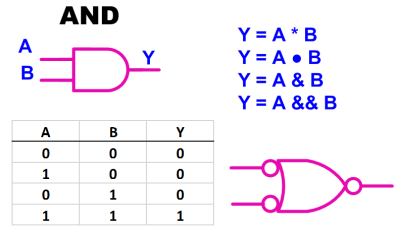
2Moving on to the AND gate we see a simple truth table, also known as a Boolean Table, where it describes the function of “A AND B”. This is also our first opportunity to see the application of an alternate symbol. In this case a “low OR a low yields a low”

NAND

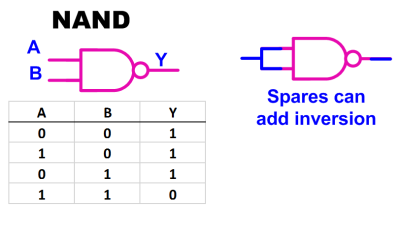
3Most if not all of the standard logic blocks come in an inverted form also such as the NAND gate shown here. The ability to invert logic functions is so useful in real life that I probably used at least three times the number of NAND gates as regular AND gates when doing medium or larger system design. The useful inversion can occur as spares or in line with the logic.

Continue reading “From Gates To FPGA’s – Part 1: Basic Logic”

Hackaday Prize Worldwide: Shenzhen

That’s right, we’re headed to the epicenter of electronics manufacturing next month: Shenzhen, China. We have a ton planned and this is the quick and dirty overview to get you thinking. If you are in the area (or are itching to travel) join us for a week of hardware hacker culture. Highlights for our tour include:

  • Meet Up on June 18th – (RSVP details coming soon)
  • Zero to Product PCB Workshop on June 19th – RSVP Now
  • Hackaday Talks presented at Maker Faire Shenzhen on June 19th and June 21st
  • Hackaday Booth at MFSZ on June 20-21

Zero to Product Workshop at MakerCamp Shenzhen

shenzhen-makercamp-drawingMakerCamp brings 30 talented Makers, Hackers, Designers, and Engineers together for a few days to build a makerspace inside of a shipping container.

We won’t be part of that build team (registration is open until 6/1 if you want to be). We will be supporting the event as part of the workshops that help celebrate the completion of the space. A mobile hackerspace full of interesting tools is one thing. But the sharing of knowledge, experience, and skill is what truly makes a hackerspace work.

zero-to-product-workshop-LAOur Zero to Product workshop created by [Matt Berggren] has been generating a ton of buzz and will be offered at Shenzhen MakerCamp.

RSVP for the Workshop

The workshop runs from 10am to 6pm on Friday, June 19th on the grounds of Maker Faire: Shenzhen. The event covers PCB design and at the end you will have laid out a development board for use with the ESP8266 WiFi module.

We were totally sold out for the workshop in LA a few weeks ago this is another chance to join in. If Shenzhen is a bit too far for you to travel, we are also planning the next installment in San Francisco on June 13th.

2015-bamf-meetupHackaday Shenzhen Meetup

If you just want to hang out, so do we! On the night of Thursday, June 18th we’ll be rolling into an area bar for a tasty beverage and a night of interesting conversation. As always, we want to see the hardware you’ve been working on. We do recommend bringing things that fit easily in your pocket or backpack since we’re meeting up to spend some time with other Hackaday community members in the area.

We don’t have the location nailed down for this one. Check this post again as we’ll be adding it here. And if you have a bar to suggest to us please leave a comment below.

The picture above is from just a few weeks ago. We had a huge turnout for the BAMF meetup. There was a ton of hardware on hand which makes for really easy conversation as you meet other hackers for the first time.

Talks by [Mike] and [Sophi] plus Booth at Maker Faire Shenzhen

[Mike] is giving a talk on Friday, June 19th about the power of Open Design to move education forward. [Sophi] will be presenting her talk on Sunday, June 21st about making stuff that matters and working on research equipment used to investigate the world around us such as solar, medicine and disease.

Come to the Faire to hear our talks, but make sure you swing by the Hackaday booth as well. We’ll be bringing some of our most favorite projects to exhibit but we can’t resist the opportunity to do something interactive. Stop by and build an oscillator, wire up a sequencer, and create your own rudimentary music based on [Elliot Williams’] series Logic Noise.

Tag Along with Hacker Camp Shenzhen?

hcsz2015-thumbnailOne of the adventures we’ve always wanted to take part in is Hacker Camp Shenzhen which is run by Hackaday alumnus and Hackaday Prize Judge [Ian Lesnet]. The week-long camp leverages [Ian’s] knowledge of the area, manufacturers, markets, and people to provide tours and workshops for those interested in manufacturing. It just so happens that HackerCamp lines up the same week as all of the Hackaday events. We can’t take part in the entire thing, but are hoping that we have a free day to meet up (and possibly tag along) with the HackerCamp crew.


The 2015 Hackaday Prize is sponsored by:

Levitating Objects In Paramagnetic Liquids

Two weekends ago was the Bay Area Maker Faire, and lacking a venue to talk to people who actually make things, we had a meetup at a pub. This brought out a ton of interesting people, and tons of interesting demos of what these people were building. By either proclivity or necessity, most of these demos were very blinkey. The demo [Grant McGregor] from Monterey Community College brought was not blinkey, but it was exceptionally cool. He’s levitating objects in paramagnetic liquids with permanent magnets.

Levitating objects in a paramagnetic solution around a magnetic field has been an intense area of research for the Whitesides Research Group for a few years now, with papers that demonstrate methods of measuring the density of objects in a paramagnetic solution and fixing diamagnetic objects inside a magnetic field. [Grant] is replicating this research with things that can be brought to a bar in a small metal box – vials of manganese chlorate with bits of plastic and very strong neodymium magnets. The bits of plastic in these vials usually float or sink, depending on exactly what plastic they’re made of. When the paramagnetic solution is exposed to a magnetic field, the density of the solution changes, making the bits of plastic sink or float.

It’s a bizarre effect, but [Grant] mentioned a nurd rage video that shows the effect very clearly. [Grant]’s further experiments will be to replicate the Whitesides Research Group’s experiment to fix a diamagnetic object inside a magnetic field. As for any practical uses for this effect, you might be able to differentiate between different types of plastic (think 3D printing filament) with just a vial of solution and a strong magnet.

[Grant] was heading out of the pub right when I ran into him, but he did stick around long enough to run into the alley behind the pub and record an interview/demo. You can check that out below.

Continue reading “Levitating Objects In Paramagnetic Liquids”

LayerOne Demoscene Demoboard Party

The LayerOne conference is over, and that means this last weekend saw one of the biggest demoscene parties in the USA. Who won? A European team. We should have seen this coming.

There were two categories for the LayerOne demo compo, the first using only the LayerOne Demoscene Board. It’s a board with a PIC24F microcontroller, VGA out, and a 1/8″ mono audio out. That’s it; everything that comes out of this board is hand coded on the PIC. A few months ago, [JKing] wrote a demo to demonstrate what this demoboard can do. According to him, it’s the only reason Hackaday sold a single Demoboard in the Hackaday store:

Continue reading “LayerOne Demoscene Demoboard Party”

Need Timing Diagrams? Try Wavedrom

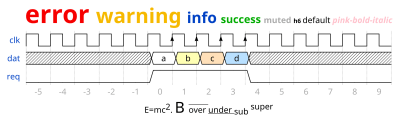
When working with anything digital, you’re going to end up reading or writing a timing diagram before long. For us, that’s meant keeping (text) notes, drawing something on a napkin, or using a tool like Inkscape. None of these are ideal.

An afternoon’s search for a better tool ended up with Wavedrom.

Just so you know where we’re coming from, here’s our list of desiderata for a timing diagram drawing solution:

  • Diagrams have a text-based representation, so their generation can be easily scripted and the results versioned and tracked throughout project development
  • Command-line rendering of images, because we like to automate everything
  • Looks good
  • Simple to use for common cases, but flexible enough to do some strange stuff when needed
  • Output modifiable when absolutely necessary: SVG would be nice

Basically, what we want is graphviz for timing diagrams.

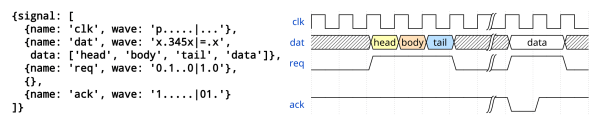
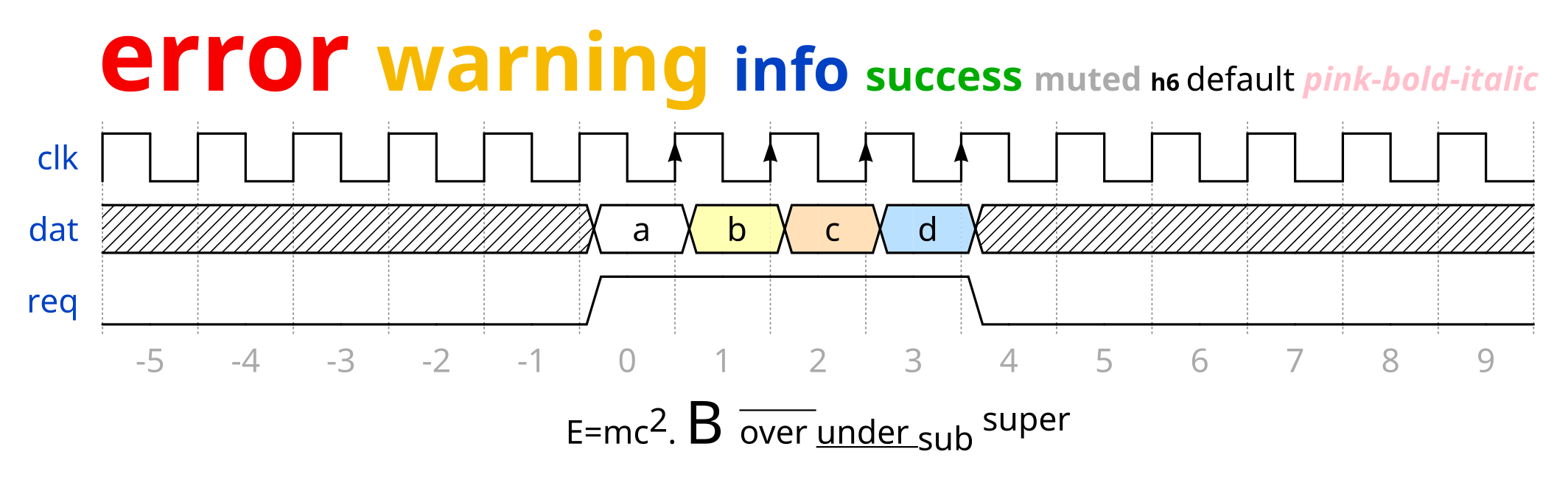
Wavedrom nails four out of these five at the moment, and has promise to cover all of the bases. Give the online editor demo a try. We found it intuitive enough that we could make simple diagrams without even reading the fine manual. The tutorial has got you covered for more esoteric use cases.
foo

Clearly, some good thought has been put into the waveform description language, WaveJSON; it’s mostly readable and makes the essentials quick and easy. Because you can also enter straight SVG, it leaves the door open for full-fledged lunacy.

Wavedrom is written in JavaScript, and built for embedding in webpages; that’s the way they intend us to use it. On the other hand, if you want to run your own local version of the online editor, you can download it and install it locally if you’d like.

Our only quibble is that the standalone, command-line application wouldn’t generate images without the GUI on our Arch system. (Looks like there are some Google Chrome dependencies?) Otherwise, we think we’ve found our solution.

There are other applications out there. Drawtiming looks good, but we can’t quite get our head around the file format and the graphic output isn’t as flexible as we’d like: it only outputs GIF and we’re more into SVG because it can be edited easily after the fact.

There are font-based solutions that let you “type” the timing diagrams. We found Xwave and “Timing Diagram Font“. These work but aren’t particularly flexible; if you want something to happen at odd times, you’re out of luck. Plus, it just feels like a dirty hack, as if that were a bad thing.

Latex users can use tikz-timing, which makes sketching out your timing diagrams as much fun as laying out a very complex table in Latex (that is: not fun at all). On the other hand, it looks good, is ultimately flexible, outputs PDF, and would be scriptable if someone put the time in to write a nice frontend.

So for the next little while, we’re trying out Wavedrom.

What do you use for making timing diagrams?

Pictures That Defeat Key Locks

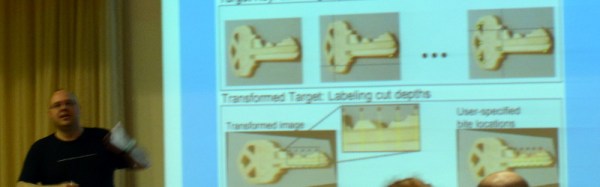
We’re at LayerOne this weekend and one of the talks we were excited about didn’t disappoint. [Jos Weyers] presented Showing Keys in Public — What Could Possibly Go Wrong? The premise is that pictures of keys, in most cases, are as good as the keys themselves. And that pictures of keys keep getting published.

[Jos] spoke a bit about new services that offer things like 3D scanning and storage of your key for printing when you get locked out, or apps that ask you to take a picture of your key and they’ll mail you a duplicate. Obviously this isn’t the best of ideas; you’re giving away your passwords. And finding a locksmith is easier than findind a 3D printer. But it’s the media gaffs with important keys that intrigues us.

We’ve already seen the proof of concept for taking covert images to perfectly duplicate a key. But these examples are not so covert. One example is a police officer carrying around handcuff keys on a belt clip. Pose for a picture and that key design is now available to all. But news stories about compromised keys are the biggest offenders.

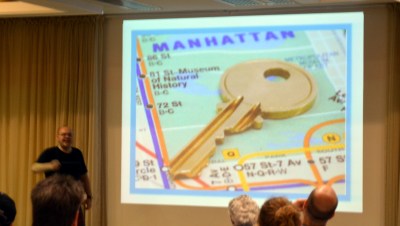
subway-keysA master key for the NYC Subway was compromised and available for sale. The news coverage not only shows a picture at the top of the story of a man holding up the key straight on, but this image of it on a subway map which can be used to determine scale. This key, which is still published openly on the news story linked above, opens 468 doors to the subway system and these are more than just the ones that get you onto the platform for free. We were unable to determine if these locks have been changed, but the sheer number of them has us thinking that it’s unlikely.
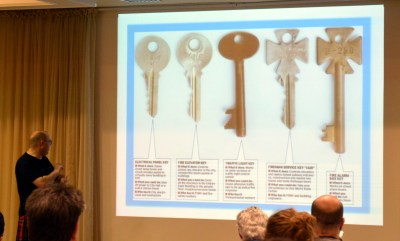
firemans-keysWorse, was the availability of fire-department master keys which open lock boxes outside of every building. (Correction: these are fire department keys but not the actual lock-box keys) A locksmith used to cut the original keys went out of business and sold off all their stock. These keys were being sold for $150, which is bad enough. But the news coverage showed each key on a white background, straight on, with annotations of where each type of key will work.
Other examples include video news stories about credit card skimmers installed in gas pumps — that coverage showed the key used to open the pump housing. There was also an example of speed camera control cabinet keys being shown by a reporter.

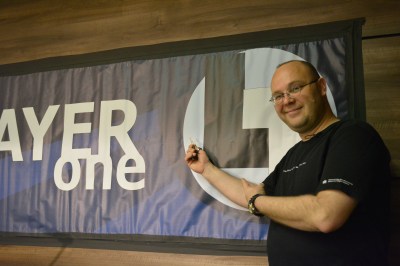
key-photo-duplication-layerone[Jos’] example of doing the right thing is to use a “prop” key for news stories. Here he is posing with a key after the talk. Unfortunately this is my own house key, but I’m the one taking pictures and I have blurred the teeth for my own security. However, I was shocked during image editing at the quality of the outline in the image — taken at 6000×4000 with no intent to make something that would serve as a source for a copy. It still came out remarkably clear.



Some locks are stronger than others, but they’re all meaningless if we’re giving away the keys.