Hackaday Podcast 181: 3D Printing With Volcano Nuts, The Hackaday Bookshelf, And A Puzzlebot

This week, Editor-in-Chief Elliot Williams and Assignments Editor Kristina Panos convened in a secret location to say what we will about the choicest hacks of the past week. We kick things off by discussing the brand new Cyberdeck contest, which is the first of it’s type, but certainly won’t be the last. In other contest news, we recently announced the winners of the Hack it Back Challenge of the Hackaday Prize, which ran the gamut from bodysnatching builds to rad resto-mods and resto-recreations.
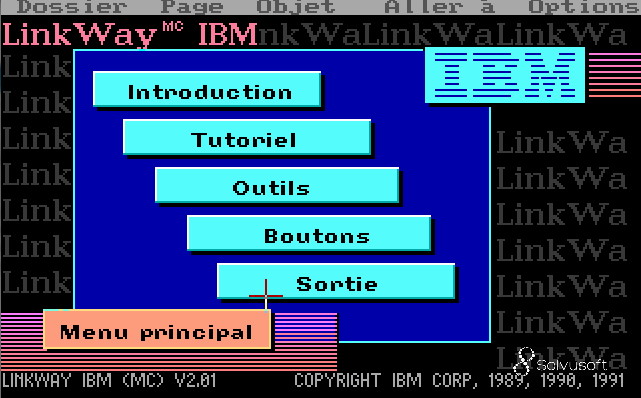
IBM’s Linkway, French edition. Très tubulaire, non?

Taking top honors in wow factor this week is [Stuff Made Here]’s jigsaw puzzle-solving robot. This monster can currently tackle small laser-cut puzzles, but is destined to solve an all-white 5000-piece nightmare once all the engineering pieces have come together.

Then we took a field trip to Zip Tie City, where the plastic’s green ♻ and the wiring’s pretty, admired volcano nuts from afar, and briefly considered the idea of a 3D printer with a heating zone of programmable length.

Finally, we take a look at a creatively destructive robot that’s akin to a useless machine, bloviate about books you should read, and dance around the topic of learning by playing.


Direct download.

Check out the links below if you want to follow along, and as always, tell us what you think about this episode in the comments!


Continue reading “Hackaday Podcast 181: 3D Printing With Volcano Nuts, The Hackaday Bookshelf, And A Puzzlebot” →

This Week In Security: Breaches, ÆPIC, SQUIP, And Symbols

So you may have gotten a Slack password reset prompt. Something like half a percent of Slack’s userbase had their password hash potentially exposed due to an odd bug. When sending shared invitation links, the password hash was sent to other members of the workspace. It’s a bit hard to work out how this exact problem happened, as password hashes shouldn’t ever be sent to users like this. My guess is that other users got a state update packet when the link was created, and a logic error in the code resulted in too much state information being sent.

The evidence suggests that the first person to catch the bug was a researcher who disclosed the problem mid-July. Slack seems to use a sane password policy, only storing hashed, salted passwords. That may sound like a breakfast recipe, but just means that when you type your password in to log in to slack, the password goes through a one-way cryptographic hash, and the results of the hash are stored. Salting is the addition of extra data, to make a precomputation attack impractical. Slack stated that even if this bug was used to capture these hashes, they cannot be used to directly authenticate as an affected user. The normal advice about turning on 2-factor authentication still applies, as an extra guard against misuse of leaked information. Continue reading “This Week In Security: Breaches, ÆPIC, SQUIP, And Symbols” →

Microsoft’s New Simulator Helps Train Drone AIs

Testing any kind of project in the real world is expensive. You have to haul people and equipment around, which costs money, and if you break anything, you have to pay for that too! Simulation tends to come first. Making mistakes in a simulation is much cheaper, and the lessons learned can later be verified in the real world. If you want to learn to fly a quadcopter, the best thing to do is get some time behind the sticks of a simulator before you even purchase anything with physical whirly blades.

Oddly enough, the same goes for AI. Microsoft built a simulation product to aid the development of artificial intelligence systems for drones by the name of Project AirSim. It aims to provide a comprehensive environment for the testing of drone AI systems, making development faster, cheaper, and more practical.

Continue reading “Microsoft’s New Simulator Helps Train Drone AIs” →

What Goes Into A Hacker Camp

Long-time readers of Hackaday will know that we attend quite a few events, including summer hacker camps. Here in Europe this year there are two large events, the British Electromagnetic Field, and the Dutch MCH, or May Contain Hackers. These events are put together by volunteers from within the community, and as part of the MCH setup I noticed they needed drivers for their off-site logistics. I have a licence to drive medium-sized trucks in Europe so it seemed like a perfect fit. I traveled early on the first set-up day to the Dutch city of Utrecht, and found myself behind the wheel of a large Volkswagen box van. My brief career as a trucker had begun!

An Empty Field Of Dreams

A field with a few tents and a blue sky
The tents stand in isolation at the end of day one.

The Netherlands is a relatively small country and the MCH site at Zeewolde is roughly in its centre, so while the traffic could be heavy the distances weren’t large by American or even British standards. There were however a wide variety of loads waiting for me and my fellow driver, and a few obstacles such as the hottest days of the year and angry Dutch farmers blockading the roads. If you’re interested in the logistics behind a large hacker camp then our journeys provided an insight that maybe wandering around the field doesn’t quite deliver.

Arriving on site on the first day gives a perspective on how much of the infrastructure comes from specialist contractors and thus isn’t delivered by the hackers. Articulated trucks from the marquee company were disgorging the main tents, with their crews expertly assembling them in record time. The toilets and showers were arriving as self-contained hook lift container units, and yet more contractors were delivering fencing or tables and chairs. I can add the power infrastructure to this list, but due I’m told to delays at another event this wasn’t on site on the first day. Continue reading “What Goes Into A Hacker Camp” →

Linux Fu: The Chrome OS Flex Virtualization

The Flex Desktop is user-friendly and responsive

You’ve probably heard about Google Chromebooks. Like Android, Chrome OS is based on some variant of Linux, but it is targeted at the “cloud first” strategy so Chromebooks typically don’t have a huge amount of storage or compute power. If you have a real Chromebook, you can also use it to run certain other kinds of programs via virtualization. However, Google has recently pushed out Chrome OS Flex which is meant to install on a spare laptop you might happen to have hanging around. Seems attractive to take that only Windows 7 laptop and repurpose it to run Chrome OS, especially if you can run Linux apps on it. Unfortunately, Chrome OS Flex has a very different use case and I would only recommend installing it if you meet the exact use case it addresses.

The other option, of course, is to just install Linux on that old hardware. There are several distributions that are made for that purpose and, honestly, even most of the major distributions will work fine on older hardware with a little tweaking to turn off some of the more resource-costly features. That assumes you know how to install, tweak, and maintain Linux.

Continue reading “Linux Fu: The Chrome OS Flex Virtualization” →

2022 Hackaday Prize: Congratulations To The Winners Of The Hack It Back Challenge

Wow! We knew that the Hack it Back Challenge round of the Hackaday Prize would bring out the clever repairers among you, but we’re still impressed to see the results! This was a tough round for the judges, but they came up with a short list of ten finalists, and we’re pleased to bring them to you here.

The Hack it Back Challenge aimed to keep old gear from being thrown away by performing a heroic repair, giving it a new purpose in life, or otherwise bringing it back to a useful state. Of course, once you’ve got the box open, you start thinking of how to improve whatever the gadget is, and some of our finalists took that in unexpected directions. Continue reading “2022 Hackaday Prize: Congratulations To The Winners Of The Hack It Back Challenge” →

AI Creates Your Spreadsheets, Sometimes

We’ve been interested in looking at how AI can process things other than silly images. That’s why the “Free AI Bot that Generates the Excel Formula for Any Problem” caught our eye. Based on GPT-3, it supposedly transforms your problem description into a formula suitable for Excel or Google Sheets.

Our first prompt didn’t work out very well. But that was sort of our fault. When they say “Excel formula” they mean that quite literally. So trying to describe the actual result you want in terms of columns or rows seems to be beyond it. Not realizing that, we asked:

If the sum of column H is greater than 50, multiply column A by 0.33

And got:

=IF(SUM(H:H)>50,A*0.33,0)

A Better Try

Which is close, but not really how anyone even mildly proficient with Excel would interpret that request. But that’s not fair. It really needs to be a y=f(x) sort of problem, we suppose.

Continue reading “AI Creates Your Spreadsheets, Sometimes” →