There’s A Fungus Among Us That Absorbs Sound And Does Much More

Ding dong, the office is dead — at least we hope it is. We miss some of the people, the popcorn machine, and the printer most of all, but we say good riddance to the collective noise. Thankfully, we never had to suffer in an open office.

For many of us, yours truly included, home has become the place where we spend approximately 95% of our time. Home is now an all-purpose space for work, play, and everything in between, like anxiety-induced online shopping. But unless you live alone in a secluded area and/or a concrete bunker, there are plenty of sound-based distractions all day and night that emanate from both inside and outside the house. Headphones are a decent solution, but wearing them isn’t always practical and gets old after a while. Wouldn’t it be nice to be able to print your own customized sound absorbers and stick them on the walls? Continue reading “There’s A Fungus Among Us That Absorbs Sound And Does Much More”

Rocket Lab Plans Larger Neutron Rocket For 2024

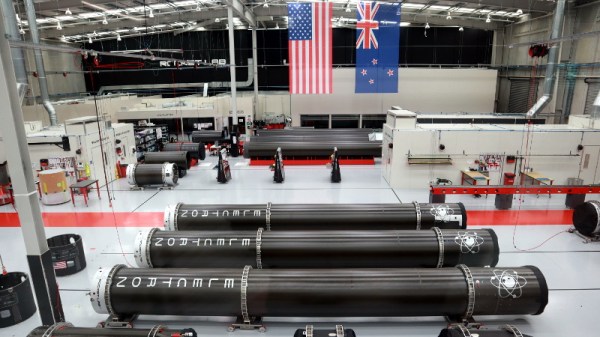
When Rocket Lab launched their first Electron booster in 2017, it was unlike anything that had ever flown before. The small commercially developed rocket was the first to use fully 3D printed main engines, and instead of pumping its propellants with traditional turbines, the vehicle used electric motors that jettisoned their depleted battery packs overboard during ascent to reduce weight. It even looked different than its peers, as rather than a metal fuselage, the Electron was built from a lightweight carbon composite which gave it a distinctive black color scheme.

Packing so many revolutionary technical advancements into a single vehicle was a risk, but Rocket Lab founder Peter Beck believed a technical shakeup was the only way to get ahead in an increasingly competitive market. While that first launch in 2017 didn’t make it to orbit, the next year, Rocket Lab could boast three successful flights. By the end of 2020, a total of fifteen Electron rockets had completed their missions, carrying payloads from both commercial customers and government agencies such as NASA, the United States Air Force, and DARPA.

Rocket Lab’s gambit paid off, and the company has greatly outpaced competitors such as Virgin Orbit, Astra, and Relativity. In fact Electron is now the second most active orbital booster in the United States, behind SpaceX’s Falcon 9. Considering their explosive growth, it’s only natural they’d want to maintain that momentum going forward. But even still, the recent announcement that the company will be developing a far larger rocket they call Neutron to fly by 2024 took many in the industry by surprise; especially since Peter Beck himself had previously said they would never build it.

Continue reading “Rocket Lab Plans Larger Neutron Rocket For 2024”

Balanced Design And How To Know When To Quit Optimizing

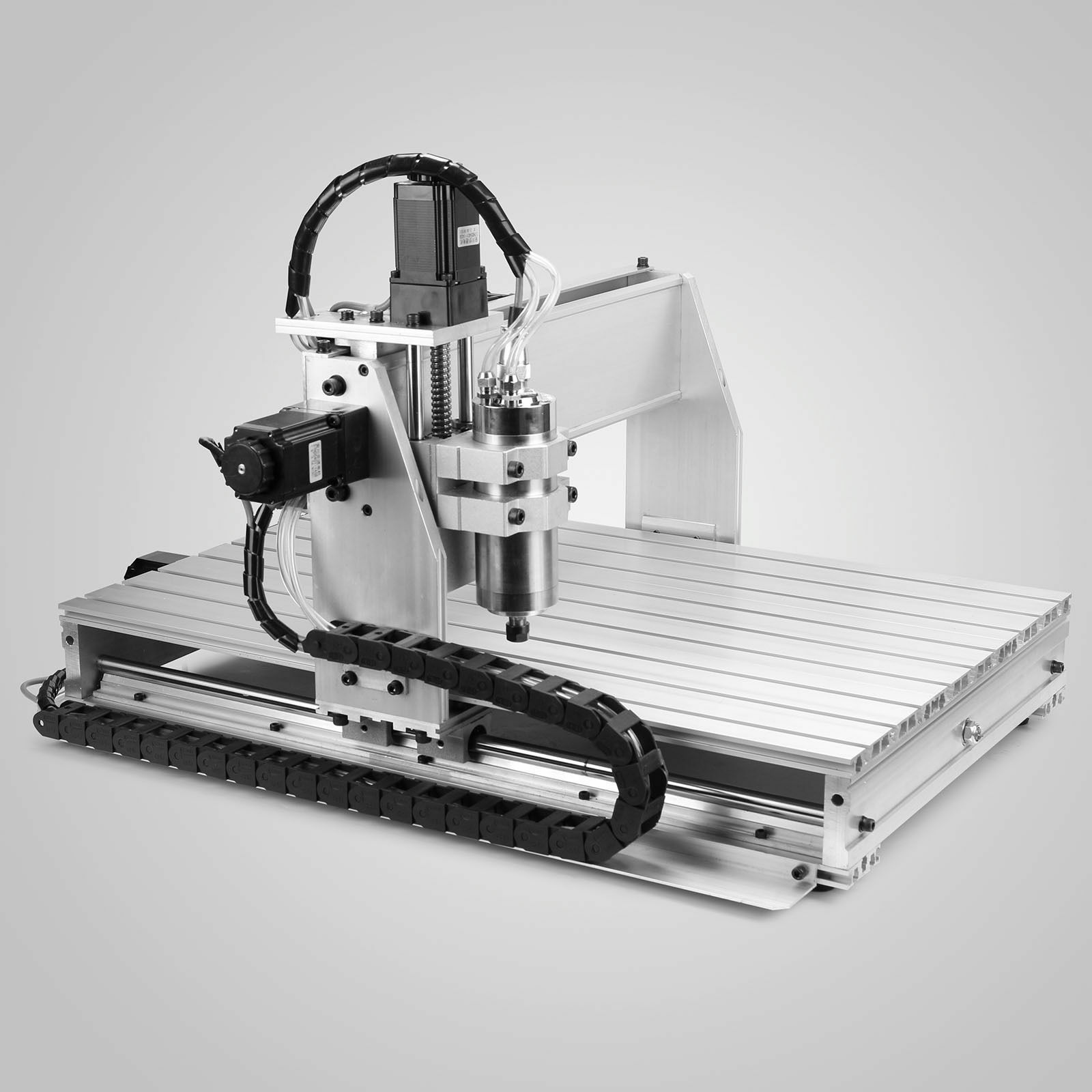
I got a relatively inexpensive 6040 CNC machine, and have been spending most weekends making the thing work, and then cutting stuff, learning the toolchain, and making subsequent improvements. Probably 90% of my machine time has been on making improvements. It’s not that the machine was bad — I got the version with ballscrews and a decently solid frame — but it’s that it somehow didn’t work together as a whole. It’s just an incredibly unbalanced design.

Let’s start with the spindle motor. It’s a 2.2 kW water-cooled beast that is capable of putting tons of work into a piece and spinning at very high speed. Yet to keep up with the high speed spindle, the motors that move it around would have to be capable of high speeds as well — it’s a feeds and speeds thing if you’re not a CNC geek. And they can’t. Instead, the stepper motors that came with the kit are designed for maximum force at low speeds. Which can make sense for some machines, but for one with a slightly flexible X-axis like this one, that’s wasted as well. The frame just can’t handle the low-end grunt that the motors are capable of, so it can’t take advantage of the spindle’s power either. The design is all over the place.
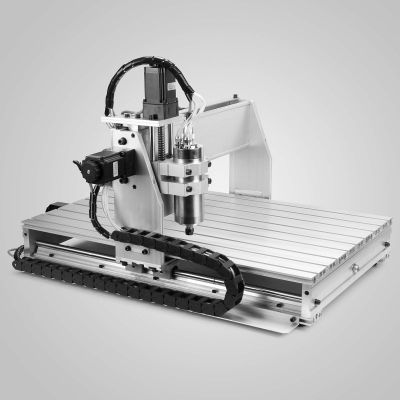
Over the last two months’ of weekends, I’ve been going through this iterative procedure of asking “what is my limiting factor right now?”, working on fixing that thing up, running it some, and then asking the question again. And it’s a good general procedure, and I believe that it’s getting me to the machine I want at the minimum cost of time, money, and effort.

At first, it was the driver hardware/software with its emulated USB parallel port, so I swapped out the controller for an Arduino running GRBL, soldered directly to the DB-25 that comes out of the back. At least it can put out pulses fast enough to order the motors around, but they would still stall out at high speeds. Swapping the stepper motors out for a high-speed pair only cost me €40, which makes you wonder why they didn’t just put the right motors on in the first place. The machine now travels fast enough to make use of the high-speed spindle, and I’m flying through plywood and plastics without leaving burn marks. It’s a huge win for not much money.

The final frontier is taking big bites out of aluminum. The spindle can do it, but I fear I’m up against the frame’s rigidity on the X-axis. For whatever reason, they went with unsupported rods on the X, which are significantly more flexible than an axis that’s backed up by more metal. And this is where the limiting factor may actually be my time and patience, rather than money. I just can’t bear to disassemble and reassemble the thing again. So for now, it’s going to be small nibbles, taking advantage of the machine’s speed, if not yet the spindle’s full horsepower.

But it’s odd, because this machine is a bundle of good parts. It’s just that they haven’t been chosen to work together optimally; the frame doesn’t work with the stepper motors, which don’t work with the spindle. If they went through my procedure of saying “what’s the limiting factor?” they could have saved themselves €100 by just shipping it with a wimpier spindle, which would have been a balanced, if anemic, machine. Or they could have built it with the right motors for more speed. Or supported rails for more grunt. Or both!

I’ll never know why they quit optimizing their design when they did. Maybe they never got past the slow USB/parallel port speed? But I’m near the end of my path, and I can tell because the limiting ingredient isn’t a simple upgrade, or even mere money anymore, but my own willpower.

How can you tell when you’re at the top of a mountain in a dense fog? A step you take in any direction would lead you downhill. How can you tell when you’re satisfied with a project’s state? When you don’t have the need, or desire, to undertake the next most obvious improvement.


Historical Hackers: Hero Builds Vending Machines

We tend to think of mechanical contrivances as products of the industrial revolution and true automation as something computers handle. Yet even before computers, automation existed — using timing motors and cams and other mechanical contraptions. But it might surprise you to know that there was actually some sophisticated automation going way back. Really way back, invented in a world without computers, CAD software, or even electricity. For example, around 50 AD an inventor named Hero — sometimes known as Heron — built machines powered by steam and wind. His inventions included vending machines and music players.

It is hard to imagine what kind of music player or, indeed, vending machine you could build in 50AD. Some of Hero’s inventions were used in temples to, for example, dispense holy water. Others were used in theater to do things like automatically lighting a fire or creating thunder effects. There was even an entirely automated puppet show that used knotted ropes to put on a ten-minute production with no human assistance.

Continue reading “Historical Hackers: Hero Builds Vending Machines”

This Week In Security: APT Targeting Researchers, And Someone Watching All The Cameras

Microsoft’s Patch Tuesday just passed, and it’s a humdinger. To add the cherry on top, two seperate BSOD inducing issues led to Microsoft temporarily pulling the update.

Among the security vulnerabilities fixed is CVE-2021-26897, another remote code exploit in the Windows DNS server. It’s considered a low-complexity attack, but does require local network access to pull off. CVE-2021-26867 is another of the patched vulnerabilities that sounds very serious, allowing an attacker on a Hyper-V virtual machine to pierce the barrier and run code on the hypervisor. The catch here is that the vulnerability is only present when using the Plan 9 filesystem, which surely limits the scope of the problem to a small handful of machines.

The most interesting fixed flaw was CVE-2021-26411 a vulnerability that allowed remote code execution when loading a malicious web page in either IE or pre-chromium Edge. That flaw was actively being exploited in a unique APT campaign, which we’ll cover right after the break.

Continue reading “This Week In Security: APT Targeting Researchers, And Someone Watching All The Cameras”

Rex Wasn’t Really A PDA, It Was The First Great Digital Rolodex

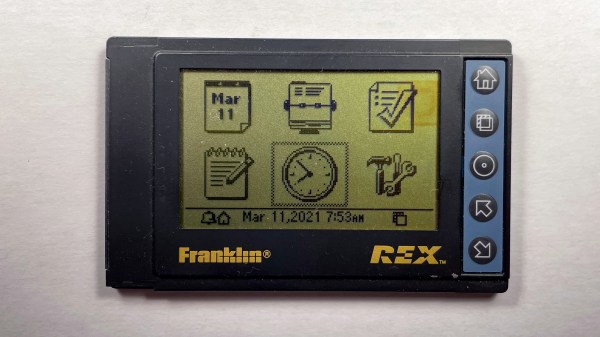
Back in the 1990s I was fascinated with small computers. I used the HP200LX palmtop computer for almost ten years, which I wrote about back in December. Naturally, the Franklin Rex 3 PCMCIA-sized organizer caught my attention when it was released in 1997. Here was a Personal Digital Assistant (PDA) the size of a credit card that could fit not just in your pocket, but in your shirt pocket.

Viewed today, it was an interesting paradigm. The screen takes up almost the entire front face of the device with a few buttons for navigation. But isn’t it a deal-breaker that you can’t enter or edit contact info on the device itself? This was long before cellphones were pervasive, and if you had the option to connect to the internet a telephone or Ethernet cable was involved. The ability to have a large data set in your pocket viewable without slapping a brick-like laptop on a table was pretty huge.

I think the killer feature was the PCMCIA interface. I challenged myself to reverse engineer the API so that I could sync data outside of the

Continue reading “Rex Wasn’t Really A PDA, It Was The First Great Digital Rolodex”

Ask Hackaday: What’s Your Favourite Build Tool? Can Make Ever Be Usurped?

What do you do whilst your code’s compiling? Pull up Hackaday? Check Elon Musk’s net worth? Research the price of a faster PC? Or do you wonder what’s taking so long, and decide to switch out your build system?

Clamber aboard for some musings on Makefiles, monopolies, and the magic of Ninja. I want to hear what you use to build your software. Should we still be using make in 2021? Jump into the fray in the comments.

Continue reading “Ask Hackaday: What’s Your Favourite Build Tool? Can Make Ever Be Usurped?”