Mike Ossmann And Dominic Spill: IR, Pirates!

Mike Ossmann and Dominic Spill have been at the forefront of the recent wave of software-defined radio (SDR) hacking. Mike is the hardware guy, and his radio designs helped bring Bluetooth and ISM-band to the masses. Dominic is the software guy who makes sure that all this gear is actually usable. The HackRF SDR is still one of the best cheap choices if you need an SDR that can transmit and receive.

So what are these two doing on stage giving a talk about IR communication? Can you really turn traffic lights green by blinking lights? And can you spoof a TV remote with a cardboard cutout, a bicycle wheel, and a sparkler? What does IR have to do with pirates, and why are these two dressed up as buccaneers? Watch our video interview and find out, or watch the full talk for all of the juicy details.

Continue reading “Mike Ossmann And Dominic Spill: IR, Pirates!”

Ask Hackaday: How On Earth Can A 2004 MP3 Player Read An SDXC Card?

What were you doing in 2004? Can you even remember 2004? Maybe it’s like the old joke about the 1960s, if you can remember it, you weren’t really there, man. Cast your mind back, [Lance Armstrong] was winning the Tour de France, and SpaceShipOne made it into space.

[Gregg Eshelman], wrote to us to say that in 2004 he bought an MP3 player. Ask your parents about them, they were what hipsters used before they had cassette tapes: portable music players that everyone thought were really cool back then, onto which music didn’t come from the Internet but had to be manually loaded from a computer.

Jokes about slightly outdated consumer electronics aside, [Gregg]’s player, a GPX MW3836, turned out to be a really good buy. Not only does it still work, it packs an unexpected bonus, it reads 64Gb SD cards when they are formatted as FAT32. This might not seem like a big deal at a cursory glance, but it’s worth considering a little SD card history.

Back when the GPX was made, the maximum capacity of an SD card was 2Gb, a figure that must have seemed huge when the standard was created, but by the middle of the last decade was starting to look a little cramped. The GPX player is designed to only read these original 2Gb cards. In the years since then there have been a couple of revisions to the standard, SDHC, and SDXC, which have given us the huge cards we are used to today. Many other devices from the 2Gb SD era, made before SDHC and SDXC existed, cannot read the modern cards, yet [Gregg]’s GPX can.

Hackaday’s readership constantly amaze us with the sheer breadth of their knowledge and expertise, so we are sure that among you reading this piece will be experts on SD card standards who can shed some light on this mystery. Why can a player designed for the original SD card standard read the much newer cards when other contemporary ones can not? [Gregg] would love to know, and now our curiosity has been whetted, so would we.

If you think you’ve heard [Gregg]’s name before, it might be for his expertise in resin casting automotive parts.

SD card image: Andreas Frank (CC BY 2.5).

Coin Cell Challenge: Use Coin Cell, Win Prizes

Today, we’re calling all hackers to do the most with a single coin cell. It’s the Coin Cell Challenge, and we’re looking for everything from the most low-power electronics to a supernova in a button cell battery.

Electronics are sucking down fewer and fewer amps every year. Low power is the future, and we’re wondering how far we can push the capabilities of those tiny discs full of power. The Coin Cell Challenge is your chance to plumb the depths of what can be done with the humble coin cell.

This is a contest, and as with the tradition of the Open 7400 Logic Competition and the recent Flashing Light Prize, we want to see what the community can come up with. The idea is simple: do something cool with a single coin cell and you’ll secure your fifteen minutes of fame and win a prize.

Three Challenges

To kick this contest off, we’re opening up three challenges to all contenders to the world heavyweight champion of button cell exploits. The first, the Lifetime Award, will go to whoever can run something interesting the longest amount of time on a coin cell. The Supernova Award is the opposite – what is the most exciting thing you can do with a button cell battery, lifetime be damned? The Heavy Lifting Award will go to the project that is the most unbelievable. If you think you can’t do that with a coin cell battery — lifting a piano or starting a car, for example — odds are you probably can. We want to see it.

Prizes and Rules

All Hackaday hardware hacking challenges need prizes, and for this one, we’re rolling out the red carpet. We’re offering up cash prizes for the top coin cell hacks. There are three $500 USD cash prizes, one for each winner of the Lifetime, Supernova, and Heavy Lifting awards. We’re not stopping there, because the top twenty builds overall will each receive $100 in Tindie credit, where the winners can cash in on some artisanal electronics sold by the people who design them.

What do you have to do to get in on this action? First, you need to build something. This something must be powered by nothing more than a single coin cell battery and must include some type of electronics. We also want this to be Open Source, and you’ll need to start a project on hackaday.io. The full rules are available over here, but don’t wait — the deadline for entry is January 8th, 2018.

We’re excited to see what the community comes up with, and who will find a production coin cell that’s the size of a dinner plate. This is going to be a great contest with overheating coin cells and tiny bits of metal flying across the room. This is going to be a contest filled with blinkies and wireless devices that run for far, far too long. Someone is going to misread the rules and tape together a meter tall pile of coin cells. It’s going to be awesome, so start your project now.

Marguerite Perey: When The Lab Assistant Gets The Credit

Most people obtain a bachelor’s degree before getting their masters, and even that is a prerequisite for a doctorate. Most people, however, don’t discover a new chemical element.

Marguerite Perey graduated with a chemistry diploma from Paris’ Technical School of Women’s Education in 1929, and applied for work at the Curie Institute, at the time one of the leading chemistry and physics labs in the world. She was hired, and put to work cataloging and preparing samples of the element actinium. This element had been discovered thirty years before by a chemist who had also been working in the Curie laboratory, but this was the height of the chemical revolution and the studies and research must continue.

When Marie Curie died in 1934, the discoverer of actinium, André-Louis Debierne, continued his research and Perey kept providing samples. Marguerite’s work was recognized, and in time she was promoted from a simple lab assistant to a  radiochemist. It would not be an exaggeration to say that Marguerite was, at the time, the world’s leading expert in the preparation of actinium. This expertise would lead her to the discovery of the bottom left corner of the periodic table: francium, element 87, the least electronegative element, and arguably the most difficult naturally occurring element to isolate.

Continue reading “Marguerite Perey: When The Lab Assistant Gets The Credit”

HJWYDK: The Journal Our Community Has Been Awaiting

We’re excited to announce the Hackaday Journal of What You Don’t Know. This will be a peer-reviewed journal of white papers that goes well beyond “look what I did” and will provide full design, data, and everything else needed to reproduce the most interesting things the engineering world has to offer. It’s a complete description of your knowledge offered up for the benefit of all.

Topics will include original and creative research, engineering, and entertainment in the areas of interest to the Hackaday community. These papers should embody original insight, experience, or discovery in any sufficiently challenging domain knowledge. This will be the manual for the things you need to know, but probably don’t. HJWYDK makes that knowledge freely available using the Open Access model for publications. It will be a journal without paywalls or frustration. It’s the journal you will reach for whenever you need to do something that feels impossible.

Useful information doesn’t just happen. It’s won through struggle and leads to unique knowledge. Have your accomplishments recognized at a higher level, and make sure they live on and are freely available.

All papers accepted by the editorial and review process will be immediately published online. They will also be printed in the annual Proceedings of the Hackaday Superconference, with the best submissions invited to present in person at the conference. Submit your papers now!

We are currently seeking Associate Editors and Peer Reviewers. Editors should send your background info to journal@hackaday.com. Reviewers should join the team on the HJWYDK project page and mention your areas of expertise in the join request.

CNC Milling Is More Manual Than You Think

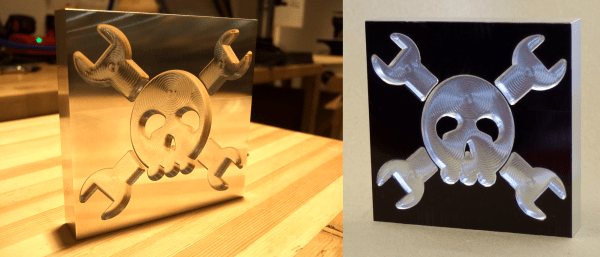
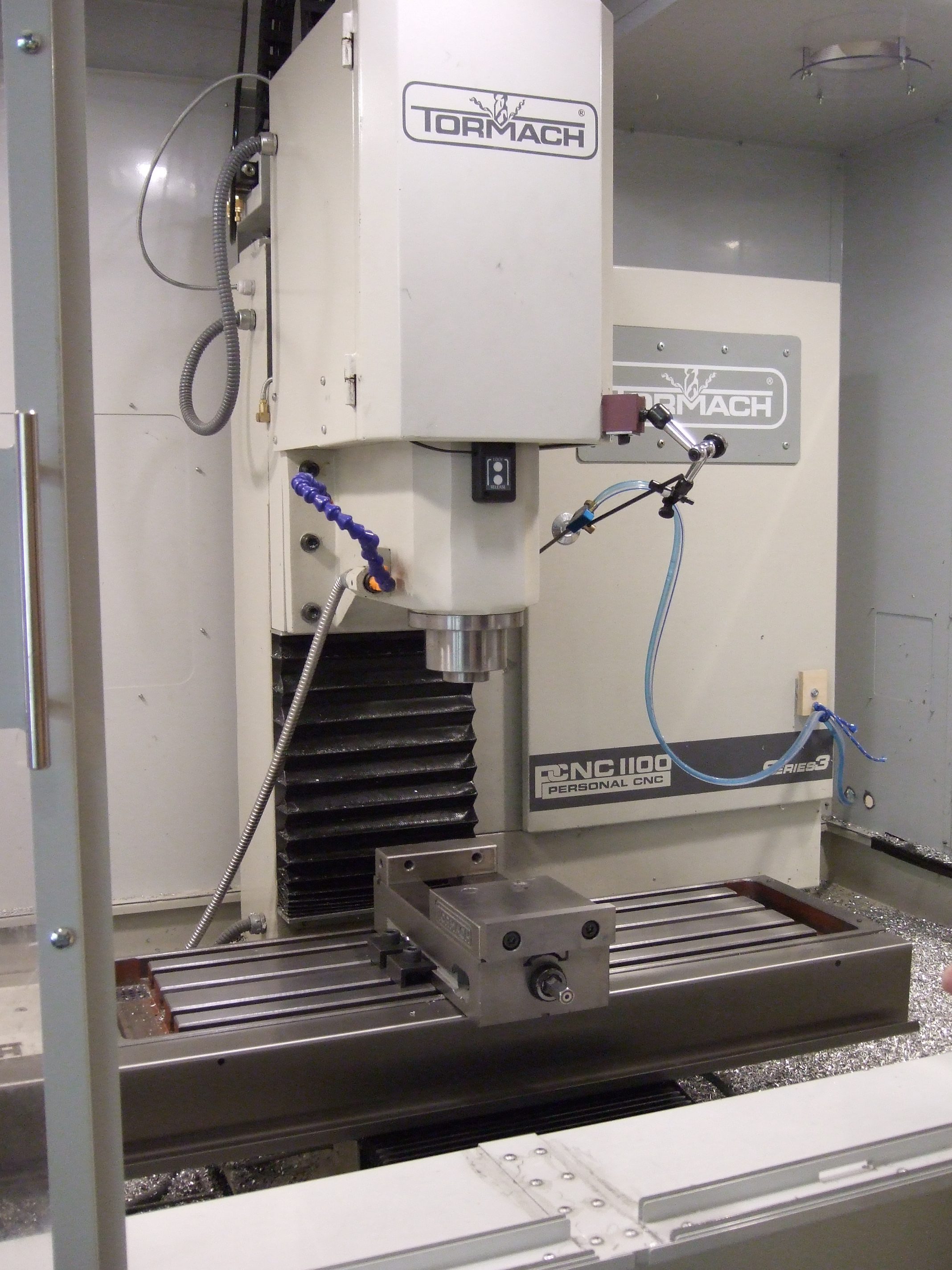
I was in Pasadena CA for the Hackaday Superconference, and got to spend some quality time at the Supplyframe Design Lab. Resident Engineer Dan Hienzsch said I could have a few hours, and asked me what I wanted to make. The constraints were that it had to be small enough to fit into checked luggage, but had to be cool enough to warrant taking up Dan’s time, with bonus points for me learning some new skills. I have a decent wood shop at home, and while my 3D printer farm isn’t as pro as the Design Lab’s, I know the ropes. This left one obvious choice: something Jolly Wrencher on the industrial Tormach three-axis CNC metal mill.

A CNC mill is an awesome tool, but it’s not an omniscient metal-eating robot that you can just hand a design file to. If you thought that having a CNC mill would turn you into a no-experience-needed metal-cutting monster, you’d be sorely mistaken.

Of course the machine is able to cut arbitrary shapes with a precision that would be extremely demanding if done by hand, but the craft of the operator is no less a factor than with a manual mill in making sure that things don’t go sideways. Dan’s good judgment, experience, and input was needed every step of the way. Honestly, I was surprised by how similar the whole procedure was to manual milling. So if you want to know what it’s like to sit on the shoulder of a serious CNC mill operator, read on!

Continue reading “CNC Milling Is More Manual Than You Think”

Hackaday Links Column Banner

Hackaday Links: November 26, 2017

Hey, it’s sometime between Black Friday and Cyber Monday. We’re blowing out everything in the Hackaday Store. There’s some great deals in there. Tindie, our lovable robot dog is also heading up hundreds of Tindie deals for Cyber Monday. If you want some electronic stuff direct from the people who make it, this is the sale to check out.

Looking for some other Black Friday/Cyber Monday sales? Adafruit has compiled a list of retailers so I don’t have to. Thanks, Phil. There are deals from Lulzbot to Makerbot, LittleBits to Sparkfun.

The engineer responsible for Dieselgate has been sentenced to 40 months in prison. There are two takeaways from this: 1) The Nuremberg Defense doesn’t work. 2) Don’t build a business plan around breaking the law, despite what the libertarian hellscape of Hacker News tells you.

The theme for next year’s DEF CON has been announced. It’s, “1983”. What does that mean? Brutalist architecture, first of all. They’re also going for a ‘year before 1984’ thing, where everyone installs always-on, far-field microphones in their house and connects them to the Internet. In other news, Alexas and Google Homes are on sale this Black Friday. Big props for the official DEF CON style guide with typefaces and colors, though.

Over on Hackaday.io, [Frank] has created a very interesting and very cool game for the Vectrex. It’s called Bloxorz, and you can think of it as a cross between Marble Madness and Q*Bert. It’s a puzzle game, and now it’s a project on Kickstarter. Want to check out what this game looks like? Take a look at the video. It’s big into the tradition of early-90s puzzle games (a genre we wish would come back), and if I had a Vectrex, I’d buy one.

I told you SparkleCon tickets are on sale, right?

Here’s an argument you can settle. What is the grit designation of sandpaper? Sandpaper comes in various grits, from 60 (very coarse) to 1500, 2000, and 6000 (for polishing, basically). Here’s a question: how are these numbers derived? I have a vague memory from my youth where someone who probably didn’t know what they were talking about said grit sizes are the number of abrasive particles per some unit of area. A 60-grit sandpaper would have sixty particles of aluminum oxide per square quarter inch, for example. This sounds too stupid to be correct, doesn’t fit with the mesh sizes of different grades of sandpaper, and a cursory Googling does not tell me how sandpaper grit sizes are derived. What say you, Hackaday peanut gallery? Where do the numbers on the back of a sheet of sandpaper actually come from?