Buy A Baofeng While You Still Can? FCC Scowls At Unauthorized Frequency Transmitters

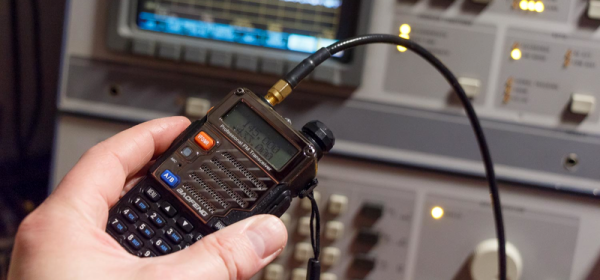
There was a time when a handheld radio transceiver was an object of wonder, and a significant item for any radio amateur to own. A few hundred dollars secured you an FM walkie-talkie through which you could chat on your local repeater, and mobile radio was a big draw for new hams. Thirty years later FM mobile operation may be a bit less popular, but thanks to Chinese manufacturing the barrier to entry is lower than it has ever been. With extremely basic handheld radios starting at around ten dollars and a capable dual-bander being yours for somewhere over twice that, most licencees will now own a Baofeng UV5 or similar radio.

The FCC though are not entirely happy with these radios, and QRZ Now are reporting that the FCC has issued an advisory prohibiting the import or sale of devices that do not comply with their rules. In particular they are talking about devices that can transmit on unauthorised frequencies, and ones that are capable of transmission bandwidths greater than 12.5 kHz.

We’ve reported before on the shortcomings of some of these radios, but strangely this news doesn’t concern itself with their spurious emissions. We’re guessing that radio amateurs are not the problem here, and the availability of cheap transceivers has meant that the general public are using them for personal communication without a full appreciation of what frequencies they may be using. It’s traditional and normal for radio amateurs to use devices capable of transmitting out-of-band, but with a licence to lose should they do that they are also a lot more careful about their RF emissions.

Read the FCC statement and you’ll learn they are not trying to restrict the sale of ham gear. However, they are insisting that imported radios that can transmit on other frequencies must be certified. Apparently, opponents of these radios claim about 1 million units a year show up in the US, so this is a big business. The Bureau warns that fines can be as high as $19,639 per day for continued marketing and up to $147,290 — we have no idea how they arrive at those odd numbers.

So if you’re an American who hasn’t already got a Baofeng or similar, you might be well advised to pick one up while you still can.

UV5-R image via PE1RQM

Infection? Your Smartphone Will See You Now

When Mr. Spock beams down to a planet, he’s carrying a tricorder, a communicator, and a phaser. We just have our cell phones. The University of California Santa Barbara published a paper showing how an inexpensive kit can allow your cell phone to identify pathogens in about an hour. That’s quite a feat compared to the 18-28 hours required by traditional methods. The kit can be produced for under $100, according to the University.

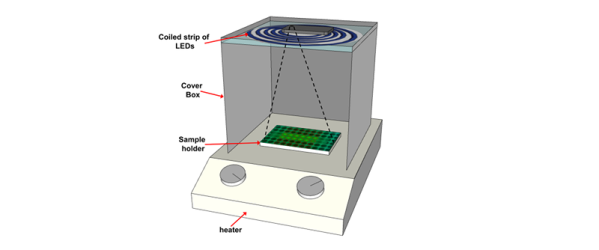
Identifying bacteria type is crucial to prescribing the right antibiotic, although your family doctor probably just guesses because of the amount of time it takes to get an identification through a culture. The system works by taking some — ahem — body fluid and breaking it down using some simple chemicals. Another batch of chemicals known as a LAMP reaction mixture multiplies DNA and will cause fluorescence in the case of a positive result.

Continue reading “Infection? Your Smartphone Will See You Now”

Prusa Introduces A Resin Printer At Maker Faire NY

For one reason or another, the World Maker Faire in New York has become the preeminent place to launch 3D printers. MakerBot did it with the Thing-O-Matic way back when, and over the years we’ve seen some interesting new advances come out of Queens during one special weekend in September.

Today Prusa Research announced their latest creation. It’s the resin printer you’ve all been waiting for. The Prusa SL1 is aiming to become the Prusa Mk 3 of the resin printer world: it’s a solid printer, it’s relatively cheap (kit price starts at $1299/€1299), and it produces prints that are at least as good as resin printers that cost three times as much.

The tech inside the SL1 is about what you’d expect if you’ve been following resin printers for a while. The resin is activated by a bank of LEDs shining through a photomask, in this case a 5.5 inch, 1440p display. Everything is printed on a removable bed that can be transferred over to a separate ‘curing chamber’ after the print is done. It’s more or less what you would expect, but there are some fascinating refinements to the design that make this a resin printer worthy of carrying the Prusa name.

Common problems with a masked SLA printer that uses LEDs and an LCD are the interface between the LCD and the resin, and the temperature of the display itself. Resin is not kind to LCD displays, and to remedy this problem, Prusa has included an FEP film on the bottom of the removable tank. This is a user-replaceable part (technically a consumable, at least to the same extent as a PEI build plate on a filament printer), and Prusa will be selling those as spare parts on their store. The LCD is also cooled; one of the major drawbacks of shining several watts of UV through an LCD is the lifetime of the display. Cooling the display helps, and should greatly increase the lifetime of the printer. All of this is wrapped up in an exceptionally heavy metal case with the lovely hinged UV-opaque orange plastic lid.

Of course, saying you’ve built a resin printer is one thing, but how do the prints look? Exceptional. The Prusa booth at Maker Faire was loaded up with sample prints from the machine, and they’re of the same high quality you would expect from the Form 3D printers that have been the go-to in the resin printer world. The Prusa SLA also works with big-O Open resins, meaning you’re not tied to a single resin vendor.

This is just the announcement of the Prusa resin printer, but they are taking preorders. The price for the kit — no word on how complex of a kit it is — is $1300, while the assembled printer is $1600, with the first units shipping in January.

Prusa Unveils Their Own Line Of PLA Filament

There’s little debate that the Original Prusa i3 MK3 by Prusa Research is just about the best desktop 3D printer you can buy, at least in its price bracket. It consistently rates among the highest machines in terms of print quality and consistency, and offers cutting edge features thanks to its open source iterative development. Unless you’re trying to come in under a specific budget, you really can’t go wrong with a Prusa machine.

But while the machine itself can be counted on to deliver consistent results, the same can’t always be said for the filament you feed into it. In a recent blog post, [Josef Prusa] explains that his team was surprised to see just how poor the physical consistency was on even premium brands of 3D printer filament. As a company that prides itself with keeping as much of the 3D printing experience under their control as possible, they felt they had an obligation to do better for their customers. That’s why they’ve started making their own filament which they can hold to the same standards as the rest of their printer.

Their new filament, which is aptly called “Prusament”, is held to higher physical standards of not only diameter but ovality. Many manufacturers simply perform spot checks on the filament’s diameter, but this can miss bulges or changes in its cross-sectional shape. On your average 3D printer this might cause some slightly uneven extrusion and a dip in print quality, but likely not a failure. But the Prusa i3 MK3, specifically with the Multi Material upgrade installed, isn’t most printers. During testing even these slight variations were enough to cause jams.

But you won’t have to take their word for it. Every spool of Prusament will have a QR code that points to a page which tells you the exact production date, length, percent ovality, and standard diameter deviation of that particular roll. An interactive graph will even allow you to find the filament’s diameter for a specific position in the spool, as well as determine how much filament is remaining for a given spool weight. It should be very interesting to see what the community will do with this information, and we predict some very interesting OctoPrint plugins coming down the line.

Prusament is currently only available in PLA, but PETG and ASA variants are coming soon. You can order it now directly from Prusa Research in Prague for $24.99 per kilogram, but it will also be available on Amazon within the month for help keep the shipping costs down.

Continue reading “Prusa Unveils Their Own Line Of PLA Filament”

New Part Day: Put An Alexa In Everything

The last great hope for electronics manufactures is smart home assistants. The Alexas and Siris and OK Googles are taking over homes across the country. At its best, it’s HAL 9000, only slightly less homicidal. It will entertain your children, and you can order cat litter just by saying you want cat litter. This is the future, whether we like it or not.

In an attempt to capture the market, Amazon has released the Alexa Connect Kit. This is an Amazon-Echo-On-a-Chip — a piece of hardware that adds Alexa to microwaves, blenders, and whatever other bit of home electronics you can imagine.

The Alexa Connect Kit is the hardware behind Amazon’s efforts to allow developers easy integration with Alexa. The options for adding Alexa to a product up until now have been using Zigbee to connect an Echo Show or Echo Plus, or simply giving a device the ability to connect to an Echo through Bluetooth. The Alexa Connect Kit, however, is a pure hardware solution that puts Alexa in anything.

Unfortunately you can’t get one yet. Right now, the Alexa Connect Kit is just a preview, and if you want to get your hands on one — or get any specs on this bit of hardware — you’ll need to apply to the developer program. We’ve signed up and will share and juicy details that come our way as part of the program.

According to the Wall Street Journal (try Google referral link if you hit the pay wall), several companies are already working on integrating the Alexa Connect Kit into their existing product lines. Hamilton Beach and Procter & Gamble are both working on something, although the press doesn’t say what kind of device will now be loaded up with a voice assistant. Amazon, however, has a microwave using the technology that the owner can, “command the microwave to do things like defrost a half-pound of chicken, or set it up to automatically reorder a favorite type of popcorn on Amazon”.

Despite the sparse details, this is relatively game-changing when it comes to the world of homebrew electronics. We’ve seen dozens of projects using hacked Raspberry Pis and other microcontrollers to at Alexa to hacked coffee machines, to shoot Nerf darts, and to control a projector. If you can actually get one of these Alexas-on-a-chip, all those projects could be done with one simple piece of hardware.

Linux, Without The Git Factor

Linux started as a student project in the 1990s, the creation of Linus Torvalds. He has attained celebrity status while steering his creation through the decades, but along the way he has also attracted a different reputation within the Linux and software community. He is famous for his outbursts and rants, some of which become rather personal, and it is not difficult at all to find kernel developers or would-be kernel developers who have turned their backs on the project as a result.

It’s very refreshing indeed then to read an update from [Linus] as part of his regular communications, in which he admits that he has an issue, and says that he is taking the time to seek help for it. There is an accompanying update to the kernel maintenance code of conduct, which suggests that this is likely to mark a sea-change in that environment, as well as we hope salvage that aspect of [Linus]’ reputation.

“My flippant attacks in emails have been both unprofessional and uncalled for. Especially at times when I made it personal. In my quest for a better patch, this made sense to me. I know now this was not OK and I am truly sorry.”

The Hackaday community has a much greater than average proportion of Linux users among its readership. Even those readers who use a desktop OS with BSD, Windows, or other kernels will almost certainly have a Linux kernel somewhere, whether it’s in their phone, their set-top-box, their children’s toys, or even their domestic appliances. And of course a large swath of the Internet runs on Linux. It is in the best interest of us all that we continually attract and retain brilliant people to contribute to the effort put into developing and maintaining the Linux kernel.

Without wishing to lionise [Linus] above the many others whose work has also contributed to Linux and its success, his contribution to our community has been beyond measure and it has been uncomfortable to see his other side. It’s a step in the right direction to apologize for personal attacks and behavior that drives a wedge into the kernel developer community, and seek to change that behavior. We’d urge others to follow his example, we’re sure every grouping has at times had its personality problems, and it’s never too late to enact some repairs.

While Linus steps away to work on his self improvement, veteran kernel developer Greg Kroah-Hartman will take the reigns among the kernel maintainers.

ICub Is The Robot That Is Equally Cute And Creepy

We shouldn’t say iCub — the humanoid robot from Italy — is creepy. After all, human-like robots are in their infancy and an early computer or automobile would hardly be indicative of where those industries would take us. You can see the little guy in the video below.

The effort is open source and was part of an EU project that has been adopted by 20 labs around the world. The video just shows a guy in VR gear operating the robot, but the website has a lot of technical information if you want to know more.

Continue reading “ICub Is The Robot That Is Equally Cute And Creepy”