We’ll admit that only a few of us here at Hackaday are Radiohead fans. However, we all couldn’t help but appreciate their new remastered release of OK Computer. The new release contains some bonus material. At the end of the bonus material is a strange noise that turns out to be a ZX Spectrum Basic program.[OooSLAJEREKooO] managed to find it, play it, and record it for all of us (see video below).
The two minutes of tones might sound unfamiliar to a modern computer user, but back in the day, audio tones were used to communicate over phone lines and to load and save programs via cassette tape recorders. You might be asking yourself: why the ZX Spectrum? Radiohead is from the UK, but that’s not the complete picture. Of all home computers, the ZX Spectrum had a higher effective bit rate when storing data on tape. Basically, it takes less time (and less tape) to put it on a Speccy than a C64 or Apple.
Two hulking computers — likely necessitating the use of a crane to move them — and hundreds of tape reels were discovered in the basement of a former IBM engineer by their heir and a scrap dealer cleaning out the deceased’s home. Labels are scarce, and those that are marked are mostly from the late 1960s through the mid 1970s, including data from the Pioneer 8 to 11 missions, as well as the Helios missions.
When hardware manufacturers make GUI code-generation tools, the resulting files often look like a canned-spaghetti truck overturned on the highway — there’s metaphorical overcooked noodles and red sauce all over the place. Sometimes we think they’re doing this willfully to tie you into their IDE. Not so the newest version of ST’s graphical STM32CubeMX, which guides you through a pleasant pin-allocation procedure and then dumps out, as of the latest version, a clean Makefile.
Yes, that’s right. This is a manufacturer software suite that outputs something you can actually use with whatever editor, GUI, compiler, or environment that you wish — even the command line. Before this release, you had to go through a hacky but functional script to get a Makefile out of the CubeMX. Now there’s official support for real hackers. Thanks, ST!
If you’re compiling on your own, you’ll need to update the BINPATH variable to point to your compiler. (We use the excellent GNU ARM Embedded Toolchain ourselves, which is super-easy to install on almost any Linux.) If you want to use STM32CubeMX with the Eclipse IDE, [kali prasad yadav] sent us PDF instructions — it’s not hard.
If you doubt that the availability of a free, open, and non-constraining toolchain can matter for a silicon vendor, we’d point to AVR and the Arduino platform that spun off of their support of GCC. Sure, Atmel still pushes their all-in-one wonder, Atmel Studio, which is better than the Arduino IDE by most any metric. But Studio is closed, and Arduino is open. We’d love to see the number of Studio users compared with Arduino users.
Congratulations to ST for taking a big step in the right, open-toolchain, direction.
Everyone’s favorite packet sniffing tool, Wireshark, has been around for almost two decades now. It’s one of the most popular network analysis tools available, partially due to it being free and open source. Its popularity guaranteed that it would eventually be paired with the ESP32/8266, the rising star of the wireless hardware world, and [spacehuhn] has finally brought these two tools together to sniff WiFi packets.
The library that [spacehuhn] created uses the ESP chip to save Pcap files (the default Wireshark filetype) onto an SD card or send the data over a serial connection. The program runs once every 30 seconds, creating a new Pcap file each time. There are many example scripts for the various hardware you might be using, and since this is written for the ESP platform it’s also Arduino compatible. [spacehuhn] has written this as a proof-of-concept, so there are some rough edges still, but this looks very promising as a network analysis tool.
[spacehuhn] is no stranger to wireless networks, either. His YouTube channel is full of interesting videos of him exploring various exploits and testing other pieces of hardware. He’s also been featured here before for using an ESP8266 as a WiFi jammer.
London is one of those cities with an identity problem when it comes to airports. There is no one London airport, instead a group of airports serve the city at various distances from it. London Gatwick is the second largest of these, and sits with its single runway in the Sussex countryside about 30 miles south of the city.
If you follow British news sources, you may have heard a little about Gatwick in the last couple of days. Its runway was closed for two short periods and a selection of flights were diverted, because of what is being reported as a drone sighting. This is an extremely serious matter, responsible multirotor owners will be painfully aware of the distance and altitude regulations surrounding flights near airports.
An oft-shared drone identification guide for airline pilots, of uncertain provenance (phantompilots.com).
If you are familiar with the way that drone stories are reported by the mass media, you will probably not need to click on the link above to the BBC reporting to find out its tone. There is significant concern within the multirotor community that it presents a very one-sided view, and takes at face value the assertion that the sighting was a drone, when in fact there is no proof at all of that being the case. For those of us who have seen many such stories come and go it is difficult not to agree with the drone pilots, there is at best some lazy reporting in the air, and at worst some outright journalistic irresponsibility.
As Hackaday readers, you are used to writers with an in-depth knowledge of the subjects upon which they write. We don’t know all possible facets of technology and we occasionally get things wrong, but we all have very strong backgrounds in the tech, hacker, and maker industries and communities we write about. We have engineering education, we’ve worked in a wide variety of technology industries, we build our own stuff for fun, and we’ve founded and run hackspaces.
By comparison the journalists whose work you will read in the mainstream media are generalists. They will have a specific educational background and a particular set of interests, but in their work they cover whatever stories tumble off the endless conveyor belt of events. Thus when a drone story appears, they find themselves out of their normal comfort zone of politics or local news, and can not rely on their experience to inform their coverage of it. The responsible journalistic approach is to do a little research and ask the pertinent questions asking for concrete proof of drone involvement. We’re still waiting for that to happen in these allege drone encounters.
Multirotor building and flying is a significant feature of our community, and anything that brings the attention of law enforcement to the kind of work we do should be a worry to us all. Multirotors are not the only things covered by Hackaday that could be misrepresented in the same way. We’ve visited this topic before, take a look at our analysis of a series of air proximity reports blamed on drones. Some of them, you couldn’t make up.
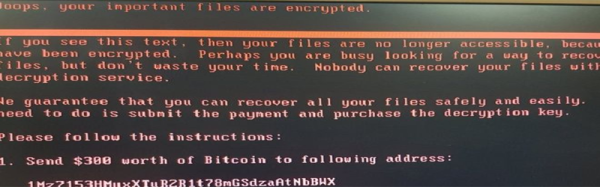
[The BBC] reports Companies all over the world are reporting a new ransomware variant of WannaCry. this time it has taken out sensors monitoring the Chernobyl nuclear disaster site.
We have all heard of the growing problem of ransomware and how Windows XP systems seem especially susceptible to WannaCry and it’s variants which were originally zero day vulnerabilities stored up by the NSA then leaked by WikiLeaks. Microsoft did release a patch. It’s been everywhere in the media but it still seems that some people didn’t get the memo.
Ukrainian state power plants and Kiev’s main airport, among others, have been affected. Probably most interesting and scary of all is that Chernobyl monitoring stations have been taken out, and monitors have to take radiation levels manually for the moment.
It seems that most reports are coming from old Soviet Bloc states (Ukraine, Russia, and Poland), which raises the question of where the attacker is based. Kaspersky Lab is reporting that it’s believed the ransomware was a “new malware that has not been seen before” with a close resemblance to Petya. So as a result, the firm has dubbed it NotPetya.
NotPetya is spreading rapidly affecting companies all over the world with no signs of slowing just yet. Will we see an end to WannaCry variants any time soon.
[Update Thanks to [getrekt] , It now seems that this is fake ransomware which just destroys your data whether you pay or not.]
CastAR is the brainchild of renaissance woman [Jeri Ellsworth], who was hired by Valve to work on what would eventually become SteamVR. Valve let [Jeri] go, but allowed her to take her invention with her. [Jeri] founded a new company, Technical Illusions, with [Rick Johnson] and over the past few years the CastAR has appeared everywhere from Maker Faires to venues better focused towards innovative technologies.
In 2013, Technical Illusions got its start with a hugely successful Kickstarter, netting just north of one million dollars. This success drew the attention of investors and eventually led to a funding round of $15 million. With this success, Technical Illusions decided to refund the backers of its Kickstarter.
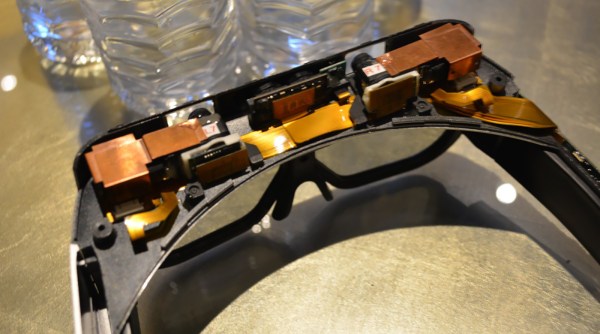
We’ve taken a look a CastAR in the past, and it’s something you can only experience first-hand. Unlike the Oculus, Google Cardboard, or any of the other VR plays companies are coming out with, CastAR is an augmented reality system that puts computer-generated objects in a real, physical setting. Any comparison between CastAR and a VR system is incomplete; these are entirely different systems with entirely different use cases. Think of it as the ultimate table top game, or the coolest D&D game you could possibly imagine.