As circuits find their way into more and more real-world environments, the old standard circuitry isn’t always up to the task. It wasn’t that long ago that a computer needed special power, cooling, and a large room. Now those computers wouldn’t cut it for the top-of-the-line smartphone. However, most modern circuits don’t bend well and don’t like getting wet.
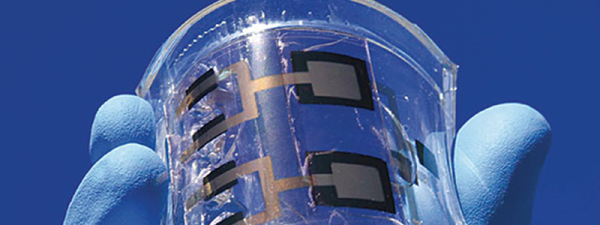
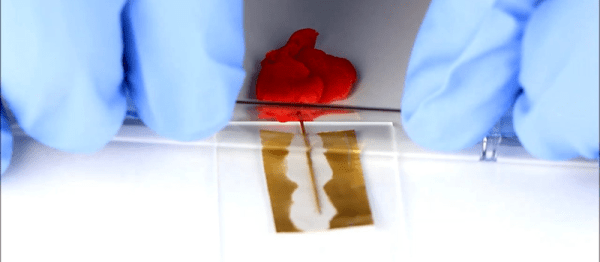
An international team of researchers is developing chemical-based circuitry that uses gold nanoparticles and electrically charged organic molecules to build circuit elements that behave like semiconductor diode junctions. It’s simple to make flexible circuits that don’t mind being wet using this chemical soup.
In an interview with IEEE Spectrum, the developers mentioned that other circuit elements similar to transistors and light sensors should be possible. The circuits aren’t perfect, however. The switching speed needs improvement. Also, while conventional circuits don’t like to get wet, these chemical circuits have difficulties if things get dry. Still, like all technology, things will probably improve over time.
This technology needs a good bit of engineering refinement before it is practical. If you need flexible photosensitive circuits in the near term, you might try here. Meanwhile, waterproof circuitry just needs the right kind of enclosure.
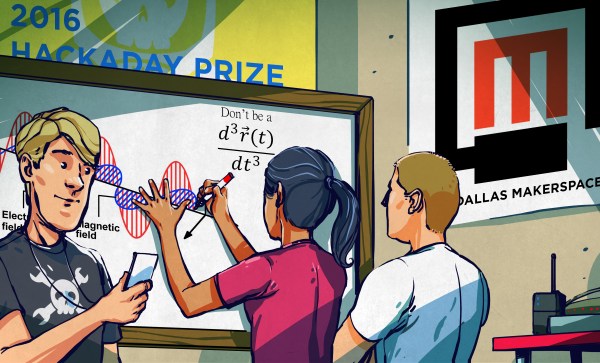
The Hackaday Prize meetup at the Dallas Makerspace is this weekend: Saturday March 19th. We will be kicking things off at 7pm with food and drinks followed by lightning talks. If you want to come but have yet to RSVP you can do that via Meetup, please do this so we can have enough food and drinks on site for everyone.
We’ve already lined up a number of lightning talks (5-7 minutes each) to get things started so we aren’t sitting and staring at one another like a junior high dance. But we encourage you to show up and sign up for one on on the night of the meetup. Even if you don’t give a talk you should bring a project to show off afterward.
Lightning Talks Primed With:
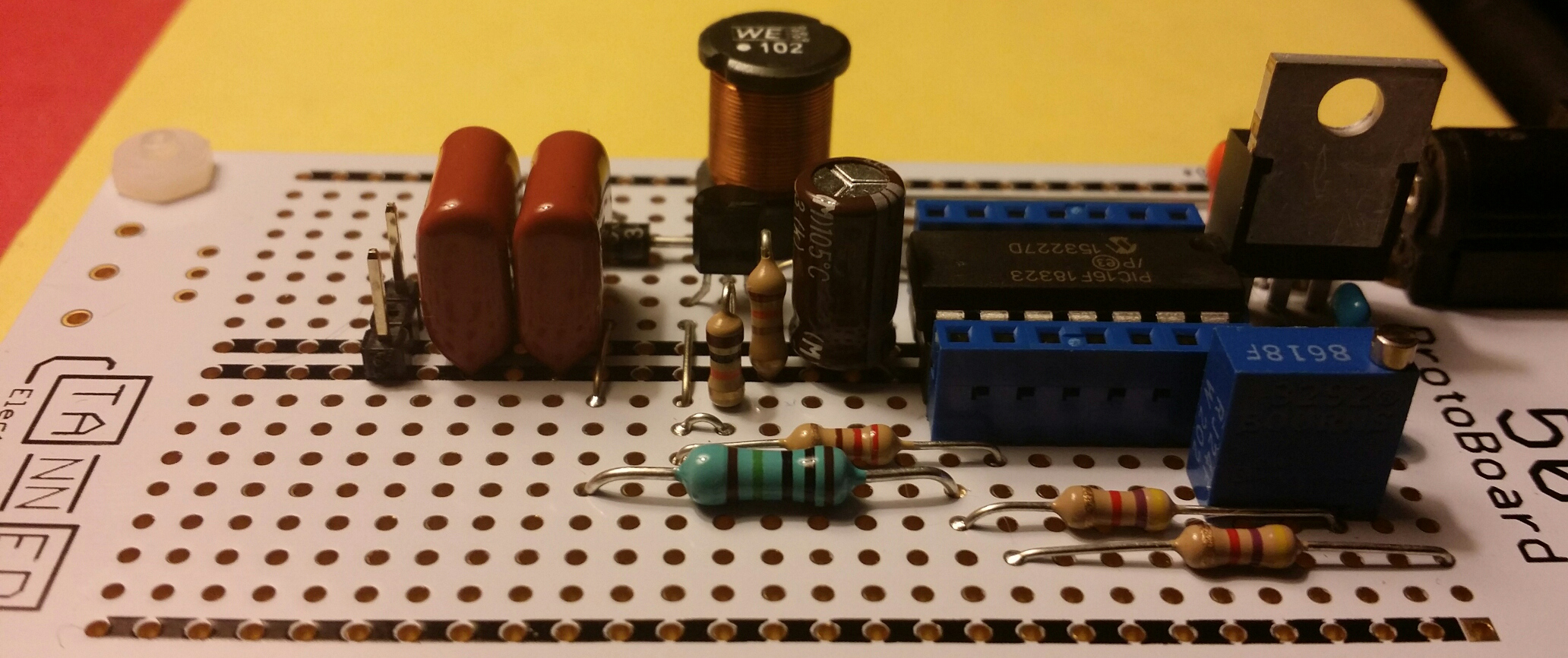
450V 1mA PIC boost converter by [Bradley Mahurin][Brandon Dunson] giving a talk about the 2016 Hackaday Prize, [Mike Szczys] will be giving a talk about the Hackaday | Belgrade hardware badge. [Dave Anders] will be talking about his WITCH-E Project and [Bradley Mahurin] is bringing his 450V 1mA PIC based boost converter. Not to discredit the Hackaday talks, but I’ve seen [Dave] and [Bradley]’s work before and you’ll want to see this stuff first hand and get a chance to talk with these guys.
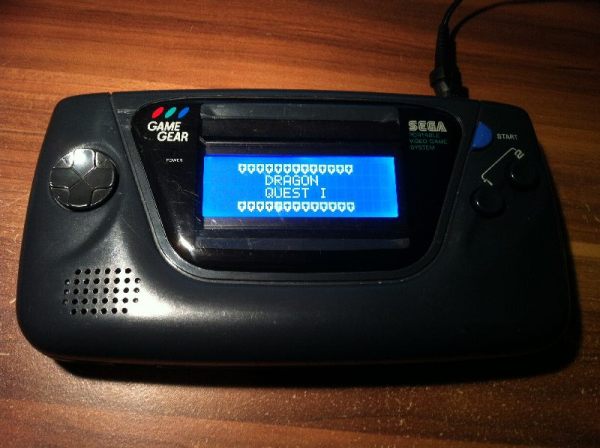
To start with, he built a prototype PCB and tested out the concept. It worked so he began on the real thing. He tore out the guts from a broken Game Gear, saving some parts like those responsible for supplying power. Impressively, he etched his own replacement boards for the Game Gear’s control pads; surprising himself at how simple it ended up being. He fit a 16×4 LCD into the space previously occupied by the Game Gear’s screen.
The program itself is a simple text adventure of his own creation. He even added little 8-bit sprites. The story is classic, a princess has gotten herself in some trouble and a brave hero has been coerced into saving her. Last, he added some music and sound effects from Zelda with a piezo buzzer.
This project is guaranteed to disappoint a visiting younger cousin or relative, but we like to think of that as a feature and not a bug. Great work!
Every year, Congress passes bills directing the funding for various departments and agencies. Sometimes, this goes swimmingly: congress recently told NASA to attempt a landing on Europa, Jupiter’s ice-covered moon. Sometimes, it doesn’t go as well. The draft of the FAA Reauthorization act of 2016 (PDF) includes provisions for drones and model airplanes amid fears of privacy-encroaching quadcopters.
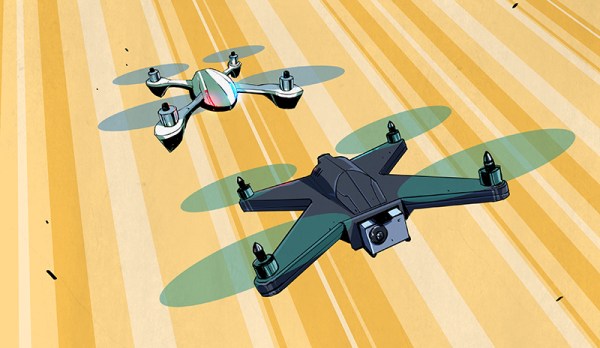
As would be expected, the 2016 FAA Reauthorization act includes a number of provisions for unmanned aerial systems, a class of aircraft that ranges from a Phantom quadcopter to a Predator drone. The draft of the act includes provisions for manufacturers to prevent tampering of modification of their product, and provide the FAA with a statement of compliance, and prohibit these devices from being sold unless these conditions are met.
For a very long time, the Congress and the FAA have had special rules for model aircraft. Since 2012, the special rules for model aircraft have been simple enough: model aircraft are flown for hobby or recreational use, must operate in accordance with community-set safety guidelines, weigh less than 55 pounds, give way to manned aircraft, and not be flown within five miles of an airport. The 2016 FAA Reauthorization bill adds several updates. No model aircraft may be flown higher than 400 feet above ground level, and the operator of a model aircraft must pass a knowledge and safety test administered by the FAA. Under this draft of the FAA Reauthorization bill, you will have to pass a test to fly a quadcopter or model plane.
While this is only a draft of the 2016 FAA Reauthorization bill, there is a considerable risk flying model planes could quickly go the way of amateur radio with a Morse requirement for the license. This, of course, is due to Congress’ fears of the impact drones and model airplanes could have on safety, despite recent studies that show a 2kg drone is likely to cause injury to a human passenger once every 187 million years of operation. In other words, politicians don’t understand statistics.
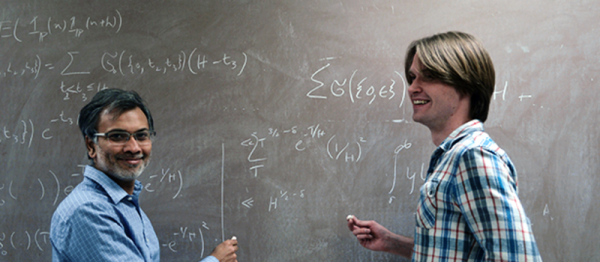
If you’ve spent any time around prime numbers, you know they’re a pretty odd bunch. (Get it?) But it turns out that they’re even stranger than we knew — until recently. According to this very readable writeup of brand-new research by [Kannan Soundararajan] and [Robert Lemkein], the final digits of prime numbers repel each other.
More straightforwardly stated, if you pick any given prime number, the last digit of the next-largest prime number is disproportionately unlikely to match the final digit of your prime. Even stranger, they seem to have preferences. For instance, if your prime ends in 3, it’s more likely that the next prime will end in 9 than in 1 or 7. Whoah!
Even spookier? The finding holds up in many different bases. It was actually first noticed in base-three. The original paper is up on Arxiv, so go check it out.
This is a brand-new finding that’s been hiding under people’s noses essentially forever. The going assumption was that primes were distributed essentially randomly, and now we have empirical evidence that it’s not true. What this means for cryptology or mathematics? Nobody knows, yet. Anyone up for wild speculation? That’s what the comments section is for.
(Headline photo of researchers Kannan Soundararajan and Robert Lemke: Waheeda Khalfan)
Have you ever seen the science experiment (or magic trick?) where you get water supercooled to where it isn’t frozen, but then it freezes when you touch it, pour it, or otherwise disturb it? Apparently, ice crystals form around impurities or disturbances in the liquid and then “spread.” A similar effect can occur in metals where the molten metal cools in such a way that it stays melted even below the temperature that would usually cause it to melt.
[Martin Thuo] at Iowa University used this property to make solder joints at room temperature using Field’s metal (a combination of bismuth, indium, and tin). The key is a process that coats the molten metal with several nanolayers that protect it from solidifying until something disturbs the protective layer.
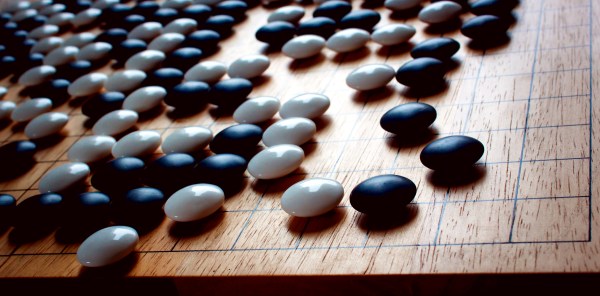
We wake up this morning to the news that Google’s deep-search neural network project called AlphaGo has beaten the second ranked world Go master (who happens to be a human being). This is the first of five matches between the two adversaries that will play out this week.
On one hand, this is a sign of maturing technology. It has been almost twenty years since Deep Blue beat Gary Kasparov, the reigning chess world champion at the time. Although there are still four games to play against Lee Sedol, it was recently reported that AlphaGo beat European Go champion Fan Hui in five games straight. Go is generally considered a more difficult game for machine minds to play than chess. This is because Go has a much larger pool of possible moves at any given time.
Does This Matter?
Okay, the news part of this event has been covered: machine beats man. Does it matter? Will this affect your life and how? We want to hear what you think in the comments below. But I’m going to keep going with some of my thoughts on the topic.
You’re still better at Ms. Pacman [Source: DeepMind paper in Nature]Let’s look first at what AlphaGo did to win. At its core, the game of Go is won by figuring out where your opponent will likely make a low-percentage move and then capitalizing on that choice. Know Your Enemy has been a tenet of strategy for a few millennia now and it holds true in the digital age. In addition to the rules of the game, AlphaGo was fed a healthy diet of 30 million positions from expert games. This builds behavior recognition into the system. Not just what moves can be made, but what moves are most likely to be made.
DeepMind, the company behind AlphaGo which was acquired by Google in 2014, has published a paper in Nature about their approach. They were even nice enough to let us read without dealing with a paywall. The secret sauce is the learning process which at its core tries to mimic how living entities learn: observe repetitively while assigning values to outcomes. This is key as it leads past “intellect”, to “intelligence” (the “I” in AI that everyone seems to be waiting for). But this is a bastardized version of “intelligence”. AlphaGo is able to recognize and predict behavior, then make choices that lead to a desired outcome. This is more than intellect as it does value the purpose of an opponent’s decisions. But it falls short of intelligence as AlphaGo doesn’t consciously understand the purpose it has detected. In my mind this is exactly what we need. Truly successful machine learning will be able to make sense out of sometimes irrational input.
The paper from Nature doesn’t go into details about Go, but it explains the approach of the learning system applied to Atari 2600. The algorithm was given 210×160 color video at 60Hz as an input and then told it could use a joystick with one button. From there it taught itself to play 49 games. It was not told the purpose or the rules of the games, but it was given examples of scores from human performance and rewarded for its own quality performances. The chart above shows that it learned to play 29 of them at or above human skill levels.

![You're still better at Ms. Pacman [Source: DeepMind paper in Nature]](https://hackaday.com/wp-content/uploads/2016/03/deepmind-atari2600-machine-learning.jpg)