Particle Electron – The Solution To Cellular Things

Just over a year ago, Particle (formerly Spark), makers of the very popular Core and Particle Photon WiFi development kits, released the first juicy tidbits for a very interesting piece of hardware. It was the Electron, a cheap, all-in-one cellular development kit with an even more interesting data plan. Particle would offer their own cellular service, allowing their tiny board to send or receive 1 Megabyte for $3.00 a month, without any contracts.

Thousands of people found this an interesting proposition and the Electron crowdfunding campaign took off like a rocket. Now, after a year of development and manufacturing, these tiny cellular boards are finally shipping out to backers and today the Electron officially launches.

Particle was kind enough to provide Hackaday with an Electron kit for a review. The short version of this review is the Electron is a great development platform, but Particle pulled off a small revolution in cellular communications and the Internet of Things

Continue reading “Particle Electron – The Solution To Cellular Things”

FAA Rescinds Drone Ban Around DC

Late last year, the FAA expanded a Special Flight Rule Area (SFRA) that applied to Unmanned Aerial Systems, drones, and RC airplanes around Washington DC. This SFRA was created around the year 2000 – for obvious reasons – and applies to more than just quadcopters and airplanes made out of foam. Last December, the FAA expanded the SFRA from 15 nautical around a point located at Reagan National to 30 nautical miles. No remote-controlled aircraft could fly in this SFRA, effectively banning quadcopters and drones for six million people.

Today, the FAA has rescinded that ban bringing the area covered under the Washington DC SFRA to 15 nautical miles around a point inside Reagan National. This area includes The District of Columbia, Bethesda, College Park, Alexandria, and basically everything inside the beltway, plus a mile or two beyond. Things are now back to the way they were are few weeks ago.

The 30-mile SFRA included a number of model flying clubs that were shuttered because of the ban. DCRC is now back up. The Capital Area Soaring Association worked with the FAA and AMA to allow club members to fly.

Of course, limitations on remote-controlled aircraft still exist. For the most part, these are rather standard restrictions: aircraft must weigh less than 55 pounds, fly below 400 feet line of sight, and must avoid other aircraft.

Replacing The IPhone 6 Button Bricks The Phone

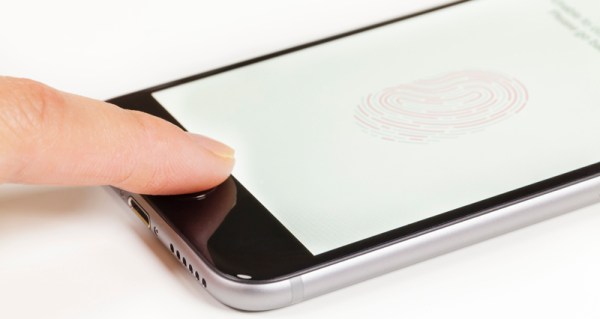
News comes from The Guardian that the iPhone 6 will break because of software updates due to non-authorized hardware replacements. Several thousand iPhone 6 users are claiming their phones have been bricked thanks to software updates if the home button – and the integrated TouchID fingerprint sensor – were replaced by non-Apple technicians.

For the last few iPhone generations, the TouchID fingerprint sensor has been integrated into the home button of every iPhone. This fingerprint sensor provides an additional layer of security for the iPhone, and like everything on smartphones, there is a thriving market of companies who will fix broken phones. If you walk into an Apple store, replacing the TouchID sensor will cost about $300. This part is available on Amazon for about $10, and anyone with a pentalobe screwdriver, spudger, and fine motor control can easily replace it. Doing so, however, will eventually brick the phone, as software updates render the device inoperable if the TouchID sensor is not authorized by Apple.

According to an Apple spokeswoman, the reason for the error 53 is because the fingerprint data is uniquely paired to the touch ID sensor found in the home button. If the TouchID sensor was substituted with a malicious TouchID sensor, complete and total access to the phone would be easy, providing a forehead-slapping security hole. Error 53 is just Apple’s way of detecting devices that were tampered with.

In fairness to Apple, not checking the authenticity of the touch ID would mean a huge security hole; if fingerprint data is the only thing keeping evil balaclava-wearing hackers out of your phone, simply replacing this sensor would grant them access. While this line of reasoning is valid, it’s also incredibly stupid: anyone can get around the TouchID fingerprint sensor with a laser printer and a bit of glue. If you ever get ahold of the German Defense Minister’s iPhone, the fingerprint sensor isn’t going to stop you.

This is a rare case where Apple are damned if they do, damned if they don’t. By not disabling the phone when the TouchID sensor is replaced, all iPhones are open to a gaping security hole that would send the Internet into a tizzy. By bricking each and every iPhone with a replacement TouchID sensor, Apple gets a customer support nightmare. That said, the $300 replacement cost for the TouchID sensor will get you a very nice Android phone that doesn’t have this problem.

Anti-Drone Mania Reaches Panic Levels For Superbowl

According to this report at FOX News Technology, the FAA may use “deadly force” against your remote-controlled quadcopter, ahem, “drone” if you’re flying within a 36-mile radius of the Super Bowl this weekend. We call shenanigans on using “deadly” for things that aren’t alive to begin with, but we have no doubt that they intend to take your toys away if you break the rules. We are curious to see how they’re going to do it, though.

sect_6_6446The actual Notice to Airmen (NOTAM) has the details, and seems pretty comprehensive. You can’t fly your sea plane or go crop dusting either. Model rocketry is off the table within the circle on Sunday afternoon. It tickles our superiority-bone to note that only “drones” made the headlines.

But we also see our loophole! The ban only extends from the ground’s surface up to 18,000 ft (5,500 m) above sea level. (No, we’re not thinking of flying quadcopters in tunnels under the stadium.) They didn’t rule out high-altitude balloon flight over the Super Bowl? Don’t even think about it.

On the other hand, those of you near the game should count your blessings that you don’t live within 30 miles of the US Capitol and spend the day drone racing.

Continue reading “Anti-Drone Mania Reaches Panic Levels For Superbowl”

Super Thin ICs Are Coming

An ordinary integrated circuit is made of layers of material. Typically a layer is made from some material (like silicon dioxide, polysilicon, copper, or aluminum). Sometimes a process will modify parts of a layer (for example, using ion implantation to dope regions of silicon). Other times, some part of the layer will be cut away using a photolithography process.

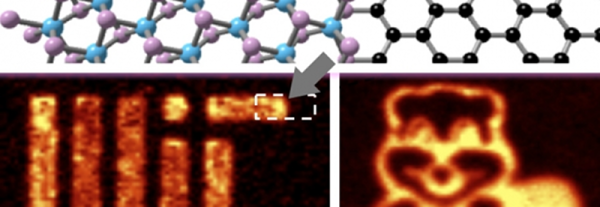
Researchers at MIT have a new technique that allows super thin layers (1-3 atoms thick) and–even more importantly–enables you to use two materials in the same layer. They report that they have built all the basic components required to create a computer using the technique.

Continue reading “Super Thin ICs Are Coming”

FTDI Drivers Break Fake Chips, Again

Just over a year ago, FTDI, manufacturers of the most popular USB to serial conversion chip on the market, released an update to their drivers that bricked FTDI clones. Copies of FTDI chips abound in the world of cheap consumer electronics, and if you’ve bought an Arduino for $3 from a random online seller from China, you probably have one of these fake chips somewhere in your personal stash of electronics.

After a year, we have the latest update to FTDI gate. Instead of bricking fake chips, the latest FTDI drivers will inject garbage data into a circuit. Connecting a fake FTDI serial chip to a computer running the latest Windows driver will output “NON GENUINE DEVICE FOUND!”, an undocumented functionality that may break some products.

FTDI gate mk. 1 merely bricked fake and clone chips, rendering them inoperable. Because fakes and clones of these chips are extremely common in the supply chain, and because it’s very difficult to both tell them apart and ensure you’re getting genuine chips, this driver update had the possibility to break any device using one of these chips. Cooler heads eventually prevailed, FTDI backed down from their ‘intentional bricking’ stance, and Microsoft removed the driver responsible with a Windows update. Still, the potential for medical and industrial devices to fail because of a random driver update was very real.

The newest functionality to the FTDI driver released through a Windows update merely injects unwanted but predictable data into the serial stream. Having a device spit out “NON GENUINE DEVICE FOUND!” won’t necessarily break a device, but it is an undocumented feature that could cause some devices to behave oddly. Because no one really knows if they have genuine FTDI chips or not – this undocumented feature could cause problems in everything from industrial equipment to medical devices, and of course in Arduinos whose only purpose is to blink a LED.

Right now, the only option to avoid this undocumented feature is to either use Linux or turn off Windows Update. Since the latter isn’t really a great idea, be prepared constantly roll back the FTDI driver to a known good version.

Rumors Of Xilinx Sale Abound

The companies that design and build the chips we all use – Atmel, Texas Instruments, Microchip, NXP, Freescale, Intel, Altera, Avago, Broadcom, and On Semi are all buying each other, merging, and slowly becoming two or three gigantic semiconductor companies. The question on everyone’s mind is, ‘which company will be next?’ The answer might be Xilinx, inventors of the FPGA and designers of some really cool parts.

The Wall Street Journal and Barron’s reported a few regulatory filings from Xilinx last week. This could signal an acquisition or merger of the company When this could happen is anyone’s guess, but rumors are flooding the Internet over who would buy Xilinx.

Until recently, Xilinx’s largest competitor in the FPGA market was Altera. That is, until Intel came by with a check for $16.7 Billion. The revenue, size, and market cap of both Xilinx and Altera aren’t too different, leading the question of who would have the money to buy Xilinx and isn’t Intel. Aren’t rumors fun?

Xilinx’s portfolio include high performance, mid-range and low-cost FPGAs as well as interesting hybrid devices. One such hybrid is Zynq, an FPGA and fast ARM Cortex A9 processor in the same package. All these chips will be made for years to come in one form or another. The only question is if Xilinx will make these chips, or will the company continue on under some new branding.