Ubuntu Core Supports Raspberry Pi 2 I/O

Although it isn’t official, Ubuntu Core–the tiny Internet of Things version of Ubuntu–now runs on the Raspberry Pi 2. There are prebuilt binaries as well as instructions for how to roll your own, if you prefer. You can even access GPIO

Ubuntu Core abandons the old-style Debian packages, in favor of Snap, a new version of the Ubuntu phone’s Click package manager. Snap offers transactional updates. The idea is that all of these “things” on the IoT need to be updated to patch security holes or fix other issues.

Continue reading “Ubuntu Core Supports Raspberry Pi 2 I/O”

GoGo Starts Testing New In-Flight Internet Technology

GoGo, the largest provider of Internet above 30,000 feet, has announced they are now testing their next generation of in-flight Internet.

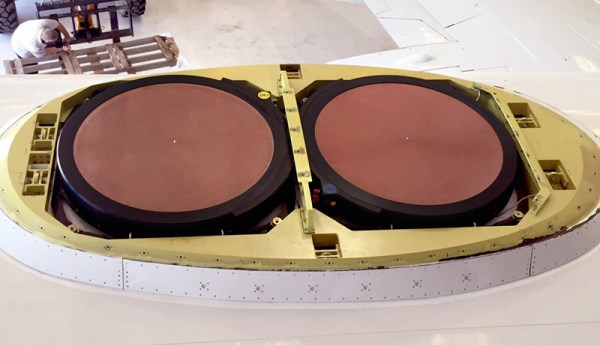
Of special interest in the new 2Ku system is the antennas strapped to the top of a GoGo-equipped plane’s fuselage. These antennas form a mechanically-phased-array that are more efficient than previous antennas and can provide more bandwidth for frequent fliers demanding better and faster Internet.

The Antenna Pod
The Antenna Pod

Currently, GoGo in-flight wireless uses terrestrial radio to bring the Internet up to 35,000 feet. Anyone who has flown recently will tell you this is okay, but you won’t be binging on Nexflix for your next cross country flight. The new system promises speeds up to 70Mbps, more than enough for a cabin full of passengers to be pacified by electronic toys. The 2Ku band does this with a satellite connection – much faster, but it does have a few drawbacks.

Because the 2Ku system provides Internet over a satellite connection, ping times will significantly increase. The satellites GoGo is using orbit at 22,000 miles above Earth, or about 0.1 light seconds away from the plane. Double that, and your ping times will increase by at least 200ms compared to a terrestrial radio connection.

While this is just fine for email and streaming, it does highlight the weaknesses and strengths of mobile Internet.

Two New FPGA Families, Designed In China

The two largest manufacturers of FPGAs are, by far, Altera and Xilinx. They control over 80% of the market share, with Lattice and others picking up the tail end. The impact of this can be seen in EE labs and alibaba; nearly every FPGA dev board, every instructional, and every bit of coursework is based on Altera or Xilinx chips.

There’s a new contender from the east. Gowin Semiconductor has released two lines of FPGAs (Google translate) in just under two years. That’s incredibly fast for a company that appears to be gearing up to take on the Altera and Xilinx monolith.

The FPGA line released last week, the GW1N family, is comprised of two devices with 1,152 and 8,640 LUTs. These FPGAs are built on a 55nm process, and are meant to compete with the low end of Altera’s and Xilinx’ offerings. This adds to Gowin’s portfolio introduced last May with the GW2A (Google translate) family, featuring devices ranging from 18,000 to 55,000 LUTs and DSP blocks. Packages will range from easily solderable QFN32 and LQFP100, to BGA packages with more pins than an eighteenth century seamstress at the royal ball.

For comparison, Xilinx’ Spartan-6 LX family begins with devices featuring 3,840 LUTs and 216kb of block RAM, with larger devices featuring 147,443 LUTs and up to 268kb of block RAM. Altera’s Cyclone IV E devices are similarly equipped, with devices ranging from 6,272 to 114,480 LUTs. Between the two device families introduced by Gowin recently, nearly the entire market of low-end FPGAs is covered, and they’re improving on the current offerings: the GW1N chips feature random access on-chip Flash memory. Neither the low-end devices from Altera nor devices from Lattice provide random-access Flash.

The toolchain for Gowin’s new FPGAs is based nearly entirely on Synopsys’ Synplify Pro, with dedicated tools from Gowin for transforming HDL into a bitstream for the chip. This deal was inked last year. As for when these devices will make it to market, Gowin is hoping to send out kits to well-qualified devs soon, and the devices may soon show up in the warehouses of distributors.

Gowin’s FPGAs, in contrast to the vast, vast majority of FPGAs, are designed and fabbed in China. This gives Gowin a unique home-field advantage in the land where everything is made. With LVDS, DSP, and other peripherals these FPGAs can handle, Gowin’s offerings open up a wide variety of options to developers and product engineers a few miles away from the Gowin plant.

The GW1N and GW2A families of FPGAs are fairly small when it comes to the world of FPGAs. This limitation is by capability though, and not number of units shipped. It’s nearly tautological that the largest market for FPGAs would be consumer goods, and Gowin is focusing on what will sell well before digging in to higher end designs. We will be seeing these chips show up in devices shortly, and with that comes a new platform to tinker around with.

If you’re looking to make your mark on the world of open source hardware and software, you could do worse than to start digging into the synthesis and bitstream of these Gowin chips. Just months ago, Lattice’s iCE40 bitstream was reverse engineered, and already there are a few boards capitalizing on a fully open source toolchain for programmable logic. With more capable FPGAs coming out of China that could be stuffed into every imaginable product, it’s a golden opportunity for hardware hackers and developers alike.

[Thanks for the tip Antti]

Drivers For 3D Printers And Why We Need Them

Manufacturers of 3D printers have a lot to do before they catch up with makers of the cheapest 2D, paper-based printers. If you’ve ever taken an inkjet apart, you’ll most likely find some sort of closed-loop control on at least one of the axes. The 2D printer will tell you when you’re out of ink, when a 3D printer will go merrily along, printing in air without filament. File formats? Everything is Gcode on a 3D printer, and there are dozens, if not hundreds of page description languages for 2D printers.

The solution to some of these problems are drivers – software for a 3D printer that slowly consumes the slicing of an object, printer settings, and placing an object on the bed. It’s coming, and the people who are responsible for making your 2D printer work with your computer are busy at work messing up the toolchain for your 3D printer.

The latest version of CUPS (C Unix Printing System) adds support for 3D printers. This addition is based on meetings, white papers, and discussions in the Printer Working Group (PWG). There has already been a lot of talk about what is wrong with the current state of 3D printer toolchains, what can be improved, and what should be completely ignored. Let’s take a look at what all of this has accomplished.

Continue reading “Drivers For 3D Printers And Why We Need Them”

Google’s OnHub Goes Toe To Toe With Amazon Echo

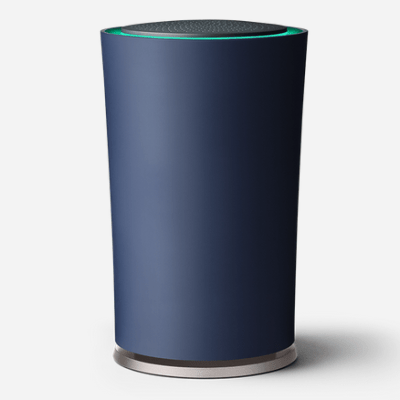
Yesterday Google announced preorders for a new device called OnHub. Their marketing, and most of the coverage I’ve seen so far, touts OnHub as a better WiFi router than you are used to including improved signal, ease of setup, and a better system to get your friends onto your AP (using the ultrasonic communication technique we’ve also seen on the Amazon Dash buttons). Why would Google care about this? I don’t think they do, at least not enough to develop and manufacture a $199.99 cylindrical monolith. Nope, this is all about the Internet of Things, as much as it pains me to use the term.

google-onhub-iot-router-thumbOnHub boasts an array of “smart antennas” connected to its various radios. It has the 2.4 and 5 Gigahertz WiFi bands in all the flavors you would expect. The specs also show an AUX Wireless for 802.11 whose purpose is not entirely clear to me but may be the network congestion sensing built into the system (leave a comment if you think otherwise). Rounding out the communications array is support for ZigBee and Bluetooth 4.0.

I have long looked at Google’s acquisition of Nest and assumed that at some point Nest would become the Router for your Internet of Things, collecting data from your exercise equipment and bathroom scale which would then be sold to your health insurance provider so they may adjust your rates. I know, that’s a juicy piece of Orwellian hyperbole but it gets the point across rather quickly. The OnHub is a much more eloquent attempt at the same thing. Some people were turned off by the Nest because it “watches” you to learn your heating preferences. The same issue has arisen with the Amazon Echo which is “always listening”.

Google has foregone those built-in futuristic features and chosen a device to which almost  everyone has already grown accustom: the WiFi router. They promise better WiFi and I’m sure it will deliver. What’s the average age of a home WiFi AP at this point anyway? Any new hardware would be an improvement. Oh, and when you start buying those smart bulbs, fridges, bathroom scales, egg trays, and whatever else it’ll work for them as well.

As far as hacking and home automation, it’s hard to beat the voice-activated commands we’ve seen with Echo lately, like forcing it to control Nest or operate your Roku. Who wants to bet that we’ll see a Google-Now based IoT standalone device quickly following the shipment of OnHub?

Continue reading “Google’s OnHub Goes Toe To Toe With Amazon Echo”

Covert Cricket Score Tracker Gets Around Office Rules

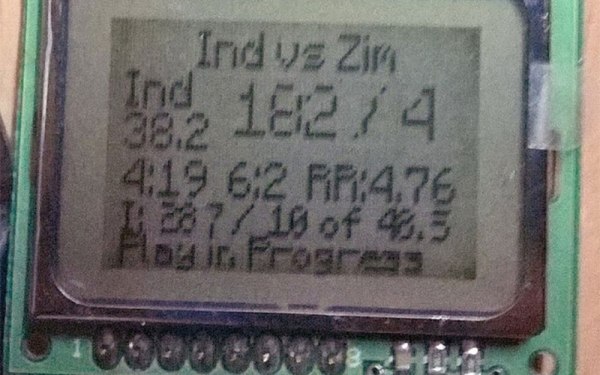
[Rohit Gupta] was looking for a stealthy way to keep up with the scores for his favorite game: cricket. Unfortunately, his office blocked access to most sites where he could watch the game, so he came up with a covert way to track the score on a small LCD screen. Using a Raspberry Pi and the web scraping program BeautifulSoup, he wrote a program that grabbed the score once a minute, and displayed it on a screen salvaged from a Nokia 5510 cell phone, driven through the Adafruit 5510 Python display library. Web scraping is a technique where a program grabs a web page, scrapes all of the content off it and processes it so only the data that is needed remains.

[Rohit] doesn’t name the web site that he scraped the score from, but there are two good reasons for that. Firstly, this hack relies on his office not blocking it, and secondly, many web sites frown on web scraping like this, as doing it too often can overload their servers, and you obviously don’t see the ads that the site is running. So, it is a technique that should be used with some caution. That aside, this is  a great example of a stealthy way to display information that you want to track, but without obnoxious (and obvious) alerts popping up on screen. And, given that cricket games can often go on for several days, that’s a good way to keep track of the game you love and keep your job.

Need a little primer on web scraping? Check out this guide.

Saving 25,000 Electronics Manuals And Could Use Help

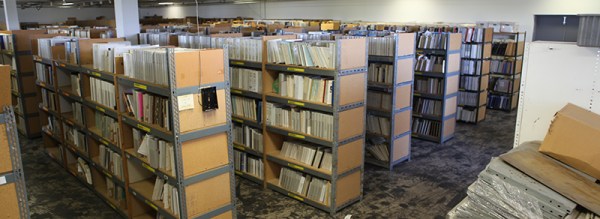
Textfiles.com is the largest repository of BBS archives and digital writings in the world, and admin [Jason Scott] has a nearly single-minded devotion to saving the documents of and relating to our electronic age. Now, he’s in a bit of a pickle. He found 25,000 manuals for all kinds of electronic items. The collection goes back to the 30s, [Jason] wants to save them, and the current owner of the collection needs the space. Have you ever noticed how terrible books are to move?

Included in this collection just outside Baltimore, MD are thousands of manuals for various pieces of equipment going back to the 1930s. There are Tektronix manuals, HP manuals, and instructions and schematics for equipment that hasn’t been made in a very, very long time. [Jason] put up a Flickr gallery of the library in all its glory. There’s bound to be some very interesting stuff in there.

Of course the acquisition of tens of thousands of out of print manuals will never go smoothly. [Jason] needs to start emptying out the shelves on Monday. The current plan is to go through all the manuals, remove the duplicates, and shuffle them over to a storage unit about a mile away until they can be dealt with properly. If you’re around Baltimore, or more specifically Finksburg, MD, [Jason] could use a few hands to clear out this archive on Monday.