Perfecting A Bluetooth N64 Controller

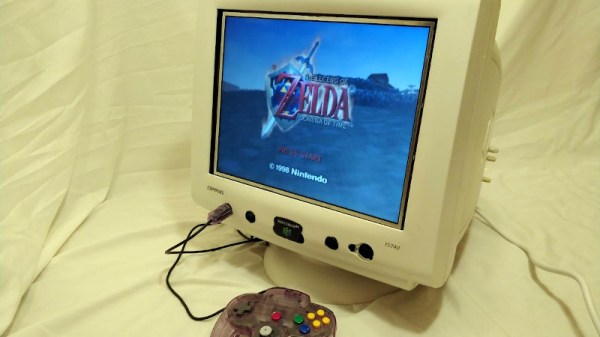
Love it or hate it, the Nintendo 64 controller doesn’t seem to be going anywhere. Dedicated fans are still looking for ways to use the unique trilobed controller with modern systems, and they won’t be satisfied until they perfectly replicate the original experience. [Shyri Villar] has been working on perfecting a blend of original and modern hardware that looks very promising.

The project started when [Shyri] found that you could take the internals from a modern third party Bluetooth N64 controller made by 8BitDo and put them into the original controller’s case. This would give you the original buttons back, and overall a more authentic weight and feel. Unfortunately, this usually means dumping the original N64 joystick for the 8BitDo’s.

What [Shyri] wanted to do was install the 8BitDo PCB into an original N64 controller, but adapt Nintendo’s joystick to communicate with it. Unfortunately, since the original joystick used optical encoders and the 8BitDo version uses potentiometers, there’s something of a language gap.

To bridge the divide, both the X and Y dimensions of the joystick get their own PIC12F675 microcontroller and X9C103S digital potentiometer. The microcontrollers read the X and Y values from the original joystick’s encoders, and use the digital potentiometers to provide the 8BitDo with the expected analog input. Right now the electronics are held on two scraps of perfboard tucked into the side “wings” of the controller, but hopefully we’ll see a custom PCB in the future.

If you’re more interested in going back in time with your trusty N64 controller, then you might be interested in learning more about how one hacker managed to hook it up to the MSX.

Fire Breathing N64 Puts Blast Processing In The Shade

Consoles over the years have innovated, bringing new features and experiences with each subsequent generation. Rumble, motion controls and more recently VR have all come to the fore as companies vie for supremacy in the marketplace. Nobody’s really had the guts to tackle fire, though. Until now.

The case and spinning logo alone would have made the front page; the fire is simply next level. Our parents were always telling us to sit further from the TV… and now we know why.

The build is based on the Nintendo 64. The motherboard is removed from the original case, and fitted to a sheet metal enclosure of impressive craftsmanship. This allows the fitment of the machine’s party piece — twin jets of flame, triggered by an extra button on the controller. There’s also a spinning N64 logo built into the front of the case, backlit in a foreboding red — hinting to the player that this is no regular console.

The console is capable of shooting flames up to 4 feet long, and if you have to ask why, you’re likely on the wrong website. We’d love to see the jets triggered by rumble, ideally on a per player basis — making bouts of Mario Kart and Smash Brothers more perilous than ever.

As it turns out, fire’s also a great way to visualise sound waves. Video after the break.

Continue reading “Fire Breathing N64 Puts Blast Processing In The Shade”

Overclocking In An SNES Emulator

The bsnes emulator has a new overclocking mode to eliminate slowdowns in SNES games while keeping the gameplay speed accurate. We’re emulating old SNES hardware on modern machines that are vastly more powerful. Eliminating slowdowns should be trivial, right? For an emulator such as bsnes, which is written to achieve essentially pixel-perfect accuracy when emulating, the problem is decidedly non-trivial. Stick around to learn why.

Continue reading “Overclocking In An SNES Emulator”

The Not Quite USB-C Of Nintendo Switch Accessories

Historically gaming consoles are sold at little-to-no profit in order to entice customers with a low up-front price. The real profits roll in afterwards from sales of games and accessories. Seeking a slice of the latter, aftermarket accessory makers jump in with reverse-engineered compatible products at varying levels of “compatible”.

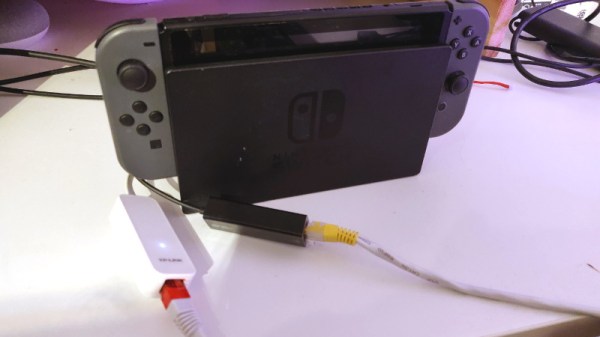
When the Nintendo Switch was released with a standard USB-C port for accessories, we had hoped those days of hit-or-miss reverse engineering were over, but reality fell short. Redditor [VECTORDRIVER] summarized a few parts of this story where Nintendo deviated from spec, and accessory makers still got things wrong.

Officially, Nintendo declared the Switch USB-C compliant. But as we’ve recently covered, USB-C is a big and complicated beast. Determined to find the root of their issues, confused consumers banded together on the internet to gather anecdotal evidence and speculate. One theory is that Nintendo’s official dock deviated from official USB-C dimensions in pursuit of a specific tactile feel; namely reducing tolerance on proper USB-C pin alignment and compensating with an internal mechanism. With Nintendo playing fast and loose with the specs, it makes developing properly functioning aftermarket accessories all the more difficult.

But that’s not the only way a company can slip up with their aftermarket dock. A teardown revealed Nyko didn’t use a dedicated chip to manage USB power delivery, choosing instead to implement it in software running on ATmega8. We can speculate on why (parts cost? time to market?) but more importantly we can read the actual voltage on its output pins which are too high. Every use becomes a risky game of “will this Switch tolerate above-spec voltage today?” We expect that as USB-C becomes more common, it would soon be cheapest and easiest to use a dedicated chip, eliminating the work of an independent implementation and risk of doing it wrong.

These are fairly typical early teething problems for a new complex technology on their road to ubiquity. Early USB keyboard and mice didn’t always work, and certain combination of early PCI-Express cards and motherboards caused damage. Hopefully USB-C problems — and memories of them — will fade in time as well.

[via Ars Technica]

[Main image source: iFixit Nintendo Switch Teardown]

Installing Android On Your Nintendo Switch, Because Why Not?

In a continuing trend of ‘but does it run Android?’, enterprising folk over at the XDA-Developers forum have found a way to get LineageOS (the successor to CyanogenMod) installed and running on the Nintendo Switch using Switchroot source code. Promising to release the necessary files to replicate this effort has obviously made other people at XDA-Developers forum as well as on Reddit rather excited.

As for the question of ‘why?’, one has to remember that internally the Nintendo Switch is an Nvidia Tegra X1-based system with a Maxwell GPU, making it definitely one of the nicer ARM-based portable systems out there if one wants to do some Android-based gaming. Even better, the entire Nvidia Shield TV-derived ROM runs from the SD card, so just popping out this SD card is sufficient to return to playing Switch games.

Currently a few nagging issues still have to be worked out with this ROM, such as touchscreen issues, sleep mode not working, auto-rotation not working as communication with the sensor needs to be figured out, and so on. This should make it clear that it won’t be a production ready piece of software, but definitely something that should be used at your own risk.

While it shouldn’t harm the Switch, one should probably not try it on a Switch one cares deeply about. Just in case.

A Wii Playing The GameCube, Disguised As A Game Boy SP

It may be hard to believe, but thanks to the expert work of Nintendo aficionado [Bill Paxton], the Game Boy Advance SP and GameCube lovechild that you see before you started its life as a Wii. That means not only can it play commercial GameCube and Wii games, but also has access to the wide library of homebrew games and emulators available for those systems.

To create this marvel, [Bill] first had to expertly cut away extraneous components from the Wii’s motherboard. He then mated the “trimmed” PCB to a new board that holds the controls as well as some other ancillary components such as the audio amplifier and USB port. He even managed to squeeze a battery in there, as demonstrated in the video after the break.

Finally, he designed a 3D printed enclosure that incorporates GameCube-style controls (complete with printed buttons) into the classic clamshell Game Boy SP shape. Because of the complexity of the design, [Bill] decided to have it professionally printed at Shapeways rather than trying to run it off of his home printer, which he says helps sells the professional look. It did take him some trial and error before he got the hang of painting the printed material to his satisfaction, but we think the end result was certainly worth the effort.

It probably won’t come as a huge surprise to find that this isn’t the first time [Bill] has pulled off a stunt like this. A few years back he created a very similar “GameCube SP”, but by the looks of it, this revised attempt improves on the original version in every way possible.

Continue reading “A Wii Playing The GameCube, Disguised As A Game Boy SP”

Doom On The NES

“But can it run Doom?” is perhaps the final test of hacking a platform. From calculators to thermostats, we’ve seen Doom shoehorned into a lot of different pieces of hardware. Many times we’re left scratching our heads at the mashup, and this is no exception.

[TheRasteri] wasn’t satisfied with the existing ports of Doom, so he decided to bring the classic game to a classic console, the NES. In the video embedded after the break, he helpfully points out the system requirements for running Doom, and compares them with the specifications of the NES. Spoilers: not nearly enough.

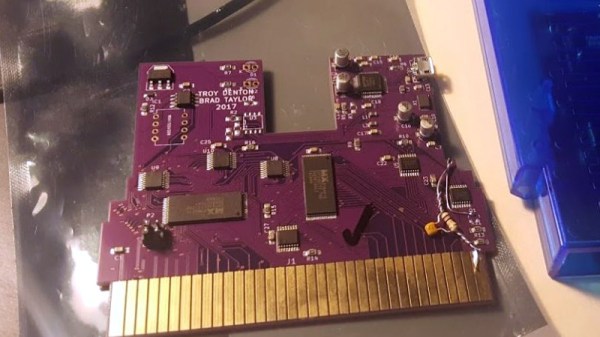
How did he manage the feat? Taking inspiration from Nintendo’s own SuperFX chip, he embedded a co-processor in the cartridge, and fed the video stream from the cartridge back into the NES. It might not be fair to call it a co-processor, since it’s a Raspberry Pi with thousands of times the processing power of the 6502 that powers the NES. The idea might seem familiar, and in fact it was partially inspired by [Tom7]’s similar hack last year.

Using a Cypress USB controller to feed the graphics bus, [TheRasteri] is able to run Doom on the Raspberry Pi, take the visuals from the game, and convert them into blocks of graphics the NES expects to load from the cartridge. The best trick is that he apparently managed to squeeze everything into a normal NES cartridge. He plans to release a build video on his channel, so keep an eye out.

Meanwhile, don’t forget to take a look at those calculators and thermostats we mentioned.

Continue reading “Doom On The NES”