N64Boy Advance

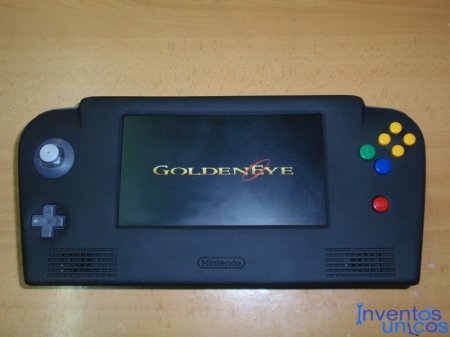
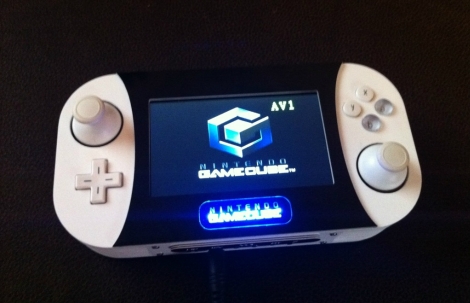
[Hailrazer] found a Game Boy Advance carrying case in his closet and thought he could pull off an N64Boy Advance in a few weekends. Despite the fast build time, [Hailrazer] built something that wouldn’t look out of place sitting on a shelf at a toy store.

This isn’t the first time we have covered an N64 Advance portable gaming system that uses a GBA carrying case, but this hack keeps the original styling of the Game Boy Advance without all the epoxy, bondo and sanding. Inside is a 4.3″ screen, GameCube joystick, N64 expansion pack, and enough Li-ion to get 5-6 hours of play time. The build doesn’t include a D-pad because [Hailrazer] doesn’t use that while playing. It also doesn’t have controller or A/V ports, because he doesn’t, “want to sit around with friends playing N64 on a 4.3″ screen.” A very pragmatic build, indeed.

We love seeing people re-purpose odd bits of plastic they have lying around, so we’re wondering when someone with an Original Game Boy Carrying Case will build an NESBoy. Video after the jump.

Continue reading “N64Boy Advance”

RoboTouch Adds Physical Game Controls To The IPad

robotouch

[ProtoDojo] wanted to play a racing game on his iPad, but he was not a big fan of using the touch interface for this particular title. Instead, he put together a pretty neat little hack that allows him to play games on his iPad using an old NES controller.

He built a set of custom conductive arms which he mounted on three micro servos. The servos were attached to the iPad screen using small suction cups in the locations where it expects to receive button presses. They are also wired to an Arduino that interprets button presses from the attached NES controller. When the Arduino senses that the D-pad or buttons have been pressed, it triggers the servos, which in turn press the virtual buttons on the screen.

In the video below, you can see that after adjusting the servo positions, the setup seems to work pretty well. You might expect to see some sort of lag with a setup like this, but we didn’t notice any. The [ProtoDojo] web site is currently down due to heavy traffic, but you should be able to find some more build details there, once it becomes functional again.

Continue reading “RoboTouch Adds Physical Game Controls To The IPad”

Wiimote-based Whiteboard Lets You Write On Any Surface

propeller_whiteboard

The Wiimote is a fantastic tool for hackers, given their affordability and how easy they are to work with. [Gareth] had a “eureka” moment while working on another Wiimote-based project, and with some alterations, converted it into an electronic whiteboard.

The whiteboard was built using the IR sensor he extracted from a Wiimote, which is wired to an EasyProp board to process the input. The Wiimote is aimed at a LCD screen, which can be “drawn” upon using a light pen he constructed from an IR led and a few batteries. Any movement of the pen is tracked by the Wiimote’s IR sensor and converted to an XY coordinate, which is then painted on the screen. The sensor has the ability to track up to four points at a time, so you can theoretically use up to four pens simultaneously.

[Gareth] points out that the sensor is not limited to tracking small displays, as the white board can be easily scaled up in size using any kind of rear projection device.

Continue reading to see a video of his whiteboard in action.

Continue reading “Wiimote-based Whiteboard Lets You Write On Any Surface”

DrunkenNES Makes A Game Out Of Getting Hammered

drunkenNES_cart

While handheld breathalyzers are pretty novel to have around while drinking with friends, there’s nothing exciting about a $50 off the shelf unit. If you really want to grab people’s attention, you have to get creative and built something like [Batsly Adams] and his friends did.

One evening, he was casually drinking with some friends and playing around with an electronic alcohol sensor. They quickly put together a NES ROM that would play sounds, changing the pitch depending on how much alcohol the sensor detected. It quickly became apparent to them that a full-fledged breathalyzer video game was in order. In no time, he and his friends had compiled graphics, a soundtrack, and the code to drive their game, DrunkenNES.

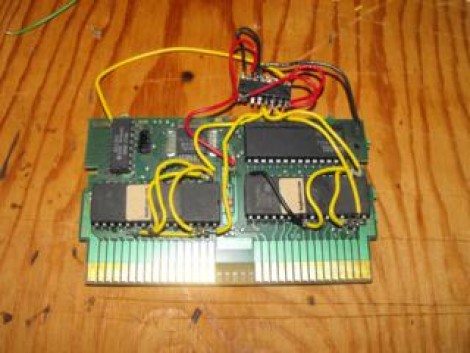
To play the game, each player must blow into a gutted NES cartridge that has been fitted with the alcohol sensor. The Nintendo computes the player’s BAC, reporting how intoxicated they are using simple graphics and cheesy animal puns. We don’t know when the code and schematics will be made available, but when they are, you can guarantee we will be building one for “research” purposes to pair with our Power Hour shot glass.

Keep reading to see some in game video of DrunkenNES

[Thanks Adam]

Continue reading “DrunkenNES Makes A Game Out Of Getting Hammered”

Walking Motion Analysis Using Wii Remotes

WiiGait is not a political scandal, it’s a project that records motion data while walking. [Bilal Chishti] and [Zassa Kavuma] are strapping a Wii remote onto each leg and recording the sensor data while making video of the walker at the same time. The two are using an Ubuntu box to pull the sensor data from the Bluetooth-enabled devices and utilizing its built-in webcam for the video. They graph the data for each axis and we’re sure that syncing up data anomalies with the video is just a matter of matching timestamps.

So what good is this? The creators are keeping us in the dark about an end-goal for collected data; this may just be for the experience of using the hardware. But we could see it having uses in making distance runners more efficient, or teaching that bipedal robot how to balance.

Continue reading “Walking Motion Analysis Using Wii Remotes”

NES Game Pad Wireless Light Commander

NES_wireless_light_switch

Annoyed that the new lights he bought for his apartment lacked power switches, Instructables user [p.arry.drew] decided to install a pair of wireless light switches. Not content to use the remotes separately, he decided to see if he could cram them both into an old NES controller, making for a nice all-in-one wireless light commander.

He disassembled the light switch remotes, cutting off a bit of the battery contacts to ensure they fit in the game pad. He then pulled apart his NES controller, removing the cord and adding some foam padding to ensure that the buttons fully contacted the wireless switches when pressed. A few bits of wooden dowel were added to keep everything in place, then the controller was reassembled.

His creation makes for a very convenient method of controlling several light switches from once source, plus the packaging is pretty handsome as well. These remote light switching solutions seem to be all the rage lately, so keep them coming!

Read on for a quick video of his remote light switches in action.

Continue reading “NES Game Pad Wireless Light Commander”

wireless_nunchuck

Bluetooth-enabled Wii Nunchuck

The wireless controller for the Nintendo Wii has been used in many a hack due to its simple to use Bluetooth interface. The nunchuck portion of the controller however, has always required a physical tether to the wireless controller, or an aftermarket wireless dongle. [Rousselmanu] is looking to change that with his Bluetooth-enabled wireless Wii nunchuck. He is able to retrieve a slew of data from the nunchuck, including information from all of the accelerometers, buttons, as well as the joystick. The data is read into a PIC MCU and relayed via serial to a Bluetooth module he purchased online.

The Bluetooth module looks fairly easy to interface in Linux, and [Rousselmanu] has a video showing off how well the nunchuck can be used to interact with 3D models. He admits that the controller is a bit ugly at the moment as all the components don’t quite fit so well, but future revisions will surely remedy that.

Keep reading to see a video of the nunchuck in action.

Continue reading “Bluetooth-enabled Wii Nunchuck”