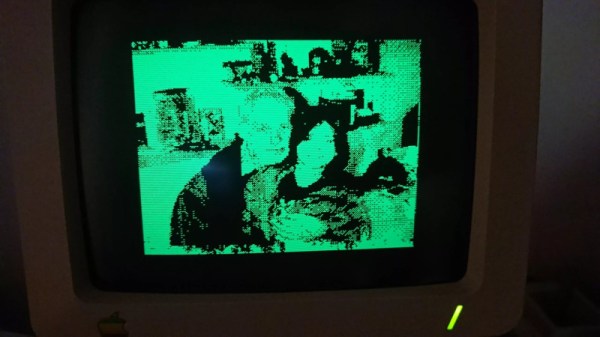
Digital Photography Comes To The Apple II

Back in the very early days of consumer digital photography, one of the first stars of the new medium came from Apple. The QuickTake 100 used a novel flat form factor and at its highest resolution could only shoot 640×480 images, but at the time it was a genuine object of desire. It came in Windows and Apple versions, and to use the Apple variant required a Mac of the day with appropriate software.

The interface was an Apple serial connector though, so it was quite reasonable for [Colin Leroy-Mira] to wonder whether it could work with Apple’s 8-bit machines. The result is QuickTake for the Apple IIc, the product that perhaps Apple should have brought us in an alternative 1994.

Fortunately the protocol has already been reverse engineered and forms part of the dcraw package, however the process of extracting the code wasn’t easy. The full resolution and colour of the original pictures has to be sacrificed, and of course once the custom serial cable has been made it’s a painfully slow process transferring the pictures. But to get anything running in this way on such elderly hardware which was never intended to  perform this task is an extremely impressive feat. We would have given anything for this, back in the 8-bit days.

If you have a QuickTake and want to use a more modern machine, we’ve got you covered there, too.
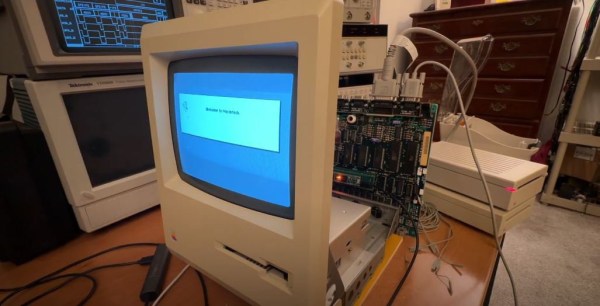
Teensy Stands In For The Motorola 68k

While it might not seem like it today, there was a time in the not-too-distant past where Motorola was the processor manufacturer. They made chips for everything, but the most popular was arguably the 68000 or 68k. It’s still has a considerable following today, largely among retrocomputing enthusiasts or those maintaining legacy hardware. For those wanting to dip their toes into this world, this Motorola 68000 emulator created by [Ted Fried] may be the thing needed to discover the magic of these once-ubiquitous chips.

The emulator itself runs on a Teensy 4.1, a 32-bit ARM microcontroller running at 600 MHz — giving it enough computing power to act as a cycle-accurate emulator not only for the 68000 CPU but also the local bus interface, in this case for a Mac 512K. This capability also makes it a drop-in replacement for the 68000 in these older Macs and the original hardware in these computers won’t notice much of a difference. A few tricks are needed to get it fully operational though, notably using a set of latches to make up for the fact that the Teensy doesn’t have the required number of output pins to interface one-to-one with the original hardware.

While the emulator may currently be able to replace the hardware and boot the computer, there is still ongoing development to get every part of the operating system up and working. The source code is available on the project’s GitHub page though so any updates made in the future can be found there. And if you have a Mac 128k and still haven’t upgraded to the 512k yet, grab one of these memory switching modules for the upgrade too.

Continue reading “Teensy Stands In For The Motorola 68k”

HDMI For The Original Xbox

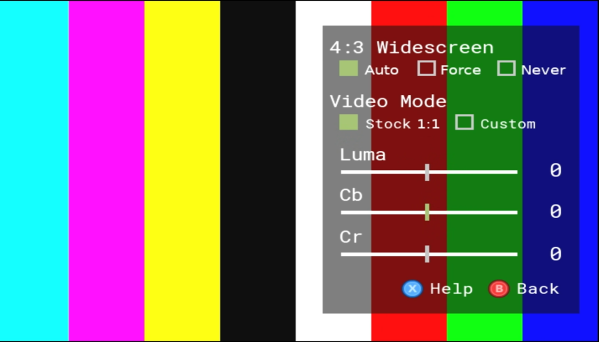
The original Xbox was a console based on PC architecture that launched back in 2001. That was long before HDMI became a defacto standard for home AV systems. However, it’s possible to mod the Xbox to output lovely crisp digital video over HDMI for use with modern screens, as covered by [Modern Vintage Gamer].

The mod, originally known as XboxHDMI and later XboxHD+, is a pure digital output mod, and was developed by [Dustin Holden]. Unlike other solutions, it doesn’t work by converting the console’s existing analog output. Instead, it captures pixel data straight out of the GPU and pumps it out over HDMI, along with 5.1 surround sound, too.

Mods like these have become popular in recent years for multiple reasons. Original HD output cables for older consoles are often hard to come by, and many used analog outputs that are no longer suitable for using with modern screens. For those that don’t want to keep older CRTs and flat screens going for older consoles, digital video output kits are a great way to keep using your old consoles well into the future. Video after the break.

Continue reading “HDMI For The Original Xbox”

Retro Computing Coding Competition Still Open

There’s still time to enter Octojam 10, a competition to write a new program for a rather old (and virtual) machine: the CHIP-8. This interpreted language on a virtual machine was used in the 1970s and 1980s to write games that could run on several consoles, such as the COSMAC VIP. Since then, a community of tinkerers has grown up around CHIP-8 and figuring out how to get the most out of the minimal resources the machine gives you.

Continue reading “Retro Computing Coding Competition Still Open”

Retrotechtacular: The $175,000 Laser Printer

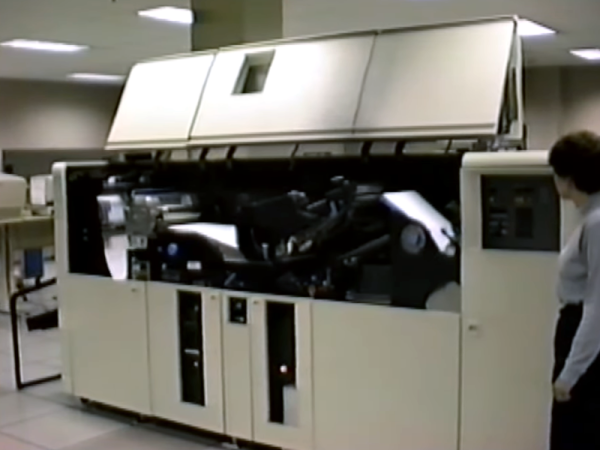
Laser printers today are cheap and readily available. But in 1976, they were the height of printing technology. The IBM 3800 was the $175,000 printer to have in that year. (Video, embedded below.) But you couldn’t have one on your desktop. Even if you could afford it, the thing is the size of a car, and we don’t even want to guess what it weighs. The printer took tractor-fed continuous form paper and could do 167 pages a minute at about 150 dots per inch (actually 180 x 144). For the record, that was as much as 1.7 miles of paper an hour!

In those days, people who would use this printer traditionally had massive banks of noisy impact printers. We imagine this device saved many data processing person’s hearing. Compared to a modern laser printer, though, it needed a lot of maintenance. For example, the initial models needed a xenon flash lamp replaced every month, although later models could go years on one bulb. Looking at some of the hardware in the video, it was probably made closer to the end of life for these printers which were made through 1999.

Continue reading “Retrotechtacular: The $175,000 Laser Printer”

Antique Motherboard Speaks

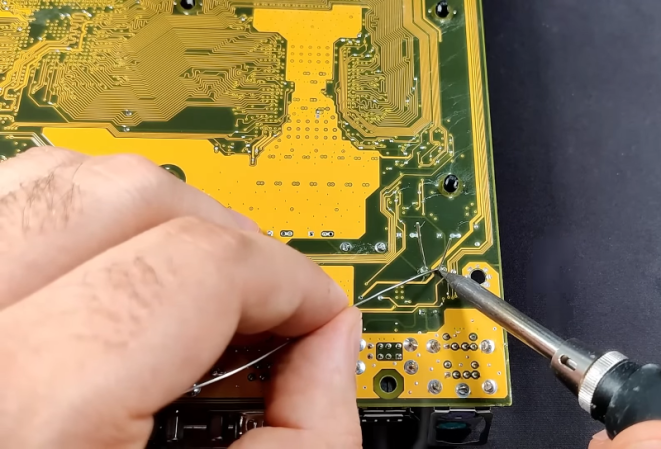
[Bits und Bolts] has been restoring an old PC motherboard with the infamous bad electrolytic capacitors. The video of his exploits was interesting enough, but pretty standard stuff. What we found interesting though, was an odd feature of the ASUS Bios called “Post Reporter” that let the motherboard speak error codes and status through the external speaker. (Video, embedded below.) We aren’t sure who wanted that, and since we haven’t seen it around lately, we are guessing the answer was nobody wanted it.

We enjoyed watching the PCB rework. Those large internal ground plane layers do make it hard to unsolder and then solder the caps. That makes the job seem deceptively easy. However, if you want to skip to the exotic BIOS, jump to the 8:20 mark.

Continue reading “Antique Motherboard Speaks”

Pocket Calculator Isn’t A Brain Or Magic

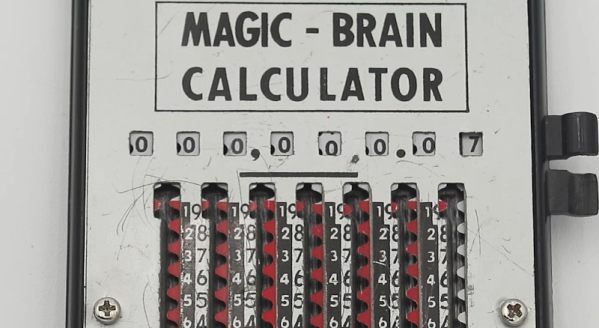
If you predate the pocket calculator, you may remember slide rules. But slide rules take a a little skill to use. There was a market for other devices that were simpler or, in some cases, cheaper. One common one was the “magic brain” or Addiator which was a little metal box with some slots that could add numbers. However, using clever tricks it could also subtract and — in a fashion — multiply. [Our Own Devices] has a teardown of the device you can see in the video below. It is deceptively simple, and the description of how it works is at least as interesting as the peek inside.

We remember these on the market and, honestly, always thought they were simple tally mechanisms. It turns out they are both less and more than that. Internally, the device is a few serrated sheet metal strips in a plastic channel. The subtraction uses a complement addition similar to how you do binary subtraction using 2’s complement math. Multiplication is just repetitive addition, which is fine for simple problems.

Continue reading “Pocket Calculator Isn’t A Brain Or Magic”