A Scientist Made An Artificial Black Hole In The Lab, And You Won’t Believe What Happened Next

OK, that was a little click-baity, but then again, so was the announcement this week that a scientist had confirmed Hawking radiation with a lab-grown black hole. It sure got our attention, at least.

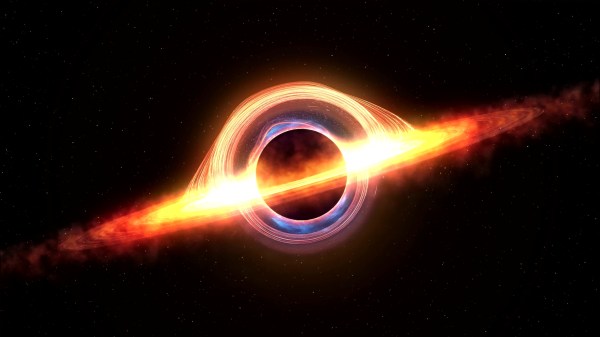
As it turns out, the truth is both less and more than meets the eye. The article above was eventually edited to better reflect the truth that, alas, we have not yet found a way to create objects so massive that even light cannot escape them. Instead, physicist [Jeff Steinhauer] and colleagues at the Technion-Israel Institute of Technology have developed an acoustic model of black holes, which is what was used to observe the equivalent of Hawking radiation for the first time. Hawking radiation is the theoretical exception to the rule that nothing makes it out of a black hole and would imply that black holes evaporate over time. The predicted radiation would be orders of magnitude weaker than the background radiation, though, making it all but impossible to detect.

That’s where [Steinhauer]’s sonic black holes come in. In these experiments, phonons, packets of mechanical vibrations that stand in for photons, are trapped in a fast-moving stream of fluid. The point in the stream where its speed straddles the local speed of sound is the equivalent to a real black hole’s event horizon; phonons inside that boundary can never escape. Except, of course, for the sonic equivalent of Hawking radiation, which the researchers found after 97,000 attempts.

When we first stumbled upon this story, we assumed a lab-grown black hole, even an acoustic analog, would take a CERN’s-worth of equipment to create. It turns out to be far simpler than that; [Steinhauer], in fact, built his black hole machine singlehandedly from relatively simple equipment. The experiments do require temperatures near absolute zero and a couple of powerful lasers, so it’s not exactly easy stuff; still, we can’t help but wonder if sonic black holes are within the reach of the DIY community. Paging [Ben Krasnow] and [Sam Zeloof], among others.

[Featured image credit: Nitzan Zohar, Office of the Spokesperson, Technion]

Sea Level: How Do We Measure Global Ocean Levels And Do Rising Oceans Change That Benchmark?

Every summer you go down the shore, but lately you’ve begun to notice that the beach seems narrower each time you visit. Is that the sea level rising, or is the sand just being swept away? Speaking of sea levels, you keep hearing that they rise higher every year — but how exactly is that measured? After all, you can’t exactly use a ruler. As it turns out, there are a number of clever systems in place that can accurately measure the global sea level down to less than an inch and a half.

Not only are waves always rippling across the ocean’s surface, but tides periodically roll in and out, making any single instantaneous measurement of sea level hopelessly inaccurate. Even if you plan to take hundreds or thousands of measurements over the course of weeks or months, taking the individual measurements is still difficult. Pick a nice, stable rock in the surf, mark a line on it, and return every hour for two weeks to hold a tape measure up to it. At best you’ll get within six inches on each reading, no matter what you’ll get wet, and at worst the rock will move and you’ll get a damp notebook full of useless numbers. So let’s take a look at how the pros do it.

Continue reading “Sea Level: How Do We Measure Global Ocean Levels And Do Rising Oceans Change That Benchmark?”

X-Ray Defeats Letterlocking — Unfolds And Reads Letter Sealed Since 1697

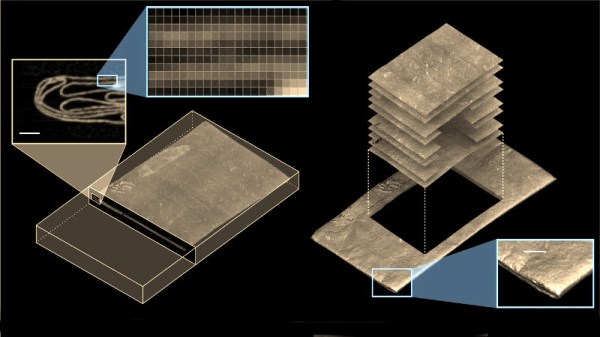
Over recent years we’ve been treated to a series of fascinating advances in the world of x-ray imaging, as  researchers have developed their x-ray microtomography techniques and equipment to the point at which they can probe and then computationally reconstruct written material within objects such as letters or scrolls in museum collections whose value or fragility means they can’t be opened and read conventionally. There is more to this challenge than simply extracting the writing though, in addition to detecting the ink the researchers also have to unpick the structure of whatever it was written upon. A particular challenge comes from letterpackets, the art of folding a letter into its own envelope, and a newly-published Nature Communications paper details work from a team of academics in the USA, the UK, and the Netherlands in tackling it.

Letterpackets were more than a practical method of packaging a missive for the mail, they also had a security function often called Letterlocking. A packet would be folded in such a way as to ensure it was impossible to open without tearing or otherwise damaging the paper, and their structure is of especial interest to historians. The researchers had a unique resource with which to work; the Brienne collection is a trunk full of undeliverable mail amassed by a 17th century postmaster couple in Den Haag in the Netherlands, and now in the possession of the Beeld en Geluid museum in that city. In it were a cache of letters including 577 never-opened letterpackets, and the x-ray technique promised a means to analyse these without compromising them.

A letter imaged using the technique.

The researchers have developed an entirely computational technique for the virtual unfolding process. Starting with a 3D volumetric x-ray scan of the unopened packet they then identify the various layers of paper and the bright spots which denote the ink. Their algorithm has to cope with areas in which two or more layers are tightly in contact, for example when multiple levels are folded, and then unpick the resulting 3-dimensional mesh into a 2-dimensional sheet. Their process for mapping the crease pattern involves applying a colour map representing the mean curve radius at a given point. The final section of the paper looks at the multiple different methods of letterlocking, and attempts to categorise them all including a security rating for each. It’s evident that this could be a highly personalised process, indeed they give as an example a letter from Mary Queen of Scots that used an intricate spiral folding technique to identify its sender.

It’s clear that this technique will reveal many more fascinating historical documents as it is both refined and extended across the many more collections of further artefacts that have lain waiting for it. As they say, individual letters do not necessarily contain earth-shattering historical discoveries, but taken together they shed an important light on the social history of past centuries.

One of the names on the paper is [David Mills], whose work has featured here before.

We’re Cloning Animals From The “Frozen Zoo”; Like A Seed Bank But For Animals

Seed banks are facilities of great value to biodiversity and agriculture around the world. These facilities are used to house stocks of seeds of a wide variety, helping to maintain genetic diversity and avoid the permanent loss of various plant species. While there are some challenges, the basic requirements to run a simple seed bank are to keep a selection of seeds at low temperature and humidity to maximise their viable lifespan.

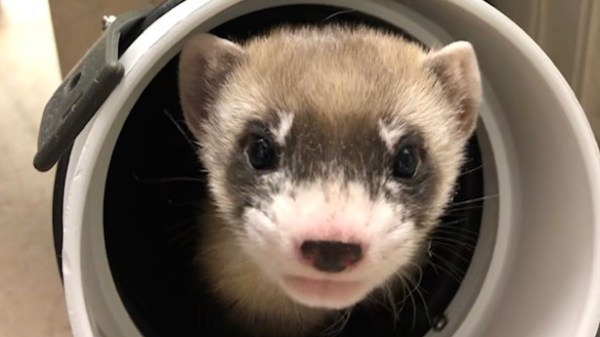
When it comes to animals, things become more difficult — one can’t simply plant an old seed in the ground and grow a fresh new meerkat, for example. Preservation of animal genetic material poses its own unique set of challenges — ones that the San Diego “Frozen Zoo” don’t shy away from. They’ve recently shown the viability of the program with the healthy birth of a ferret cloned from an animal that died in 1988.

Continue reading “We’re Cloning Animals From The “Frozen Zoo”; Like A Seed Bank But For Animals”

Using Phase Change Materials For Energy Storage

Renewable energy sources are becoming increasingly popular. However, such energy can be wasted if an excess is available when it’s not yet needed. A particularly relevant example is solar power; solar panels provide most of their output during the day, while often a household’s greatest energy use is at night.

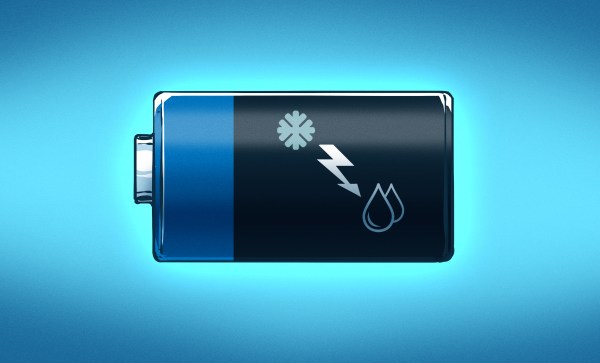
One way to get around this problem is by storing excess energy so that it can be used later. The most common way this is done is with large batteries, however, it’s not the only game in town. Phase change materials are proving to be a useful tool to store excess energy and recover it later – storing energy not as electricity, but as heat. Let’s take a look at how the technology works, and some of its most useful applications. Continue reading “Using Phase Change Materials For Energy Storage”

Ben Krasnow Measures Human Calorie Consumption By Collecting The “Output”

It’s a bit icky reading between the lines on this one… but it’s a fascinating experiment! In his latest Applied Science video, [Ben Krasnow] tries to measure how efficient the human body is at getting energy from food by accurately measuring what he put in and what comes out of his body.

The jumping off point for this experiment is the calorie count on the back of food packaging. [Ben] touches on “bomb calorimetry” — the process of burning foodstuff in an oxygen-rich environment and measuring the heat given off to establish how much energy was present in the sample. But our bodies are flameless… can we really extract similar amounts of energy as these highly controlled combustion chambers? His solution is to measure his body’s intake by eating nothing but Soylent for a week, then subjects his body’s waste to the bomb calorimetry treatment to calculate how much energy was not absorbed during digestion. (He burned his poop for science, and made fun of some YouTubers at the same time.)

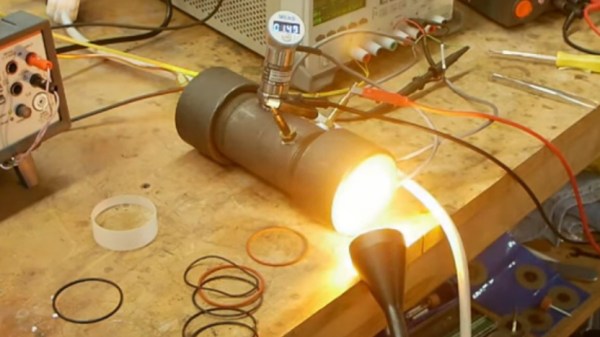
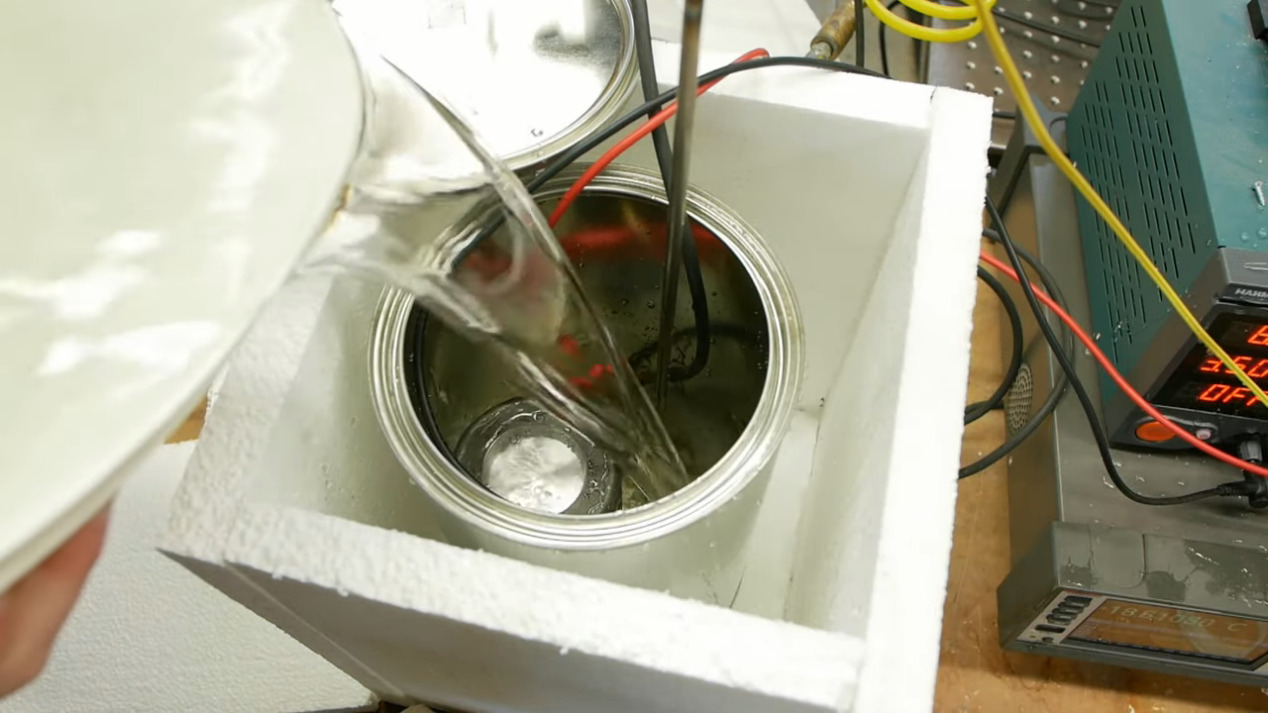
The test apparatus is a cool build — a chunk of pipe with an acrylic/glass laminated window that has a bicycle tire value for pressurization, a pressure gauge, and electrodes to spark the combustion using nichrome wire and cotton string. It’s shown above, burning a Goldfish® cracker but it’s not actually measuring the energy output as this is just a test run. The actual measurements call for the combustion chamber to be submerged in an insulated water bath so that the temperature change can be measured.

Now to the dirty bits. [Ben] collected fecal matter and freeze-dried it to ready it for the calorimeter. His preparation for the experiment included eating nothing but Soylent (a powdered foodstuff) to achieve an input baseline. The problem is that he measures the fecal matter to have about 75% of the calories per gram compared to the Soylent. Thinking on it, that’s not surprising as we know that dung must have a high caloric level — it burns and has been used throughout history as a source of warmth among other things. But the numbers don’t lead to an obvious conclusion and [Ben] doesn’t have the answer on why the measurements came out this way. In the YouTube comments [Bitluni] asks the question that was on our minds: how do you correlate the volume of the input and output? Is comparing 1g of Soylent to 1g of fecal matter a correct equivalency? Let us know what you think the comments below.

The science of poop is one of those 8th-grade giggle topics, but still totally fascinating. Two other examples that poop to mind are our recent sewage maceration infrastructure article and the science of teaching robot vacuums to detect pet waste.

Continue reading “Ben Krasnow Measures Human Calorie Consumption By Collecting The “Output””

Flapping Wings And The Science Of How Bees Can Fly

Jerry Seinfeld launched his career with Bee Movie, an insect-themed animated feature that took the world by storm in 2007. It posed the quandary – that supposedly, according to all known laws of aviation, bees should not be able to fly. Despite this, the bee flies anyway, because bees don’t care what humans think is impossible.

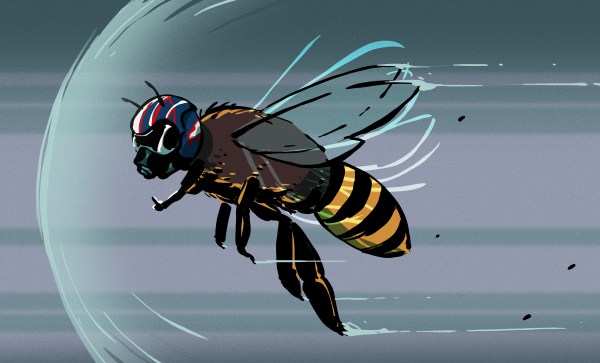
The quote isn’t easily attributed to anyone in particular, but is a cautionary tale about making the wrong assumptions in an engineering context. Yes, if you model a bee using the same maths as an airliner, of course you’ll find that it shouldn’t be able to fly. Its tiny wings can’t possibly generate enough lift to get its body off the ground. But that’s because the assumption is an erroneous one – because bees don’t fly in the same way planes do. Bees flap their wings. But that’s just the beginning. The truth is altogether more complex and interesting! Continue reading “Flapping Wings And The Science Of How Bees Can Fly”