
Building A Gifford-McMahon Cryocooler With 3D-Printed Parts

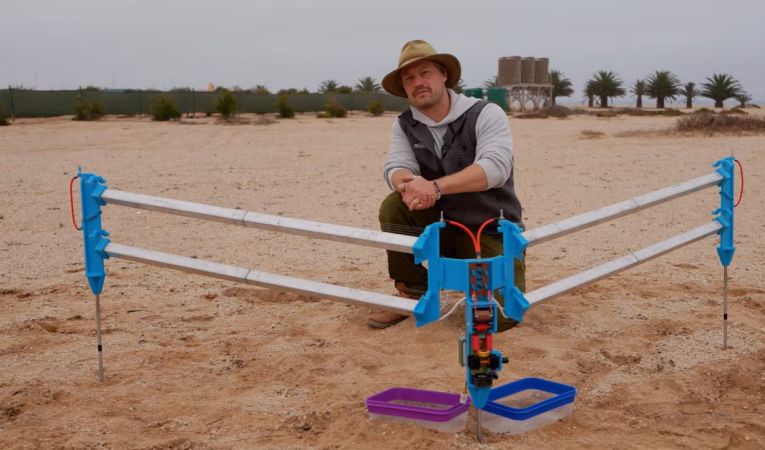
Although cryocoolers are capable of pretty impressive cooling, for many of them the underlying working principle is simple enough that you do not need any special skills or a big budget to make your own version. Take the Gifford-McMahon cryocooler for example, which works using nothing more than some kind of coolant gas and a piston in a cylinder that you can even 3D print, as demonstrated by [Hyperspace Pirate] in a recent video.

The lowest temperature reached across the two prototypes was only -84°C, but this was mostly due to some sub-optimal design choices, such as the use of regular air and a clear acrylic tube to get a good glimpse at the inner workings. The trickiest part of this type of cryocooler is probably that you need to move the piston containing the regenerator between both ends of the cylinder to get a cool and a hot side.

That particular problem was solved by using magnets to move the piston externally, which worked beautifully until the problem of using regular compressed air from the shop compressor caused massive ice formation that jammed up the piston. Obviously this was not an unexpected issue, and for the next step the coolant gas will be replaced by helium, as making that gas freeze up requires quite a bit more effort.

Continue reading “Building A Gifford-McMahon Cryocooler With 3D-Printed Parts”

Using Electrolysis For More Than Just Generating Hydrogen

When the topic of ‘electrolysis’ is mentioned, people typically think of just splitting plain old dihydrogen monoxide (hydric acid: H2O) into its constituent atoms, but this barely scratches the surface of what is going on during electrolysis. Once you understand the full picture it also becomes obvious how electrolysis can be used for other tasks, including metal refining, flow batteries and more, as covered in a recent video by [NightHawkInLight].

On a fundamental level electrolysis is what it says on the tin: a way to lyse (i.e. split apart) using electrons, which is what the anode and cathode provide or remove. This can be used to break down the bonds between hydrogen and oxygen, but also those of iron ore, like Fe3O4. Stripping the oxygen from the iron atoms is commonly done in a reduction process using the CO from coke or hydrogen,

Setup for electrolysing iron ore. (Credit: NightHawkInLight, YouTube)
Setup for electrolysing iron ore.

By instead dissolving the iron ore in acid, electrolysis can then be used to separate the two. In the example, the acid is created by one side of the electrolytic cell, with both electrodes separated by an ion-exchange membrane barrier that prevents the chemical processes on each side of the cell to affect the other side while still enabling the cell to work. How to make these membranes is also demonstrated in the video.

Through a careful arrangement of these membranes and the electrodes, you can guide which reactions can occur where, and which – negative or positively charged – ion can pass through which membrane, giving a lot of control. It can also be used to prevent undesirable reactions from happening, such as in this case the generating of chlorine gas from the NaCl being lysed.

Acidity indicator dye is used to show in great detail how the cell works, including its preparation of getting the acidity just right before the crushed iron ore is mixed with some of the generated acid and the resulting liquid added to the cell. Following this you get a closed-loop chemical process to which only fresh iron ore slush has to be added and electrodes swapped out for fresh ones as the build-up of iron becomes sufficiently thick. In addition to supplying the cell with electricity, naturally, though you can even invert the cell and use it as a chemical battery akin to a lead-acid one if that’s more your thing.

Continue reading “Using Electrolysis For More Than Just Generating Hydrogen”

Microsoft Claims 20 Second Qubits

While it might seem that your computer malfunctions every few minutes, the reality is that modern computers are usually quite robust. Not so much for quantum computers, where qubit life is often measured in milliseconds. Now, the company claims to have qubits that last for about 20 seconds.

For example, Microsoft’s Majorana 1 quantum chip, which, incidentally, was mired in controversy, provided 8 qubits that were stable very briefly. This second-generation chip provides 12 qubits that average 20-second lifespans.

Continue reading “Microsoft Claims 20 Second Qubits”

AMOC And The Planet-Wide Impact Of Ocean Currents

Although it can be hard to tell from looking at the often placid waters of the Earth’s oceans, their currents carry immense amounts of water around the globe on a daily basis, underlying a dynamic system that – much like the Earth’s atmosphere – plays a major role in everything from weather systems to local climates and ecosystems.

Of all these ocean currents the Atlantic meridional overturning circulation (AMOC) is perhaps the most famous, as it is basically the sole reason why Europe has the mild climate that it does today, courtesy of it carrying thermal energy from the equator all the way to the coast off Scandinavia.

Although collapsing an ocean current seems as improbable as stopping the jet streams in the upper atmosphere, it’s actually significantly easier due to how much ocean currents rely on factors that we can fairly easily influence. Over the past decades we have seen worrying signs that the AMOC is indeed weakening, with the million-dollar question being what scenario we’ll be looking at.

While collapsing the AMOC within a decade may be theoretically possible, current models seem to point towards a weakening by about half by the end of this century, with a recent research article by Valentin Portmann et al. in Science Advances going over the various statistical models to come to this conclusion.

Continue reading “AMOC And The Planet-Wide Impact Of Ocean Currents”

Hunting Submarines Via Gravity Is A Tough Errand

Among so many other technological advances, the Cold War saw the advent of the ballistic missile submarine. The concept was simple—pack enough nuclear warheads to destroy a small civilization into a compact metal tube, and then hide it underwater. The oceans would act as a cloak for your fleet of world-enders, and keep your enemies forever on their toes. A terrifying machine that could both start and end a war with the push of a button.

Most nation states are populated by humans with the will to live. Thus, there has been a great incentive to find ways to keep tabs on these sunken doombringers. Great efforts have gone into improving sonar and magnetic detection methods over the decades, which are the bread and butter of sub hunting to this day. However, military researchers have also explored the prospect of whether submarines could be detected via their effect on the gravitational field alone.

Continue reading “Hunting Submarines Via Gravity Is A Tough Errand”

Figuring Out What James Webb’s Mysterious Little Red Dots Are

After the James Webb Space Telescope (JWST) began operations in 2022, it soon made a tantalizing discovery in the form of mysterious red dots: small, red-tinted astronomical objects of unknown origin and composition. So far well over 300 of such little red dots (LRDs) have been identified, with many theories on what they are. Fortunately the Chandra X-ray Observatory recently added some more clues as detailed in an accompanying paper.

Current theories include them being a form of primordial galaxy, or a supermassive black holes embedded in a dense gas cloud. The LRD discussed in the paper with the designation 3DHST-AEGIS-12014 was found to emit X-rays unlike other LRDs. By comparing the data between JWST and Chandra for this LRD it lends credence to the theory that these LRDs are a transitional phase as a supermassive black hole ingests the material of said gas cloud.

X-rays produced during this can sometimes make it out of the gas cloud, after which we can observe it. If that’s the case, these LRDs should cease to exist the moment the black hole has consumed enough of the cloud, which is something that we may be able to find evidence for if we’re lucky.

This adds just another reason why keeping the Chandra X-ray Observatory mission funded, after it narrowly got saved in 2024.

Through-Glass Vias And The Long Road To Glass Substrates

Credit: Keith Best, Semiengineering.

Glass-based substrates are slowly beginning to push out organic substrates – as also commonly used in PCBs – due to often superior material properties for packaging. One area where glass substrates have however struggled is with through-hole vias and providing the conductive copper path through them. A 2024 article by [Keith Best] gives a good overview of the topic, with recent news showing how much companies like Intel are pushing for glass substrates, specifically for the packaging of dies.

One major advantage with vias in glass substrates is that they can be much smaller, enabling smaller than 0.1 mm diameter holes with far finer pitch. The challenge here is to make perfect holes with a laser that are defect-free, as well as have the intended diameter.

After that this through-glass via (TGV) has to be coated or filled with copper, much like their organic equivalent. Said TGV can be fully filled with copper, or use plating and add dielectric filler. Detecting flaws in such a finished TGV is important.

In a 2025 review article of glass substrate technologies by [Pratik Nimbalkar] et al. published in Chips the state of the art at the time was covered. The need for ever higher-density integration options with ASICs is highlight here, especially now that many chips today consist of multiple interconnected dies inside a single package.

The complications of creating TGVs with femtosecond laser pulses in Borofloat 33 glass are highlighted by [Daniel Franz] et al. in a 2025 research article, with microcracks and backside ablation observed without proper precautions, something which previously was often resolved by an etching step following said laser drilling. The main issue here is the post-drilling residual stress from the thermal shock, which the authors demonstrate can be largely prevented with careful tweaking of the laser drilling parameters.

As pointed out in a 2024 review article by [Chen Yu] et al. glass substrates are useful for far more than just high-density chip packaging. Glass substrates are also chemically resistant, have a higher heat resistance, are largely transparent to RF and can be hermetically sealed against outside influences. This makes them great for various advanced sensors and communication devices.

Meanwhile, if you wanted to do some metal-depositing on glass at home, we covered this recently.