Self-Healing Concrete: What Ancient Roman Concrete Can Teach Us

Concrete is an incredibly useful and versatile building material on which not only today’s societies, but also the ancient Roman Empire was built. To this day Roman concrete structures can be found in mundane locations such as harbors, but also the Pantheon in Rome, which to this day forms the largest unreinforced concrete dome in existence at 43.3 meters diameter, and is in excellent condition despite being being nearly 1,900 years old.

Even as the Roman Empire fell and receded into what became the Byzantine – also known as the Eastern Roman – Empire and the world around these last remnants of Roman architecture changed and changed again, all of these concrete structures remained despite knowledge of how to construct structures like them being lost to the ages. Perhaps the most astounding thing is that even today our concrete isn’t nearly as durable, despite modern inventions such as reinforcing with rebar.

Reverse-engineering ancient Roman concrete has for decades now been the source of intense study and debate, with a recent paper by Linda M. Seymour and colleagues adding an important clue to the puzzle. Could so-called ‘hot mixing’, with pockets of reactive lime clasts inside the cured concrete provide self-healing properties?

Continue reading “Self-Healing Concrete: What Ancient Roman Concrete Can Teach Us”

Hackaday Links Column Banner

Hackaday Links: April 2, 2023

It may be hard to believe, but it’s time for the Hackaday Prize again! The 2023 Hackaday Prize was announced last weekend at Hackaday Berlin, and entries are already pouring in. The first-round challenge is all about “Re-engineering Education,” which means you’ve got to come up with a project idea that helps push back the veil of ignorance somehow. Perhaps you’ve got a novel teaching tool in mind, or a way to help students learn remotely. Or maybe your project is aimed at getting students involved and engaged. Whatever it is — and whatever the subject matter; it doesn’t just have to be hacking-adjacent — get an entry together, build a team, and get to work. The first round closes on April 25, so get to it!

Continue reading “Hackaday Links: April 2, 2023”

Why A Community Hackerspace Should Be A Vital Part Of Being An Engineering Student

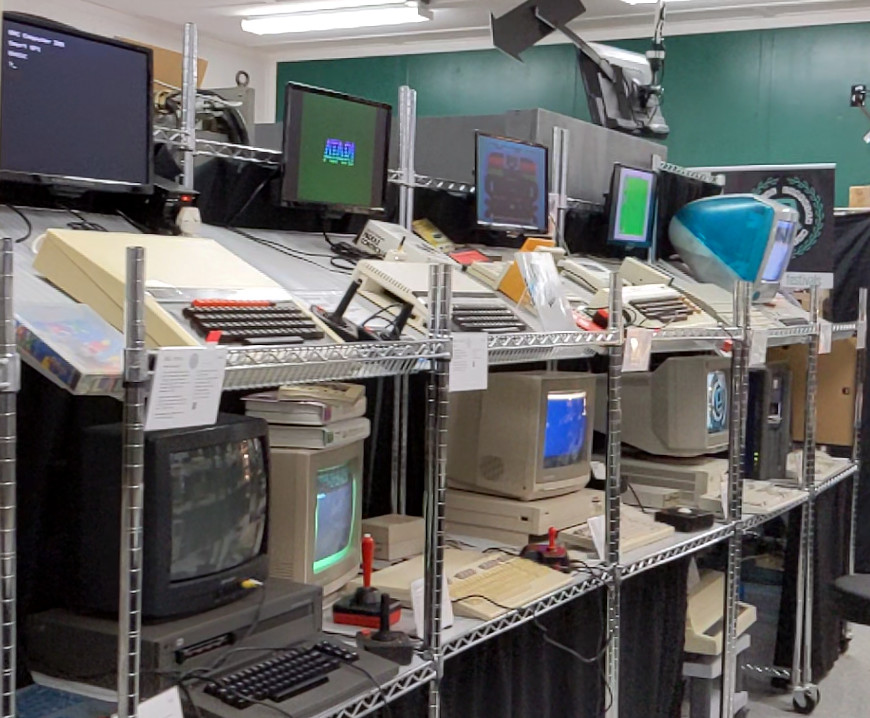
Travelling the continent’s hackerspaces over the years, I have visited quite a few spaces located in university towns. They share a depressingly common theme, of a community hackerspace full of former students who are now technology professionals, sharing a city with a university anxious to own all the things in the technology space and actively sabotaging the things they don’t own. I’ve seen spaces made homeless by university expansion, I’ve seen universities purposefully align their own events to clash with a hackerspace open night and discourage students from joining, and in one particularly egregious instance, I’ve even seen a university take legal action against a space because they used the name of the city, also that of the university, in the name of their hackerspace. I will not mince my words here; while the former are sharp practices, the latter is truly disgusting behaviour.

The above is probably a natural extension of the relationship many universities have with their cities, which seems depressingly often to be one of othering and exclusion. Yet in the case of hackerspaces I can’t escape the conclusion that a huge opportunity is being missed for universities to connect engineering and other tech-inclined students with their alumni, enhance their real-world skills, and provide them with valuable connections to tech careers.

Yesterday I was at an event organised by my alma mater, part of a group of alumni talking to them about our careers.  At the event I was speaking alongside an array of people with varying careers probably more glittering than mine, but one thing that came through was that this was something of a rare opportunity for many of the students, to talk to someone outside the university bubble. Yet here were a group of engineers, many of whom had interesting careers based locally, and in cases were even actively hiring. If only there were a place where these two groups could informally meet and get to know each other, a community based on a shared interest in technology, perhaps?

It’s not as though universities haven’t tried on the hackerspace front, but I’m sad to say that when they fill a room with cool machines for the students they’re rather missing the point. In some of the cases I mentioned above the desire to own all the things with their own students-only hackerspace was the thing that led to the community hackerspaces being sabotaged. Attractive as they are, there’s an important ingredient missing, they come from a belief that a hackerspace is about its facilities rather than its community. If you were to look at a room full of brand-new machines and compare it with a similar room containing a temperamental Chinese laser cutter and a pair of battered 3D printers, but alongside a group of seasoned engineers in an informal setting, which would you consider to be of more benefit to a student engineer? It should not be a difficult conclusion to make.

Universities value their local tech industry, particularly that which has some connection to your university. You want your students to connect with your alumni, to connect with the local tech scene, and to ultimately find employment within it. At the same time though, you’re a university, you see yourselves as the thought leader, and you want to own all the things. My point is that these two positions are largely incompatible when it comes to connecting your engineering students with the community of engineers that surround you, and you’re failing your students in doing so.

Thus I have a radical proposal for universities. Instead of putting all your resources on a sterile room full of machines for your students, how about spending a little into placing them in a less shiny room full of professional engineers on their off-time? Your local hackerspace is no threat to you, instead it’s a priceless resource, so encourage your students to join it. Subsidise them if they can’t afford the monthly membership, the cost is peanuts compared to the benefit. Above all though, don’t try to own the hackerspace, or we’re back to the first paragraph. Just sometimes, good things can happen in a town without the university being involved.

PCIe For Hackers: Extracting The Most

So, you now know the basics of approaching PCIe, and perhaps you have a PCIe-related goal in mind. Maybe you want to equip a single-board computer of yours with a bunch of cheap yet powerful PCIe WiFi cards for wardriving, perhaps add a second NVMe SSD to your laptop instead of that Ethernet controller you never use, or maybe, add a full-size GPU to your Raspberry Pi 4 through a nifty adapter. Whatever you want to do – let’s make sure there isn’t an area of PCIe that you aren’t familiar of.

Splitting A PCIe Port

You might have heard the term “bifurcation” if you’ve been around PCIe, especially in mining or PC tinkering communities. This is splitting a PCIe slot into multiple PCIe links, and as you can imagine, it’s quite tasty of a feature for hackers; you don’t need any extra hardware, really, all you need is to add a buffer for REFCLK. See, it’s still needed by every single extra port you get – but you can’t physically just pull the same clock diffpair to all the slots at once, since that will result in stubs and, consequently, signal reflections; a REFCLK buffer chip takes the clock from the host and produces a number of identical copies of the REFCLK signal that you then pull standalone. You might have seen x16 to four NVMe slot cards online – invariably, somewhere in the corner of the card, you can spot the REFCLK buffer chip. In a perfect scenario, this is all you need to get more PCIe out of your PCIe.

Continue reading “PCIe For Hackers: Extracting The Most”

Hackaday Links Column Banner

Hackaday Links: March 26, 2023

Sad news in the tech world this week as Intel co-founder Gordon Moore passed away in Hawaii at the age of 94. Along with Robert Noyce in 1968, Moore founded NM Electronics, the company that would later go on to become Intel Corporation and give the world the first commercially available microprocessor, the 4004, in 1971. The four-bit microprocessor would be joined a few years later by the 8008 and 8080, chips that paved the way for the PC revolution to come. Surprisingly, Moore was not an electrical engineer but a chemist, earning his Ph.D. from the California Institute of Technology in 1954 before his postdoctoral research at the prestigious Applied Physics Lab at Johns Hopkins. He briefly worked alongside Nobel laureate and transistor co-inventor William Shockley before jumping ship with Noyce and others to found Fairchild Semiconductor, which is where he made the observation that integrated circuit component density doubled roughly every two years. This calculation would go on to be known as “Moore’s Law.”

Continue reading “Hackaday Links: March 26, 2023”

Plan To Jam Mobile Phones In Schools Is Madness

Mobile phones in schools. If you’re a teacher, school staffer, or a parent, you’ve likely got six hundred opinions about this very topic, and you will have had six hundred arguments about it this week. In Australia, push has come to shove, and several states have banned the use of mobile phones during school hours entirely. Others are contemplating doing the same.

In the state of New South Wales, the current opposition party has made it clear it will implement a ban if elected. Wildly, the party wants to use mobile phone jamming technology to enforce this ban whether students intend to comply or not. Let’s take a look at how jammers work in theory, and explore why using them in schools would be madness in practice.

Continue reading “Plan To Jam Mobile Phones In Schools Is Madness”

Hackaday Podcast 211: Pocket Sundial, Origami Llama, PCB Spacemouse

This week, Editor-in-Chief Elliot Williams and Contributor Emeritus Kristina Panos chewed the fat about the coolest hacks of the previous week. But first, a bit of news — our Low Power Challenge fizzled out this week, and boy did we have a lot of entries at the last minute. We love to see it though, and we’re going to get judging ASAP.

Don’t forget, this weekend is Hackaday Berlin! Livestreaming for this one may be iffy, but we’ll have the talks up for you eventually, so don’t fret too much if you can’t make it in the flesh this time.

Kristina definitely got What’s That Sound this week, but her answer will of course be bleeped out. Then it’s on to the hacks, beginning with a 6-DoF controller that does everything in interesting ways and a printed shredder that eats like a goat. From there we cover bolt dispensers, coffee grinders with Bluetooth weighing, camera calibration, and a $50 pen plotter that’s definitely a hack. Finally, we discuss the virtues of physicality when it comes to SIM cards and recorded music.

Check out the links below if you want to follow along, and as always, tell us what you think about this episode in  the comments!

And/or download it and listen offline.

Continue reading “Hackaday Podcast 211: Pocket Sundial, Origami Llama, PCB Spacemouse”