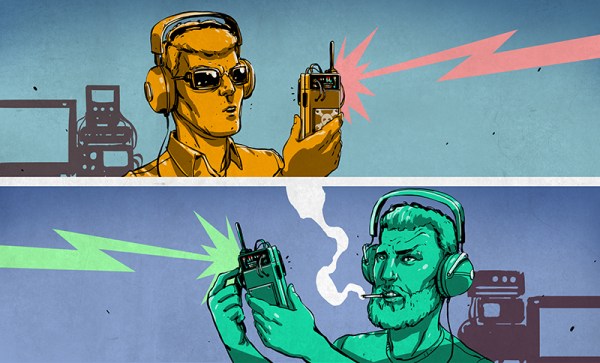
Hide Silent, Hide Deep: Submarine Tracking Technologies Of The Cold War

All through the cold war, there was a high-stakes game of cat and mouse in play. Nuclear powers like the United States and the Soviet Union would hide submarines armed with nuclear missiles underwater. The other side would try to know where they were so they could be targeted in the event of war. The common wisdom was that the United States had many high tech gadgets to help track enemy submarines, but that the Soviet Union was way behind in this area. This was proven false when a Soviet Victor-class boat followed a US missile submarine for six days. Now, a recently declassified CIA report shows how the Soviets didn’t use sonar at all but developed their own technology.

There is something fascinating about submarines. Like an old sailing ship, submarines are often out of touch with their command bases and the captain is the final authority. Like a space ship, the submarine has to survive in an inimical environment. I guess in all three cases, the crew doesn’t just use technology, they depend on it.

Although the submarine has some non-military uses, there are probably more military subs than any other type. After all, a sub is as close to a cloaking device as any real-life military vehicle has ever had. Before modern technology offered ways to find submarines using sonar or magnetic anomalies, a completely submerged submarine was effectively invisible.

There was a lot of speculation that the Soviet Union lacked sufficient technology to use sonar  the way the US did. However, in some cases, they had simply developed different types of detection — many of which the West had discarded as impractical.

Continue reading “Hide Silent, Hide Deep: Submarine Tracking Technologies Of The Cold War”

This Week In Security: Camera Feeds, Python 2, FPGAs

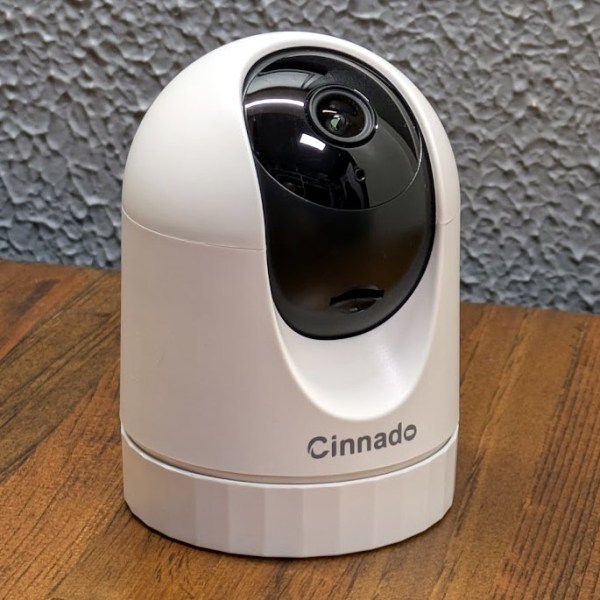
Networked cameras keep making the news, and not in the best of ways. First it was compromised Ring accounts used for creepy pranks, and now it’s Xiaomi’s stale cache sending camera images to strangers! It’s not hard to imagine how such a flaw could happen: Xiaomi does some video feed transcoding in order to integrate with Google’s Hub service. When a transcoding slot is re-purposed from one camera to another, the old data stays in the buffer until it is replaced by the new camera’s feed. The root cause is probably the same as the random images shown when starting some 3D games.

Python is Dead, Long Live Python

Python 2 has finally reached End of Life. While there are many repercussions to this change, the security considerations are important too. The Python 2 environment will no longer receive updates, even if a severe security vulnerability is found. How often is a security vulnerability found in a language? Perhaps not very often, but the impact can be far-reaching. Let’s take, for instance, this 2016 bug in zipimport. It failed to sanitize the header of a ZIP file being processed, causing all the problems one would expect.

It is quite possible that because of the continued popularity and usage of Python2, a third party will step in and take over maintenance of the language, essentially forking Python. Unless such an event happens, it’s definitely time to migrate away from Python2.
Continue reading “This Week In Security: Camera Feeds, Python 2, FPGAs”

Living At The Close Of The Multiway Era

After over a decade of laptop use, I made the move a couple of months ago back to a desktop computer. An ex-corporate compact PC and a large widescreen monitor on a stand, and alongside them a proper mouse and my trusty IBM Model M that has served me for decades. At a stroke, the ergonomics of my workspace changed for the better, as I no longer have to bend slightly to see the screen.

The previous desktop PC was from an earlier time. I think it had whatever the AMD competitor to a Pentium 4 was, and if I recall correctly, its 512 MB of memory was considered to be quite something. On the back it had an entirely different set of sockets to my new one, a brace of serial ports, a SCSI port, and a parallel printer port. Inside the case, its various drives were served by a set of ribbon cables. It even boasted a floppy drive. By contrast the cabling on its successor is a lot lighter, with much less bulky connectors. A few USB plugs and a network cable, and SATA for its disk drive. The days of bulky multiway interconnects are behind us, and probably most of us are heaving a sigh of relief. Continue reading “Living At The Close Of The Multiway Era”

BeOS: The Alternate Universe’s Mac OS X

You’re likely familiar with the old tale about how Steve Jobs was ousted from Apple and started his own company, NeXT. Apple then bought NeXT and their technologies and brought Jobs back as CEO once again. However, Jobs’ path wasn’t unique, and the history of computing since then could’ve gone a whole lot different.

In 1990, Jean-Louis Gassée, who replaced Jobs in Apple as the head of Macintosh development, was also fired from the company. He then also formed his own computer company with the help of another ex-Apple employee, Steve Sakoman. They called it Be Inc, and their goal was to create a more modern operating system from scratch based on the object-oriented design of C++, using proprietary hardware that could allow for greater media capabilities unseen in personal computers at the time.

Continue reading “BeOS: The Alternate Universe’s Mac OS X”

Commercial Circuit Simulator Goes Free

If you are looking for simulation software, you are probably thinking LTSpice or one of the open-source simulators like Ngspice (which drives Oregano and QUCs-S), or GNUCap. However, there is a new free option after the closing of Spectrum Software last year: Micro-Cap 12. You may be thinking: why use another closed-source simulator? Well, all the simulators have particular strengths, but Micro-Cap does have very nice features and used to retail for about $4,500.

The simulator boasts a multipage schematic editor, native robust digital simulation, Monte Carlo analysis, 33,000 parts in its library, worst-case and smoke analysis, Smith charts, and it can even incorporate spreadsheets. There’s a built-in designer for active and passive filters. Have a look at the brochure and you will see this is a pretty serious piece of software. And now it’s at least free as in beer.

Continue reading “Commercial Circuit Simulator Goes Free”

The Barcode Revolution: Welcome To Our Automated World

Featured in many sci-fi stories as a quicker, more efficient way to record and transfer information, barcodes are both extremely commonplace today, and still amazingly poorly understood by many. Originally designed as a way to allow for increased automation by allowing computer systems to scan a code with information about the item it labels, its potential as an information carrier is becoming ever more popular.

Without the tagging ability of barcodes (and their close cousin: RFID tags), much of today’s modern world would grind to a halt. The automated sorting and delivery systems for mail and parcels, entire inventory management systems, the tracing of critical avionics and rocketry components around the globe, as well as seemingly mundane but widely utilized rapid checkout at the supermarket, all depends on some variety of barcodes.

Join me on a trip through the past, present and future of the humble barcode.

Continue reading “The Barcode Revolution: Welcome To Our Automated World”

The Oldest Nuclear Reactor? Nature’s 2 Billion Year Old Experiment

When was the first nuclear reactor created? You probably think it was Enrico Fermi’s CP-1 pile built under the bleachers at the University of Chicago in 1942. However, you’d be off by — oh — about 2 billion years.

The first reactors formed naturally about 2 billion years ago in what is now Gabon in West Africa. This required several things coming together: natural uranium deposits, just the right geology in the area, and a certain time in the life of the uranium. This happened 17 different times, and the average output of these natural reactors is estimated at about 100 kilowatts — a far cry from a modern human-created reactor that can reach hundreds or thousands of megawatts.

The reactors operated for about a million years before they spent their fuel. Nuclear waste? Yep, but it is safely contained underground and has been for 2 billion years.

Continue reading “The Oldest Nuclear Reactor? Nature’s 2 Billion Year Old Experiment”