Our Right To Repair Depends On A Minimally Viable Laptop

It’s never been harder to repair your electronics. When the keyboard in your shiny new MacBook dies, you’ll have to send it to a Genius. When the battery in your iPhone dies, you’ll have to break out the pentalobe screwdrivers. Your technology does not respect your freedom, and this is true all the way down to the source code: the Library of Congress is thankfully chipping away at the DMCA in an effort that serves the Right to Repair movement, but still problems remain.

The ability — or rather, right — to repair will inevitably mean using electronics longer, and keeping them out of the garbage. That’s less e-waste, but it’s also older, potentially slower and less powerful portable workstations. This is the question: how long should you keep your electronics running? When do you start getting into the false economy of repairing something just because you can? What is the minimally viable laptop?

Continue reading “Our Right To Repair Depends On A Minimally Viable Laptop”

Better Living Through Science: Why Your Kids Probably Aren’t Getting Measles

Oddly, there’s been a few recent outbreaks of measles. It struck me how when I was a kid, a few hundred kids getting measles wouldn’t have been news at all. However, even a handful makes the news now, since in 2000 the Center for Disease Control declared measles eradicated in the United States.

So how can an eradicated disease come back? How did we eradicate it to start with? The answers tell a pretty interesting tale of science applying to everyday life.

Continue reading “Better Living Through Science: Why Your Kids Probably Aren’t Getting Measles”

“Good Code Documents Itself” And Other Hilarious Jokes You Shouldn’t Tell Yourself

Code documentation — is there anything more exciting than spending your time writing extensive comments? If I had to guess, your answer is probably somewhere along the lines of “uhm, yes, everything is more exciting than that”. Plus, requesting to document your code is almost like an insult to your well thought out design, this beautiful creation you implemented so carefully that it just has to be obvious what is happening. Writing about it is just redundant, the code is all you need.

As a result, no matter if it’s some open source side project or professional software development, code documentation usually comes in two flavors: absent and useless. The dislike for documenting ones code seems universal among programmers of any field or language, no matter where in the world they are. And it’s understandable, after all, you’re in it for the coding, implementing all the fun stuff. If you wanted to tell stories, you would have chosen a different path in life.

This reluctance has even formed whole new paradigms and philosophies claiming how comments are actually harmful, and anyone trying to weasel their way out of it can now happily rehash all those claims. But, to exaggerate a bit, we’re essentially villainizing information this way. While it is true that comments can be counterproductive, it’s more the fundamental attitude towards them that causes the harm here.

In the end, code documentation is a lot like error handling, we are told early on how it’s important and necessary, but we fail to understand why and instead grow to resent doing it again for that same old teacher, supervisor, or annoying teammate. But just like error handling, we are the ones who can actually benefit the most from it — if done right. But in order to do it right, we need to face some harsh truths and start admitting that there is no such thing as self-documenting code, and maybe we simply don’t understand what we’re actually doing if we can’t manage to write a few words about it.

So let’s burst some bubbles!

Continue reading ““Good Code Documents Itself” And Other Hilarious Jokes You Shouldn’t Tell Yourself”

Does Tesla’s Autosteer Make Cars Less Safe?

In 2016, a Tesla Model S T-boned a tractor trailer at full speed, killing its lone passenger instantly. It was running in Autosteer mode at the time, and neither the driver nor the car’s automatic braking system reacted before the crash. The US National Highway Traffic Safety Administration (NHTSA) investigated the incident, requested data from Tesla related to Autosteer safety, and eventually concluded that there wasn’t a safety-related defect in the vehicle’s design (PDF report).

But the NHTSA report went a step further. Based on the data that Tesla provided them, they noted that since the addition of Autosteer to Tesla’s confusingly named “Autopilot” suite of functions, the rate of crashes severe enough to deploy airbags declined by 40%. That’s a fantastic result.

Because it was so spectacular, a private company with a history of investigating automotive safety wanted to have a look at the data. The NHTSA refused because Tesla claimed that the data was a trade secret, so Quality Control Systems (QCS) filed a Freedom of Information Act lawsuit to get the data on which the report was based. Nearly two years later, QCS eventually won.

Looking into the data, QCS concluded that crashes may have actually increased by as much as 60% on the addition of Autosteer, or maybe not at all. Anyway, the data provided the NHTSA was not sufficient, and had bizarre omissions, and the NHTSA has since retracted their safety claim. How did this NHTSA one-eighty happen? Can we learn anything from the report? And how does this all align with Tesla’s claim of better-than-average safety line up? We’ll dig into the numbers below.

But if nothing else, Tesla’s dramatic reversal of fortune should highlight the need for transparency in the safety numbers of self-driving and other advanced car technologies, something we’ve been calling for for years now.

Continue reading “Does Tesla’s Autosteer Make Cars Less Safe?”

Leigh Johnson’s Guide To Machine Vision On Raspberry Pi

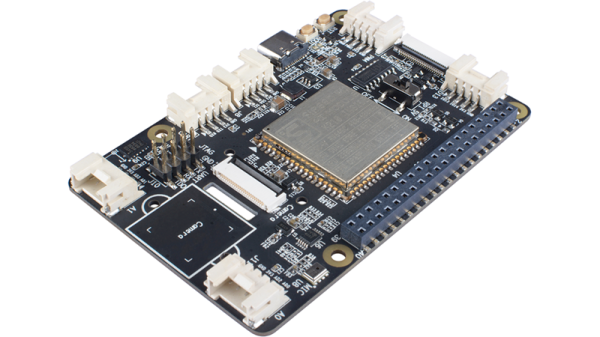
We salute hackers who make technology useful for people in emerging markets. Leigh Johnson joined that select group when she accepted the challenge to build portable machine vision units that work offline and can be deployed for under $100 each. For hardware, a Raspberry Pi with camera plus screen can fit under that cost ceiling, and the software to give it sight is the focus of her 2018 Hackaday Superconference presentation. (Video also embedded below.)

The talk is a very concise 13 minutes, so Leigh flies through definitions of basic terms, before quickly naming TensorFlow and Keras as the tools she used. The time she saved here was spent on explaining what convolutional neural networks are and how they work, just enough to prepare the audience. But all of that is really just background, the meat of the talk is self-contained examples that Leigh has put together and made available online. I love to see that since it means you go beyond just watching and try it out for yourself. Continue reading “Leigh Johnson’s Guide To Machine Vision On Raspberry Pi”

Yes, You Can Put IoT On The Blockchain Using Python And The ESP8266

Last year, we saw quite a bit of media attention paid to blockchain startups. They raised money from the public, then most of them vanished without a trace (or product). Ethics and legality of their fundraising model aside, a few of the ideas they presented might be worth revisiting one day.

One idea in particular that I’ve struggled with is the synthesis of IoT and blockchain technology. Usually when presented with a product or technology, I can comprehend how and/or why someone would use it – in this case I understand neither, and it’s been nagging at me from some quiet but irrepressible corner of my mind.

The typical IoT networks I’ve seen collect data using cheap and low-power devices, and transmit it to a central service without more effort spent on security than needed (and sometimes much less). On the other hand, blockchains tend to be an expensive way to store data, require a fair amount of local storage and processing power to fully interact with them, and generally involve the careful use of public-private key encryption.

I can see some edge cases where it would be useful, for example securely setting the state of some large network of state machines – sort of like a more complex version of this system that controls a single LED via Ethereum smart contract.

What I believe isn’t important though, perhaps I just lack imagination – so lets build it anyway.

Continue reading “Yes, You Can Put IoT On The Blockchain Using Python And The ESP8266”

Computer Algebra For Electronic Design

Don’t get me wrong. Like most people, there’s nothing I enjoy more than solving a long, involved math problem by hand. But, sometimes, a few pages of algebraic scratches on paper is just a means to an end. I find this especially true during electronic design sessions, be it circuit design or PCB layout; I just need the answer, and any time spent finding it distracts me from the larger task at hand. For me, at least, this seems to happen at least once a week, and about five years ago I decided to do something about it. I had heard of computer algebra packages, of course, but they weren’t taught as part of the undergraduate engineering curriculum when I went to school. So, I set about learning one: let the computers do the math!

The package I chose is wxMaxima, a document-based front-end to the Maxima computer-algebra system. Descended from code originally written in the late 1960s, it’s a general-purpose package supporting symbolic computation for algebra and calculus. There’s solid, mature code underneath with a modern UI veneer on top. Plus, it’s FOSS.

As I’ve progressed, I’ve found that some additional functions make the Maxima environment especially convenient for circuit design. A few are simple enough that I’d typically just re-create them as needed, so I never really got organized – there were several versions of my “library” floating around on various machines. I finally got my act together, cleaned up the most-frequently used functions, and put them into a GitHub repo.

Let’s have a look at how we can use them to take the tedium out of math for some design problems.

Continue reading “Computer Algebra For Electronic Design”