Discovered in 1997 by Aaron Spangler and never fixed, the WinNT/Win95 Automatic Authentication Vulnerability (IE Bug #4) is certainly an excellent vintage. In Windows 8 and 10, the same bug has now been found to potentially leak the user’s Microsoft Live account login and (hashed) password information, which is also used to access OneDrive, Outlook, Office, Mobile, Bing, Xbox Live, MSN and Skype (if used with a Microsoft account).
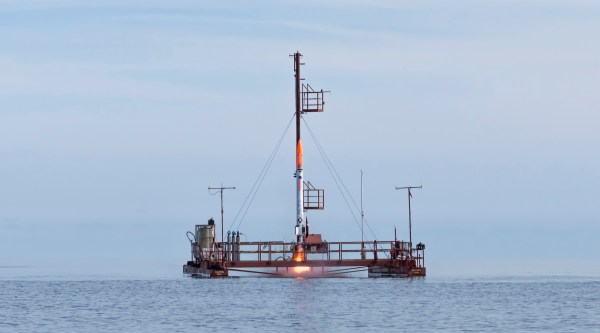
Copenhagen Suborbitals just launched their latest amateur liquid fuel rocket. Why? Because they want to strap someone to a bigger amateur liquid fuel rocket and launch them into space.
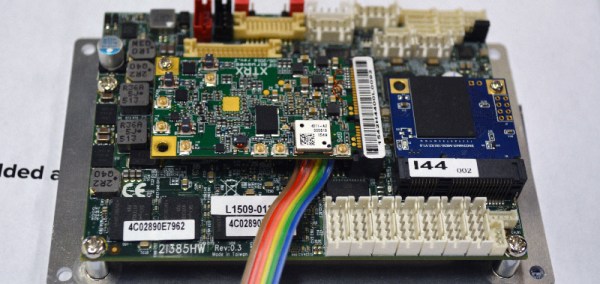
We’ve covered them before, but it’s been a while. While they make a big deal of being amateurs, they are the least amateurish amateurs we’ve come across. We’ll forgive a lot as long as they keep making great videos about their projects. Or posting great pictures of the internals of their rockets.
The Nexø I rocket they recently launched claims to be the first guided, amateur, liquid-fueled rocket. There is a nice post on the guidance system. It was launched from a custom built barge off the shore of Denmark, which allows them to escape quite a few legal hurdles around the launch. The rocket flew beautifully. That is, it went only away from the ground; no other directions. Also, it didn’t explode, which is a lot to expect from even the biggest players in the field.
Copenhagen Suborbitals continues to do amazing work. Hopefully their next rocket will be even more impressive… for amateurs, that is.
At frustratingly regular intervals, the debate around gun control crops up, and every time there is a discussion about smart guns. The general idea is to have a gun that will not fire unless authenticated and authorized. There’s usually a story about a young person who invents a smart controller and another company that is struggling because they just can’t get “Big Guns” to buy into the idea. We aren’t going to focus on the politics; we’re going to look at whether the technology is realistic, and why a lot of the news stories about new tech never pan out.
Let’s start with an example of modern technology creeping into established machines: the car. These are giant hunks of metal with nearly constant explosions, controlled by sophisticated electronics that are getting smarter and more connected every day. Industry is adopting it with alacrity, and the vehicles are getting more efficient and powerful because of it. So why can’t firearms?
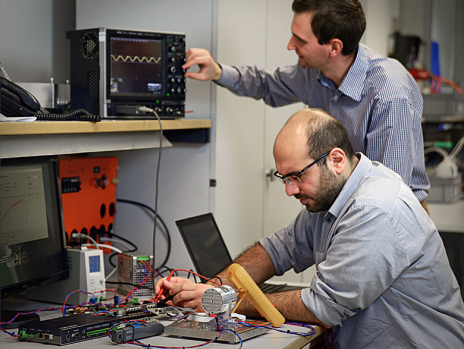
Satellites make many of our everyday activities possible, and the technology continues to improve by leaps and bounds. A prototype, recently completed by [Arda Tüysüz]’s team at ETH Zürich’s Power Electronics Systems Lab in collaboration with its Celeroton spinoff, aims to improve satellite attitude positioning with a high speed, magnetically levitated motor.
Beginning as a doctoral thesis work led by [Tüysüz], the motor builds on existing technologies, but has been arranged into a new application — with great effect. Currently, the maneuvering motors on board satellites are operated at a low rpm to reduce wear, must be sealed in a low-nitrogen environment to prevent rusting of the components, and the microvibrations induced by the ball-bearings in the motors reduces the positioning accuracy. With one felling swoop, this new prototype motor overcomes all of those problems.
There’s a problem with software defined radio. It’s not that everyone needs to re-learn what TEMPEST shielding is, and it’s not that Bluetooth is horribly broken. SDR’s biggest problem is one of bandwidth and processing. With a simple USB TV Tuner, you can listen in on aircraft, grab Landsat images from hundreds of miles up, or sniff the low-power radios used in Internet of Things things. What you can’t do is make your own WiFi adapter, and you can’t create your own LTE wireless network. This is simply a problem of getting bits from the air to a computer for processing.
At HOPE last weekend, the folks behind the very capable LimeSDR and a new company working with Lime’s hardware laid out the possibilities of what software defined radio can do if you make a link to a computer very fast, and add some processing on the SDR itself.
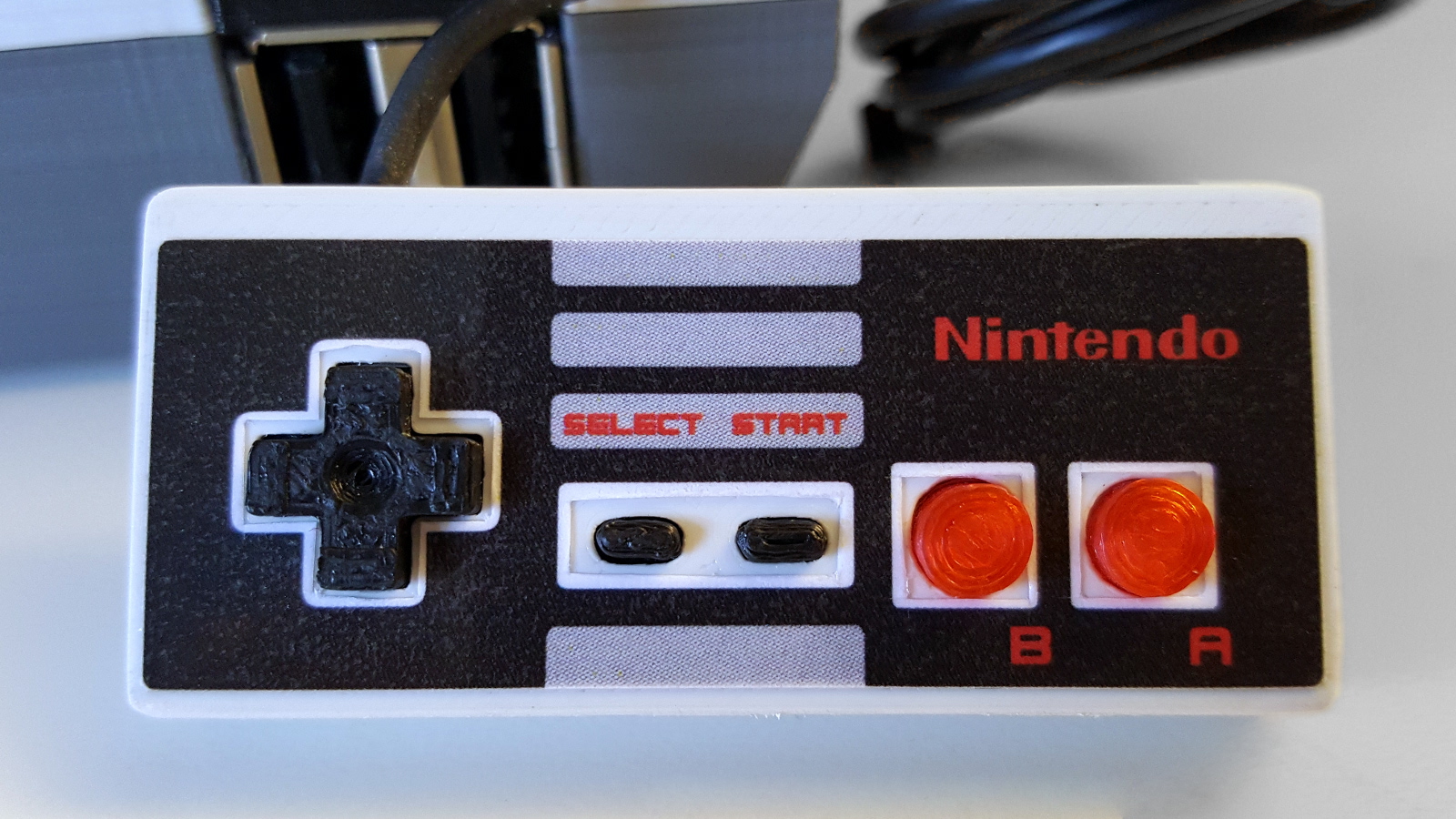
You may not remember this, but Nintendo hardware used to be a pretty big deal. The original Game Boy and NES both had remarkable industrial design that, like the Apple II and IBM Thinkpad, weren’t quite appreciated until many years after production ended. But, like many of you, [daftmike] had nostalgia-fueled memories of the NES experience still safely locked away.
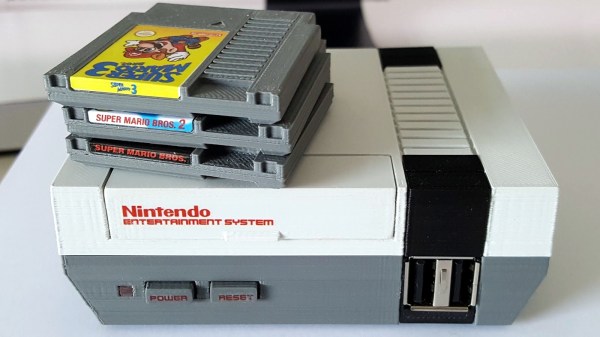
Memories like lifting the cartridge door, blowing on the cartridge, and the feel of the cartridge clicking into place. So, understandably, reliving those experiences was a key part of [daftmike’s] Raspberry Pi-based NES build, though at 40% of the original size. He didn’t just want to experience the games of his youth, he wanted to experience the whole NES just as he had as a child.
Now, like any respectable hacker, [daftmike] didn’t let gaps in his knowledge stop him. This project was a learning experience. He had to teach himself a lot about 3D design and modeling, using Linux, and programming. But, the end result was surely worth the work; the attention to detail shows in features like the USB placement, the power and reset buttons, and of course the game cartridges which work with the magic of NFC and still include the insert and toggle action of the original cartridge carriage.
If you have a 3D printer and Raspberry Pi available, you could build a similar NES emulator yourself. But if you don’t have a 3D printer, but do have an original NES lying around, you could pull of the Raspberry Pi in a NES case hack. Whichever you do, the NES’s beauty deserves to be displayed in your home.
Almost exactly two years ago, shocking news thundered across the electronics blogosphere. There was a new WiFi module on the block. It was called the ESP8266, a simple serial device capable of taking care of an 802.11 network and a WiFi stack, giving any project with a microcontroller access to the Internet. Earlier modules to connect microcontrollers were sufficient for the task, but nothing could beat the ESP8266 on price.
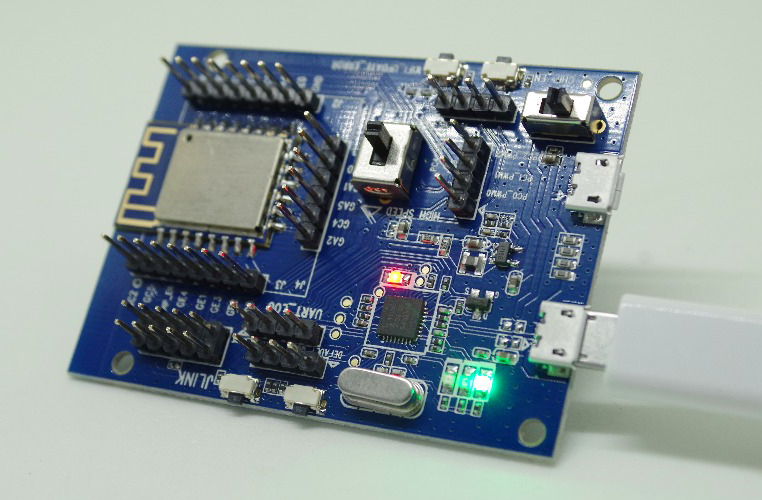
The RTL8710 dev kit
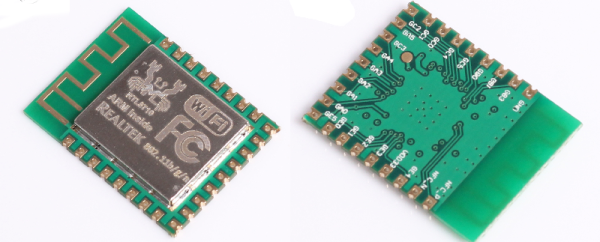
Now, there’s a new module that’s even cheaper and more powerful than the ESP8266, and just like all of our favorite parts from China, it inexplicably shows up on eBay and AliExpress before anywhere else. It’s the Realtek RTL8710, available on eBay, on AliExpress, and elsewhere around the web for about $1.50 per device. There’s also a dev kit for the device featuring breakouts, an additional microcontroller, and a few switches and buttons for about $15.
As you would expect, there is zero English-language data available about the RTL8710, everything is in Chinese. There is a forum of sorts going over this new chip, and the Google Translatrix is good enough to glean a little bit of info about the new chip.
The RTL8710 features an ARM processor clocked at 166MHz. Stock, this module is running FreeRTOS. There’s 1MB of Flash, 48k of RAM available to the user, up to 21 GPIOs, 3 I2C, 4 PWM pins, and 2 PCM. This module also comes with an FCC logo, but I can’t find anything on the FCC website about this module.
If anything, the Realtek RTL8710 isn’t meant to be a competitor to the ESP8266. While extremely popular and still very useful, the ‘next gen’ ESP32 is due to be released in a month or so, and with the exception of Bluetooth on the ESP32, this Realtek module should match its capabilities quite well. Whether anyone can get an English datasheet is another matter, but if history is any indication a few English language RTL8710 forums will pop up a few hours after this is posted.