Repaired Manned Multicopter Flies Without Horrifying Crash

[amazingdiyprojects] has been making lots of test flights in his crazy eight propeller gasoline powered danger bucket.

We last covered the project when he had, unfortunately, wrecked the thing in a remote-controlled test flight.  He later discovered that the motor’s crankshaft bearings had, well, exploded. The resulting shrapnel destroyed the motor and crashed the drone. He described this failure mode as “concerning”.

Also concerning is the act of stepping into the seat once all the propellers are started up. He tags this as “watch your step or die”. Regardless, he also describes flying in the thing as so incredibly fun that it’s hard to stay out of it; like a mechanical drug. It explains why his channel has been lately dominated by videos of him testing the multicopter. Those videos are found after the break.

The device drinks 0.65-0.7 liters per minute of gasoline, and he’s been going through reserves working out all the bugs. This means everything from just figuring out how to fly it to discovering that the dust from the ground effect tends to clog up the air filters; which causes them to run lean, subsequently burning up sparkplugs. Dangerous, but cool.

Continue reading “Repaired Manned Multicopter Flies Without Horrifying Crash”
Amazing SDR Built By 16 Year Old

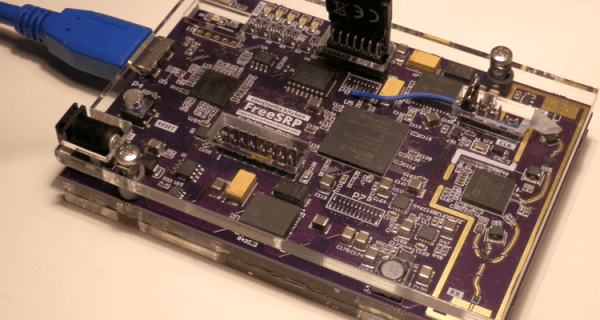
[Lukas] started his epic SDR-from-scratch build when he was 16. Projects like this aren’t completed overnight. (He’s now 18. We’re impressed.)

The project itself is a Software-Defined Radio built on top of the 12-bit Analog Devices AD9364 transceiver IC. A big fat FPGA takes the data and runs it off to a USB 3.0 interface, which is necessary for the amount of data this thing will be producing — he’s got it receiving 56 MHz of bandwidth. In short, this is an SDR peripheral that’s in the big leagues.

After two years of work and (only!) three revision, [Lukas] got the thing working. Read his writeup for the blow-by-blow account. In the end, a 6-layer board was necessary for the routing to get the full speed out of the clocking, and he discovered the reason that you use exactly the specified bias resistors — the expensive ADC chip gets very hot. But he didn’t give up, and in the end he pulled off a project of immense complexity. In his own words:

I have discovered that taking on large projects, even when not knowing how to tackle problems that might arise, is a very effective way of learning for me. It’s just important to be persistent, as I’ve seen that almost any problem can be solved on your own — which is incredibly rewarding — even if you get stuck and seem to not make progress for a while.

[Lukas] is now working on the software. He’s already got a hacked osmocom driver working, so it plays nice with GNURadio.

Of course, there are tons of ways to get into SDR without building your own from scratch, but we applaud [Lukas] for going the hard way. If you’re tempted to follow in his footsteps, have a look at [Michael Ossmann]’s great talk on making the RF design process as tractable as possible.

Power Log Splitting: Trying (and Sometimes Failing) To Build A Better Ax

Wood. Humans have burned it for to heat their homes for thousands of years. It’s truly a renewable source of energy. While it may not be the most efficient or green method to warm a space, it definitely gets the job done. Many homes still have a fireplace or wood burning stove for supplemental heat. For those in colder climates, wood is more than just supplemental, it’s needed simply for survival.

Splitting maul by Chmee2 via Wikipedia

The problem with firewood is that it doesn’t come ready to burn. Perfect fireplace sized chunks don’t grow on trees after all. The trees have to be cut up into logs. The logs must be split. The split wood then needs to dry for 6 months or so.

Anyone who’s spent time manually splitting wood can tell you it’s back breaking work. Swinging an 8 pound maul for a few hours will leave your hands numb and your shoulders aching. It’s the kind of work that leaves the mind free to wander a bit. The hacker’s mind will always wander toward a better way to get the job done. Curiously we haven’t seen too many log splitting hacks here on the blog. [KH4] built an incredible cross bladed axe back in 2015, but that’s about it.

Continue reading “Power Log Splitting: Trying (and Sometimes Failing) To Build A Better Ax”

Computer-Designed Portraits, Knit By Hand!

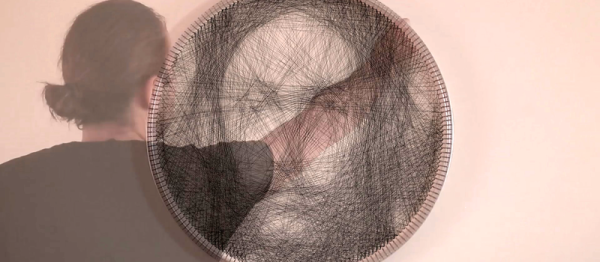
Artist [Petros Vrellis] has done something that we’ve never seen before: his piece “A New Way to Knit” lives up to its name. What he’s done is to take the traditional circular loom, some black thread, and toss some computing at it. And then he loops the string around and around and around.

a-new-way-to-knit-175653201mp4-shot0009_thumbnail

The end result of following the computer’s instructions is a greyscale portrait. Where few black strings overlap, it’s light, and where more overlap, it’s darker. That’s the whole gimmick, but the effect is awesome. As you zoom in and out, it goes from a recognizable face to a tangle of wires and back. Check out his video embedded below.

Continue reading “Computer-Designed Portraits, Knit By Hand!”

Yes, You Should Be Hacking Your Car’s Data System

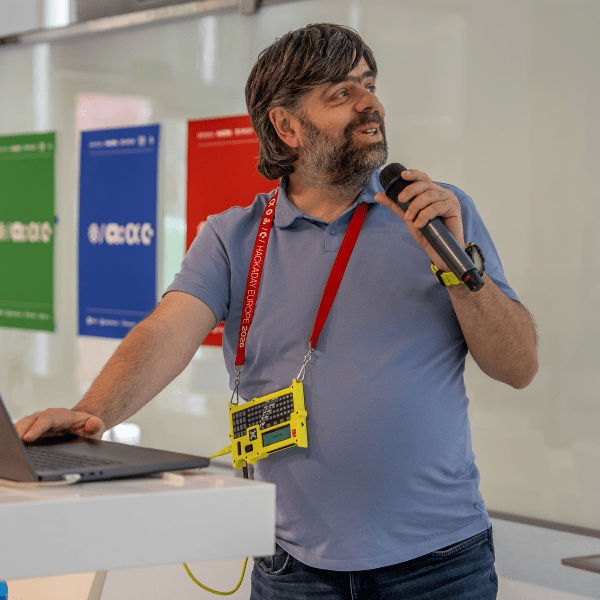
If you own a car, I would wager it’s the most complex device you own. Within you find locomotion, safety systems, and an entertainment system that may be using technology from several decades ago (but that’s a rant for a different article). Jalopy or Sweet Hotness, your ride has an underlying data network that is a ton of fun to hack, and something of a security dinosaur. Both were discussed by Craig Smith and Erik Evenchick during their talk on Car Hacking tools at Hope XI.

You should recognize both of these names. Eric Evenchick is a Hackaday contributor who has been traveling the world presenting talks and workshops on his open source car hacking hardware called CANtact. Craig Smith is founder of OpenGarages and author of the Car Hacker’s Handbook which we highly recommend. The pair made a great joint presentation; both were charismatic, using wit to navigate through the hardware, software, techniques, and goals you want to have in mind to jump into car hacking.

Continue reading “Yes, You Should Be Hacking Your Car’s Data System”

3D Printering: Non-Planar Layer FDM

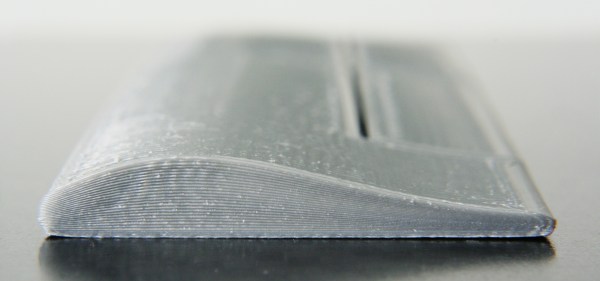
Non-planar layer Fused Deposition Modeling (FDM) is any form of fused deposition modeling where the 3D printed layers aren’t flat or of uniform thickness. For example, if you’re using mesh bed leveling on your 3D printer, you are already using non-planar layer FDM. But why stop at compensating for curved build plates? Non-planar layer FDM has more applications and there are quite a few projects out there exploring the possibilities. In this article, we are going to have a look at what the trick yields for us.

Continue reading “3D Printering: Non-Planar Layer FDM”

Design For Hackers

Near the end of the lifecycle of mass-market commercial product development, an engineering team may come in and make a design for manufacturability (DFM) pass. The goal is to make the device easy, cheap, and reliable to build and actually improve reliability at the same time. We hackers don’t usually take this last step, because when you’re producing just a couple of any given device, it hardly makes sense. But when you release an open-source hardware design to the world, if a lot of people re-build your widget, it might be worth it to consider DFM, or at least a hardware hacker’s version of DFM.

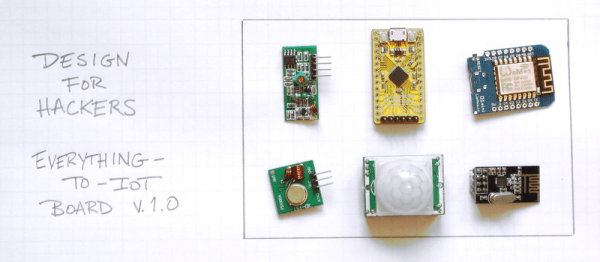
If you want people to make their own versions of your project, make it easy and cheap for them to do so and don’t forget to also make it hackable. This isn’t the same as industrial DFM: rather than designing for 100,000s of boards to be put together by robot assembly machines, you are designing for an audience of penny-pinching hackers, each building your project only once. But thinking about how buildable your design is will still be worthwhile.

In this article, I’m going to touch on a couple of Design for Hackers (DFH) best practices. I really want to hear your experience and desires in the comments. What would you like to see in someone else’s open designs? What drives you nuts when replicating a project? What tricks do you know to make a project easily and cheaply buildable by the average hacker?

Continue reading “Design For Hackers”