If we were to express an official view of the what these guys did once they hacked into a Target store’s PA system, we’d have to go with definitely uncool. However, it’s good to know that phone phreaking and good ol’ social engineering isn’t dead yet. Many of us got our start by playing with the systems around us.
Anyone could call into a Target store and request to be transferred to the PA’s extension code, which was the same everywhere. If the person transferring the call wasn’t quick on their feet, the caller would then be patched directly into the stores PA system. The kicker? Target had no way of stopping the PA until the caller hung-up. It’s the way the system was designed.
The hack itself is embarrassingly simple. The PA is attached to the in-store phone network. This is pretty standard. We’ve all seen a sales associate go up to phone in a store, dial a number, and make an announcement throughout the store. Where Target went wrong is improper separation of systems, and poorly thought out standardization.
The weakest link in security is always the people it’s designed for, not the one’s it’s designed to keep out. It’s a fun little prank, and hopefully Target has it sorted out now.
Preserved railways are now an established part of the tourist itinerary. It doesn’t matter if you call it a railroad, railway, chemin de fer, Eisenbahn or whatever, the chances are that somewhere near you there will be a line rescued from dereliction on which you can spend a Saturday afternoon in vintage rolling stock being hauled by a locomotive long ago withdrawn from regular service. They are established enough to have become an industry in their own right, with the full range of support services to maintain hundred-year-old machinery and even build entire new locomotives.
So we’ve become used to seeing preserved railways in a state of polished perfection. Sometimes a little too perfect, there was a wry observation in a recent BBC documentary on the subject that a typical British preserved railway represents an average day in the 1950s when the Queen was about to visit. Anyone who lived through that era will tell you the reality was a little different, how run down the system was after World War II and just how dirty everything became when exposed to decades of continuous coal smoke.
A particularly worn-out section of railway in those days could be found at Tywyn, on the Welsh coast. A 2’3″ narrow-gauge line built in the 1860s to serve a slate quarry and provide a passenger service to local communities, the Tal-y-Llyn Railway (Welsh pronunciation help) had been in continuous decline for decades and on the death of its owner in 1950 faced closure. With only one of its two locomotives operational and its track in a parlous state it attracted the attention of the author Tom Rolt, already famous for kick-starting the preservation of Britain’s inland waterway system. A preservation society was formed, and in a joint enterprise with the former owner’s estate the line was saved. The world’s first preserved railway had commenced operations.
“Lawnmower” Locomotive in 1952 [Source: talyllyn.co.uk]In a country reeling from the economic effects of fighting a world war there was no infrastructure for a group of enthusiasts rescuing a near-derelict railway. Nobody had ever done this before, there was no body of expertise and certainly no handy suppliers to call when parts were required. To rebuild their line the Tal-y-Llyn volunteers had to reach into their own well of initiative gained over the “Make do and Mend” war years and build their own way out of any challenges they encountered. In case you were wondering what the relevance to Hackaday readers has been in the last few paragraphs there’s your answer: what would you do if you were handed seven and a quarter miles of run-down track and a single barely serviceable locomotive that is one of the oldest in the world still running?
We are fortunate that in 1953 an American film maker, Carson “Kit” Davidson, visited the line, and through his affectionate short film we have a portrayal of the railway’s state in the early stages of preservation. When the footage was shot they had secured a second serviceable locomotive courtesy of the nearby and recently closed Corris Railway, but had yet to replace the majority of the worn-out and overgrown track. It’s a treat to watch, and sets the stage very well for the home-made machinery that is to follow.
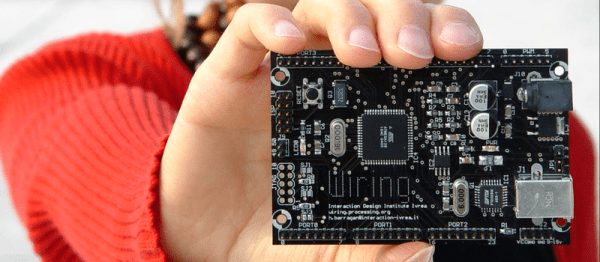
Hernando Barragán is the grandfather of Arduino of whom you’ve never heard. And after years now of being basically silent on the issue of attribution, he’s decided to get some of his grudges off his chest and clear the air around Wiring and Arduino. It’s a long read, and at times a little bitter, but if you’ve been following the development of the Arduino vs Arduino debacle, it’s an important piece in the puzzle.
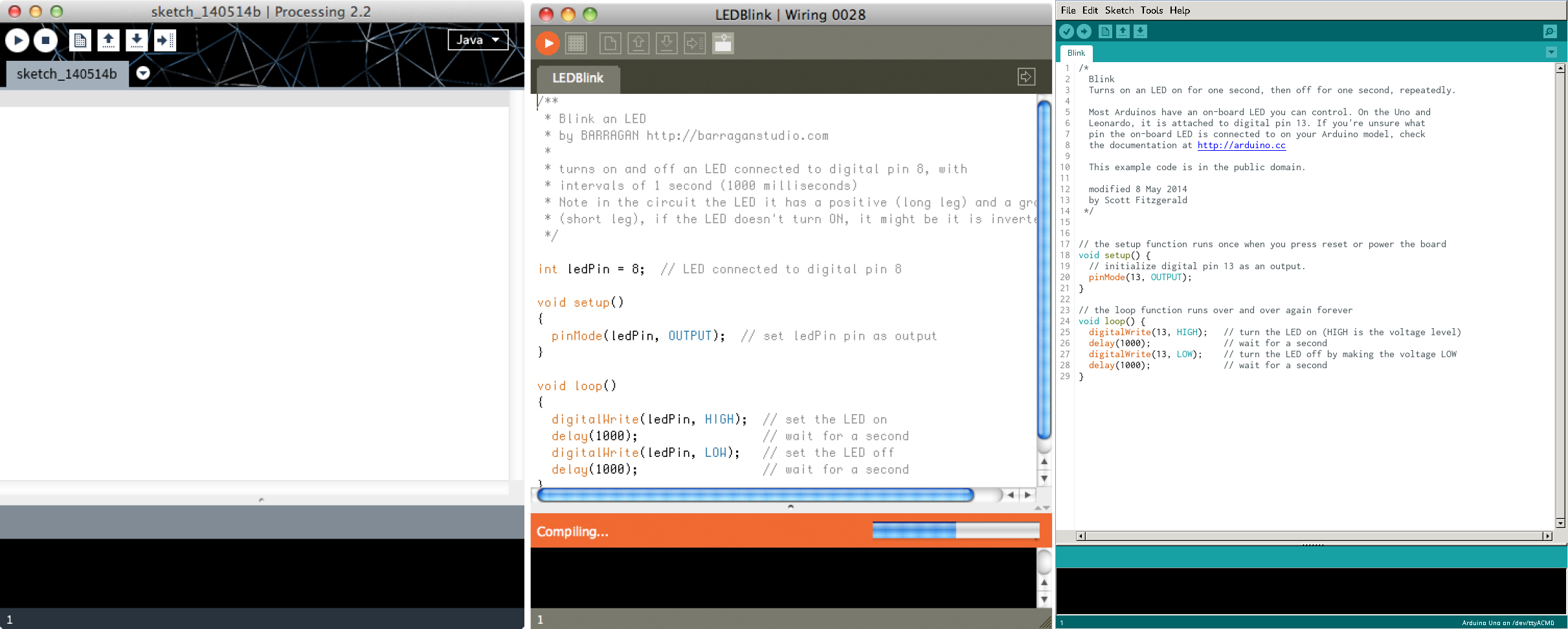
Wiring, in case you don’t know, is where digitalWrite() and company come from. Maybe even more importantly, Wiring basically incubated the idea of building a microcontroller-based hardware controller platform that was simple enough to program that it could be used by artists. Indeed, it was intended to be the physical counterpart to Processing, a visual programming language for art. We’ve always wondered about the relationship between Wiring and Arduino, and it’s good to hear the Wiring side of the story. (We actually interviewed Barragán earlier this year, and he asked that we hold off until he published his side of things on the web.)
The short version is that Arduino was basically a fork of the Wiring software, re-branded and running on a physical platform that borrowed a lot from the Wiring boards. Whether or not this is legal or even moral is not an issue — Wiring was developed fully open-source, both software and hardware, so it was Massimo Banzi’s to copy as much as anyone else’s. But given that Arduino started off as essentially a re-branded Wiring (with code ported to a trivially different microcontroller), you’d be forgiven for thinking that somewhat more acknowledgement than “derives from Wiring” was appropriate.
See what we mean?
The story of Arduino, from Barragán’s perspective, is actually a classic tragedy: student comes up with a really big idea, and one of his professors takes credit for it and runs with it.
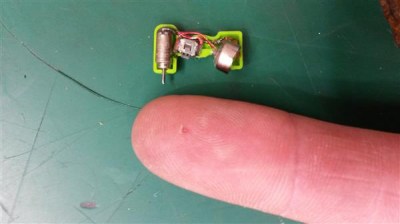
There isn’t much information we could find on this one (sorry, no source files that we know of), but this little hack is so playful and fun, we just had to share it with you. [Lance Abernethy] has built both a working cordless drill, and circular saw using nothing more than a 3D printer, what seems to be a pager-type vibration motor, a tactile switch and a coin cell battery – you can see them both working in the video after the break.
[Lance] used an Ultimaker 2, running a 0.25mm nozzle, and printing at a 0.04mm layer height in PLA. As you would expect, the 0.25mm nozzle is needed for such small parts – it’s also close to the limit of what extruder can still squeeze plastic through. it greatly increases the chance of blocked or clogged nozzles.
[Lance] admits that the saw can’t quite cut anything just yet, but he does say that he has plans to make more miniature cordless tools. We can’t wait to see how he might manage the mechanism for a jig-saw.
Delrin, Acetal, and its many trade names is a material properly known as Polyoxymethylene or POM. It is one of the strongest plastics and is a good go-to material when you want the best properties of plastic, and don’t need the full strength of a metal part. It was originally formulated to compete with Zinc and Aluminum castings after all.
I won’t go too deep into the numbers behind POM. If you need the Young’s Modulus, you probably don’t need this guide. This is intended to be more of a guide to its general properties. When you’re looking for something to fit an application it is usually easier to shift through the surface properties to select a few candidates, and then break the calculator out later to make sure it will work if you’re uncertain about the factor of safety.
The most popular property of POM is its ease of machining. While doing this research every single site I came across referred to it as the most machinable plastic. That’s about as objective as subjective praise can get. It doesn’t tend to grab tools like, for example, HDPE. It also chips nicely unlike UHMW and Nylon. Some plastics, like UHMW, have the unfortunate tendency to render the dials on a mill or lathe meaningless as the plastic deflects away from the tool. POM does not do this as much. Of course these other plastics have their strengths as well, but if any plastic will do, and you’re machining, POM is a very good choice.
They say that the first casualty of war is the truth, and that’s probably only more the case in a civil war. When one side in a conflict controls the message, the other side is at a huge disadvantage. Technology can level the playing field, and in the case of the Syrian Civil War, a swarm of tiny Raspberry Pi transmitters is helping one side get their message out.
We won’t pretend to understand the complexities of this war, but it’s clear that the Syrian government controls broadcast media and access to the internet, and is using them for propaganda while denying the opposition access to the same. A decentralized medium can get the message out under these conditions, and that’s exactly what Pocket FM does. Built around a Raspberry Pi and a frequency-agile FM transmitter, a Pocket FM can take multiple audio feeds and transmit them out to a 5km radius. Small enough to be packed up and deployed quickly and able to be powered by batteries or solar panels, the pirate transmitters can be here one minute and gone the next, yielding a robust network resistant to takedown attempts.
The network built around Pocket FM in Syria is small but growing, and it appears to be making a difference in the conflict. We find the concept of a decentralized network intriguing and potentially empowering, at least in situations where the letter of the law regarding broadcasting is not a prime consideration. That’s where projects like Airchat seek to build an unsanctioned network. The same goes for Tweeting on the Amateur Radio Band in a project aptly named HamRadioTweets.
We wonder how a fleet of these Pi-based transmitters could aid in recovery from natural disasters?
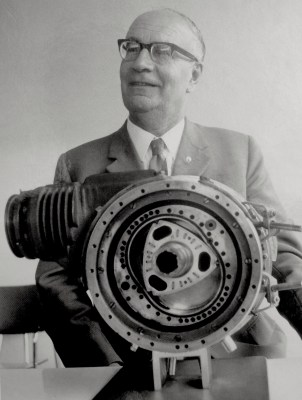
Through the history of internal combustion engines, there has been plenty of evolution, but few revolutions. Talk of radically different designs always leads to a single name – Wankel. The Wankel rotary engine, most notably used in automobiles by Mazda, has been around since the late 1950’s. The Wankel rotary is an example of a design which makes sense on paper. However, practical problems cause it to underperform in the real world.
Invention and History
Felix Wankel’s engine was conceived during a dream. In it, 17-year-old Felix was driving his car to a concert. When he arrived, he bragged to his friends that his car used a new type of engine – half turbine, half reciprocating. “It is my invention!” he told his friends. Upon waking up, Wankel became dedicated to building his engine. Though he never received a formal degree (or a driver’s license), Wankel was a gifted engineer.
Young Wankel’s checkered history includes membership in several anti-semitic groups in the 1920’s. He was also involved with the founding of the Nazi party. His conflicting views on the direction of the party lead to his arrest in 1933. Eventually released through action of Hitler himself, Wankel joined the SS in 1940. The end of the war saw Wankel spending several months in a French prison for his wartime involvement.



!["Lawnmower" Locomotive in 1952 [Source: talyllyn.co.uk]](https://hackaday.com/wp-content/uploads/2016/03/jbs-1-2kw.jpg?w=400)




 Felix Wankel’s engine was conceived during a dream. In it, 17-year-old Felix was driving his car to a concert. When he arrived, he bragged to his friends that his car used a new type of engine – half turbine, half reciprocating. “It is my invention!” he told his friends. Upon waking up, Wankel became dedicated to building his engine. Though he never received a formal degree (or a driver’s license), Wankel was a gifted engineer.