It was the year of 1687 when Isaac Newton published “The Principia“, which revealed the first mathematical description of gravity. Newton’s laws of motion along with his description of gravity laid before the world a revolutionary concept that could be used to describe everything from the motions of heavenly bodies to a falling apple. Newton would remain the unequivocal king of gravity for the next several hundred years. But that would all change at the dawn of the 20th century when a young man working at a Swiss patent office began to ask some profound questions. Einstein had come to the conclusion that Newtonian physics was not adequate to describe the findings of the emerging electromagnetic field theories. In 1905, he published a paper entitled “On the Electrodynamics of Moving Bodies” which corrects Newton’s laws so they work when describing the motions of objects near the speed of light. This new description became known as Special Relativity.
It was ‘Special’ because it didn’t deal with gravity or acceleration. It would take Einstein another 10 years to work these two concepts into his relativity theory. He called it General Relativity – an understanding of which is necessary to fully grasp the significance of gravitational waves.
The trick is that many POS terminals and barcode readers support command characters in their programming modes. Through use of these Advanced Data Formatting (ADF) modes, [virustracker] sends Windows-Key-r, and then cmd.exe, ftps a file down, and runs it. Whatever computer is on the other side of the barcode scanner has just been owned. ADF even supports a delay function to allow time for the command window to pop up before running the rest of the input.
The article details how they got their payload from requiring more than ten individual barcodes down to four. Still, it’s a suspicious-looking attack to try to pull off where other people (think cashiers) are looking. However, we have many automated machines in our everyday life that use barcodes. How many of these are vulnerable is an open question. [virustracker] suggests lottery machines, package-delivery automats, and even hospitals.
The defense is simple, and it’s the same as everywhere else: disable the debug and configuration modes in your production systems, and sanitize your input. Yes, even the barcodes.
Hackaday Belgrade — our first ever conference in Europe — is coming up fast. One of the really exciting things for me is the hardware badge which [Voja Antonic] designed for the conference. He’s done a great job with hardware choices and I think we’ve hit the sweet spot for badge hacking. Let’s jump into the hardware and firmware details after the break.
Get your ticket now for ten hours of talks and workshops, evening concerts, and of course badge hacking the entire time. Earlybird sales close Monday. We’re still in the process of going through talk proposals but we’ll publish a post next week announcing all of the speakers.
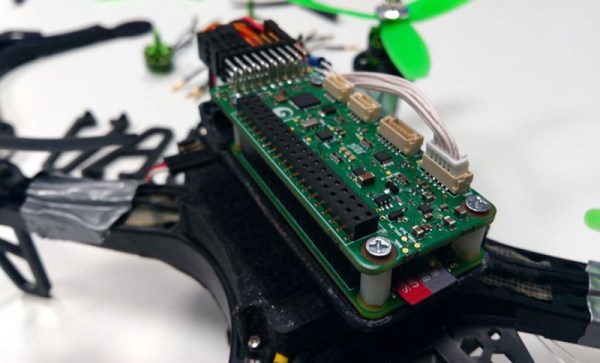
Flight controllers for quadcopters and other drones are incredible pieces of engineering. Not only do these boards keep an aircraft level, they do so while keeping the drone in one place, or reading a GPS sensor and flying it from waypoint to waypoint. The latest of these flight controllers is built on everyone’s favorite $5 computer, the Raspberry Pi Zero.
The PXFmini controller and autopilot shield is the latest project from Erle Robotics that puts eight servo outputs on the Pi, barometer and IMU sensors, a power supply, and all the adapters to turn the Raspberry Pi Zero into a capable flight controller. Since the Pi Zero will have some computational horsepower left over after keeping a quadcopter level, there’s a possibility of some very cool peripherals. Erle Robotics has been working with depth cameras and Lidar on more than a few drones. This makes for some interesting applications we can only imagine now.
The schematics for the PXFmini are open source in the best traditions of the RC and drone community and will be available soon. You can check out a video of the FXPmini flying around an office below.
For some people to join a new group is an exciting proposal, to meet new people and interact with them to accomplish a goal is their idea of a good time. If this describes you then you’re all set to jump in there and make some new friends! There are other people who see social interaction as not such a good time. They would rather avoid that situation and go on about their normal day, I get it. In general my level of comfort is inversely proportional to the number of people with me. This is not a character trait that I chose, I’m an introvert by nature.
The stereotype depicts hackers, nerds, or geeks as people without many friends who spend most of our time alone or you might just call us “loners”. I should make it clear that I’m writing this article from a table for 1 at my local diner and it would be out of the ordinary if there was another person at this table with me. Just in case someone feels the need to speak to me I’m wearing headphones as a deterrent, audio delivery is not their use at this time (headphone hack). I can feel the first comment brewing so let me nip that in the bud real quick: I’m in a restaurant AND actively being alone because there are often too many distractions at home to get things done in a timely manner. And I like the pancakes.
Before I climb up on this soapbox let me say that many of you are already involved in the community and are doing a great job, in fact I’m pretty sure many of the old-timers I talk about are Hackaday readers. This article is a result of my self reflection regarding my lack of community involvement as of late. I can’t think of any reasons why I shouldn’t take myself down a peg or two publicly, enjoy.
I won’t bother with the “Ra-Ra! Team Spirit!” garbage to get you all jazzed up to be a part of the team. But I will tell you what you’re missing out on by not being active and participating. It’s similar to the saying “You can lead a horse to water but you can’t make that horse join a group of like-minded horses that would all benefit from a wealth of horse-knowledge.” The saying changes depending on where you’re from, that’s how it was told to me.
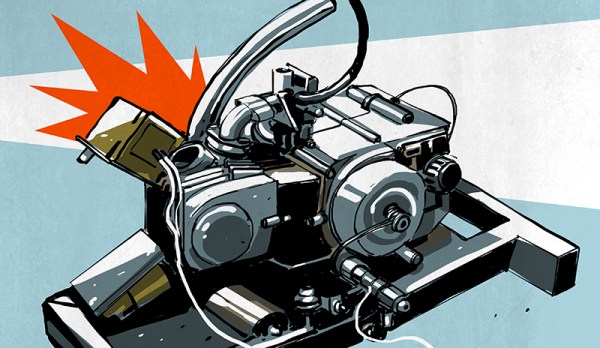
Electric cars are all the rage lately, but let’s not forget about the old standby – internal combustion. The modern internal combustion engine is a marvel of engineering. Today’s engines and surrounding systems have better power, greater fuel economy, and lower emissions than anything that has come before. Centuries’ worth of engineering hours have gone into improving every aspect of the engine – with one notable exception. No automotive manufacturer has been able to eliminate the engine’s camshaft in a piston powered-production vehicle. The irony here is that camless engines are relatively easy to build. The average hacker could modify a small four-stroke engine for camless operation in their workshop. While it wouldn’t be a practical device, it would be a great test bed for experimentation and learning.
Suck, Squeeze, Bang, Blow
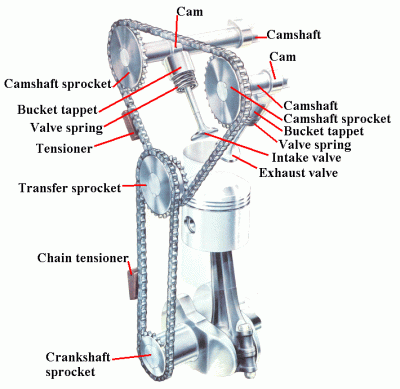
A multi-cylinder gasoline engine is a complex dance. Hundreds of parts must move in synchronicity. Valves open and close, injectors mist fuel, spark plugs fire, and pistons move up and down. All follow the four-stroke “Intake, Compression, Combustion, Exhaust” Otto cycle. The camshaft controls much of this by opening and closing the engine’s spring-loaded intake and exhaust valves. Lobes on the shaft press on tappets which then move the valve stems and the valves themselves. The camshaft itself is driven at half the speed of the crankshaft through timing gears, chains, or a belt. Some valve trains are relatively simple – such as overhead cam engines. Others, such as the cam-in-block design, are more complex, with pushrods, rockers, and other parts required to translate the movement of the cam lobe to movement at the valve.
Exactly when, and how fast a valve opens is determined by the profile of the cam lobe. Auto racing and performance enthusiasts often change camshafts to those with more aggressive profiles and different timing offsets depending on the engine’s requirements. Everything comes at a cost though. A camshaft machined for maximum power generally won’t idle well and will make the engine harder to start. Too aggressive a lobe profile can lead to valve float, where the valves never fully seat at high RPM.
Myriad Solutions
Engine manufacturers have spent years working around the limitations of the camshaft. The results are myriad proprietary solutions. Honda has VTEC, short for Variable Valve Timing and Lift Electronic Control. Toyota has VVT-i. BMW has VANOS, Ford has VCT. All these systems provide ways to adjust the valve action to some degree. VANOS works by allowing the camshaft to slightly rotate a few degrees relative to its normal timing, similar to moving a tooth or two on the timing chain. While these systems do work, they tend to be mechanically complex, and expensive to repair.
The simple solution would be to go with a camless engine. This would mean eliminating the camshaft, timing belt, and most of the associated hardware. Solenoids or hydraulic actuators open and close the valves in an infinitely variable number of ways. Valves can even be held open indefinitely, effectively shutting down a cylinder when max power isn’t necessary.
So why aren’t we all driving camless engines? There are a few reasons. The advantages of camless engines to camshaft engines are analogous to the advantages of electronic fuel injection (EFI) vs carburetors. At the core, a fuel injector is a solenoid controlled valve. The fuel pump provides constant pressure. The engine control unit (ECU) fires the injectors at just the right time to inject fuel into the cylinders.The computer also leaves the valves open long enough so that the right amount of fuel is injected for the current throttle position. Electronically this is very similar to what would be required for a camless engine. So what gives?
Toyota’s celebrated 22R-E, an early EFI engine
Hackers in their 30’s and beyond will remember that until the late 1970’s and early 1980’s, the carburetor was king. Companies had been experimenting with EFI since the 1950’s. The system didn’t become mainstream until the stiff pollution laws of the 70’s came into effect. Making a clean, fuel-efficient carbureted engine was possible, but there were so many mechanical and electronic actuators required that the EFI was a better alternative. So the laws of the 70’s effectively regulated carburetors out of existence. We’re looking at much the same thing with camless engines. What’s missing are the regulations to force the issue.
All the big manufacturers have experimented with the camless concept. The best effort to date has been from Freevalve, a subsidiary of Koenigsegg. They have a prototype engine running in a Saab. LaunchPoint Technologies have uploaded videos showing some impressive actuator designs LaunchPoint is working with voice coils, the same technology which moves the heads in your hard drive.
None of this means that you can’t have a camless engine now – companies like Wärtsilä and Man have engines commercially available. However, these are giant diesel engines used to drive large ships or generate power. Not exactly what you’d want to put in a your subcompact car! For the hacker set, the best way to get your hands on a camless engine today is to hack one yourself.
Ladies and gentlemen, start hack your engines!
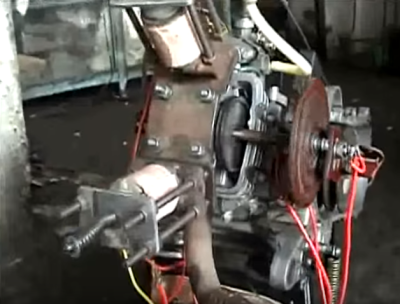
Simple, single-cylinder camless engines are relatively easy to build. Start with a four stroke overhead valve engine from a snowblower, scooter, or the like. Make sure the engine is a non-interference model. This means that it is physically impossible for the valves to crash into the pistons. Add a power source and some solenoids. From there it’s just a matter of creating a control system. Examples are all over the internet. [Sukhjit Singh Banga] built this engine as part of a college project. The control system is a mechanical wheel with electric contacts, similar to a distributor cap and rotor system. [bbaldwin1987’s] Camless Engine Capstone project at West Virginia University uses a microcontroller to operate the solenoids. Note that this project uses two solenoids – one to open and one to close the valve. The engine doesn’t need to rely on a spring for closure. [Brian Miller] also built a camless engine for college, in this case Brigham Young University Idaho Camless Engine. [Brian’s] engine uses hall effect sensors on the original camshaft to fire the solenoids. This route is an excellent stepping stone before making the jump to full electronic control.
It wouldn’t take much work to expand these projects to a multi-cylinder engine. All we’re waiting for is the right hacker to take up the challenge!
With the miniaturization of technology, we’re now able to do some pretty crazy things with computers the size of credit cards. [Dennis] has been working on a rather unique project — he calls it the Cat Exploit — we call it the Internet of Cats.
By making pet-wearable tech (is that a new term?), it’s possible to create a mini war-driving server that stray cats (or other small animals) could wear. As they roam the streets, their feline-augmentation searches and taps into open or badly secured WiFi networks, repeating and spreading the signal to other Server Entities (other network-enabled cats), opening up the networks for all to use. Continue reading “The Internet Of Cats”→





 A multi-cylinder gasoline engine is a complex dance. Hundreds of parts must move in synchronicity. Valves open and close, injectors mist fuel, spark plugs fire, and pistons move up and down. All follow the four-stroke “Intake, Compression, Combustion, Exhaust”
 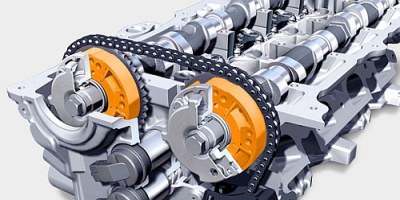 Engine manufacturers have spent years working around the limitations of the camshaft. The results are myriad proprietary solutions. Honda has VTEC, short for Variable Valve Timing and Lift Electronic Control. Toyota has VVT-i. BMW has VANOS, Ford has VCT. All these systems provide ways to adjust the valve action to some degree. VANOS works by allowing the camshaft to slightly rotate a few degrees relative to its normal timing, similar to moving a tooth or two on the timing chain. While these systems do work, they tend to be mechanically complex, and expensive to repair.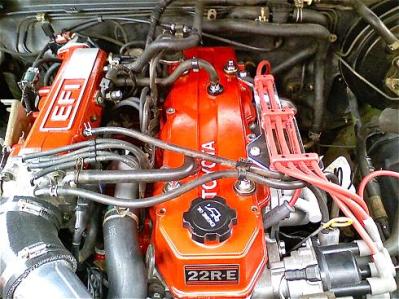
 Simple, single-cylinder camless engines are relatively easy to build. Start with a four stroke overhead valve engine from a snowblower, scooter, or the like. Make sure the engine is a non-interference model. This means that it is physically impossible for the valves to crash into the pistons. Add a power source and some solenoids. From there it’s just a matter of creating a control system. Examples are all over the internet. [Sukhjit Singh Banga] built