Windows 10 On A Tiny Board

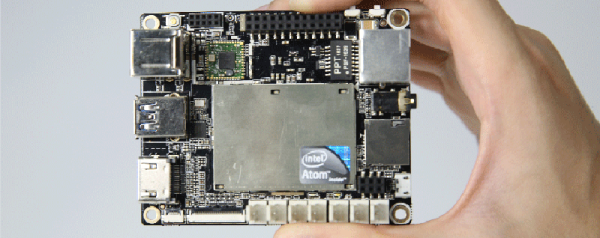
Over the past few months, a number of companies and designers have started picking up the newest Intel SoCs. Intel has to kill ARM somehow, right? The latest of these single board x86 computers is the Lattepanda. It’s a tiny board that can run everything a 5-year-old desktop computer can run, including a full version of Windows 10.

This isn’t the first time we’ve seen a tiny x86 board in recent months. Last October, an x86 board that takes design cues from the Raspberry Pi 2 hit Kickstarter. These are proper PCs, with the ability to run Windows 10, Linux, and just about every other environment under the sun.

The specs for the Lattepanda include a quad-core Cherry Trail running at 1.8GHz. the RAM is either 2GB or 4GB depending on configuration, and 32GB of eMMC Flash. Peripherals include USB 3.0, Ethernet, WiFi, Bluetooth, and integrated graphics supporting either HDMI or a DSI connector.

But of course a computer is just a computer, and you can’t sell a machine that only runs Skype to the ‘maker’ market. The Lattepanda also includes an ATMega32u4 as a coprocessor, giving this board ‘Arduino functionality’. In my day we walked uphill both ways to get a parallel port, but I digress.

While these tiny x86 boards might not be available in a year’s time, and the companies behind them may fall off the face of the planet, the introduction of these devices portends a great war over the horizon. Intel wants the low-power SoC market, a space until now reserved entirely for ARM-based devices.
4 Port USB, Raspberry Pi Zero Piggy-Back Hack

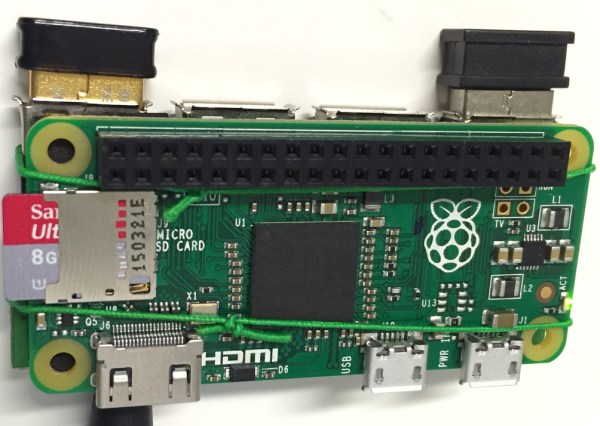
[Frederick] decided his new Zero needed a USB hub. He noticed a small, on hand, USB hub was the same size as the Zero. As any good hacker would, he stripped it from its case to piggy-back it onto the Zero. What’s with the piggy-backing since we just saw that with another Zero hack that added a WiFi dongle? Is it something in the water? Nah, probably just a natural fit with the mini-sized Zero.

It certainly helps that the USB and power pads on the back of the Zero are available and of a good size to accept direct, soldered wire connections. The USB connections on the hub were a little more tricky. The wires were soldered to the surface mount pins of the mini-B connector. But [Frederick] managed to get that done, also.

A nice advantage of this hack is that a couple of soldered jumper wires let the Zero draw power from the hub’s wall-wart, eliminating one cable from those needed to work with the Pi. Using hot glue for strain relief on the wiring is a nice touch. To keep the boards from shorting he put a piece of foam between them and help them together with elastic bands. Simple and easy.

Retrocomputing On A Chip

New electrical components enable us to reconstruct old wiring more efficiently. Especially, the accessible and cheap FPGA kits which offer the possibility to put together wiring of many old computers as an “on-a-chip” solution.

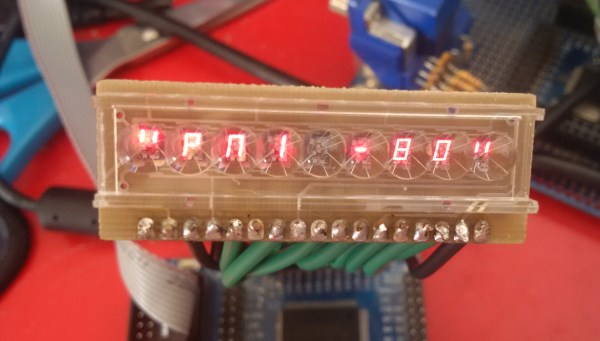
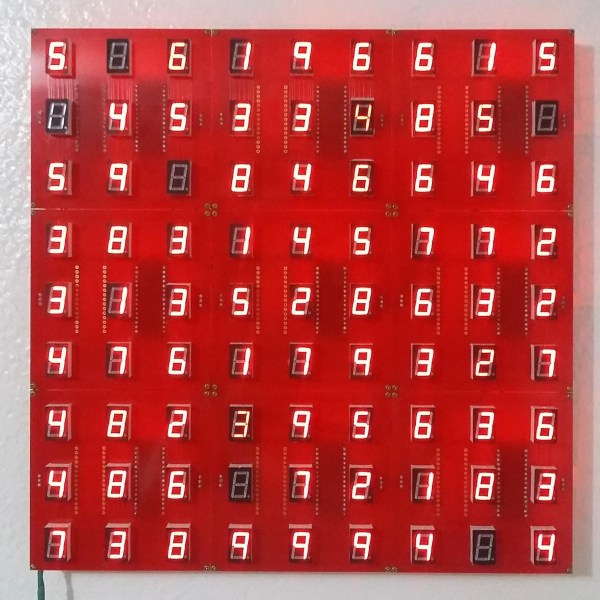
When I managed to get a hold of an old bubble LED display and a pretty mechanical matrix keyboard, I decided to build a replica of an old single board computer. Logical options seemed to be to build either KIM-1 or Heathkit ET-3400. Replicas of KIM-1 already exist, even for Arduino, so my task would be reduced to connect the keyboard and display. But then I told myself that I would use the fact that my bubble display has 9 positions as an excuse to build the legendary Czechoslovak Single Board Computer PMI-80 which used the same display. My replica is an FPGA, or rather an FPGA emulator of this very computer.

Continue reading “Retrocomputing On A Chip”

Beyond Control: The Basics Of Control Systems

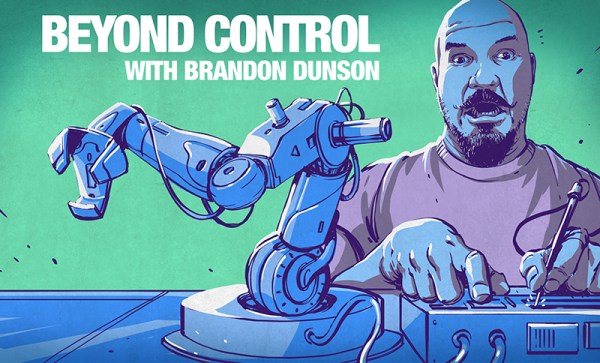
Control systems are exactly what you think they are: systems designed to control something. Perhaps a better way to put it is systems design control the behavior of something. The term “control systems” does an excellent job of being vague and most of us (originally) don’t think too much about it until its brought to our attention or we crash a robotic armature into itself and investigate how that horrifying event was allowed to happened. Usually during this investigation our internal dialog has a loop running that goes something like: “why the hell will the system allow me to manipulate it in a self-destructive way!?!”

What I found was my own ignorance, I hadn’t implemented a proper control system. One could make a case claiming that I hadn’t taken ANY control system into account whatsoever. I jumped in too deep, too fast (sound familiar?) and paid the price of crashing a rotating arm into another part of the system. Luckily, a friend stepped in and repaired the arm for me and metaphorically pointed to a large neon sign on the wall and said “you can’t ignore this”. He walked over to pull the chain dangling beneath the sign, the high voltage energized the gas in the tubes blinding me with the now unavoidably obvious words: Control Systems.

Continue reading “Beyond Control: The Basics Of Control Systems”

Prototype Sodium Ion Batteries In 18650 Cells

French researchers have announced a prototype of an 18650 sodium-ion battery. If you’ve bought a powerful LED flashlight, a rechargeable battery pack, or a–ahem–stronger than usual LASER pointer, you’ve probably run into 18650 batteries. You often find these inside laptop batteries and –famously– the Tesla electric vehicle runs on a few thousand of these cells. The number might seem like a strange choice, but it maps to the cell size (18 mm in diameter and 65 mm long).

The batteries usually use lithium-ion technology. However, lithium isn’t the only possible choice for rechargeable cells. Lithium has a lot of advantages. It has a high working voltage, and it is lightweight. It does, however, have one major disadvantage: it is a relatively rare element. It is possible to make sodium-ion batteries, although there are some design tradeoffs. But sodium is much more abundant than lithium, which makes up about 0.06% of the Earth’s crust compared to sodium’s 2.6%). Better still, sea water is full of sodium chloride (which we call salt) that you can use to create sodium.

Continue reading “Prototype Sodium Ion Batteries In 18650 Cells”

Raspberry Pi Zero, Or Minus One?

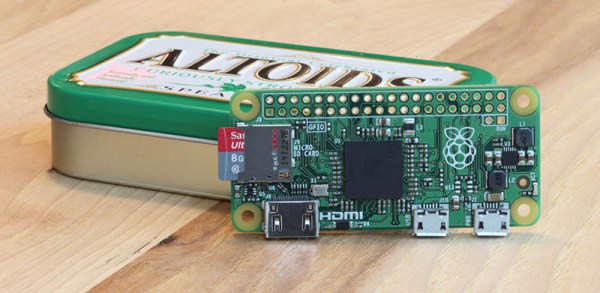
The Wall Street Journal reported that [Eric Schmidt] of Google and now Alphabet Inc, promoted the idea of an inexpensive version of the Raspberry Pi to the Raspberry Pi foundation’s [Eben Upton]. Apparently [Upton] accepted this recommendation despite existing plans to make a more expensive, more powerful version of the Pi. The outcome is the Raspberry Pi Zero that sells, in some places, for $5.00 and was given away for free on the cover of the MagPi magazine.

From the WSJ article:

“He [Schmidt] said it was very hard to compete with cheap. He made a very compelling case. It was a life-changing conversation,” Mr. Upton said, adding that he went back to the lab and scrapped all the engineering plans for more expensive versions of future Pi computers. “The idea was to make a more powerful thing at the same price, and then make a cheaper thing with the same power.”

Plans were scrapped. The more powerful Pi 2 was released at the price point of existing Pis, and now we have the Zero.

Pi’s Purpose

Foundation Mission

The Raspberry Pi Foundation is a registered educational charity in the UK. The purpose of this Foundation according to their About Us page is to, ‘advance the education of adults and children, particularly in the field of computers, computer science, and related subjects.’

Why is the Raspberry Pi Foundation so concerned about computer education? From the 1990s onward, fewer and fewer A Level students in the UK applying to study Computer Science had previous experience as hobbyist programmers. An applicant in the 2000s usually might have only done a little web design.

Why then does the Raspberry Pi Zero exist? [Upton] also told Cnet, “We really hope this is going to get those last few people in the door and involved in computer programming.”

Very good, but how well does the Zero support this goal or address their concerns?

Continue reading “Raspberry Pi Zero, Or Minus One?”

A Short History Of AI, And Why It’s Heading In The Wrong Direction

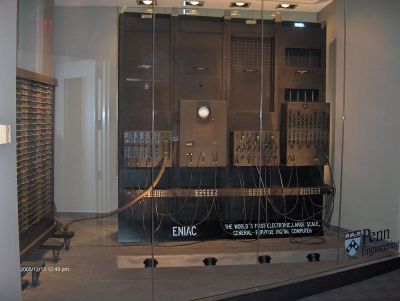
Sir Winston Churchill often spoke of World War 2 as the “Wizard War”. Both the Allies and Axis powers were in a race to gain the electronic advantage over each other on the battlefield. Many technologies were born during this time – one of them being the ability to decipher coded messages. The devices that were able to achieve this feat were the precursors to the modern computer. In 1946, the US Military developed the ENIAC, or Electronic Numerical Integrator And Computer. Using over 17,000 vacuum tubes, the ENIAC was a few orders of magnitude faster than all previous electro-mechanical computers. The part that excited many scientists, however, was that it was programmable. It was the notion of a programmable computer that would give rise to the ai_05idea of artificial intelligence (AI).

As time marched forward, computers became smaller and faster. The invention of the transistor semiconductor gave rise to the microprocessor, which accelerated the development of computer programming. AI began to pick up steam, and pundits began to make grand claims of how computer intelligence would soon surpass our own. Programs like ELIZA and Blocks World fascinated the public and certainly gave the perception that when computers became faster, as they surely would in the future, they would be able to think like humans do.

But it soon became clear that this would not be the case. While these and many other AI programs were good at what they did, neither they, or their algorithms were adaptable. They were ‘smart’ at their particular task, and could even be considered intelligent judging from their behavior, but they had no understanding of the task, and didn’t hold a candle to the intellectual capabilities of even a typical lab rat, let alone a human.

Continue reading “A Short History Of AI, And Why It’s Heading In The Wrong Direction”