Garbage Can CNC Machine Build

Forget sourcing parts for your next project from some fancy neighborhood hardware store. If you really want to show your hacker chops, be like [HomoFaciens] and try a Dumpster dive for parts for a CNC machine build.

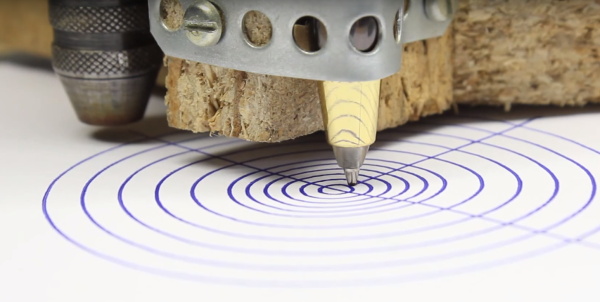
OK, we exaggerate a little – but only a little. Apart from the control electronics, almost everything in [HomoFacien]’s build could be found by the curb on bulk-waste pickup day. Particle board from a cast-off piece of flat-pack furniture, motors and gears from an old printer, and bits of steel strapping are all that’s needed for the frame of a serviceable CNC machine. This machine is even junkier than [HomoFacien]’s earlier build, which had a lot more store-bought parts. But the videos below show pretty impressive performance nonetheless.

Sure, this is a giant leap backwards for the state of the art in DIY CNC builds. but that’s the point – to show what can be accomplished with almost nothing, and that imagination and perseverance are more important for acceptable results than an expensive BOM.

With that in mind, we’re throwing down the gauntlet: can anyone build a CNC machine from cardboard and paperclips?
Continue reading “Garbage Can CNC Machine Build”

Stronger 3D Printed Parts

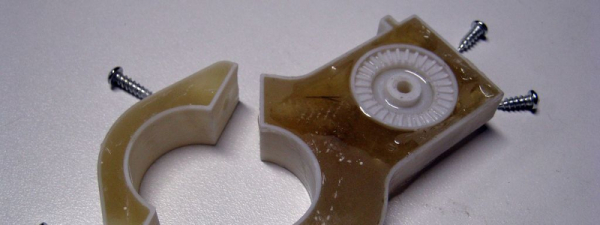
When [hobbyman] wanted some 3D printed parts to attach a bag to his bike, he was worried that the parts would not be strong enough to hold when the bag was full. He decided to find a way to reinforce the part with fiberglass and epoxy. His first model had holes and grooves to be filled in with epoxy.

However, after working with the part for a bit, he decided to take a different approach. Instead of making the part nearly solid plastic with space for the epoxy, he instead created the part as a shell and then filled it with fibers and epoxy. After it all cured, a little sanding started removing some of the plastic shell and what was left was mostly a cast fiberglass part (although some of the plastic was left on).

Continue reading “Stronger 3D Printed Parts”

The Best Conference Badge Hacking You’ve Ever Seen

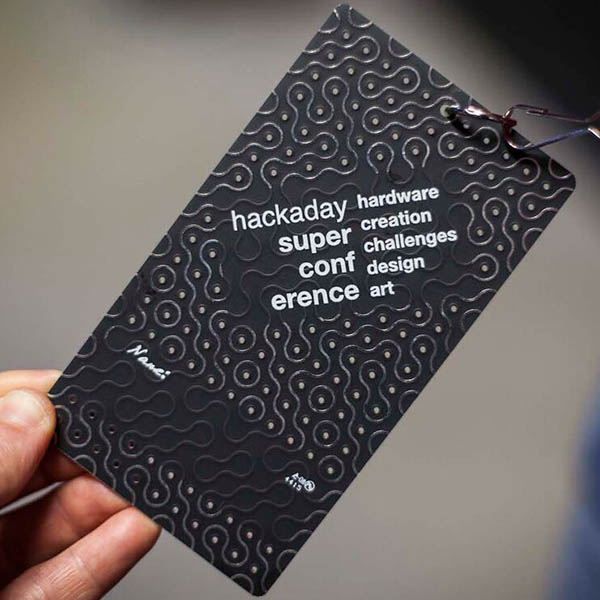
72EJpM5noCVCOQOeMV74_fmZeSQKcPxiqv70JYc9psgAs with any proper hardware con, the Hackaday Supercon needed a badge, and preferably one that was electronic. This conference centered around hardware creation, and the badge was no exception.

Designed on a tight timeline, it was possible to deliver a PCB badge for the attendees but it didn’t include microcontrollers, FPGAs, or software defined radios. This blank slate was the foundation for a completely unconstrained freestyle electronics soldering session.

The front of the badge includes a matte black solder mask with Truchet tiles of traces. Put multiple badges edge-to-edge and the pattern continues indefinitely. Inside of each curved trace is a through-hole via and those makes up a grid of holes on the back of the badge. On that back side there are also two rectangular grids that presented a nice area to which hackers soldered their components.

More than a few people took up the challenge of hacking their badge, and despite a strange pitch for the through holes (0.230″), and traces that didn’t go anywhere, there were some amazing builds. I would go so far to say that the badge hacking at the Supercon was the best I’ve ever seen, and this includes DEFCON and CCC.

Continue reading “The Best Conference Badge Hacking You’ve Ever Seen”

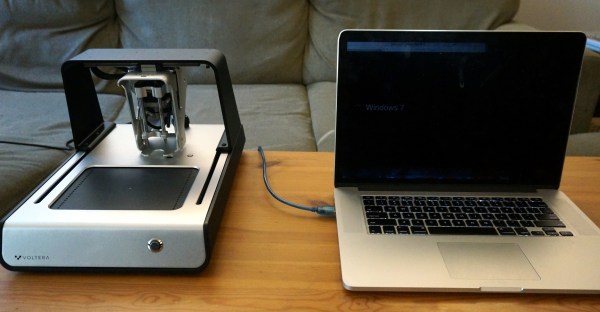
Review: Voltera V-One PCB Printer

Back in Feburary, I was one of the first people to throw some cash at the Voltera V-One circuit board printer on Kickstarter. With an anticipated delivery date of Q4 2015, I sat back and waited. This week, my V-One arrived!

I’ll preface this article by pointing out that I do know the folks at Voltera as we went to university together. That being said, I did put down my own cash for the device, so I’ve bought the right to be critical. I also have no relationship with their company. In this article, we’ll go through unboxing and printing, then get into a review of the V-One based on what we’ve seen so far.

Continue reading “Review: Voltera V-One PCB Printer”

The Story Of The 2015 Hackaday Prize

This week we’ve covered the Grand Prize and Best Product winners of the 2015 Hackaday prize: Eyedrivomatic and Vinduino. These are both amazing and worthy projects, but the real story of the Hackaday Prize isn’t about the prizes: it’s about nine months during which talented people worked toward a common good.

If you didn’t have a chance to attend the Hackaday SuperConference, here is the video of the ceremony. Take a look at the presentation which was made in front of a packed house of about 300 attendees. Then join us after the break for a look back on the last nine amazing months.

Continue reading “The Story Of The 2015 Hackaday Prize”

Video Standards Are More Than Video Signals

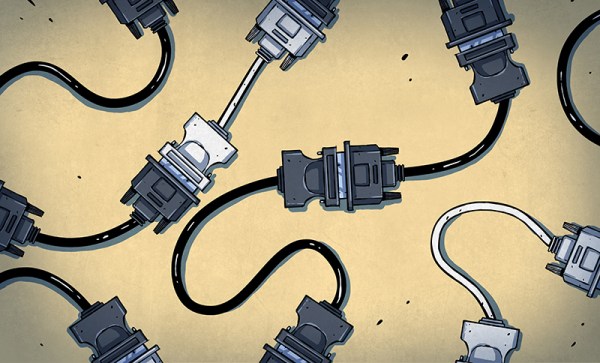
The number of hours we spend staring at screens is probably best unknown, but how about the technology that makes up the video on the screen? We’ve all seen a reel-to-reel projector on TV or in a movie or maybe you’re old enough to have owned one, surely some of you still have one tucked away real nice. Whether you had the pleasure of operating a projector or just watched it happen in the movies the concept is pretty straight forward. A long piece of film which contains many individual frames pass in front of a high intensity lamp while the shutter hides the film movement from our eyes and our brain draws in the imaginary motion from frame to frame. Staring at a Blu-ray player won’t offer the same intuition, while we won’t get into what must the painful detail of decoding video from a Blu-ray Disc we will look into a few video standards, and how we hack them.

Continue reading “Video Standards Are More Than Video Signals”

Water-Saving Agricultural System Wins Best Product

The 2015 Hackaday Prize included something new: a prize for the Best Product. The winner took home $100k in funding, a six-month residency at the Supplyframe Design Lab in Pasadena, and help turning a budding product into a full-grown success. And the winner is…

Vinduino

vinduino-shot0007 Water is a crucial element for farming: the plants need enough, but not too much. Water is also an increasingly precious resource all over the world. In California, five times as much water is used in agriculture as is used by residential consumers. A 25% reduction in agricultural use, for instance, would entirely offset all urban water use. With this in mind, a number of California farmers are trying to voluntarily reduce their water consumption. But how?

One important development is targeted irrigation. Getting precisely the right amount of water to each plant can reduce the fraction lost to evaporation or runoff. It’s a small thing, but it’s a very big deal.

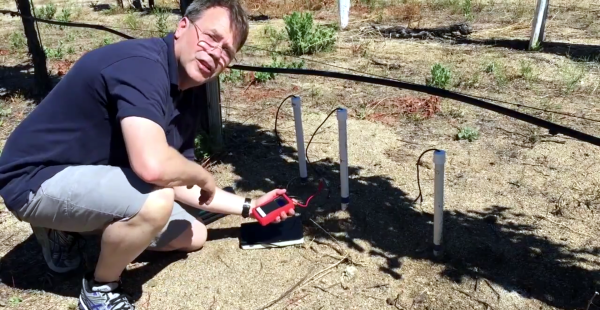
Cue Vinduino, a long-running project of “gentleman farmer” and hacker [Reinier van der Lee]. As a system, Vinduino aims to make it easy and relatively inexpensive to measure the amount of water in the soil at different depths, to log this information, and to eventually tailor the farm’s water usage to the plants and their environment. We were able to catch up with [Reinier] at the Hackaday SuperConference the day after results were announced. He shared his story of developing Vinduino and recounts how he felt when it was named Best Product:

The product that won Best Product is simple, but very well executed. It’s a hand-held soil moisture sensor reader that couples with a DIY soil probe design to create a versatile and inexpensive system. All of the 2015 Best Product Finalists were exceptional. Vinduino’s attention to detail, room for expansion, and the potential to help the world pushed this project over the top.

Continue reading “Water-Saving Agricultural System Wins Best Product”