Reverse Engineering Apple’s Lightning Connector

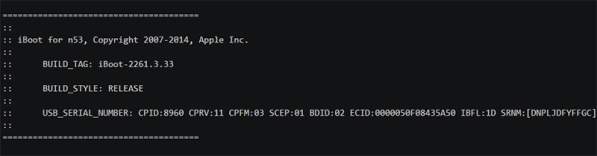
Introduced with the iPhone 5 nearly two and a half years ago, Apple’s Lightning connector has stymied the incredible homebrew electronics scene that was previously accustomed to the larger, older, better documented, and more open 30-pin connector. Now, finally, the protocols inside the Apple Lightning connector have been broken. We’re still a ways off from a Lightning breakout board, but this is the first proof that a serial console can be obtained through a Lightning connector. That’s the first step to totally owning an iDevice, and this is how all those exploits will start.

[Ramtin Amin] began the teardown of the Lightning connector began as most reverse engineering tasks should – looking at the patents, finding a source for the connectors, and any other products that use similar hardware. [Ramtin] found a Lightning to Serial converter powered by an STM32 microcontroller. Disassembling the firmware and looking at the output on a logic analyzer, [Ramtin] figured out part of the protocol, most of the wiring, and after some research, schematics for how an until-now unidentified chip in Lightning-enabled iProducts was wired.

The chip in question is colloquially known as the Tristar, and more accurately as a CBTL1608A1. During the teardown craze of the iPhone 5 launch, this chip was frequently identified as a DisplayPort Multiplexer. It is a mux, but not for DisplayPort – it’s only to connect the accessory (Lightning) UART, debug UART, baseband, SoC, and JTAG. This is the key to the castle, and being able to get through this chip means we can now own our iDevices.

The chip is an incredibly small BGA affair that [Ramtin] desoldered, reflowed onto a breakout board, and connected to an STM32 Discovery board. Using the techniques he used with other Lightning-enabled hardware, [Ramtin] was able to connect his iPhone and ever so slightly peek his head into the inner workings of his device.

It’s not complete control of an iDevice yet, but this is how all those future exploits will start. [Ramtin] uploaded a short video as a proof of concept, you can check that out below.

Continue reading “Reverse Engineering Apple’s Lightning Connector”
The Modular Bench Power Supply To Rule Them All

Right now, [The Big One] is using an ATX power supply as a bench power supply for all his electronics projects. It works, but it’s not ideal. The next step up from a power supply from an old computer is, in order, one of those Chinese deals on Amazon, a used HP supply, or for the very cool people among us, building your own. [The Big One] is very, very cool and he’s building the modular bench supply to rule them all.

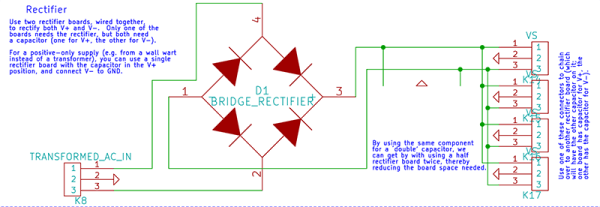
This is not your $100 china special power supply that [The Big One] would have to buy again in a few months. Inside this massive power supply is a massive transformer and rectifier that fans out to multiple power supply modules. The modules themselves will be based on an OPA548 that will be able to supply up to 3A with current limiting.

Each of these channels will be controlled by an ATMega32u4, with all the fancy stuff you’d expect from the ultimate supply; USB for setting voltage, current, and logging data, a nice LCD character display, and it’s surprisingly cheap; just about $100 for the transformer, and about $50 for each module.

It’s shaping up to be a great build, and with all the features, a power supply that would also make a great kit. If you have any input you’d like [The Big One] to hear, let him know on the project page.

Developer Saved Years Later By His Own Hardware

Bryan is a computer neophyte (he needs help turning his computer on), but he has a basketball story. His team was playing in a crucial basketball playoff game at the club. They were down by two late in the game and he just couldn’t get one of his players to play defense. This player was a great shooter and that is about it — burying a three that put the team up for the first time. After sinking it he just stood there admiring his masterpiece while Bryan screamed at him to get back on defense (he rarely played D and he didn’t that game either). Instead, he flat lined and went down on his face– heart attack!

Of course that player was me and that was an awful day. But I’m still around to tell the story… as a hardware designer years before I didn’t know that I’d bet everything on one particular project.

Continue reading “Developer Saved Years Later By His Own Hardware”

Benchmarking The Raspberry Pi 2

The Raspberry Pi has only been available for a few days, but already those boards are heading through the post office and onto workbenches around the world. From the initial impressions, we already know this quad-core ARMv7 system boots in about half the time, but other than that, there aren’t many real benchmarks that compare the new Raspberry Pi 2 to the older Raspi 1 or other similar tiny Linux dev boards. This is the post that fixes that.

A word of warning, though: these are benchmarks, and benchmarks aren’t real-world use cases. However, we can glean a little bit of information about the true performance of the Raspberry Pi 2 with a few simple tools.

For these tests, I’ve used Roy Longbottom’s Raspberry Pi benchmarking tools, nbench, and a few custom tools to determine how fast both hardware versions of the Raspberry are in real-world use cases.

Continue reading “Benchmarking The Raspberry Pi 2”

I’ve Come To Bury Radio Shack, Not Praise It.

This is a post that has been a long time coming. Today, Radio Shack, the store that has been everything from an excellent introduction to electronics and computers to a store that sells cell phones, cell phone accessories, and cell phone plans has declared bankruptcy.

To anyone, this should not be news. For the last decade, the public perception of Radio Shack was one of a shell of its former self. In 2007, The Onion famously published Even CEO Can’t Figure Out How RadioShack Still In Business, an article that like most of The Onion’s work, is a sand dune of grains of truth.

In recent years, Radio Shack has made attempts to appeal to the demographic that holds the ‘shack in such high regard. Just four short years ago, Radio Shack made an appeal to this community and asked for suggestions for what people would actually buy at Radio Shack. The answers ranged from Arduinos and larger component selections to Parallax Propellers. Even with this renewed focus on DIY, repair, electronic tinkering, and even in-house cellphone repair shops in some select locations, this was not enough.

This was a make or break year for Radio Shack. Last fall, Standard General, a hedge fund with an amazing name, attempted to refinance Radio Shack’s debt with specific revenue benchmarks set for the holiday season. These benchmarks were not met, and now Radio Shack has filed for bankruptcy protection after reaching a deal to sell nearly 2,500 stores. Radio Shack now has about 5,000 stores in the U.S.. Half of them will close, and as many as 1,700 will be operated by Sprint. The future of Radio Shack was a cell phone store, it seems.

Right now, there are rumors of Radio Shack employees ‘released from service’, with mass closings of stores very, very soon.

There has always been a love-hate relationship with Radio Shack with the DIY and tinkerer community. It was everything from many programmer’s first introduction to computers, the only place in town you could buy [Forrest Mims]’ excellent books, to a horrible place to work, and an odd store where you need a phone number to buy batteries.

This is not a eulogy; Radio Shack isn’t quite dead just yet, and eulogies are reserved for the loved ones in our lives. Radio Shack is neither. We all have a rich history with Radio Shack, and next time you’re buying some resistors on Mouser or Digikey, just remember we’re living in a different world now.

Logic Noise: Sweet, Sweet Oscillator Sounds

Welcome to part one of a series taking you down the rabbit hole of DIY electronic synthesizers based on (largely) CMOS logic chips. Instead of synths being commodity gear made by large corporate enterprises, we’ll be building with the cheapest available parts, using and misusing digital logic. In short, don’t expect pre-packaged smooth tones, because we’ll be making creative noise machines.

If you’re the chiptunes type, you’ll probably find something you like here. If you’re the circuit bender or electro-noise-punk type, this is gonna be right up your alley. If you just like to see CMOS chips wriggle and squirm in unintended ways, feel free to look over my shoulder. If you’re the type who insists that a screwdriver can’t be used to pry open a paint can, then maybe you’d better move along. There’s a thin line between the glitch as bug and the glitch as interesting discovery, and we’ll be dancing all over it.

Continue reading “Logic Noise: Sweet, Sweet Oscillator Sounds”

Reproducing A DSKY

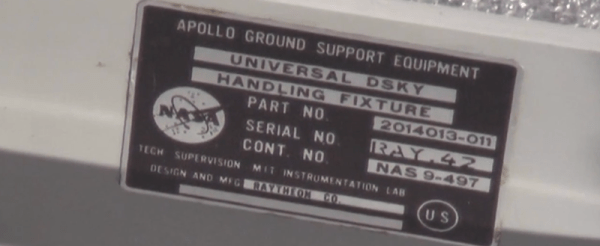
This is a project that is about a year and a half in the making, but [Fran] is finally digging into the most iconic part of the Apollo Guidance Computer and building the most accurate reproduction DSKY ever.

The Apollo Guidance Computer was a masterpiece of engineering and is frequently cited as the beginning of the computer revolution, but it didn’t really look that interesting – it looks like a vastly overbuilt server blade, really. When everyone thinks about the Apollo Guidance Computer, they think about the DSKY, the glowey keypad interface seen in the blockbuster hit Apollo 13 and the oddly accurate disappointment of Apollo 18. It’s the part of the Apollo Guidance Computer the Apollo astronauts actually interacted with, and has become the icon of the strange, early digital computers developed for NASA in the 60s.

There are a few modern DSKY replicas, but all of them are exceedingly anachronistic; all of these reproductions use seven-segment LEDs, something that didn’t exist in the 1960s. A true reproduction DSKY would use custom electroluminescent displays. These EL segments are powered by AC, and transistors back then were terrible, leading to another design choice – those EL segments were turned on and off by relays. It’s all completely crazy, and aerospace equipment to boot.

Because of the custom design and engineering choices that seem insane to the modern eye, there isn’t much in the way of documentation when it comes to making a reproduction DSKY. This is where [Fran] tapped a few of the contacts her historical deconstruction cred earned when she reverse engineered a Saturn V Launch Vehicle Digital Computer to call upon anyone who would have access to a real Apollo-era DSKY.

The first contact was the Kansas Cosmosphere who was kind enough to send extremely detailed photographs of the DSKYs in their archives. It would have been extremely nice to have old documentation made when the DSKYs were rolling off the assembly line, but that information is locked away in a file cabinet owned by Raytheon.

[Fran] got a break when she was contacted by curators at the National Air and Space Museum’s Garber facility who invited her down to DC. She was given the grand tour, including the most elusive aircraft in the museum’s collection, the Ho 229, the dual-turbojet Nazi flying wing. At the Garber facility, [Fran] received permission to take apart two DSKYs.

The main focus of [Fran]’s expedition to the Air and Space Museum was to figure out how the EL displays were constructed. The EL displays that exist today are completely transparent when turned off because of the development of transparent conductors.

The EL displays in the DSKY were based on earlier night lights manufactured by Sylvania. After looking at a few interesting items that included Gemini hardware and early DSKYs, this sort of construction was confirmed.

With a lot of pictures, a lot of measurements, a lot of CAD work, and some extremely tedious work, [Fran] was able to create the definitive reference for DSKY display elements. There are 154 separate switchable element in the display, all controlled by relays. These elements are not multiplexed; every element can be turned on and off individually.

Figuring out how the elements were put together was only one part of [Fran]’s research. Another goal was to figure out the electrical connections between the display and the rest of the DSKY. There, [Fran] found 160 gold pins in a custom socket. It’s bizarre, and more like a PGA socket than like the backplane connector [Fran] found in the Saturn V computer.

Even though [Fran]’s research was mostly on the EL panel inside the display, she did get a few more insights with her time with the DSKYs. The buttons are fantastic, and the best keys she’d ever used. This is just part one of what will be an incredibly involved project, and we’re looking forward to what [Fran] looks into next.