Have You Ever Used A Tick Stick?

Picture this: you have an irregular opening you need to fabricate a piece to fill. Maybe it’s the stonework of a fireplace; maybe it’s the curved bulkhead of a ship. How do you get that shape? The most “Hackaday” answer would be to 3D scan the area, create a CAD model based on the point cloud, and route the shape with CNC. Of course, none of those were options for the entirety of human history. So how do you do it if you don’t have such high-tech toys? With a stick, as [Essential Craftsman] takes great pains to show us in the video below.

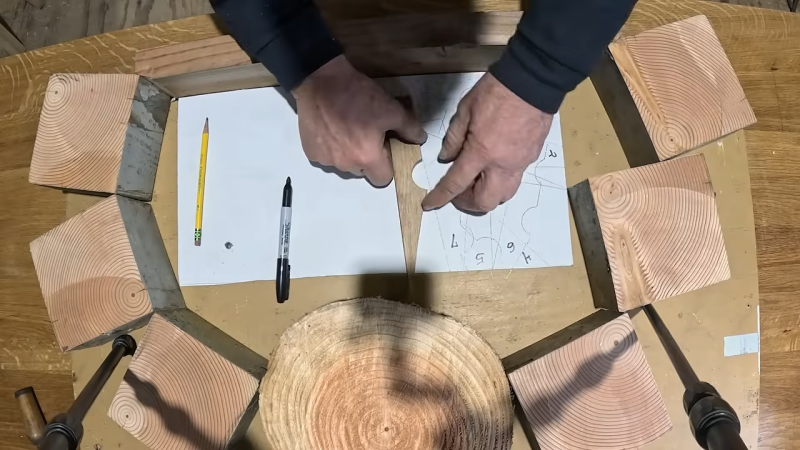
It’s not just any stick, of course. Call it a “tick stick”, a “speil stick”, or a “joggle stick” — whatever you call it, it’s just an irregularly shaped piece of wood. The irregular shape is key to the whole process. How you use it is simple: get some kind of storyboard — cardboard, MDF, whatever — that fits inside your irregular void. Thanks to the magic of the stick, it need not fit flush to the edges of the hole. You put the tick stick on the storyboard, press the pointy end against a reference point on the side of the hole, and trace the stick. The irregular shape means you’re going to be able to get that reference point back exactly later. Number the outline you just made, and rinse and repeat until you’ve got a single-plane “point cloud” made of tick stick outlines.

Your storyboard is probably going to look mighty confusing, but that’s what the numbers are for. Bring your storyboard and your tick stick onto the workbench and whatever you want to cut out– plywood, cardboard, 1/4″ steel armor plate, you name it–and simply repeat the process. Put the tick stick inside outline #1 and mark where the pointy end lands on the material. Then do it again for the other outlines, reproducing the points you measured on the original piece. After that, it’s just a game of ‘connect the dots’ and cutting with whatever methodology works for your substrate. A sharp knife will work for cardboard, but you’ll probably want something more substantial for steel plate.

It’s not often you’re going to need the tick stick– the [Craftsman] reports only needing it a few times over the course of a decades-long career, but when you need it, there’s not much else that will do the job. Well, unless you have a 3D scanner handy, that is. Continue reading “Have You Ever Used A Tick Stick?”
3D Print This MRI Safe Torque Wrench If You’re Rich

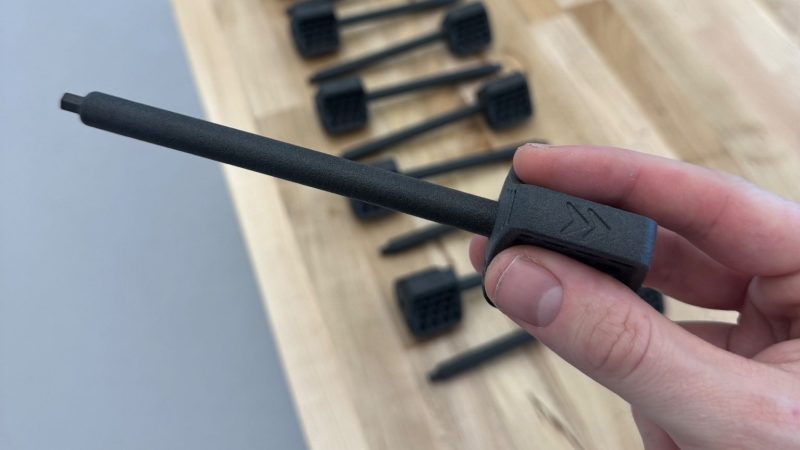
MRI machines come with a variety of safety warnings. Perhaps most importantly, you have to be very careful not to take ferrous metal objects anywhere near them, since strong magnetic fields can send them flying, causing damage and injuries. To that end, you might find yourself in need of magnetically-safe tools when working on such machines. [Sam Schmitz] recently whipped up a nifty example of an MRI-safe torque wrench himself.

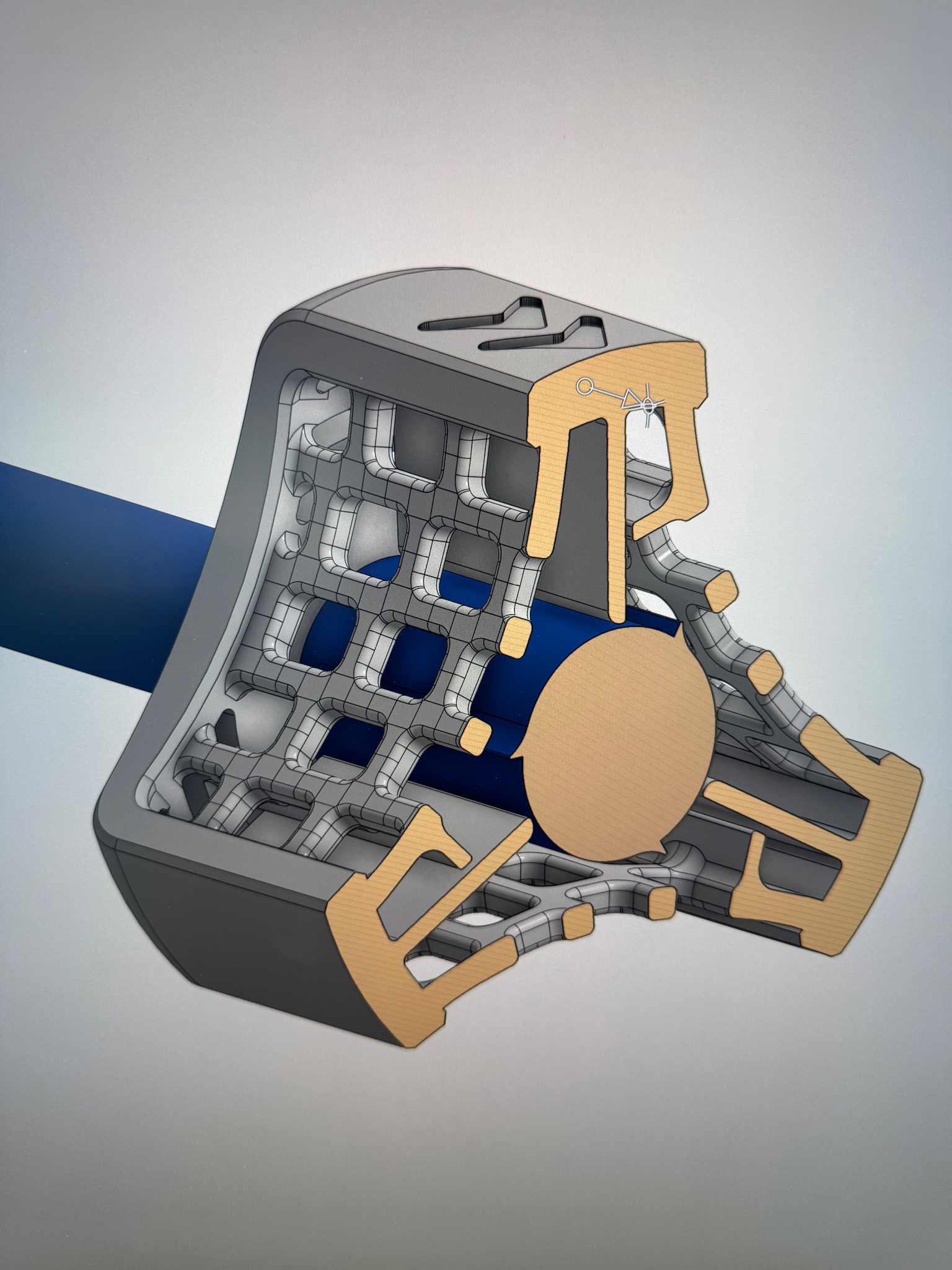
The torque wrench mechanism, which operates in one direction only.

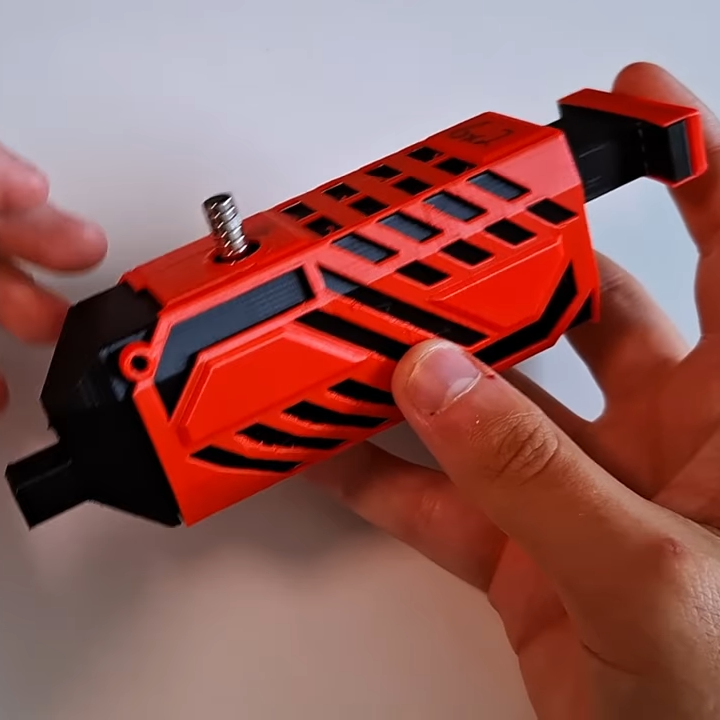
It’s a 3D printed design which can be produced on a Formlabs Fuse 1+ as a single piece in nylon using a selective laser sintering process. The torque wrench works in a deceptively simple manner. As the handle is rotated, a flap  mates with the flat side of a fin on the shaft. This allows the shaft to turn. However, apply more than 0.6 Nm of torque, and the fin will eventually give in, snapping over the lip and stopping any further rotation that would over-tighten the fastener. [Sam] suggests these printed torque wrenches largely come out to the correct torque spec when printed, and can survive a thousand cycles or more while remaining in a usable spec.

The wrench does have one drawback though—it is apparently painfully loud to use. When the handle snaps past the detent, the “click” is quite piercing. [Sam] has measured the sound at up to 125 dB. Not exactly the best when it comes to ear safety!

If you work on MRI machines regularly, you already have the tooling to do your job. However, it’s neat to see that such a specialized tool can be easily and reliably 3D printed… with the slight drawback that you need a $60,000 SLS printer to do it. SLS isn’t readily available at the DIY level just yet, but it is slowly getting there. We’re waiting with bated breath.

Calculus By Oscilloscope

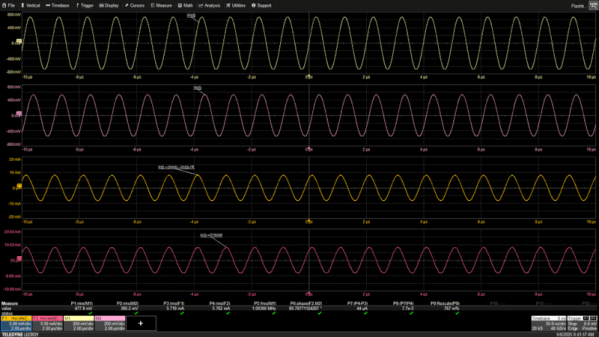
Even entry-level oscilloscopes today have simple math functions such as adding or subtracting two channels. But as [Arthur Pini] notes, more advanced scopes can now even do integration and differentiation. He writes about using these tools to make measurements on capacitors and inductors. The post in EDN is worth a read, even if your scope doesn’t offer this sort of math yet.

It makes sense that capacitors and inductors would benefit from this feature. After all, the current through a capacitor, for example, is proportional to the rate of change in the voltage across it. That’s a derivative. Since the scope can measure voltages, it can also differentiate to find the current.

The same idea applies to inductors, where the current through an inductor is related to the integral of the voltage across it. It is a simple matter to measure the voltages and perform an integration to determine the current.

Continue reading “Calculus By Oscilloscope”

Auto-Reloading Magnet Dispenser Can Feed Itself

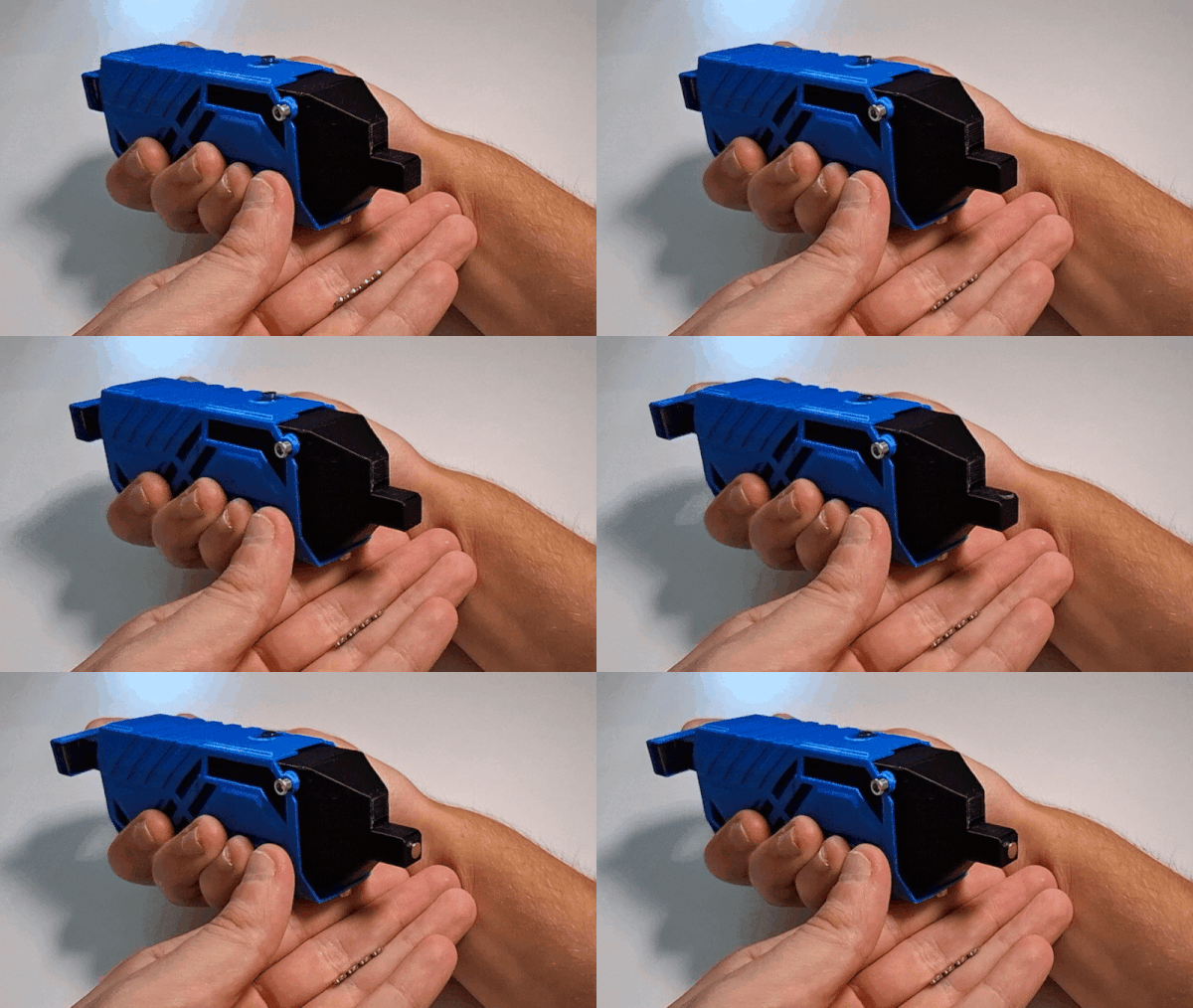
Magnet placement tools are great because they remove finger fumbling while ensuring correct polarity every time. [EmGi] has made a further improvement by making a version that auto-feeds from an internal stack of magnets.

A stack of magnets auto-feeds with every press of the plunger.

That is a trickier task than one might imagine, because magnets can have a pesky habit of being attracted in inconvenient ways, or flipping around and sticking where they should not. [EmGi] solves this with a clever rack and pinion mechanism to turn a single plunger press into a motion that shears one magnet from a stack and keeps it constrained while the same magnet responsible for holding it to the tip takes care of dragging it down a feed path. It’s easier to see it work in action, so check out the video (embedded below) in which [EmGi] explains exactly what is going on.

This design is actually an evolution of an earlier, non-reloading version. This new one is mechanically more complex, but if it looks useful you can get the design files from Printables or Makerworld and make your own.

The only catch is that this reloading design is limited in what sizes of magnet it can handle, because magnet behavior during feeding is highly dependent on the physical layout and movements. For a different non-reloading placement tool that works with any magnet size and is about as simple as one can get, you can make your own with little more than a bolt and a spring.

Continue reading “Auto-Reloading Magnet Dispenser Can Feed Itself”

The Dismal Repairability Of Milwaukee Tools

Despite the best efforts of the manufacturers, there are folks out there that try to repair power tools, with [Dean Doherty] being one of them. Recently he got a Milwaukee M18 cordless planer in for repairs, which started off with just replacing some dodgy bearings, but ended up with diagnosing a faulty controller. Consequently the total repair costs went up from reasonable to absolutely unreasonable, leading to a rant on why Milwaukee tools are terrible to repair.

Among the symptoms was the deep-discharged battery, which had just a hair over 7 V while unloaded. Question was what had drained the battery so severely. What was clear was that the tool was completely seized after inserting a working battery with just a sad high-pitched whine from a stalled motor.

After replacing both bearings and grumbling about cheap bearings, the tool had a lot of drywall dust cleaned out and was reassembled for a test run. This sadly showed that the controller board had been destroyed due to the seized rotor bearing, explaining the drained battery. Replacing the controller would have cost €60-70 as it comes with the entire handle assembly, rendering the repair non-viable and a waste.

Perhaps the one lesson from this story is that you may as well preventively swap the cheap bearings in your Milwaukee tools, to prevent seizing and taking out the controller board. That said, we’d love to see an autopsy on this controller board fault.

Continue reading “The Dismal Repairability Of Milwaukee Tools”

Rock Sphere Machine Produces Off The Charts Satisfaction

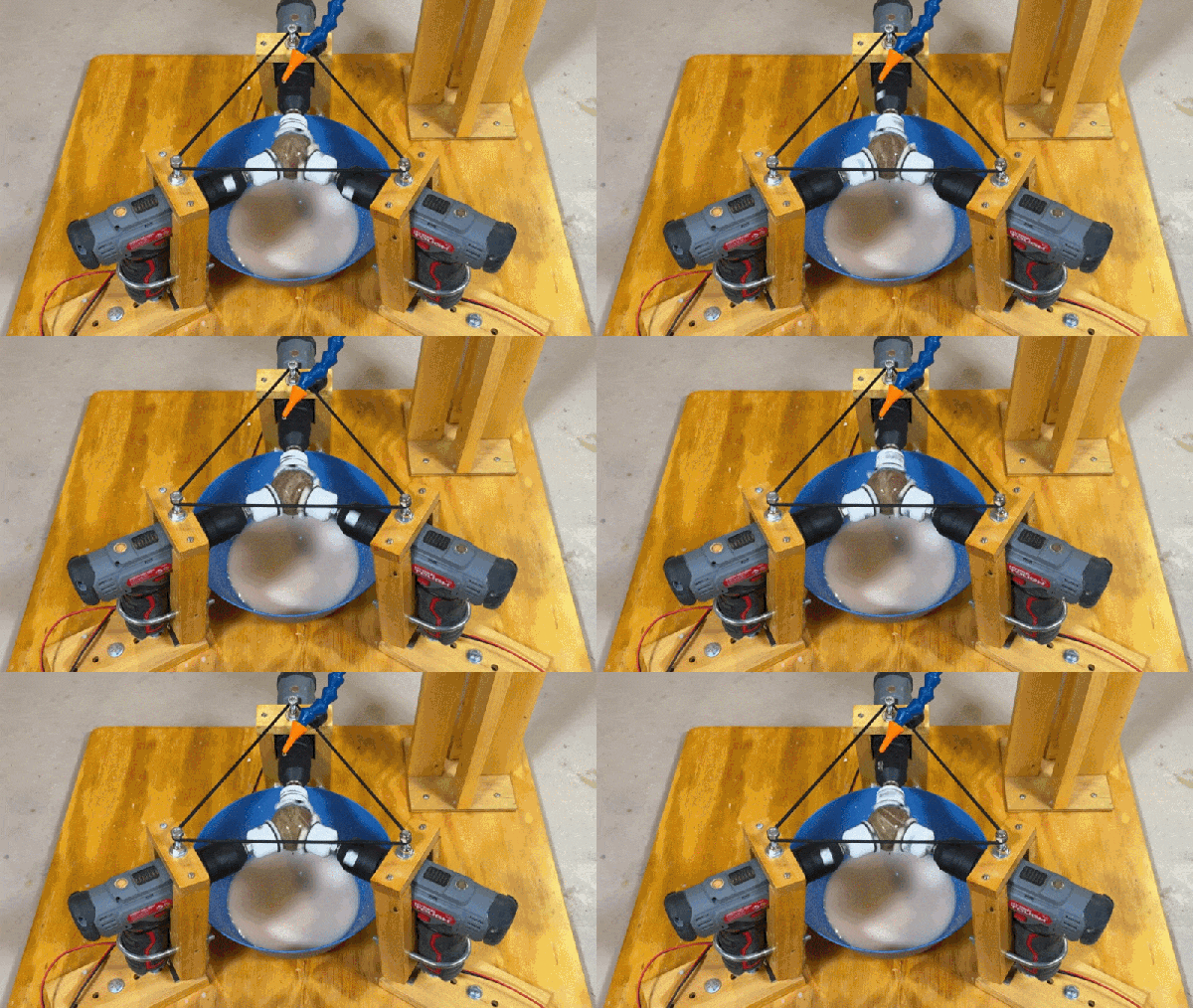
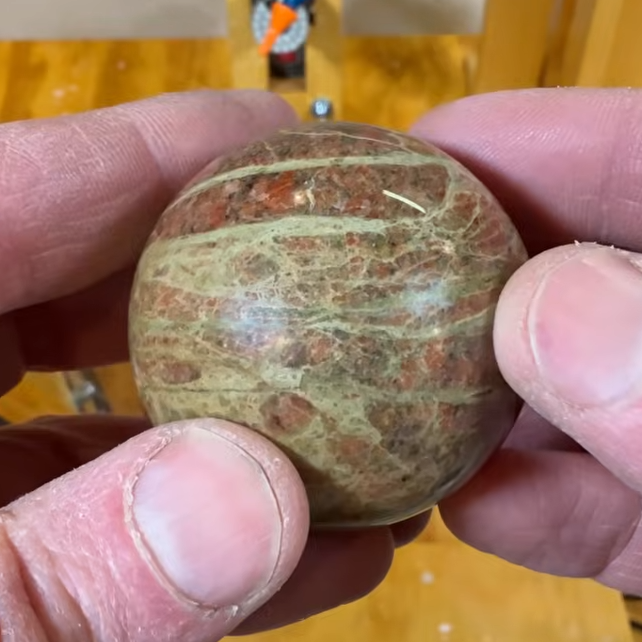
[Michigan Rocks] says he avoided making rock spheres for a long time on account of the time and cost he imagined was involved. Well, all that is in the past in light of the fabulous results from his self-built Rock Sphere Machine! Turns out that it’s neither costly to make such a machine, nor particularly time-consuming to create the spheres once things are dialed in. The video is a journey of the very first run of the machine, and it’s a great tour.

The resulting sphere? Super satisfying to hold and handle. The surface is beyond smooth, with an oil-like glossy shine that is utterly dry to the touch.

The basic concept — that of three cordless drills in tension — is adapted from existing designs, but the implementation is all his own. First a rough-cut rock is held between three diamond bits. The drills turn at 100 RPM while a simple water reservoir drips from above. After two hours, there’s a fair bit of slurry and the rock has definitely changed.

[Michigan Rocks] moves on to polishing, which uses the same setup but with progressively-finer grinding pads in place of the cutting bits. This part is also really clever, because the DIY polishing pads are great hacks in and of themselves. They’re made from little more than PVC pipe end caps with hex bolts as shafts. The end caps are filled with epoxy and topped with a slightly concave surface of hook-and-loop fastener. By doing this, he can cut up larger fuzzy-backed polishing pads and stick the pieces to his drill-mounted holders as needed, all the way down to 6000 grit. He shows everything about the pads at the 11:55 mark, and it’s an approach worth keeping in mind.

What is the end result like? See for yourself, but we think [Michigan Rocks] sums it up when he says “I wish you could feel this thing, it feels so smooth. It’s so satisfying to roll around in your hands. I’m so happy I made this machine. This is awesome.”

We’ve seen machines for making wooden spheres but this one makes fantastic use of repurposed stuff like inexpensive cordless drills, and the sort of wood structures anyone with access to hand tools can make.

Continue reading “Rock Sphere Machine Produces Off The Charts Satisfaction”

Scanning Table For The Professional Maker

Sometimes the simplest objects need some overthinking. This is exactly what [Chris Borge] realized when using his 3D scanner and finding that the included rotation table left quite a bit to be desired — providing him the perfect excuse to build a new one.

One of the main features of a rotation stage is the, well, rotation. This was done in [Chris]’s case with a NEMA 17 stepper motor, perfect for precise rotation of scanning. Hooking up the motor to a basic perf board with an Arduino Nano allows for on the fly adjustments to rotation speed. To really solidify the over-engineering, [Chris] applies his obligatory concrete mix to add some heft to the stage.

While the previous features could be removed/downgraded without much loss, the adjustable grid built into the top adds significant functionality. The grid is based on [Chris]’s past projects, which allows cross compatibility.

We love over-engineering here at Hackaday, especially when adding something new. For more prime overthought design, check out this over engineered egg cracker!

Continue reading “Scanning Table For The Professional Maker”