FPV-Rover 2.0 Has 3D Printed Treads And Plenty Of Zip

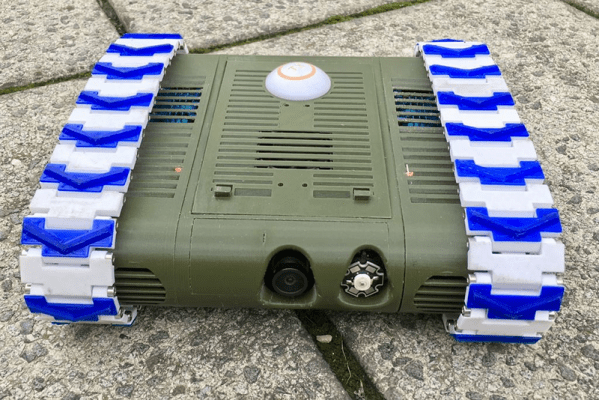
[Markus_p] has already finished one really successful 3D printed tracked robot build. Now he’s finished a second one using standard motors and incorporating what he learned from the first. The results are pretty impressive and you can see a video demo of the beast, below.

Most of the robot is PLA, although there are some parts that use PETG and flex plastic. There is an infrared-capable camera up front and another regular camera on the rear. All the electronics are pretty much off the shelf modules like an FPV transmitter and an electronic controller for the motors. There’s a servo to tilt the camera, as you can see in the second video.

The body fits together using nuts and magnets. The robot in the video takes a good beating and doesn’t seem to fall apart so it must be sufficient. What appealed to us was the size of the thing. It looks like it would be trivially easy to mount some processing power inside or on top of the rover and it could make a great motion base for a more sophisticated robot.

We’ve seen some similar projects, of course. This tracked robot uses mind control. And OpenWheel is a great place to get treads and other locomotion designs.

Continue reading “FPV-Rover 2.0 Has 3D Printed Treads And Plenty Of Zip” →
Frozen Rat Kidney Shipping Container

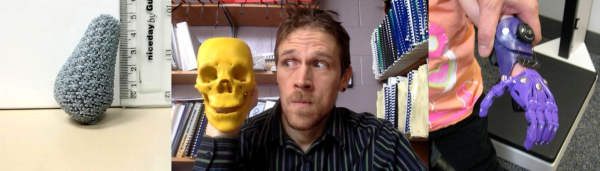
The biggest allure of 3D printing, to us at least, is the ability to make hyper-personalized objects that would otherwise fall through the cracks of our mass-market economy. Take, for instance, the Frozen Rat Kidney Shipping Container, or maybe some of the less bizarro applications in the US National Institute of Health’s 3D Print Exchange.

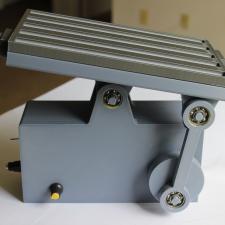
The Exchange is dominated, at least in terms of sheer numbers, by 3D models of proteins and other biochemical structures. But there are two sections that will appeal to the hacker in you: prosthetics and lab equipment. Indeed, we were sent there after finding a nice model of a tray-agitator that we wanted to use for PCB etching. We haven’t printed one yet, but check out this flexible micropositioner.

While it’s nowhere near as comprehensive a resource as some other 3D printing model sites, the focus on 3D printing for science labs should really help those who have that particular itch to find exactly the right scratcher. Or a tailor-made flexible container for slicing frozen rat kidneys. Whatever you’re into. We don’t judge.

Man with skull image: [jaqtikkun]

Titanium Knob Doesn’t Grind Our Gears

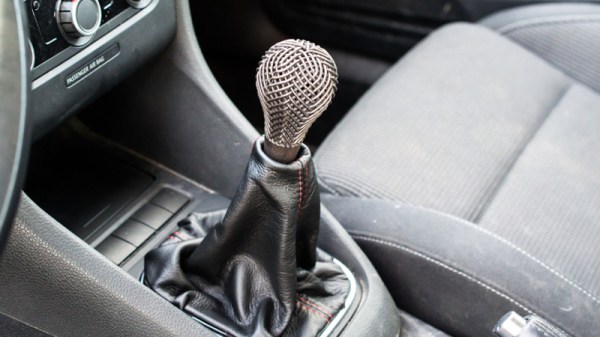
Manual transmissions! Those blessed things that car enthusiasts swear by and everyone else pretends no longer exists. They’re usually shifted by using the gearstick, mounted in the centre console of the car. Swapping out the knob on the gearstick is a popular customization; you can have everything from 8-balls to skulls, to redback spiders mounted in epoxy, sitting proud atop your gearstick. It’s rare to see anything new under the sun, but [John Allwine] came up with something we’d never seen before.

[John]’s design leans heavily on the unique ability of additive manufacturing to produce complex hollow geometries that are incredibly difficult or impossible to produce with traditional subtractive methods. The part was designed in CAD software, and originally printed on a Makerbot in plastic. After this broke, it was decided to instead produce the part in stainless steel using Shapeway’s custom order process. You can even buy one yourself. This is a much smarter choice for a part such as a gearknob which undergoes heavy use in an automotive application. The part is printed with threads, but due to the imperfect printing process, these should be chased with a proper tap to ensure good fitment.

The design was eyecatching enough to grab the attention of a professional engineer from a 3D printing company, who worked with [John] to make the part out of titanium. It’s a very tough and hardy material, though [John] notes it was an arduous task to go about tapping the threads because of this.

It’s a great example of what can now be achieved with 3D printing technology. No longer must we settle for plastic – through services like Shapeways, it’s now possible to 3D print attractive metal parts in complex designs! And, if you’ve got the right friends, you can even step it up to titanium, too.

We’ve seen other takes on the 3D shifter handle, too – like this head.


MRI To 3D Print Gets Much Faster

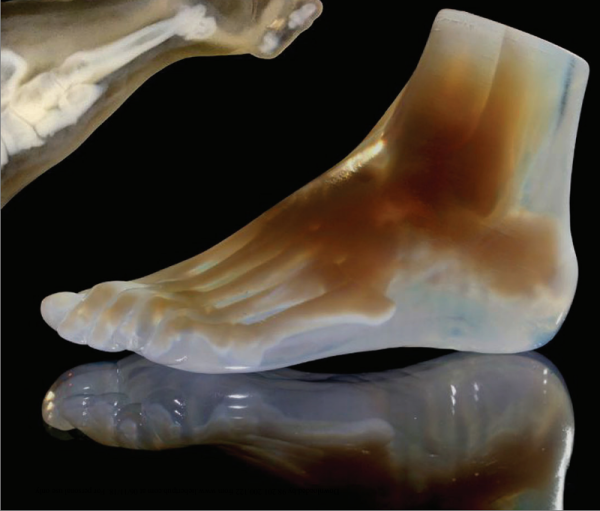
A surprising use of 3D printing has been in creating life-like models of human body parts using MRI or CT scans. Surgeons and other medical professionals can use models to plan procedures or assist in research. However, there has been a problem. The body is a messy complex thing and there is a lot of data that comes out of a typical scan. Historically, someone had to manually identify structures on each slice — a very time-consuming process — or set a threshold value and hope for the best. A recent paper by a number of researchers around the globe shows how dithering scans can vastly improve results while also allowing for much faster processing times.

As an example, a traditional workflow to create a 3D printed foot model from scan data took over 30 hours to complete including a great deal of manual intervention. The new method produced a great model in less than an hour.

Continue reading “MRI To 3D Print Gets Much Faster” →

Game Boy Camera mounted to Canon Lens using EF Mount

A Canon Lens Adapter For The Game Boy Camera

Released in 1998, the Game Boy camera was a bit ahead of its time. This specialized Game Boy cartridge featured a 128×128 pixel CMOS sensor and took 4-color greyscale photos. The camera even rotated, allowing for selfies years before that word existed.

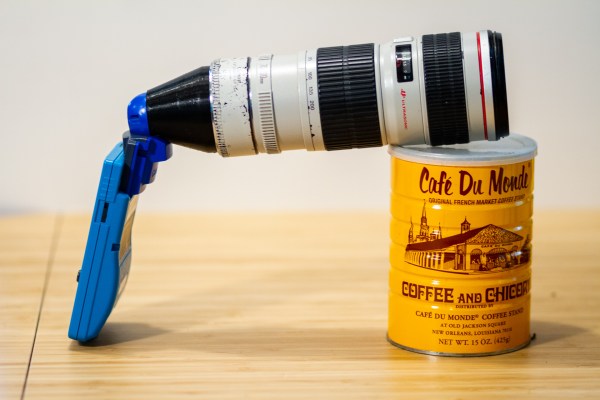
The fixed lens on this camera meant no zoom was possible. [Bastiaan] decided to address this shortcoming by building a Canon EF Lens Mount. The resulting build looks hilarious, but actually takes some interesting photos.

[Bastiaan] designed the mount using Rhino 3D, and printed it out on a Monoprice 3D printer. After some light disassembly, the mount can be screwed onto the Game Boy Camera. With the massiveĀ 70-200 f4 lens and 1.4x extender shown here, the camera gets a max focal distance of just over 3000 mm.

One issue with the Game Boy Camera was the limited options for doing anything with the photos. They could be transferred to other Game Boy Camera cartridges, or printed using the Game Boy Printer. Fortunately, [Brian Khuu] has a modern day solution that emulates the Game Boy Printer using an Arduino. This lets you get PNG files out of the device.

Slow Cooking Filament

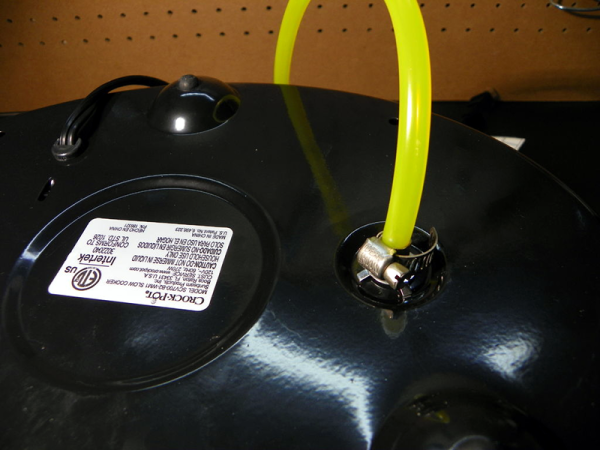
Getting good results from a 3D printer is like Goldilocks’ porridge. There are a lot of things that have to be just right. One common thing that gives people poor results is damp filament. This is especially insidious because the printer will work fine and then after some period time results degrade but it is no fault of the printer mechanics or electronics. There are many ways to attempt to dry filament, but [HydeTheJekyll] prefers using a slow cooker modified to operate with low air pressure.

We assume this works because the low pressure reduces the boiling point of water, allowing the water to boil off at temperatures that won’t distort the filament. The modifications aren’t very severe. You’ll need some hose and a pump along with some silicone caulk and petroleum jelly.

Continue reading “Slow Cooking Filament” →

Print Your Own Filament

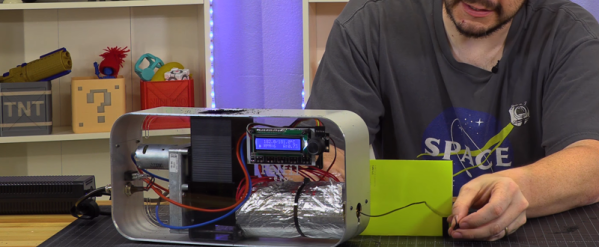
Ask anyone with a 3D printer what they make the most. They’ll probably say “trash.” There are extra pieces, stuff that oozes out of the extruder, support material, parts that didn’t stick to the bed, or just parts that needed a little tweaking to get right. No matter what you do, you are going to wind up with a lot of scraps. It would be great if you could recycle all this, and [3D Printing Nerd] looks at the FelFil Evo Filament extruder that promises it can do just that. You can see the video below.

As you’d expect, the device is a motorized auger that extrudes filament through a hot end not dissimilar to your printer’s hot end. You have to run a bag of special material through it first to clean out the plastic path. After that, you can create filament from standard pellets or pieces of old plastic.

Continue reading “Print Your Own Filament” →