Bike Lock Secures Car

[Buttim] loses his car a lot, which might sound a little bit like the plot from an early-00s movie, but he assures us that it’s a common enough thing. In a big city, and after several days of not driving one’s car, it can be possible to at least forget where you parked. There are a lot of ways of solving this problem, but the solution almost fell right into his lap: repurposing a lock from a bike share bicycle. (The build is in three parts: Part 2 and Part 3.)

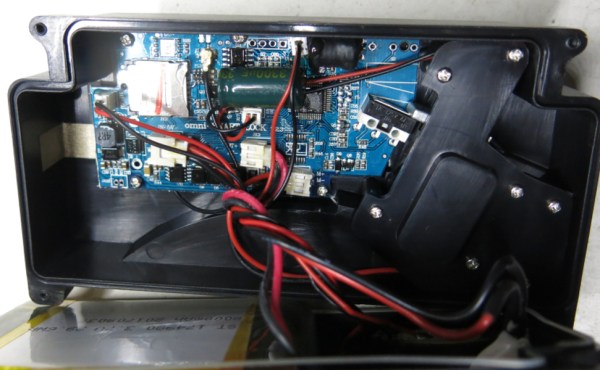
These locks are loaded with features, like GPS, a cellular modem, accelerometers, and in this case, an ARM processor. It took a huge amount of work for [Buttim] to get anything to work on the device, but after using a vulnerability to dump the firmware and load his own code on the device, spending an enormous amount of time trying to figure out where all the circuit traces went through layers of insulation intended to harden the lock from humidity, and building his own Python-based programmer for it, he has basically free reign over the device.

To that end, once he figured out how it all worked, he put it to use in his car. The device functions as a GPS tracker and reports its location over the cellular network so it can’t become lost again. As a bonus, he was able to use the accelerometers to alert him if his car was moving without him knowing, so it turned into a theft deterrent as well. Besides that, though, his ability to get into the device’s firmware reminded us of a recent attempt to get access to an ARM platform.

Bicycle Transforms Mid-Ride

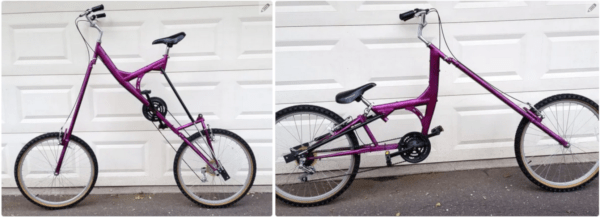
For those of us who were children in the late 80s and early 90s, we may have dreamed of one day owning a gigantic tractor trailer that could transform into a colossal fighting robot. Or of simply having a toy that could approximate this change from one form into another. As adults, though, we have come to realize that this is wishful thinking. That is, unless we decide to build this transforming bicycle.

What starts out as a slightly unusual-looking low rider-style bike effortlessly turns into a tall bike by means of a gas cylinder fixed to the bike’s rear triangle. The bike started out as a full suspension mountain bike, but the rear spring was removed to make room for this cylinder. The pivoting action of the rear triangle in a mountain bike is the key design element here: it allows the frame to change shape easily, in this situation when pushed by the cylinder. Adding some longer forks in the front and a coat of paint finishes the build.

This bike was entered in the Make It Move contest on Instrucables, and has gotten some pretty wide recognition so far. It’s a unique bicycle to be sure, and we’ve seen a few. From Russian offroad electric utility bicycles to bicycles that keep drivers from speeding down roads, there have been lots of interesting bike-based builds.

Continue reading “Bicycle Transforms Mid-Ride”

Steam Bike Rocks It Old-School

Petrol engines dominate the world of the automobile, while electric propulsion races to take an ever larger market share. Despite this, some still hold a flame for steam power. Such aficionados would hold this build in high regard, from the recent past of 2014.

In steampunk, finish is everything.

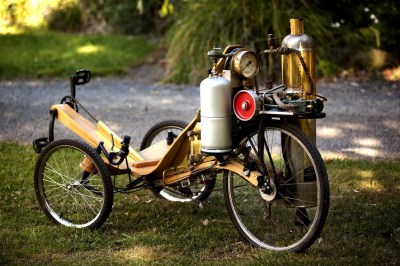
The bike is of a recumbent design, featuring a relaxed riding position well suited to the sophisticated nature of a steam-powered vehicle. Sporting a wooden frame, the build carries a strong steampunk aesthetic. The flash boiler packs 100 feet of copper pipe, and there’s an electric pump and controller to handle water delivery from the stylish brass tank. The setup is capable of producing steam within 30 seconds of startup. Motive power is courtesy of a 1.5 inch bore single-cylinder steam engine, connected to the rear wheel via a belt drive.

There’s something intoxicating about the sounds and smells of a working steam engine, though the threat of catastrophic burns does temper the excitement just a touch. Steam power isn’t going away any time soon – and it’s not just limited to transport applications, either. Video after the break.

Continue reading “Steam Bike Rocks It Old-School”

Mix And Match Parts To Build A Better Mountain Bike Derailleur

Mountain bikers take their sport seriously, and put their bikes through all manner of punishment in the course of a ride. This has given rise to a wide range of specialist equipment, such as suspension, disc brakes and even clutch derailleurs, which help reduce chain slap when riding over rough terrain. However, these specialist derailleurs aren’t available for all applications, so sometimes you’ve gotta hack together your own.

Shimano clutch derailleurs are only really available for 10-speed rear cassettes and up, due to a change in derailleur ratio compared to the earlier 6 to 9 speed cassettes. Using a derailleur designed for 10-speed operation on a rear cassette with fewer gears won’t shift properly.

[SzurkeEg] was inspired by earlier work, and realised that by combining parts from several generations of Shimano hardware, it was possible to build a working clutch derailleur for 6 to 9 speed rear cassettes. The main parallelogram is what handles the positioning of the derailleur, and is sourced from a 9-speed part to get the gear indexes correct.The rest of the parts are sourced from later models with the clutch feature built in.

It’s a smart mechanical hack, and one that isn’t necessarily the most intuitive. But by having a go, and seeing what’s possible, now a whole generation of mountain bikes can tear up the trail like never before. We’ve seen Shimano gear hacked before, too. Video below the break. Continue reading “Mix And Match Parts To Build A Better Mountain Bike Derailleur”

Russian EBike Goes Everywhere, Possibly Legal

Electric bikes may be taking the world by storm, but the world itself doesn’t have a single way of regulating ebikes’ use on public roads. Whether or not your ebike is legal to ride on the street or sidewalk where you live depends mostly on… where you live. If you’re lucky enough to live in a place where a bicycle is legally defined as having fewer than four wheels and capable of being powered by a human, though, this interesting bike from Russia might be the best homemade ebike we’ve ever seen. (Video embedded below the break.)

While some of the details of this build might be lost on those of us who do not know any Slavic languages, the video itself shows off the features of this electric vehicle build quite well. It has a custom built frame with two wheels up front, each with its own independent suspension, allowing it to traverse extremely rough terrain with ease even a mountain bike might not be able to achieve. It seems to be powered by a relatively simple rear hub in the single rear wheel, and can probably achieve speeds in the 20 km/h range while holding one passenger and possibly some cargo.

The impressive part of this build isn’t so much the electrification, but rather the suspension components. Anyone looking for an offroad vehicle may be able to take a bit of inspiration from this build. If you’re more interested in the drivetrain, there are plenty of other vehicles that use unique electric drivetrains to check out like this electric boat. And, if you happen to know Russian and see some other interesting details in this build that the native English speakers around here may have missed, leave them in the comments for us.

Continue reading “Russian EBike Goes Everywhere, Possibly Legal”

Pedal Faster! I Need To Join A Conference Call!

It is rare to find a car these days without some mechanism for charging a cell phone. After all, phones need charging all the time and we spend a lot of time in our cars. But what if you spend a lot of time on your bike? Five teens from Lynchburg, Virginia decided to build something to charge their phones from pedal power.

This isn’t a new idea, of course. Your alternator is charging your phone in your car, and bikes have had alternators connected to them for lights and other purposes. According to the team, you need to pedal about 4 miles per hour to get enough voltage to charge the phone. You can go faster though, because the circuit has a regulator. We especially liked how they determined the speed versus the voltage using a tachometer and an electric drill. We also liked the 3D printed parts such as the handlebar mount that you could probably repurpose for other things.

Continue reading “Pedal Faster! I Need To Join A Conference Call!”

Enforce Speed Limits With A Rusty Bike

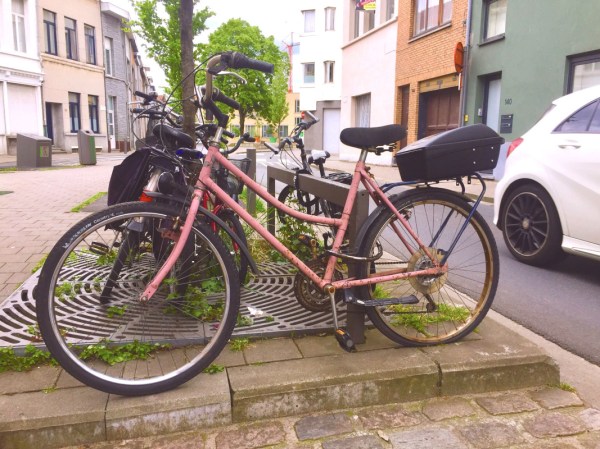
They say you can’t manage what you can’t measure, and that certainly held true in the case of this bicycle that was used to measure the speed of cars in one Belgian neighborhood. If we understand the translation from Dutch correctly, the police were not enforcing the speed limit despite complaints. As a solution, the local citizenry built a bicycle with a radar gun that collected data which was then used to convince the police to enforce the speed limit on this road.

The bike isn’t the functional part of this build, as it doesn’t seem to have been intended to move. Rather, it was chosen because it is inconspicuous (read: rusty and not valuable) and simply housed the radar unit and electronics in a rear luggage case. The radar was specially calibrated to have less than 1% error, and ran on a deep cycle lead acid battery for around eight days. Fitting it with an Arduino-compatible shield and running some software (provided on the github page) is enough to get it up and running.

This is an impressive feat of citizen activism to provide the local police with accurate data to change a problem in a neighborhood. Not only was the technology put to good use, but the social engineering involved with hiding expensive electronics in plain sight with a rusty bicycle is a step beyond what we might have thought of as well.

Thanks to [Jo_elektro] for the tip!