NES Controllers For Any Bluetooth Application

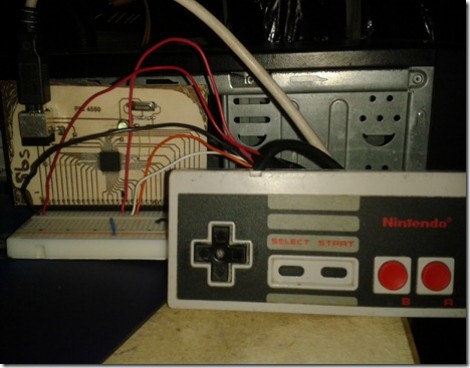
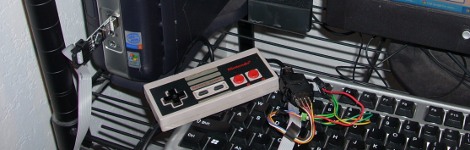
[Dustin Evans] wanted to used his original NES controllers to play emulated games. The problem is he didn’t want to alter the classic hardware. His solution was to use the connectors and enclosure from a dead NES to build a Bluetooth translator that works with any NES controller.

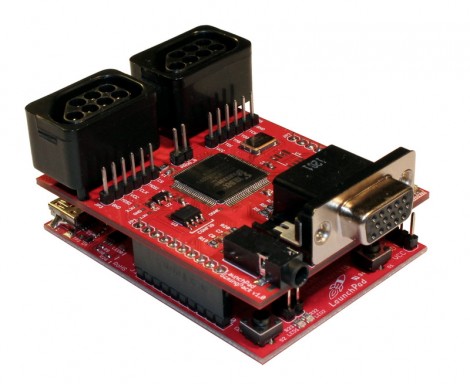
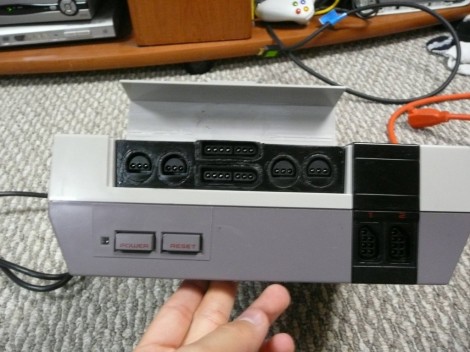
Here he’s showing the gutted half of an original NES. Although the motherboard is missing, the connectors for the controllers are still there. They’ve been rewired to an Arduino board which has a BlueSMiRF modem. The controller commands are harvested by the Arduino and sent to whatever is listening on the other end of the Bluetooth connection. He also has plans to add a couple of SNES ports to the enclosure so that those unaltered controllers may also be used.

In the video after the break [Dustin] walks us through the hardware setup. He then demonstrates pairing the device with an Android phone and playing some emulators with the pictured controllers.

Continue reading “NES Controllers For Any Bluetooth Application”

Beautiful Wooden Case For A Portable NES

After building a few portable gaming systems, [Parker] wanted to try something a little different than the usual sleek plastic builds. He decided to go with a nice wooden classic NES. He started by gutting a NOAC or Nintendo On A Chip. The NOAC has already done most of the miniaturization for him, so he was mainly focusing on the portability. While this wasn’t the most extreme mod, it wasn’t just a case swap either. He took great pictures of the process of modifying the screen to work and putting everything together. The final product is fantastic looking.

The first comment we thought was, why is the game facing backward? Due to the shape of the NOAC board, he would have had to either add more depth to the case, or extended and flipped the actual cartridge plug to make the game face forward, so we can understand why he left it alone.

Using An NES Controller With An Atari 2600

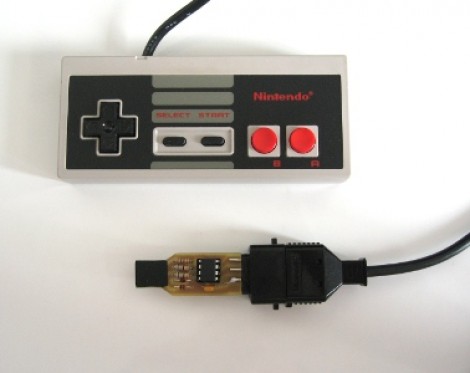
Instructibles user [Danjovic] managed to get his hands on an Atari 2600, but all the joysticks were damaged beyond repair. Instead of building an atari joystick from scratch, he looked to a slightly newer generation of gaming and decided to us an NES controller instead. This was done fairly easily with the aide of an Arduino.

This seems like a nice easy mod that could breathe a little new life into some old games, but we just can’t imagine playing without that original joystick!

Wireless Controllers For All Your Retro Systems

Remember those old wireless controllers made for the consoles of our youth like the NES and Super Nintendo? They didn’t work well, mostly owing to the fact they were built using the same infrared technology that is found in a remote control. Now that all the modern consoles are wireless, [micro] over at the nftgames forum decided to update his classic systems for wireless control.

The transmitters and receivers are built around an nRF24L01+ radio module that operates in the 2.4 GHz band. [micro] has the process of converting his controllers down to a science. He cuts the cord and wires the controller up to an AVR running at 16 MHz. The AVR sends this to the receiver where the button presses are sent through the original controller port. Basically, [micro] recreated a WaveBird controller for his NES, SNES, Saturn and N64.

The controllers are powered by internal lithium batteries, but the charging ICs are too expensive to put in each controller. To solve this problem, [micro] crafted a small external charging circuit that plugs into a 3.5mm jack on each controller. Check out [micro]’s controller demo after the break.

Continue reading “Wireless Controllers For All Your Retro Systems”

Playing Video Games For A College Application

As a senior in high school, [Owen] has been waiting to hear from the colleges he applied to for months now. Some of his applications wanted a mid-year report to see if he didn’t come down with senioritis. [Owen] realized these colleges allowed additional materials beyond a high school transcript, so he built a tiny video game that shows his electrical and programming skills.

The Demomite, as [Owen] calls his build, is an amazing piece of work. The entire system is based around an ATtiny2313 with a measly 2kB of program memory. Aside from a graphic LCD from Sparkfun and a repurposed NES controller, there isn’t much else to the build. As a study in minimalism and simplicity, [Owen] gets a big congrats from us.

The entire game fits in the 2kB of flash on the ATtiny, mostly due to coding the entire thing in assembly. You can check out [Owen]’s time-lapse construction video, software demo, and the video he sent to colleges after the break.

Continue reading “Playing Video Games For A College Application”

Overclocking A Starfox Game Cartridge

Some of our younger readers will never have experienced this before, but back in the day your video games would slow way down if there were too many moving objects on the screen. The original Castlevania comes to mind, but many will remember the problem while playing the fantastically three-dimensional Super Nintendo game Starfox. [Drakon] isn’t putting up with that hardware shortfall any longer, he hacked this cartridge to run at 42 MHz, twice as fast as the design spec.

We only occasionally look in on the cart hacking scene so it was news to us that three different versions of a pin compatible chip were used in this hardware. The first two suffer from the slowdown problem, but the final revision (SuperFX GSU 2) doesn’t. It can also be overclocked as high as 48 MHz but because of the video frame rate you won’t see added improvement with the extra 6 MHz.

[Drakon] used a Doom cartridge as a guinea pig because it offers the most RAM, and set to work rerouting the traces for the ROM chip to an EEPROM so that the hardware can be used with different games. He also took this opportunity to patch in the faster clock signal.

NES Controller Uses Capacitive Touch Instead Of Buttons

Here’s one way to really keep the component count low. [David] developed an NES controller that doesn’t use any buttons. The copper clad has been milled to provide a pad which registers a button push based on capacitance. The board has a SIL header at the top, making it easy to plug into the Arduino board that reads the inputs.

[David] had trouble getting the Arduino pin read functions to respond fast enough for he NES console’s expectations. He ended up using commands to access the ATmega’s peripherals directly in order to achieve the target timing. Speaking of, he did his own sniffing of the communication scheme using a logic analyzer. The results of that work, as well as the board files and code are available at the site linked above. And there’s a demo of the controller used to play Super Mario Bros. in the clip after the break.

This is actually a tangential project using a PCB mill which he’s developing through Kickstarter. This certainly shows that the mills works as designed.  Continue reading “NES Controller Uses Capacitive Touch Instead Of Buttons”